By Webfit News
Auckland, 10 July 2026
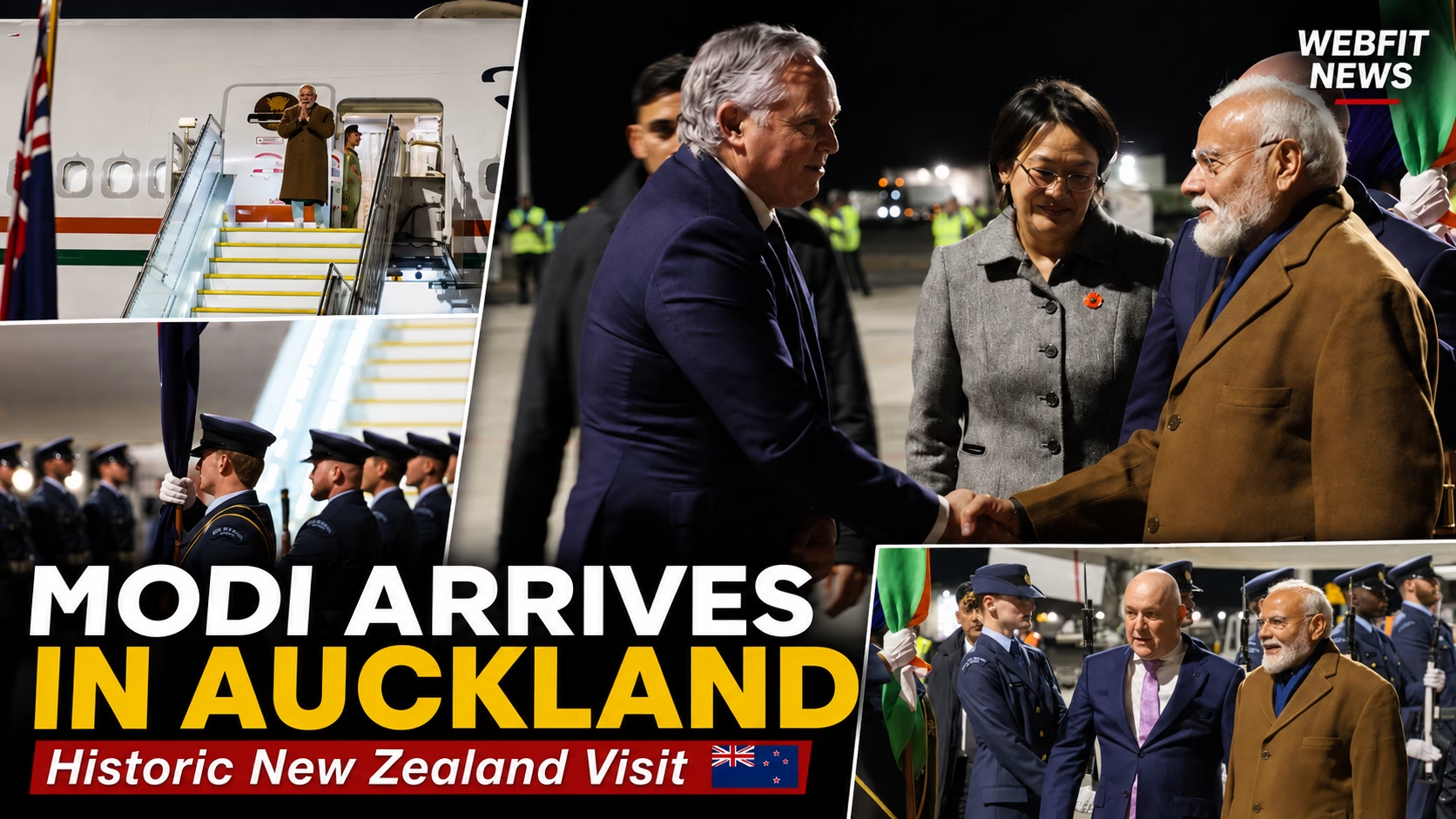
Indian Prime Minister Narendra Modi has arrived in Auckland for a brief but highly significant visit, receiving an unusually warm welcome from New Zealand Prime Minister Christopher Luxon at Auckland Airport.
Mr Luxon personally greeted his Indian counterpart on the tarmac, where Mr Modi was also welcomed with a guard of honour. Ethnic Communities Minister Mark Mitchell and senior diplomatic representatives were present as the Indian leader stepped off his aircraft on a cold Auckland evening.
The arrival marked the beginning of a tightly scheduled overnight visit involving bilateral discussions, business and sporting engagements, and a major Indian community reception at Spark Arena.
Although Mr Modi is expected to spend only about 25 hours in New Zealand, the political, economic and symbolic weight of the visit is considerably larger.
First Indian Prime Ministerial Visit in 40 Years
The visit is being described as the first by an Indian prime minister to New Zealand in 40 years.
Former Indian prime minister Indira Gandhi visited in 1968, followed by Rajiv Gandhi in 1986. Mr Modi’s arrival therefore represents only the third visit by an Indian prime minister and comes at a time when Wellington and New Delhi are attempting to strengthen a relationship that has historically remained below its full potential.
The airport welcome demonstrated the importance New Zealand is placing on the visit. A prime minister personally meeting a visiting leader on the tarmac is a deliberate diplomatic gesture, particularly for a visit lasting little more than a day.
Road closures, motorcade rehearsals, security checks and a major police presence have added to the scale of preparations across Auckland.
Police have advised the public to expect disruptions at different points during Saturday as the Indian delegation moves between official engagements.
A Visit Surrounded by Community Energy
Mr Modi’s political appearances overseas frequently develop into large community occasions, and Auckland appears to be following that pattern.
Indian community organisations across New Zealand have spent days publishing welcome messages, arranging performances and preparing for the sold-out “Kia Ora Modi” reception at Spark Arena.
More than 10,000 people are expected to attend the event, which will conclude the public programme of the visit on Saturday evening.
For many members of New Zealand’s Indian diaspora, the gathering is more than a political event. It is an opportunity to celebrate their cultural identity while recognising India’s growing international influence and New Zealand’s deepening relationship with the country.
Families are expected to travel from across New Zealand to attend. Community performers, volunteers, business representatives and cultural organisations have also been involved in preparations.
The response illustrates the growing confidence and visibility of New Zealand’s Indian population, which has become increasingly influential across business, healthcare, technology, education and professional services.
Senior Indian Delegation Signals Wider Strategic Agenda
Mr Modi is accompanied by a senior delegation that includes National Security Advisor Ajit Doval, Foreign Secretary Vikram Misri, Secretary East Rudrendra Tandon and other officials.
The composition of the delegation suggests that the visit extends well beyond ceremonial diplomacy.
Mr Doval’s presence places strategic and security matters firmly on the agenda. Discussions may cover maritime security, violent extremism, intelligence cooperation, terrorism and developments across the Indo-Pacific region.
Mr Misri and other senior officials are expected to support the diplomatic and administrative work needed to turn agreements between the two prime ministers into continuing engagement between government departments.
For India, New Zealand is not simply a distant agricultural trading nation. It is a Pacific democracy, a member of the Five Eyes intelligence partnership and an increasingly relevant participant in regional economic and security discussions.
For New Zealand, India represents one of the world’s largest and fastest-growing major economies, as well as a potentially important market for education, technology, tourism, professional services and food exports.
Trade and Investment Move to the Centre
The visit follows the signing of the New Zealand-India Free Trade Agreement in New Delhi in April 2026.
According to RNZ, the agreement is expected to eliminate or reduce tariffs on 95 percent of New Zealand exports once implemented.
The deal has created significant expectations for exporters, investors and businesses in both countries. Sectors likely to benefit include food and fibre, technology, tourism, education, pharmaceuticals, professional services and investment.
Indian products are also expected to receive improved access to the New Zealand market.
However, signing an agreement is only the beginning. Its success will depend on implementation, regulatory cooperation and whether businesses on both sides are able to take advantage of the opportunities created.
The agreement has not received universal political support in New Zealand. Labour supported the legislation at its first reading, while coalition partner New Zealand First withheld its support.
Questions about dairy access, migration settings and the distribution of benefits are likely to continue as the deal progresses.
Bilateral Talks to Cover Security, Education and Tourism
Mr Modi and Mr Luxon are scheduled to hold formal bilateral talks on Saturday.
The discussions are expected to include:
- Trade and investment
- Maritime and regional security
- Education partnerships
- Tourism and air connectivity
- Technology and innovation
- Sport
- Wider international and geopolitical developments
Dedicated business and sporting engagements are also included in the programme.
Sport has a particular historical connection this year, with 2026 marking 100 years since the Indian Army hockey team toured New Zealand in 1926. That team included Major Dhyan Chand, who later became one of international hockey’s most celebrated players.
The anniversary offers both governments an opportunity to use sport as a form of public diplomacy and community engagement.
Security Concerns and the Right to Peaceful Protest
The celebration surrounding the visit has also been accompanied by protests, heightened security and strong political rhetoric.
New Zealand protects the right to peaceful protest, including criticism of foreign governments and political leaders. That democratic right remains important.
At the same time, the responsibility of political and religious figures is equally clear. Disagreement must not become intimidation, threats or hostility directed at ethnic and religious communities.
Police preparations and the expected security presence reflect both the international importance of the visit and the need to protect the public, visiting officials and lawful demonstrators.
The Real Test Comes After the Applause
Mr Modi remains a deeply influential and polarising political leader.
His supporters credit him with strengthening India’s global position, expanding digital infrastructure, accelerating development and building a more assertive sense of national confidence.
His critics raise concerns about religious pluralism, press freedom, Hindu nationalism and the concentration of political and economic power.
New Zealand does not need to settle India’s internal political debate during a short diplomatic visit. It does, however, need to engage India with honesty, strategic clarity and a clear understanding of its own national interests.
The crowds, ceremonies and cultural performances will create striking images. But the lasting value of Mr Modi’s visit will depend on what follows.
The real test will be whether the two governments establish durable cooperation in trade, security, education, research, technology, tourism and sport.
Auckland has provided the festival atmosphere. The task now is to turn that energy into a mature and practical partnership between New Zealand and India.
Photo credit: RNZ / Blessen Tom
Reference
RNZ IndoNZ, “Narendra Modi arrives for historic visit to New Zealand”, published 10 July 2026.