In the days following the killing of Minnesota resident Renée Nicole Good during an Immigration and Customs Enforcement operation on January 7, the state has entered a period of extraordinary tension. What began as a federal immigration enforcement action has rapidly escalated into a wider confrontation between state leadership, federal authorities, and communities across Minnesota.
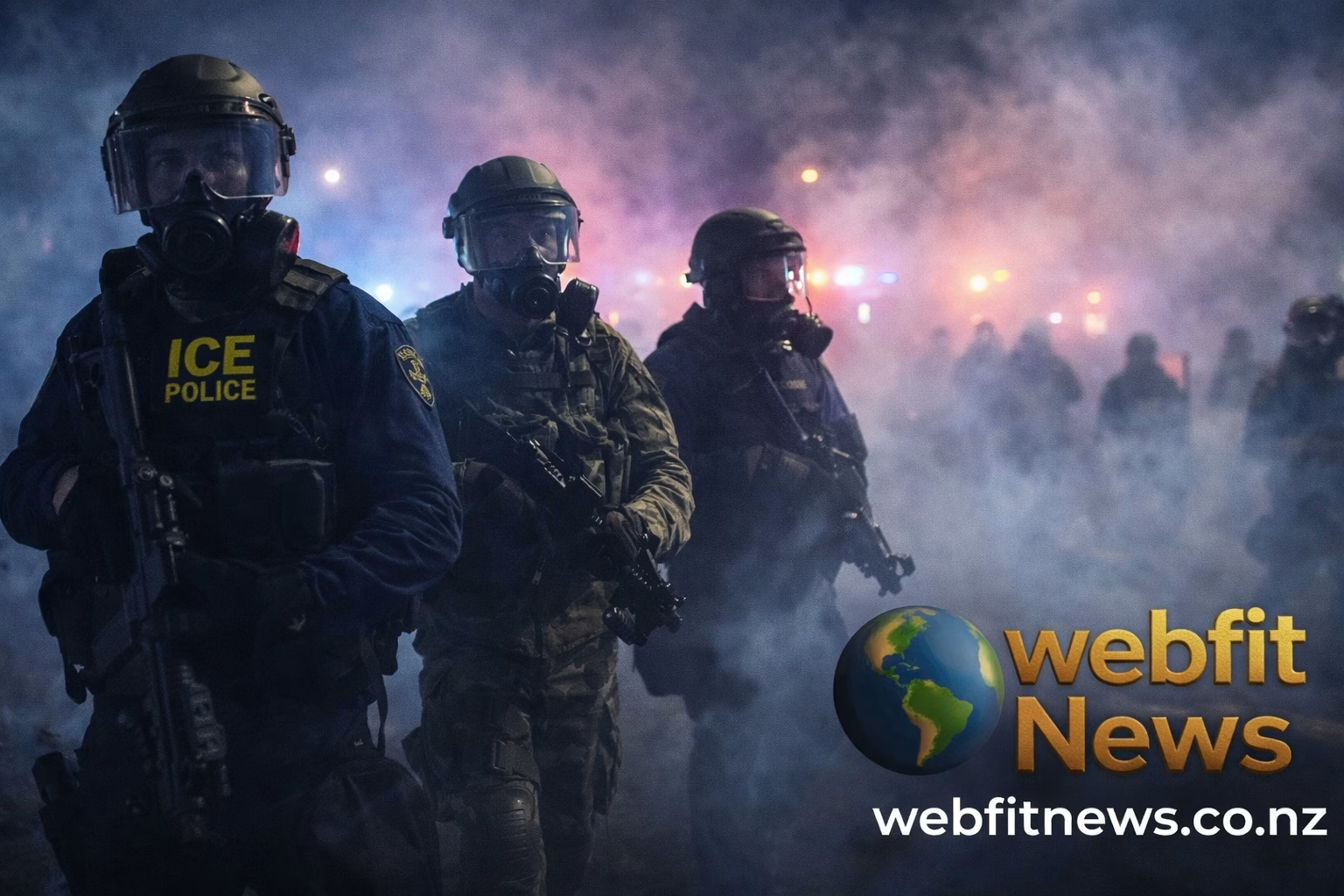
Governor Tim Walz addressed the state in a rare televised speech this week, warning that the scale and conduct of federal deployments had crossed into dangerous territory. According to the governor, between 2,000 and 3,000 federal agents have been deployed across Minnesota, a presence that rivals the combined strength of local law enforcement in Minneapolis and St. Paul.
Walz described widespread fear, disruption, and uncertainty among residents, particularly within immigrant communities and communities of color. His remarks marked one of the strongest public rebukes by a sitting governor against federal immigration enforcement in recent years.
Federal Operations Raise Civil Liberties Concerns
Reports from across the state describe ICE agents conducting operations at traffic stops, near schools, at transit hubs, and outside grocery stores. Civil rights advocates say some actions appear to go beyond targeted enforcement and risk violating constitutional protections, including due process and protection against unreasonable searches and seizures.
Several incidents have intensified public concern. In Richfield, two US citizens working at a retail store were detained during an ICE operation and later released while facing federal charges. In another widely reported case, an immigrant from Honduras was removed from his vehicle while unconscious and transferred to a detention center in Texas. Videos circulating online show distressed bystanders questioning the legality and necessity of such actions.
Federal authorities maintain that agents are acting within the scope of their duties and responding to resistance during arrests. However, critics argue that the tactics being used resemble paramilitary operations rather than civilian law enforcement, contributing to fear and instability rather than public safety.
Fallout Inside the Justice System
Adding to the controversy, several career prosecutors reportedly resigned from the US Attorney’s Office in Minneapolis following decisions related to the Good case. The Department of Justice’s initial framing of the incident, including the designation of the ICE agent involved as a victim, has drawn criticism from legal experts and civil liberties groups.
These resignations have amplified concerns about political pressure within federal institutions and raised questions about whether accountability mechanisms remain intact. Trust in legal processes, already strained, appears to be eroding further as investigations continue behind closed doors.
A National Pattern, Not an Isolated Case
While Minnesota has become the focal point, similar confrontations have been reported elsewhere. In California, a 21 year old protester was seriously injured by what authorities described as a less-lethal round fired by a federal officer. Civil rights organizations argue that these incidents reflect a broader national shift toward aggressive federal policing tactics.
The scale of the Minnesota deployment suggests that the state may be a testing ground for expanded federal authority. Legal scholars warn that the use of heavily armed federal agents in civilian settings blurs the line between law enforcement and military-style operations.
Political Tensions Deepen
President Donald Trump has publicly criticized Minnesota’s leadership in recent days, using social media to accuse state officials of obstructing federal law enforcement. His statements have further inflamed tensions, particularly after references to “retribution” against jurisdictions that resist federal immigration efforts.
Governor Walz, while condemning federal actions, has urged residents to remain calm and avoid escalation. He emphasized that accountability must come through lawful channels, including the courts and elections. Critics on both sides argue this response is either too cautious or too confrontational, highlighting the deep political divisions surrounding immigration enforcement.
Public Response and Growing Unease
Public reaction across Minnesota has been mixed but increasingly vocal. Protests have drawn thousands into the streets, while others express concern about public order and safety. Business owners, faith leaders, and educators have reported disruptions to daily life as families avoid public spaces out of fear.
Polling conducted nationally in recent years suggests declining public support for ICE as an institution, with growing calls for reform or restructuring. Minnesota’s experience may accelerate that debate, particularly if further incidents occur.
Historical Context and What Comes Next
Minnesota has a long history of labor movements, civil rights activism, and resistance to heavy-handed state power. Observers note that moments of intense federal intervention have often produced lasting political consequences, reshaping public attitudes and policy frameworks.
What remains unclear is how long the current federal presence will continue and whether legal challenges will result in meaningful limits on enforcement tactics. Civil liberties organizations are preparing lawsuits, while state officials explore options to protect residents without triggering further escalation.
For broader context on federal immigration policy shifts and their impact on local communities, readers may also revisit our earlier analysis on immigration enforcement trends in the United States, available on Webfit News.
Webfit News Takeaway
Minnesota’s unfolding crisis highlights a critical national question. How far can federal enforcement go before it undermines public trust, civil liberties, and democratic accountability?
The events following the death of Renée Nicole Good are no longer just about immigration enforcement. They reflect a deeper struggle over power, oversight, and the balance between security and rights in modern America. How this moment is resolved will likely shape not only Minnesota’s future but the national conversation on federal authority for years to come.