
WELLINGTON, NZ
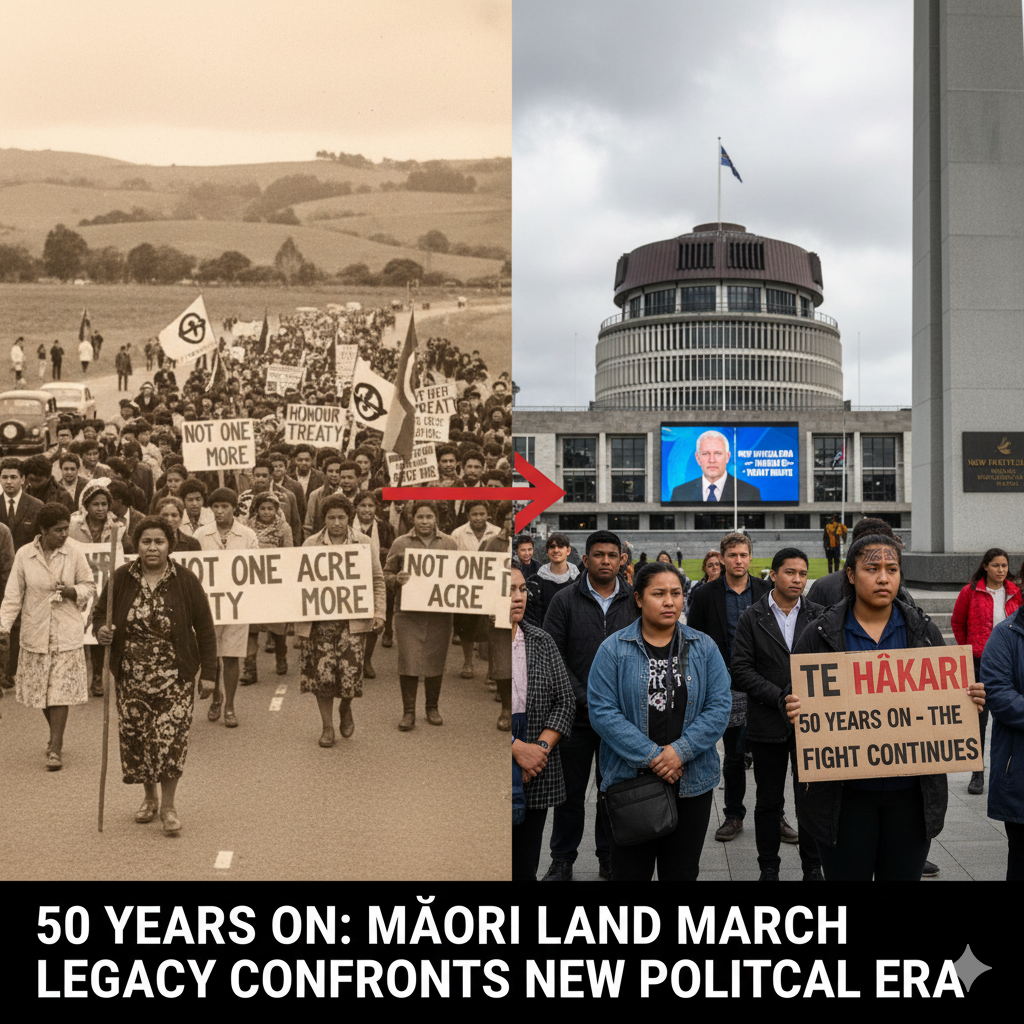
October 2025 marks 50 years since the Māori Land March changed the course of New Zealand history. The 1,000-kilometer hīkoi from Te Hāpua to Parliament put the Treaty of Waitangi and Māori land rights at the center of public debate.
Today, the anniversary is not only a commemoration but a conversation about progress. It arrives as New Zealand finalizes local referendums on Māori wards, creating a powerful reminder of how past struggles still shape the present.
The hīkoi that changed a nation
In 1975, Dame Whina Cooper, aged 80, led a small group of marchers from the Far North. They walked for one month, carrying a petition that called for an end to the loss of Māori land. By the time they reached Parliament, their numbers had grown to 5,000.
The message was simple and strong: “Not one more acre.” The march sparked national attention and helped create the Waitangi Tribunal, which investigates historical land grievances. It marked the beginning of modern Māori activism and became one of the defining images of protest in Aotearoa.
A legacy in a new political climate
This year’s commemoration includes community events, exhibitions, and school programs. Yet it unfolds during a politically sensitive time. Forty-two councils recently held referendums on whether to keep Māori wards.
These wards were designed to give Māori fair representation in local government. Their possible removal has created national debate and renewed calls for equality. Many leaders say the timing, alongside the 50th anniversary, highlights unfinished business.
The contrast is striking. The original march demanded recognition of Māori rights. The referendums test how much of that vision remains alive. As a result, this anniversary feels less like a celebration and more like a checkpoint on a long journey toward partnership.
The continuing call for justice
The Land March was always about more than politics. It spoke about people and their relationship with the whenua, the land itself. That message still echoes today.
The principles of tino rangatiratanga (self-determination) and kaitiakitanga (guardianship) guide many of the country’s biggest issues, from protecting rivers to tackling housing shortages and climate change. These ideas shape how communities act, not only how they talk.
Meanwhile, new generations are carrying the kaupapa forward. Young Māori leaders are linking past struggles to present-day challenges. Their work in environmental care, education, and social enterprise continues the march in new forms.
As Aotearoa reflects on 50 years since Dame Whina Cooper’s hīkoi, one truth stands out clearly. The journey that began in 1975 has not ended. The questions asked on the steps of Parliament remain the same: What does justice look like, who holds power, and how can the nation walk together toward fairness?