By Webfit News Desk
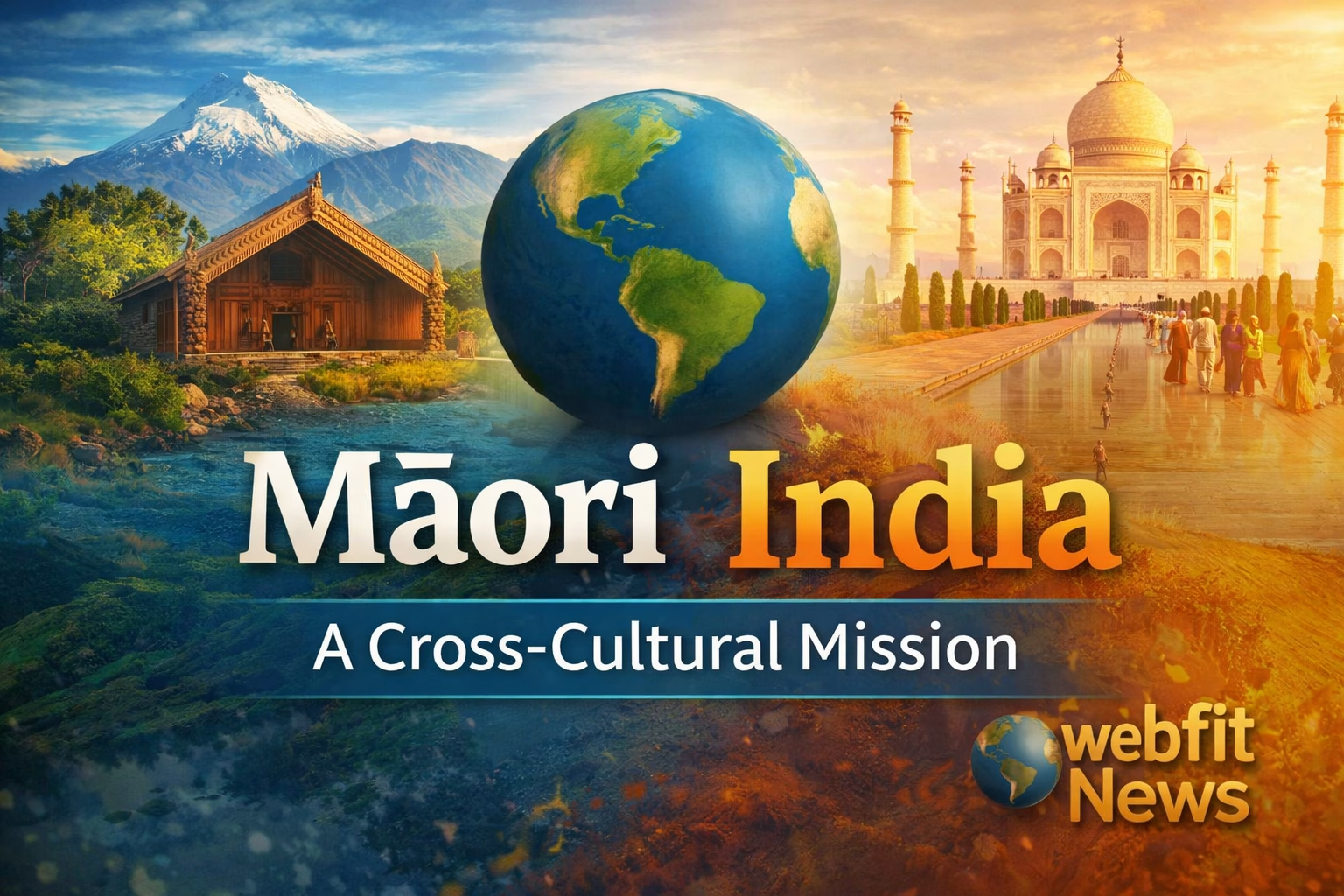
A Māori-led delegation from Aotearoa New Zealand has arrived in India with a clear goal. Build long-term business opportunities while deepening cultural connections between two ancient civilisations that value community, tradition, and identity.
The 20-member delegation brings together Māori business leaders, iwi and community representatives, educators, chefs, and performers. What makes this visit unique is that culture is not an add-on. It is at the centre of the engagement.
This is believed to be the first Māori delegation to India, where cultural exchange leads the conversation, rather than following behind government or corporate trade talks.
Why this visit matters now
The timing is not accidental.
Just weeks ago, New Zealand and India announced the conclusion of negotiations on a long-awaited free trade agreement. While the delegation is not officially part of the FTA process, its presence adds a people-first dimension to what is often a numbers-driven discussion.
Speaking earlier, Madan Mohan Sethi, India’s Consul General in Auckland, described the visit as significant.
He highlighted that Māori businesses are a major force within New Zealand’s economy, with interests across:
- Food and hospitality
- Agriculture and horticulture
- Dairy, fisheries, and forestry
- Tourism and small-scale manufacturing
Estimates place the Māori business economy at over NZ$100 billion, a figure that often surprises people outside New Zealand.
From India’s perspective, this represents not just trade, but partnership potential.
Culture first, business follows
Delegation member Otene Hopa explained that this visit is deliberately different from past trade missions.
“This is the first Māori-led delegation to India with culture in the forefront,” he said.
Rather than targeting one industry or pitching products, the group is approaching India with curiosity and respect.
India is being treated as a whole ecosystem, not a single market.
That approach aligns well with Māori values, where relationships come before transactions.
A natural connection between communities
There is already a strong Indian presence in Aotearoa New Zealand, built over generations. For the delegation, this visit is also about acknowledging that shared history and exploring how the connection can evolve.
Hopa noted that Māori are open to learning from India’s diversity, spiritual traditions, and community structures.
At the same time, Māori culture, with its emphasis on whenua (land), whānau (family), and whakapapa (connection), resonates strongly in Indian cultural spaces.
This mutual recognition creates fertile ground for collaboration that goes beyond exports and imports.
Food, performance, and education as bridges
The delegation includes well-known Māori chefs such as Hera Te Kurapa and Irihei Walker, highlighting the role of indigenous cuisine in storytelling and cultural diplomacy.
Food is being used as a shared language, one that Indians immediately understand.
Cultural performances are led by the kapa haka group Te Pikikōtuku o Ngāti Rongomai, using dance and storytelling to explain Māori history, values, and identity.
Educators, including principals from kura kaupapa Māori, are also part of the group. Their presence opens discussions on indigenous education models, language revival, and how culture can shape learning systems.
Community leaders from Te Māhurehure Marae in Auckland add another layer, grounding the delegation in lived community experience rather than abstract policy.
The role of smaller businesses
Behind the scenes, organisations like the Aotearoa Bharat Economic Foundation have been working for years to create these connections.
The foundation was established after its founders noticed that Māori and small New Zealand businesses were often left out of India-focused trade discussions.
Chief Executive Kush Bhargava has been candid about the challenges.
Large companies can usually find a way into India. Smaller businesses struggle with pricing, scale, and understanding how the market works.
The new FTA could reduce some of those barriers, especially around tariffs and access. But Bhargava has also warned that delegations alone do not guarantee results.
Photos and meetings mean little if they do not lead to realistic partnerships and signed agreements.
Where the delegation is heading
The group’s itinerary reflects a broad view of India:
- Delhi from 19 to 23 January
- Hyderabad from 23 to 28 January
- Bhubaneswar from 29 to 31 January
Each city offers a different lens on India, from government and diplomacy to technology, education, and regional culture.
For Hopa, the trip is also personal. It is his first visit to India in a decade.
Experiencing India again, this time as part of a Māori-led cultural mission, carries deep meaning.
The Webfit News perspective
At Webfit News, we see this delegation as more than a feel-good story.
It signals a shift in how New Zealand engages with the world.
Trade no longer sits only in boardrooms and ministries. Culture, community, and indigenous leadership are becoming central to how trust is built internationally.
For India and New Zealand, this visit shows that relationships can grow from shared values, not just shared balance sheets.
If the FTA sets the framework, it is these people-to-people connections that will determine whether the relationship truly thrives.