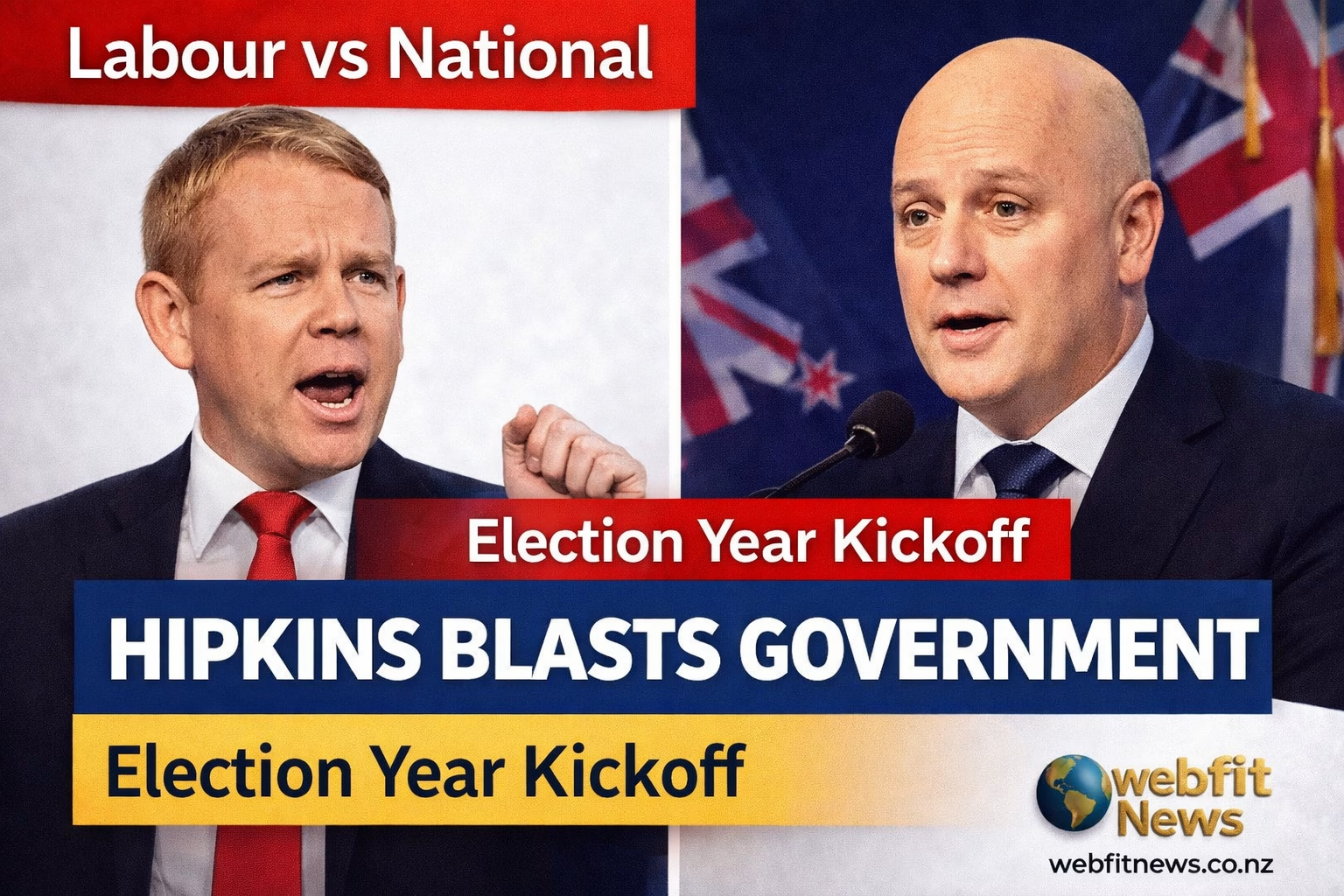
Labour leader Chris Hipkins has formally launched his party’s election-year campaign with a sharp attack on the government, framing 2026 as a choice between what he described as “negativity and blame” and a renewed sense of national purpose.
Speaking at Labour’s caucus retreat in West Auckland on Wednesday, Hipkins used his first major speech of the year to argue that New Zealanders are not feeling optimism under the current government and are instead searching for leadership that offers hope, stability, and a credible plan for the future.
His message was clear and deliberate. Labour is positioning itself as the alternative for voters who feel the country has lost direction, while the government insists it is managing difficult global conditions responsibly.
A contrast of tone and vision
Hipkins’ speech leaned heavily on tone as much as policy. He accused the government of fostering what he called a “doom and gloom” atmosphere, arguing that repeated spending cuts and blame-shifting have left communities anxious rather than confident.
He contrasted this with what he described as Labour’s work over the past two years to listen, reflect, and rebuild following its 2023 election defeat. According to Hipkins, that period of reset now allows Labour to focus on what it wants to do differently if returned to power.
In doing so, he took direct aim at Prime Minister Christopher Luxon, criticising Luxon’s recent State of the Nation address as heavy on rhetoric but light on substance.
Hipkins argued that New Zealanders are tired of what he described as management-style language and excuses, and instead want clarity on where the country is heading, particularly on jobs, housing, health care, and opportunity for younger generations.
Migration, jobs, and confidence at the centre
One of the most pointed sections of the speech focused on migration. Hipkins highlighted the high number of New Zealanders leaving the country over the past year, describing it as a warning sign that many people no longer see opportunity at home.
From Labour’s perspective, this outward flow reflects deeper economic unease, rising unemployment, and a sense that the ladder to stability is being pulled up for ordinary families.
He accused the government of making policy choices that benefit a narrow group, citing tax changes for landlords and tobacco companies while, in his words, making it harder for first-home buyers to enter the market or for families to access affordable health care.
Labour, he said, intends to campaign on redirecting investment away from speculative housing and into productive areas that create jobs and long-term growth.
Competing economic narratives
The economic divide between the two major parties is now becoming sharper.
The government has repeatedly argued that it inherited a difficult fiscal position and that disciplined spending and structural reform are required to stabilise the economy in an uncertain global environment. Ministers have pointed to easing inflation, improved business confidence, and early signs of recovery as evidence their approach is working.
Labour disputes that framing. Hipkins claimed New Zealand was already on a path toward recovery before the change of government, arguing that what followed was a “slash and burn” approach that weakened confidence and stalled momentum.
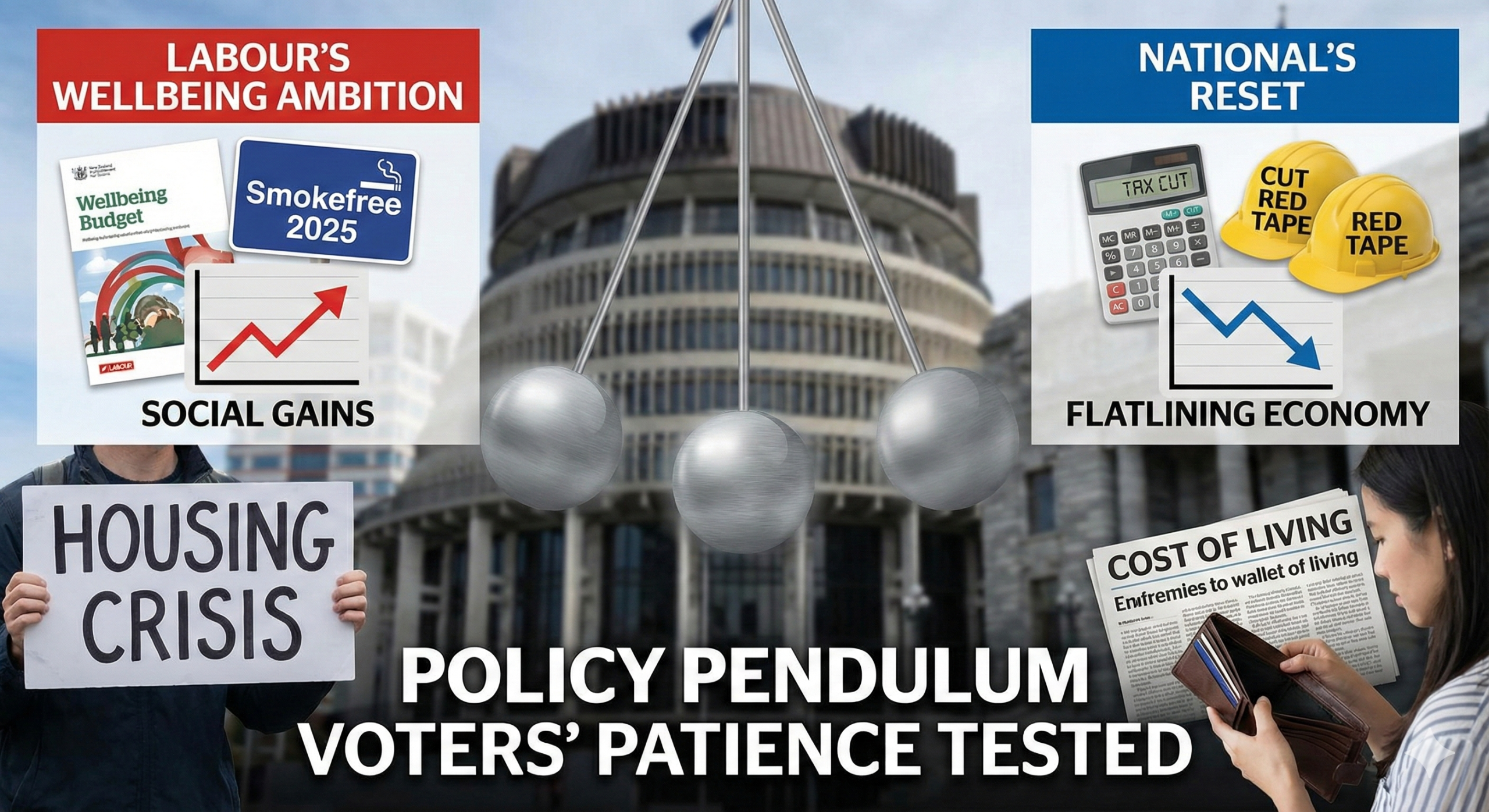
This clash of narratives is likely to define much of the election campaign. One side emphasising restraint and long-term correction, the other focusing on fairness, public investment, and social cohesion.
Leadership and political positioning
Hipkins’ speech was also notable for its direct criticism of senior figures across the governing bloc, including Nicola Willis, David Seymour, and Winston Peters.
He accused them collectively of suggesting that current conditions are the best New Zealand can expect, a claim the government strongly rejects.
For Labour, the strategy appears to be drawing a clear line between what it sees as managerial politics and values-driven leadership. The language of hope, opportunity, and collective progress is being deliberately revived, echoing themes that have historically resonated during periods of economic stress.
What this means for everyday Kiwis
Changes to the Skilled Migrant Category Resident Visa – WebfitNews
For many households, the political debate can feel distant from daily pressures. Rising costs, uncertain job prospects, health system strain, and housing affordability remain front of mind.
The significance of Hipkins’ speech lies less in any single policy announcement and more in the signal it sends about how Labour intends to speak to voters in 2026. The party is betting that a message centred on optimism, fairness, and shared responsibility will connect with families who feel worn down by constant economic anxiety.
At the same time, voters will demand more than tone. They will look closely at whether Labour can translate its rhetoric into practical, credible plans that address real constraints on government spending and delivery.
An election shaped by mood as much as math
As the election year begins, it is increasingly clear that the contest will not be fought solely on economic indicators or fiscal spreadsheets. It will also be about confidence, trust, and whether New Zealanders feel the country is moving forward together.
Hipkins has thrown down the challenge. Labour is asking voters to believe that better is possible and that leadership can lift the national mood rather than manage decline.
Whether that message cuts through will depend on how convincingly Labour can match hope with detail, and how effectively the government can persuade voters that discipline today leads to security tomorrow.
Either way, the tone of the election year is now set, and it is unlikely to soften as November draws closer.
Credit: Reporting draws on material originally published by Scoop Media.