By Geet G
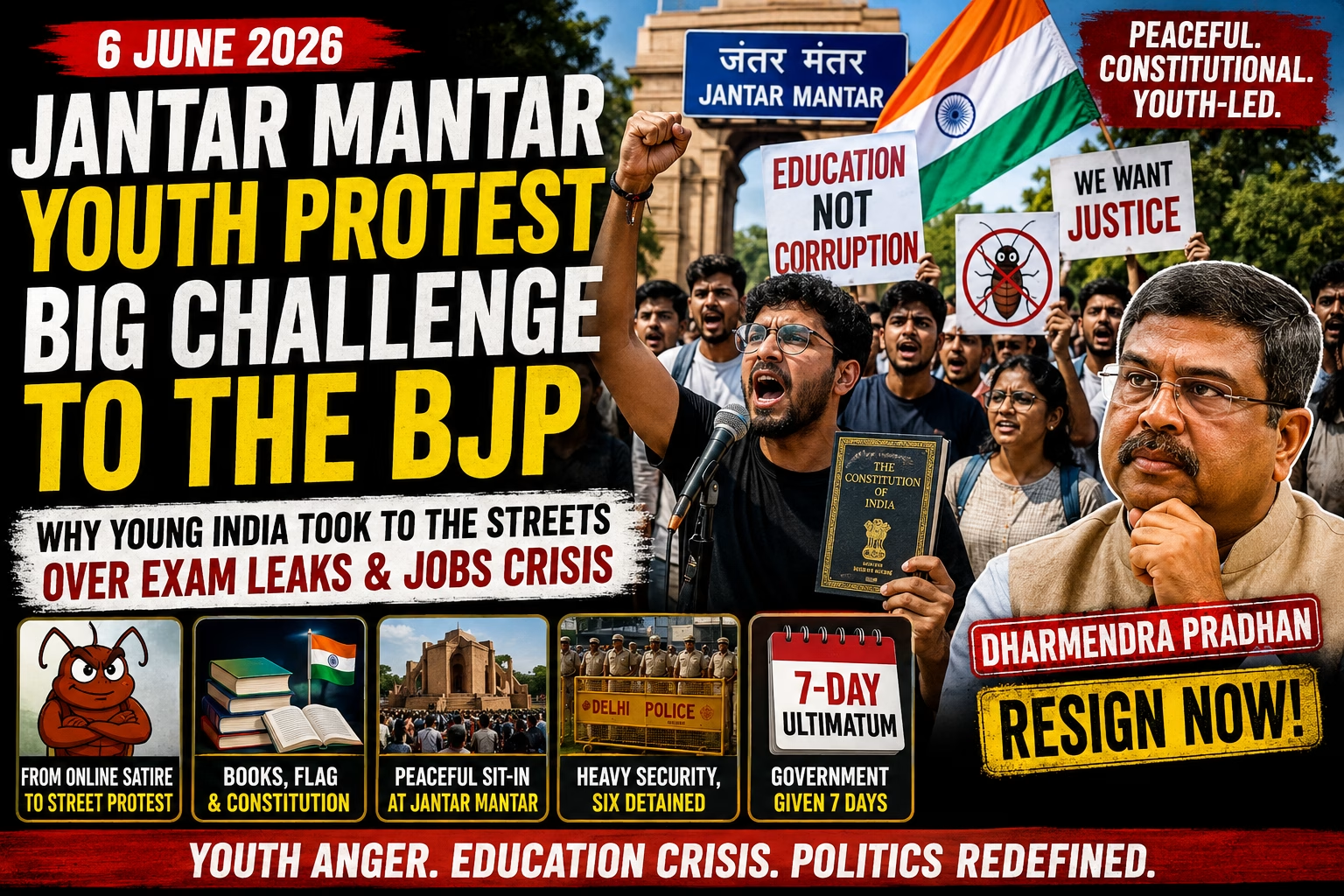
A youth-led online movement calling itself the Cockroach Janta Party turned into a street protest at Delhi’s Jantar Mantar on 6 June 2026, demanding the resignation of Union Education Minister Dharmendra Pradhan over examination-related controversies.
The protest was not organised by a traditional opposition party. It was led by a satirical but increasingly political youth movement that has grown rapidly on social media and positioned itself around anger over education, unemployment, paper leaks and the credibility of India’s exam system.
At the centre of the protest was Abhijeet Dipke, founder of the Cockroach Janta Party, who arrived in Delhi from overseas on the morning of 6 June. The movement had already built major online traction before its first real street mobilisation.
Background: From Online Satire to Street Protest
The Cockroach Janta Party emerged in May 2026 after controversy around public comments that many young people online interpreted as dismissive of unemployed youth, activists and critics.
The term “cockroach” was then turned into a political symbol by young Indians who used satire, memes and parody to express frustration with the government, especially around jobs and education.
What began as online dissent quickly became a platform for broader criticism of the BJP-led Union government.
The immediate issue for the 6 June protest was the demand for accountability from Education Minister Dharmendra Pradhan. Protesters linked their anger to the NEET paper leak issue, examination irregularities and concerns around the fairness of marking and revaluation processes.
Organisers framed the protest as peaceful, constitutional and youth-led.
Timeline: What Happened
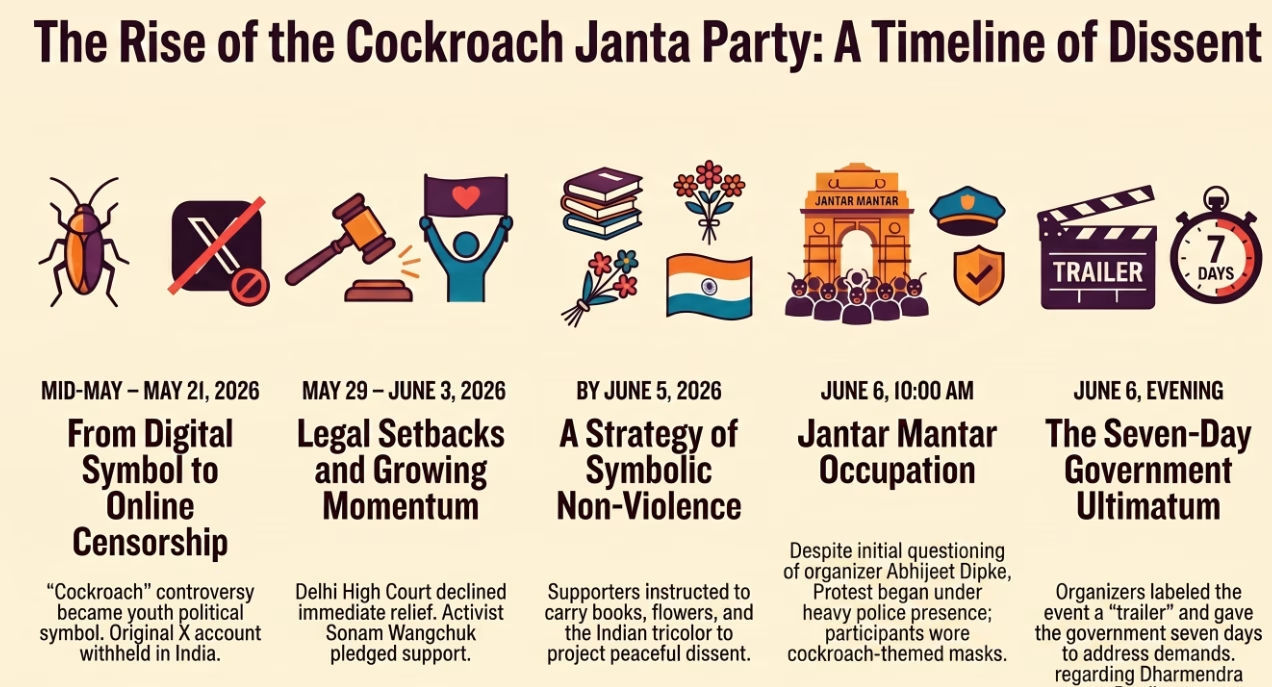
Mid-May 2026
The Cockroach Janta Party began gaining attention online after the “cockroach” controversy was turned into a youth political symbol.
21 May 2026
The movement’s original X account was reportedly withheld in India. The blocking of the account became part of the movement’s claim that online dissent was being restricted.
29 May 2026
The Delhi High Court declined immediate relief in the account-blocking matter and directed the issue to a review process under the IT Rules.
3 June 2026
Climate activist Sonam Wangchuk publicly backed the planned protest and said he would join if the demand for Pradhan’s resignation was not addressed.
5 June 2026
Organisers issued instructions asking supporters to remain peaceful, carry books and the Indian tricolour, offer flowers to police and avoid provocation.
Delhi Police initially said no formal request had been received for the protest.
Morning of 6 June 2026
Abhijeet Dipke arrived at Delhi’s Indira Gandhi International Airport. Police stopped and questioned him about the protest. Reports later said same-day permission was processed for a one-day protest at Jantar Mantar.
10:00 AM, 6 June 2026
The protest began at Jantar Mantar under heavy police presence.
Participants carried books, flowers, placards, national flags and cockroach-themed masks. The message was deliberately symbolic: education, constitutional rights and peaceful dissent.
Afternoon, 6 June 2026
Sonam Wangchuk reached the protest site carrying a rose. His presence gave the protest wider public visibility and reinforced the non-violent tone organisers were trying to project.
Around 2:25 PM
Delhi Police detained six people preventively to avoid a possible clash between rival groups near the protest site. Police later said the situation remained under control.
Evening, 6 June 2026
Organisers described the protest as “just a trailer” and gave the government seven days to act on their demand regarding Dharmendra Pradhan.
Delhi Police later clarified that no FIR had been registered against the Jantar Mantar protesters.
Police Response and Security
The police response was cautious and visible.
There was heavy deployment around Jantar Mantar and key areas of central Delhi. Barricades were placed and security was tightened, reflecting official concern that a fast-growing online movement could draw unpredictable street participation.
The most important police action of the day was preventive detention of six people to avoid confrontation. No major mainstream report reviewed for this article documented serious violence or major injuries at the main protest.
Delhi Police later denied rumours that an FIR had been filed against protesters.
BJP and Opposition Reactions
The BJP’s response focused largely on questioning the credibility and political intent of the movement.
Some BJP voices suggested the movement was influenced from outside India or linked to anti-India elements. The Cockroach Janta Party rejected those allegations and claimed most of its online support came from within India.
Opposition figures, meanwhile, quickly used the protest to highlight youth frustration. Leaders from parties including AAP, Shiv Sena (UBT), TMC, SP, CPI and CPI(ML) publicly backed or amplified the protest’s concerns.
For the opposition, the movement offered a ready-made issue: youth anger over education and jobs without appearing to be a standard party-led protest.
Turnout and Impact
The protest’s crowd size remains one of the most contested points.
Most mainstream and international reports described the core crowd as being in the hundreds. Organiser-linked posts and some sympathetic accounts claimed larger numbers.
The safest assessment is that the protest drew several hundred core participants, with a wider crowd of media, supporters and observers around the site.
That matters because the movement’s online reach is far larger than its first street turnout. This was not yet a mass uprising. But it was still politically important because it proved that a digital youth movement could move from memes to the street.
Key statements table
| Actor | Role | Statement or position | Timing | Source |
|---|---|---|---|---|
| Abhijeet Dipke | CJP founder | Asked supporters to come peacefully, carry books and the tricolor, and offer flowers to police. | Morning, 6 Jun | |
| Delhi Police | Law enforcement | Initially said no request had been received; later granted a one-day permit at Jantar Mantar. | 5–6 Jun | |
| Justice P. K. Kaurav | Delhi High Court | Declined immediate unblocking of CJP’s X account; review committee to decide by July 7. | 29 May | |
| Kiren Rijiju | Union minister | Accused the movement of links to Pakistan and an “anti-India gang,” per Reuters. | Before / during protest discourse | |
| Nitin Nabin | BJP national president | Warned that people “sitting abroad” were pushing youth toward “negative politics.” | 6 Jun | |
| Arvind Kejriwal | AAP chief | Said the government should “address their issues” rather than call youth anti-national. | 6 Jun | |
| Uddhav Thackeray | Shiv Sena (UBT) chief | Said the Centre should listen to the youth and should not underestimate them. | 6 Jun | |
| Delhi Police | Official X clarification | Said “no such FIR has been registered” against Jantar Mantar protesters. | 20:01, 6 Jun |
Why This Protest Matters
The Jantar Mantar protest was important for three reasons.
First, it connected education anger with wider dissatisfaction over jobs, governance and political accountability.
Second, it used satire in a serious way. The movement mocked power while still using constitutional language, the national flag, books and flowers to present itself as peaceful and patriotic.
Third, it created a new challenge for the BJP. This was not a normal opposition protest that could easily be dismissed as routine party politics. It came from young people using humour, online culture and public frustration to shape a political message.
The BJP may still treat it as a temporary online trend. That may prove correct if the movement cannot organise beyond Delhi. But if education controversies continue, the Cockroach Janta Party could become a vehicle for wider youth anger.
For now, 6 June 2026 should be seen as a symbolic breakthrough, not a numerical one.
The protest happened. It stayed largely peaceful. It attracted national and international attention. And it forced a conversation about whether young Indians still trust the systems that decide their educational and professional futures.
Social media and open-source evidence
| Approx. timestamp | Post / evidence | What it showed | Source |
|---|---|---|---|
| 5 Jun | Dipke posted that he was “leaving [his] fate in the hands of the Constitution” on his way to India. | Pre-protest framing of constitutional risk and personal jeopardy. | |
| 5 Jun | CJP / “Cockroach is Back” called supporters to Delhi for a “peaceful and loving dissent,” while warning them to follow the dos and don’ts. | Formal online mobilization call ahead of protest day. | |
| Early morning, 6 Jun | Dipke’s X/organizer messages told supporters to go directly to Jantar Mantar after permission was granted; Saurav Das echoed the same instruction. | Confirms the venue shift away from Parliament Street police station. | |
| Morning, 6 Jun | Search snippet from Dipke’s X post said: “Looking forward to meet you all at Jantar Mantar… Offer flowers to policemen…” | Open-source confirmation of the protest’s non-confrontational instructions. | |
| About 09:15, 6 Jun | PTI posted video of Dipke arriving and saying the education minister “must resign.” | Independent news-agency video corroboration of airport arrival and core demand. | |
| 10:30, 6 Jun | Organizer-linked posts claimed “thousands” were arriving at Jantar Mantar. | Important as an organizer claim, but not independently verified by all mainstream outlets. | |
| 13:59–14:00, 6 Jun | Instagram posts and liveblog captures showed Sonam Wangchuk entering with a rose. | Visual corroboration of Wangchuk’s presence and the protest’s symbolic style. | |
| 18:25–21:00, 6 Jun | Dipke posted that the protest was “just a trailer” and referred to threats faced by his parents. | Signaled escalation and personal-security claims after the protest. | |
| Evening, 6 Jun | Delhi Police’s official X account said reports of an FIR were false and urged people to rely on official information only. | The clearest official social-media statement issued after dispersal. |
References
Reuters, Cockroach youth group founder leads first street protest after arrival in India, 6 June 2026.
Associated Press, Mock political party for India’s young cockroaches holds first street protest, 6 June 2026.
NDTV, Cockroach Janta Party Holds Protest In Delhi, Sonam Wangchuk Joins, 6 June 2026.
India Today, Cockroach Janta Party Delhi Highlights, 6 June 2026.
Times of India, Delhi Police statements on protest permission, 6 June 2026.
News On AIR, Delhi Police denies FIR claims against Jantar Mantar protesters, 6 June 2026.