By Webfit News
The Middle East has entered one of its most dangerous chapters in decades.
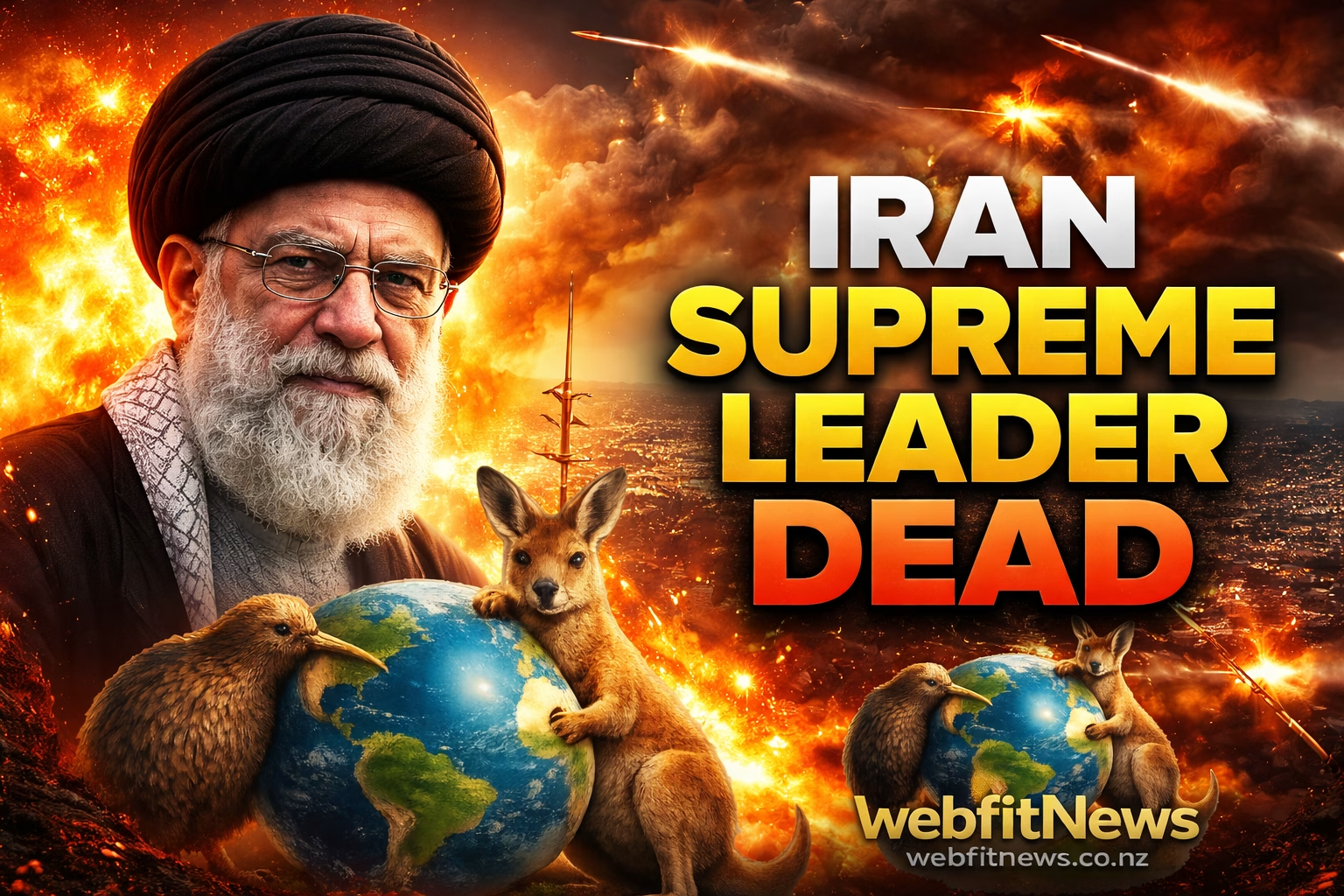
Iran has confirmed the death of its Supreme Leader, Ayatollah Ali Khamenei, following what the United States described as a “massive and ongoing” joint strike with Israel. The attack reportedly targeted locations near the Supreme Leader’s offices.
US President Donald Trump publicly declared Khamenei dead and urged Iranians to “take the opportunity” to challenge the regime. Earlier statements from Tehran had insisted the leader was “safe and sound,” but Iranian state media later confirmed his death.
This is not just another flare-up. This is a structural shock to the region’s power balance.
And the ripple effects are already visible.
What Happened: The Immediate Timeline
According to official statements and regional media:
- The US and Israel launched coordinated missile strikes inside Iran.
- The Iranian Red Crescent reported at least 201 people killed and 747 wounded.
- Iranian state media later confirmed the death of Supreme Leader Ayatollah Ali Khamenei.
- Iran responded with missile strikes targeting:
- US bases in Qatar and Bahrain
- Regional neighbours, including the UAE
- Airspaces across several Middle Eastern countries were temporarily closed.
- Debris from intercepted missiles and drones caused damage in Dubai, including:
- A five-star hotel on Palm Jumeirah
- A fire at the Burj Al Arab
In Israel, at least one civilian has died from retaliatory missile strikes. In Abu Dhabi, two fatalities have been reported.
This is no longer symbolic retaliation. This is live escalation.
Why This Is Bigger Than a Military Exchange
The Supreme Leader in Iran is not just a ceremonial head of state. The role carries ultimate authority over:
- The armed forces
- Foreign policy direction
- Strategic military decisions
- Key appointments across government and judiciary
His death creates:
- A leadership vacuum
- A potential internal power struggle
- Uncertainty over succession
- Heightened risk of unpredictable retaliation
Regime stability in Iran has long depended on centralized authority. Removing that anchor in a strike changes the psychological and political landscape across the region.
Retaliation and Regional Shockwaves
Iran’s immediate missile response signals it does not intend to de-escalate.
Key risks now include:
- Broader Gulf conflict
- Closure or disruption of shipping lanes
- Strikes on additional US or allied assets
- Proxy escalation through regional militias
Airspace closures show that governments are preparing for further rounds of retaliation.
Markets are watching closely.
New Zealand and Australia: Why This Matters to Us
You might ask: We are in Auckland. Why should this concern us?
Here is the uncomfortable reality.
1. Oil and Fuel Prices
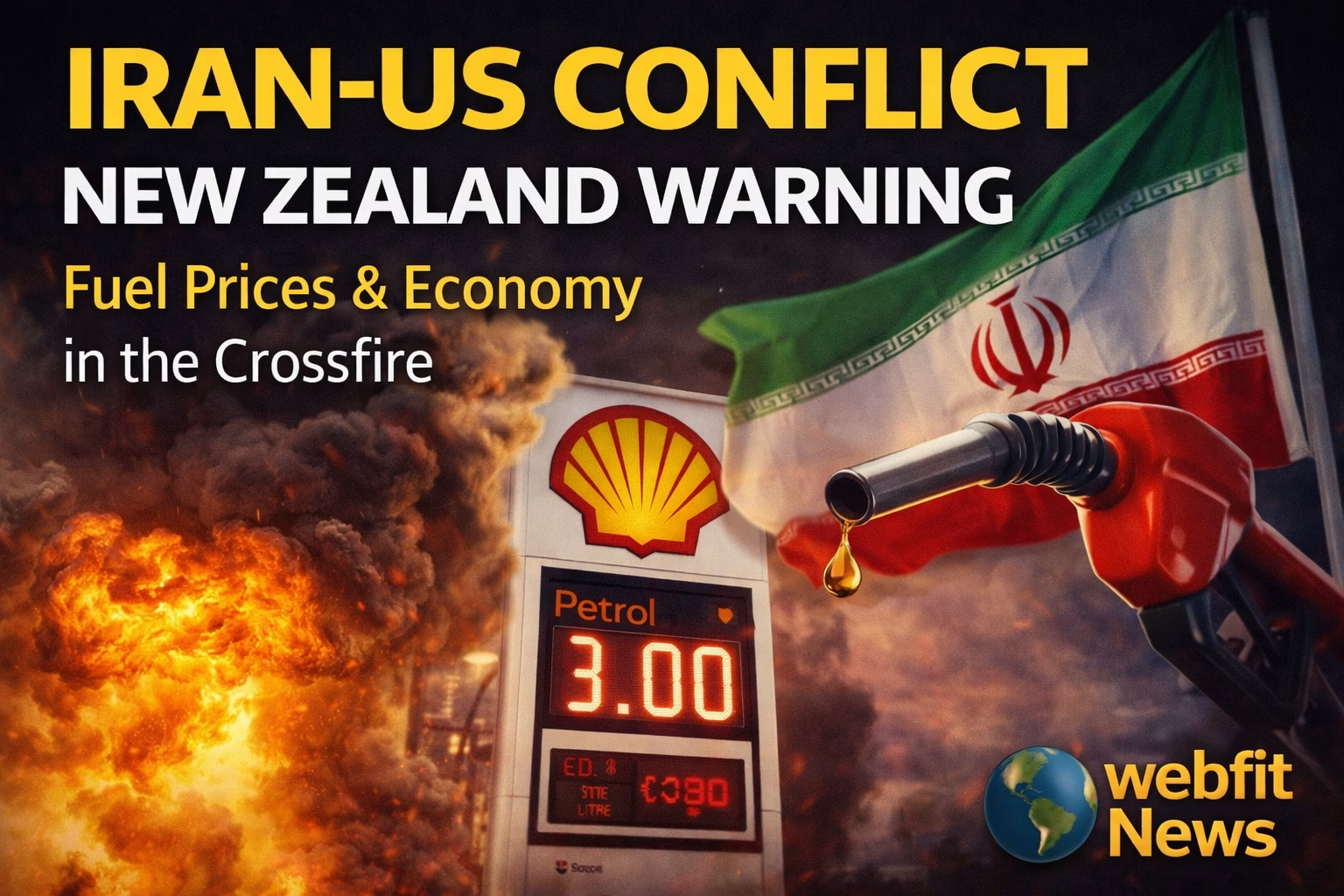
Around 20 percent of global oil supply passes through the Strait of Hormuz.
If Iran attempts to disrupt shipping in that region:
- Global oil prices could spike sharply.
- Fuel prices in New Zealand and Australia could rise within weeks.
- Transport costs would increase.
- Inflation pressure would return.
We have already lived through supply chain inflation shocks. Another oil spike could push CPI numbers upward again.
For New Zealand, that means:
- Pressure on the Reserve Bank.
- Risk to interest rate plans.
- Higher household costs.
This is not theoretical. It has happened before.
2. Air Travel and Trade
Airspace closures in the Middle East can disrupt:
- Long-haul flight routes.
- Cargo shipments.
- Freight costs.
New Zealand is an export-driven economy. Any rise in shipping or insurance costs feeds directly into:
- Food prices.
- Retail imports.
- Construction materials.
Australia faces similar exposure, especially in energy-linked sectors.
3. Financial Market Volatility
Global markets tend to react sharply to:
- Regime instability
- Oil supply risks
- Military escalation involving the US
If volatility spikes:
- KiwiSaver balances can fluctuate.
- Share markets may dip.
- Investor confidence may weaken.
New Zealand may feel this indirectly but visibly.
What Our Government Has Said
Prime Minister Christopher Luxon and Foreign Affairs Minister Winston Peters have condemned Iran’s retaliatory strikes.
Peters has advised New Zealanders in Iran or Israel to:
- Shelter in place
- Leave if it is safe to do so
According to official registration data:
- 23 New Zealanders are registered with MFAT in Iran.
- 62 are registered in Israel.
That is a relatively small number, but it reflects the real human dimension behind geopolitical headlines.
The Bigger Strategic Question
This is where things become complex.
If Iran’s top leadership is removed in a strike supported by the United States, several outcomes are possible:
- Rapid consolidation of power by hardliners
- Internal fragmentation and instability
- Broader regional retaliation
- Unexpected de-escalation
Each path carries global implications.
The most dangerous phase is uncertainty.
And we are currently in it.
Webfit News Perspective
At Webfit News, we believe the focus must move beyond emotional reaction.
Blame cycles will dominate headlines.
But the real questions are:
- How stable is the region now?
- How will energy markets react?
- Can global powers contain escalation?
- Are small economies like New Zealand prepared for secondary shocks?
New Zealand cannot influence Middle Eastern military outcomes.
But it can prepare for economic aftershocks.
That means watching:
- Fuel pricing trends
- Reserve Bank signals
- Supply chain indicators
- Trade insurance costs
If oil crosses major price thresholds, inflation narratives here could shift very quickly.
What to Watch Next
Over the next 7 to 14 days, key indicators will be:
- Oil price movement
- Strait of Hormuz shipping traffic
- Statements from Iran’s military leadership
- US military posture changes
- UN Security Council responses
- Regional proxy group activity
If escalation spreads beyond direct state actors, volatility increases sharply.