By Webfit News Analysis Desk
January 2026
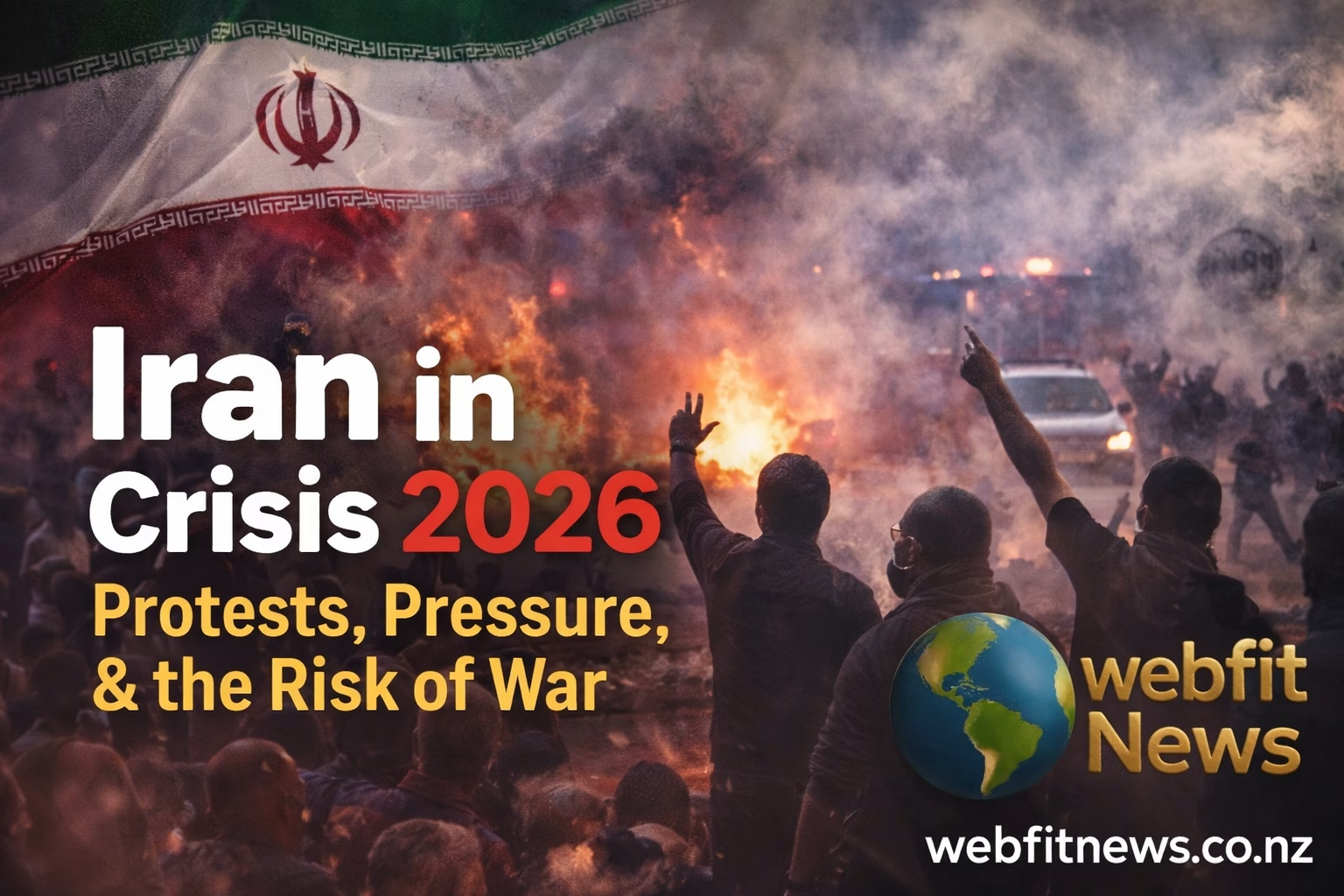
The geopolitical landscape of early 2026 is entering a dangerous new phase, with Iran now facing its most severe internal and external pressure since the founding of the Islamic Republic. Unlike previous periods of unrest, the current crisis is defined by a rare convergence of economic collapse, nationwide civil resistance, and escalating foreign military calculations. Together, these forces are pushing Iran toward what many analysts describe as a point of irreversible instability.
At the center of global attention is a question with enormous consequences: will the United States move from rhetorical support to direct military intervention, or will Iran collapse under the weight of its own internal failures?
A Regime Under Internal Siege
Iran’s domestic situation has deteriorated rapidly since late December 2025. The immediate trigger was a catastrophic collapse of the Iranian Rial, which lost nearly all practical value in a matter of weeks. By early January 2026, informal exchange rates crossed 1.4 million Rial to the US dollar, wiping out savings, salaries, and basic purchasing power for millions of citizens.
This economic shock shattered one of the regime’s last remaining pillars of stability: the merchant class. When Tehran’s Grand Bazaar closed in protest, it marked a historic turning point. Bazaar shutdowns have traditionally signaled regime-threatening unrest in Iran’s modern history, including the 1979 revolution. This time, the strikes spread quickly to logistics hubs, transport workers, and food distribution centers.
What makes this uprising different from past movements is its scope. Demonstrations have been recorded across all 31 provinces, cutting across ethnic, religious, and class lines. Protests in Kurdish, Baluch, and Arab regions have merged with unrest in Tehran, Mashhad, and Isfahan, creating a nationwide challenge to central authority.
The state’s response has been brutal. Independent estimates suggest that thousands have been killed or detained in just weeks. Internet blackouts, mass arrests, and live fire against protesters have become routine. Yet the demonstrations have not collapsed, suggesting that fear is no longer sufficient to restore control.
Minnesota Under Federal Crackdown as ICE Operations Trigger Statewide Alarm – WebfitNews
Washington’s Calculations After Venezuela
The crisis in Iran is unfolding in the shadow of a recent US operation in Venezuela, where American forces executed a rapid leadership capture that ended Nicolás Maduro’s rule within hours. That operation has reshaped thinking inside Washington, especially among those who view military intervention as a viable tool for regime change.
However, Iran presents a vastly different challenge. Tehran is not a coastal capital with weakened defenses. It sits deep within mountainous terrain, protected by layered air defense systems and an experienced security apparatus that has spent decades preparing for precisely this scenario.
American planners are acutely aware that a Venezuela-style operation cannot be easily replicated. Any strike on Iran would likely require a sustained campaign rather than a short, decisive action. That reality has divided US policymakers between those advocating restraint and those arguing that the current unrest presents a closing window of opportunity.
The Risk of Regional Escalation
The greatest constraint on any military option is the risk of regional war. Iran’s strategy of deterrence relies less on conventional warfare and more on its network of regional allies and missile capabilities. Hezbollah in Lebanon, armed groups in Iraq, and the Houthis in Yemen all remain capable of opening additional fronts if Iran itself is attacked.
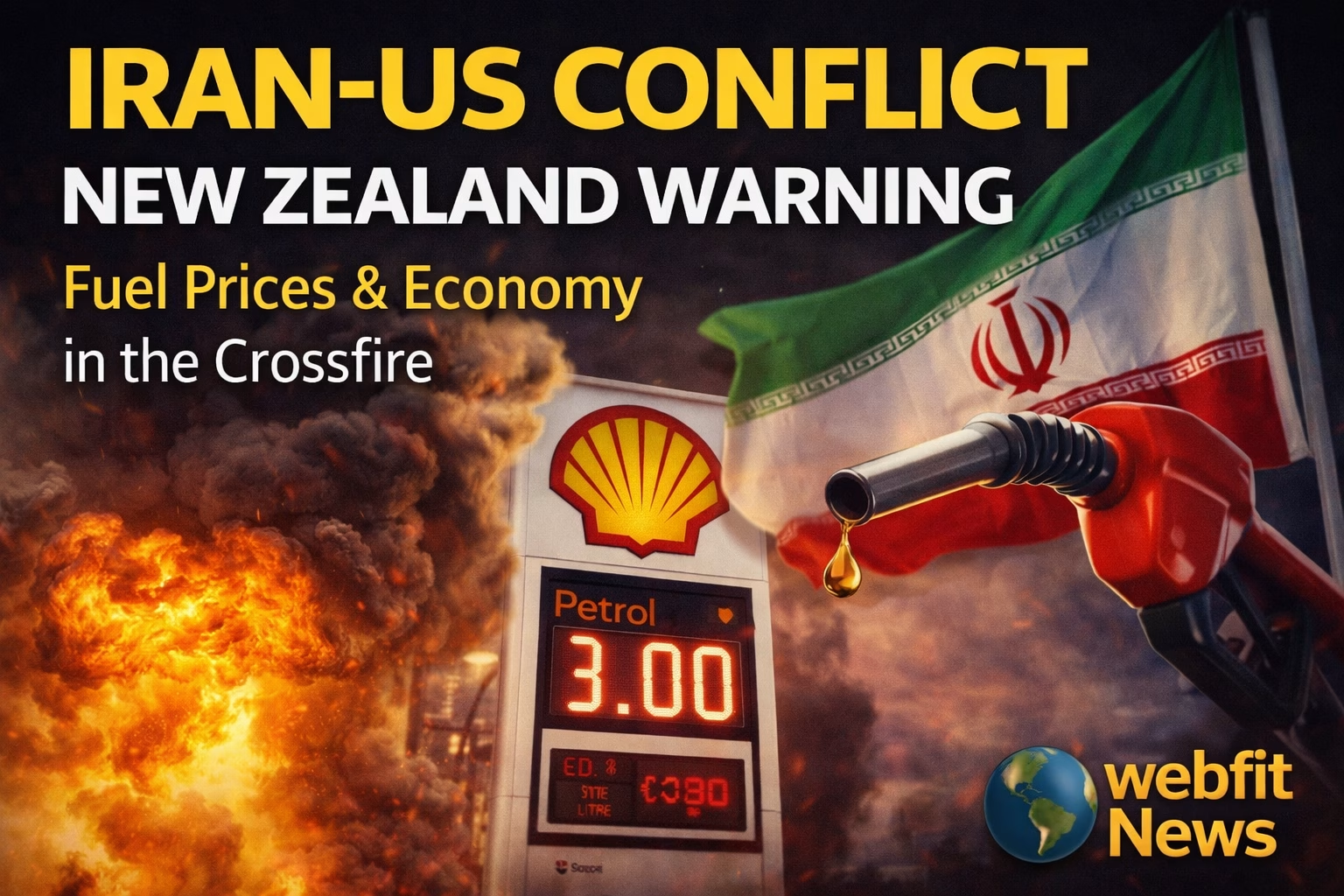
Even limited strikes could trigger missile launches against US bases or allied infrastructure across the Middle East. The potential disruption to global energy markets, shipping lanes, and civilian populations makes escalation a serious concern not only for Washington, but also for Europe, India, and East Asia.
This risk explains why many US allies have urged caution. While condemning the Iranian government’s use of force against civilians, European leaders continue to prioritize sanctions and diplomatic isolation over direct military action.
Signs of Fracture Inside the Security Forces
One of the most significant developments in January 2026 is emerging evidence of strain within Iran’s own security apparatus. Reports of refusals to fire on protesters, internal arrests of dissenting personnel, and the redeployment of regular army units to backfill overstretched paramilitary forces all point to declining morale.
Historically, Iranian regimes have survived protests as long as security forces remained unified. If that cohesion breaks, the balance shifts rapidly. Analysts are watching closely for signs that defections could spread, particularly within non-ideological military units.
At the same time, reports of capital flight by elite figures suggest that parts of the ruling class are preparing for an uncertain future. Financial exits often precede political collapse, especially in authoritarian systems facing mass unrest.
What Comes Next
As of mid-January 2026, the most likely near-term outcome is continued escalation without immediate military intervention. The United States appears focused on economic pressure, information warfare, and strategic ambiguity, keeping Iran guessing while avoiding a trigger that could unify domestic opinion against foreign interference.
However, this balance is fragile. A dramatic increase in civilian deaths, mass executions, or a sudden breakdown of internal control could rapidly shift calculations in Washington and beyond.
Iran now stands at a crossroads. It may yet suppress the uprising through force and fear, but doing so would leave a hollowed-out state facing long-term isolation and internal decay. Alternatively, the regime could fracture under the weight of economic collapse and popular resistance, reshaping the Middle East for years to come.
Either way, 2026 is already shaping up as a defining year, not only for Iran, but for the global order that surrounds it.