
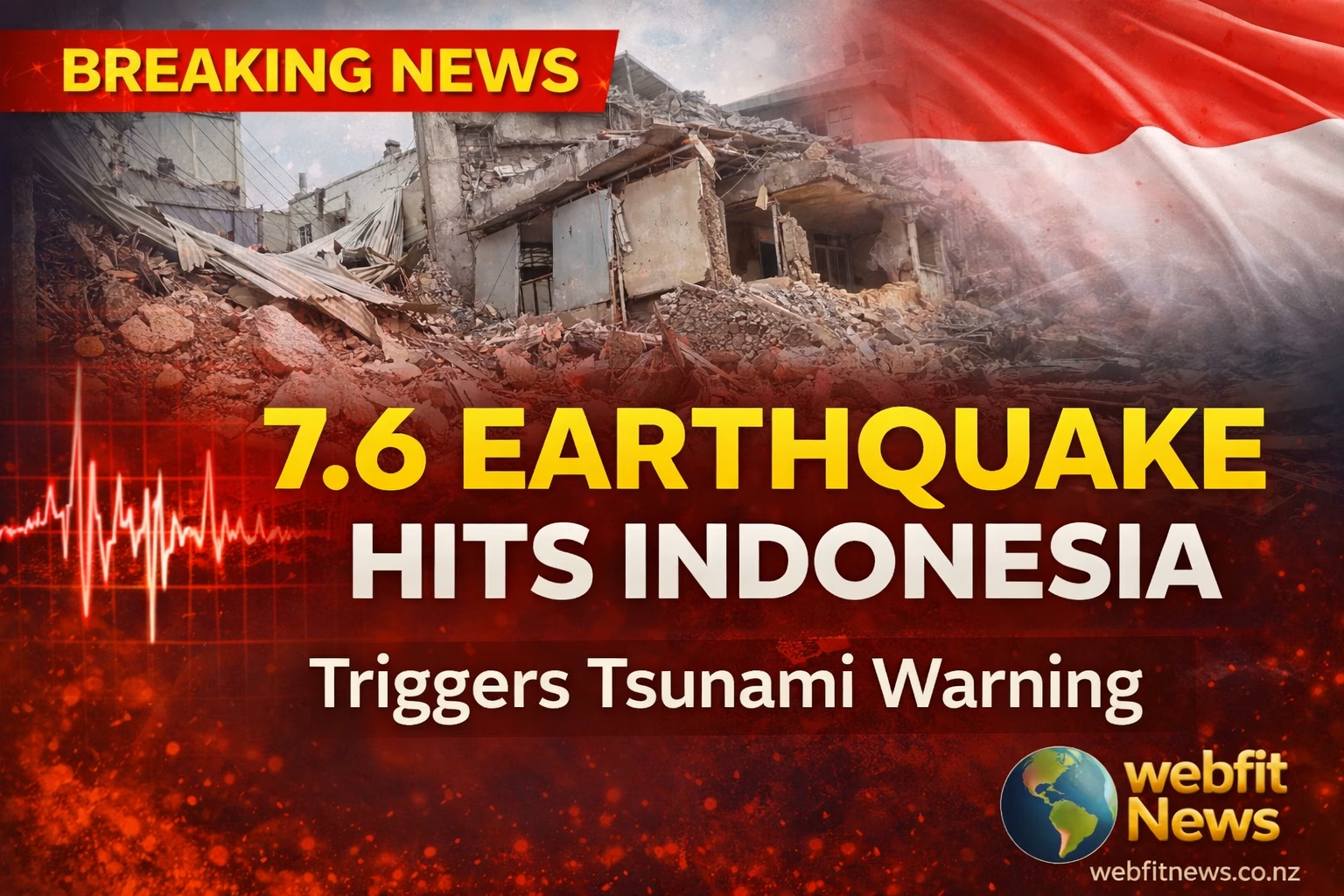
A powerful earthquake struck Indonesia early Thursday morning, shaking parts of North Sulawesi and sending panic through coastal communities.
The 7.6-magnitude quake, recorded southeast of Bitung City, caused structural damage, forced evacuations, and briefly raised fears of a tsunami.
While the situation has now stabilised, the incident highlights the ongoing risks faced by countries located along the Pacific Ring of Fire.
What Happened
According to Indonesia’s National Search and Rescue Agency (Basarnas), the earthquake struck offshore but was strong enough to be widely felt across nearby cities, including Manado.
The impact was immediate.
- Buildings shook violently
- Residents rushed out of homes and offices
- Coastal communities moved to higher ground
The quake’s strength and location triggered a tsunami warning shortly after it struck, adding urgency to evacuation efforts.
Casualty and Damage Report
Authorities have confirmed one fatality so far.
A 70-year-old woman in Manado lost her life after being struck by falling debris from a building.
She was later evacuated to Bhayangkara Hospital.
In addition to the fatality:
- Several buildings in Manado reported structural damage
- Parts of the Indonesian National Sports Committee building were affected
- Authorities are investigating reports that two people jumped from buildings during the panic
At this stage, officials are still verifying whether there are additional casualties or injuries.
Tsunami Warning and Coastal Evacuations
Following the earthquake, Indonesia’s Meteorology, Climatology and Geophysics Agency (BMKG) issued a tsunami early warning.
This led to immediate evacuations in coastal regions such as:
- Bitung
- Southeast Minahasa
Small tsunami waves were later recorded, confirming the threat was real but limited.
Wave heights included:
- 0.30 metres in West Halmahera
- 0.20 metres in Bitung
- 0.75 metres in North Minahasa
While these waves were not large enough to cause major destruction, they justified the precautionary measures taken.
Warning Lifted After Monitoring
Authorities closely monitored sea level activity after the earthquake.
The BMKG analysed data in three key intervals:
- 59 minutes after the quake
- 1 hour 38 minutes later
- 3 hours 45 minutes later
Based on these observations, officials confirmed that conditions had stabilised.
The tsunami warning was officially lifted at 09:56 a.m. local time.
This allowed emergency teams to safely enter affected areas and begin detailed assessments.
Emergency Response and Ongoing Monitoring
Search and rescue teams, along with regional disaster management agencies, are continuing their work on the ground.
Current efforts include:
- Inspecting damaged structures
- Collecting data on impact areas
- Supporting affected residents
- Monitoring for aftershocks
Authorities have also urged residents to stay alert and follow official updates.
Although normal activity is slowly returning in cities like Manado, emergency teams remain on standby.
Why Indonesia Faces Frequent Earthquakes
Indonesia is located on the Pacific Ring of Fire, one of the most seismically active regions in the world.
This zone is known for:
- Frequent earthquakes
- Active volcanoes
- Tectonic plate movements
The country sits at the meeting point of several major tectonic plates, making it highly vulnerable to seismic activity.
Events like this are not uncommon, but each one carries the risk of widespread damage and loss of life.
Webfit News Perspective
This incident shows two important things.
First, early warning systems and evacuation protocols are working. The quick response likely prevented a larger disaster.
Second, panic behaviour remains a serious issue. Reports of people jumping from buildings suggest that public awareness and preparedness still need improvement.
Natural disasters cannot be stopped. But how people respond can decide the outcome.
For countries like Indonesia, the focus now must be on stronger infrastructure, better public education, and faster emergency coordination.
Conclusion
The 7.6-magnitude earthquake in North Sulawesi has left one person dead, caused structural damage, and temporarily disrupted daily life.
While the tsunami threat has passed and conditions are stabilising, authorities remain cautious as assessments continue.
The event serves as a reminder of the constant seismic risks in the region and the importance of preparedness at every level.