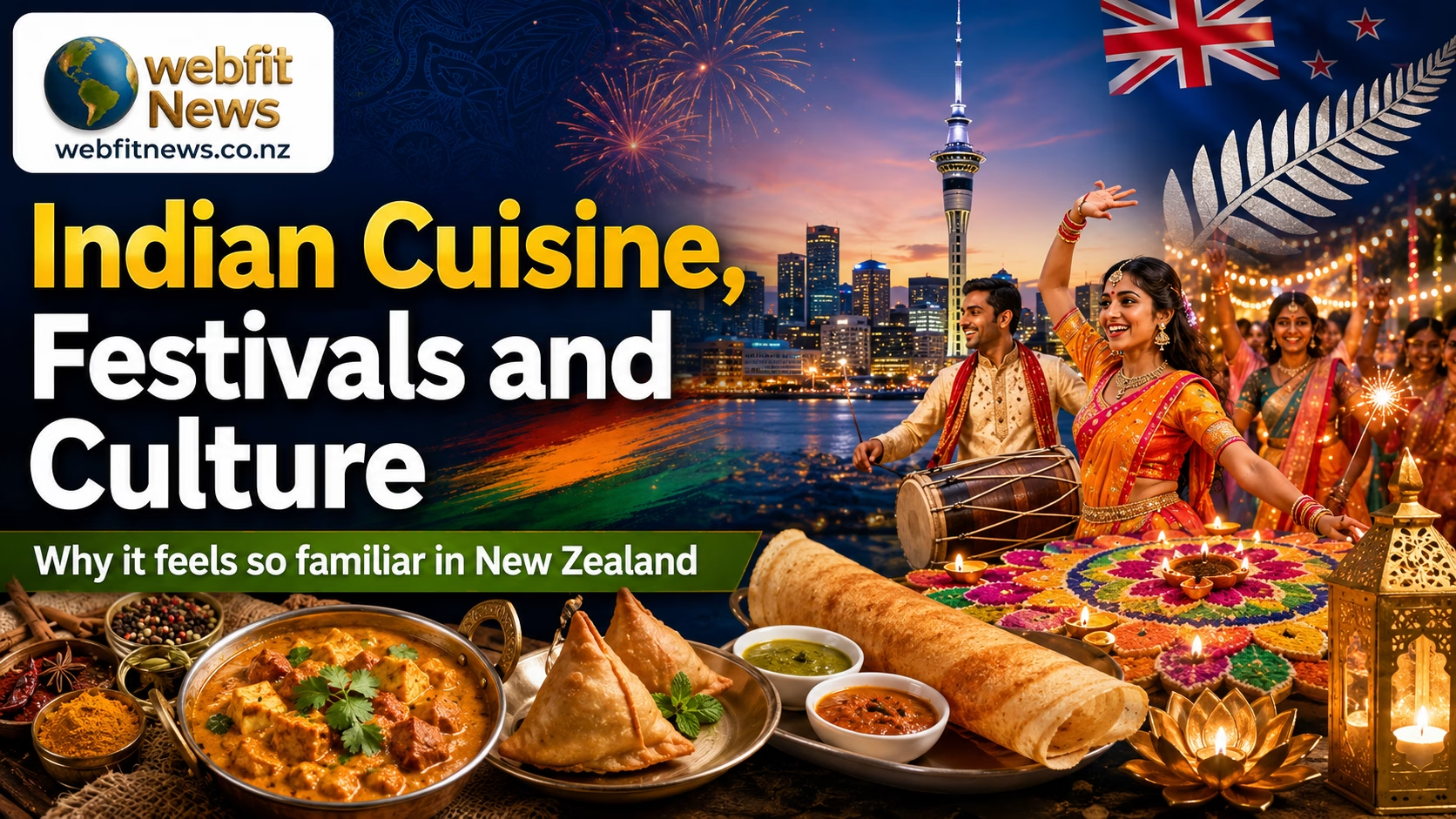
By Geet | Webfit News
For many New Zealanders, the first introduction to India may not come through a history book or a business meeting. It may come through food.
A butter chicken takeaway after work, a dosa at a weekend market, a samosa at a community event, a cup of masala chai at a friend’s home, or the bright lights of Diwali in Auckland.
Indian culture has become part of everyday life in New Zealand, especially in cities such as Auckland, Wellington, Hamilton and Christchurch. But behind the food, music, colours and festivals is a much deeper story of a civilisation shaped by thousands of years of history, migration, language, faith, trade and community life.
India’s cuisine, festivals and cultural traditions are not just colourful displays. They are a living expression of one of the world’s most diverse societies.
More Than One India
To understand Indian culture, it is important to first understand that India is not one single cultural block.
India is home to many languages, religions, regions, communities and traditions. What people eat, wear, celebrate and speak can change dramatically from one state to another.
A Punjabi wedding in North India may look completely different from a Tamil ceremony in South India. A meal in Gujarat is different from a meal in Bengal. A festival in Kerala may have a very different rhythm from a celebration in Rajasthan, Maharashtra or Assam.
For New Zealanders used to a multicultural society, this diversity may feel familiar. But India’s scale makes it extraordinary.
India’s cultural strength lies in this variety. It is not one story. It is thousands of stories living side by side.
Indian Cuisine: A Journey Through Regions
Indian food is one of the most visible parts of Indian culture in New Zealand.
Many Kiwis are familiar with popular dishes such as butter chicken, biryani, naan, tikka masala, samosas and curries. These dishes have helped Indian cuisine become one of the most loved food traditions in New Zealand.
But Indian food is far broader than what appears on most takeaway menus.
North India is known for dishes such as tandoori breads, rich curries, lentils, kebabs and dairy-based sweets.
South India offers dosa, idli, sambar, coconut-based curries and rice dishes.
Western India brings Gujarati vegetarian cuisine, Goan seafood, Maharashtrian street food and Rajasthani desert-inspired meals.
Eastern India is known for fish curries, rice, sweets and mustard-based flavours.
The Northeast of India has its own food traditions, shaped by hills, rivers, tribal communities and local produce.
This regional diversity makes Indian cuisine one of the most complex and varied in the world.
Why Spices Matter
Indian food is often described as spicy, but that is only part of the picture.
Spices in Indian cooking are not used simply to create heat. They are used to build flavour, aroma, balance and sometimes even health value.
Common spices such as turmeric, cumin, coriander, cardamom, mustard seeds, cloves, cinnamon and black pepper each play a role in creating depth.
For many Indian families, cooking is not just about feeding the body. It is about memory, hospitality and identity.
A recipe can carry the story of a grandmother, a village, a festival, a migration journey or a family celebration.
That is why food is often at the centre of Indian community life, including here in New Zealand.
Diwali: A Festival New Zealand Has Embraced
Of all Indian festivals, Diwali is probably the most recognised in New Zealand.
Known as the Festival of Lights, Diwali symbolises the triumph of light over darkness and good over evil. It is celebrated by millions of Hindus, Sikhs, Jains and others across the world.
In Auckland, Diwali has grown into one of the city’s major multicultural celebrations. It brings together music, dance, food, lights, traditional clothing, performances and family-friendly activities.
For the Indian community, Diwali is a time of prayer, family gatherings, sweets, new beginnings and celebration.
For wider New Zealand, it has become an opportunity to experience Indian culture in a welcoming public space.
This is why festivals matter. They allow communities to share their identity while inviting others to participate, learn and enjoy.
Festivals Across India
Diwali may be the best-known Indian festival in New Zealand, but it is only one part of the calendar.
India celebrates a wide range of festivals across regions and faiths.
Holi, the festival of colours, marks joy, renewal and the arrival of spring.
Eid is celebrated by Muslim communities with prayer, family gatherings and food.
Christmas is celebrated by Christian communities across India, especially in states such as Goa, Kerala and parts of the Northeast.
Navratri is marked by dance, devotion and celebration, especially among Gujarati communities.
Onam is a major festival in Kerala, known for floral decorations, traditional meals and cultural performances.
Pongal in Tamil Nadu celebrates the harvest season.
Baisakhi is important in Punjab and carries agricultural as well as religious significance.
Durga Puja is one of the biggest cultural events in Bengal, combining art, devotion, music and community gatherings.
These festivals show India’s diversity, but they also reveal something universal: the human need to gather, celebrate, remember and belong.
Culture That Travels With People
When Indian migrants move overseas, they carry more than passports and suitcases.
They carry language, food, prayer, music, festivals, family values and social customs.
That is why Indian culture has become visible across New Zealand through temples, gurdwaras, mosques, churches, community halls, dance schools, music groups, food businesses, clothing stores and cultural associations.
Children born or raised in New Zealand often grow up navigating both worlds. They may speak English at school and another language at home. They may play rugby or cricket, eat fish and chips one day and dal rice the next, celebrate Christmas with friends and Diwali with family.
This blending of cultures is not a weakness. It is one of the strengths of modern New Zealand.
Indian Culture and Kiwi Life
Indian culture has become part of New Zealand’s wider multicultural identity.
Indian restaurants are now common across suburbs. Bollywood dance performances appear at public events. Yoga, Ayurveda, Indian classical music, bhangra, garba, henna art and traditional clothing are increasingly recognised by wider audiences.
At the same time, Indian New Zealanders are contributing to business, healthcare, education, technology, sport, hospitality, politics and community service.
Culture is not just about festivals and food. It is also about participation.
The Indian community is not standing outside New Zealand society. It is helping shape it.
Why This Matters Now
As India and New Zealand build stronger ties through trade, education, tourism and diplomacy, cultural understanding becomes even more important.
Business relationships are built on trust. Tourism grows through curiosity. International education works better when people understand each other. Communities become stronger when culture is respected rather than stereotyped.
For New Zealanders, learning more about Indian culture is not just about enjoying a good meal or attending a festival. It is about understanding one of the world’s most important countries and one of New Zealand’s fastest-growing communities.
Moving Beyond Stereotypes
India is sometimes reduced to simple images: curry, cricket, Bollywood, yoga and crowded cities.
All of those may be part of India, but none of them fully define it.
Indian culture is ancient and modern, traditional and innovative, spiritual and commercial, local and global.
It exists in village kitchens and global restaurants, classical dance halls and TikTok videos, temple rituals and public festivals, family recipes and international food businesses.
For New Zealanders, the best way to understand India is not to look for one definition. It is to stay open to its diversity.
Looking Ahead
Indian cuisine, festivals and culture have already found a strong place in New Zealand life.
From Diwali celebrations in Auckland to Indian restaurants in local suburbs, the connection is visible, growing and deeply human.
As the relationship between India and New Zealand continues to strengthen, culture will remain one of the most powerful bridges between the two countries.
It begins with something as simple as sharing food, attending a festival or asking a question.
And often, that is where real understanding begins.
References
Ministry of Culture, Government of India
Incredible India, Ministry of Tourism, Government of India
Auckland Diwali Festival information
High Commission of India, Wellington
Consulate General of India, Auckland
Author: Geet