By Webfit News Desk
Published: December 23, 2025
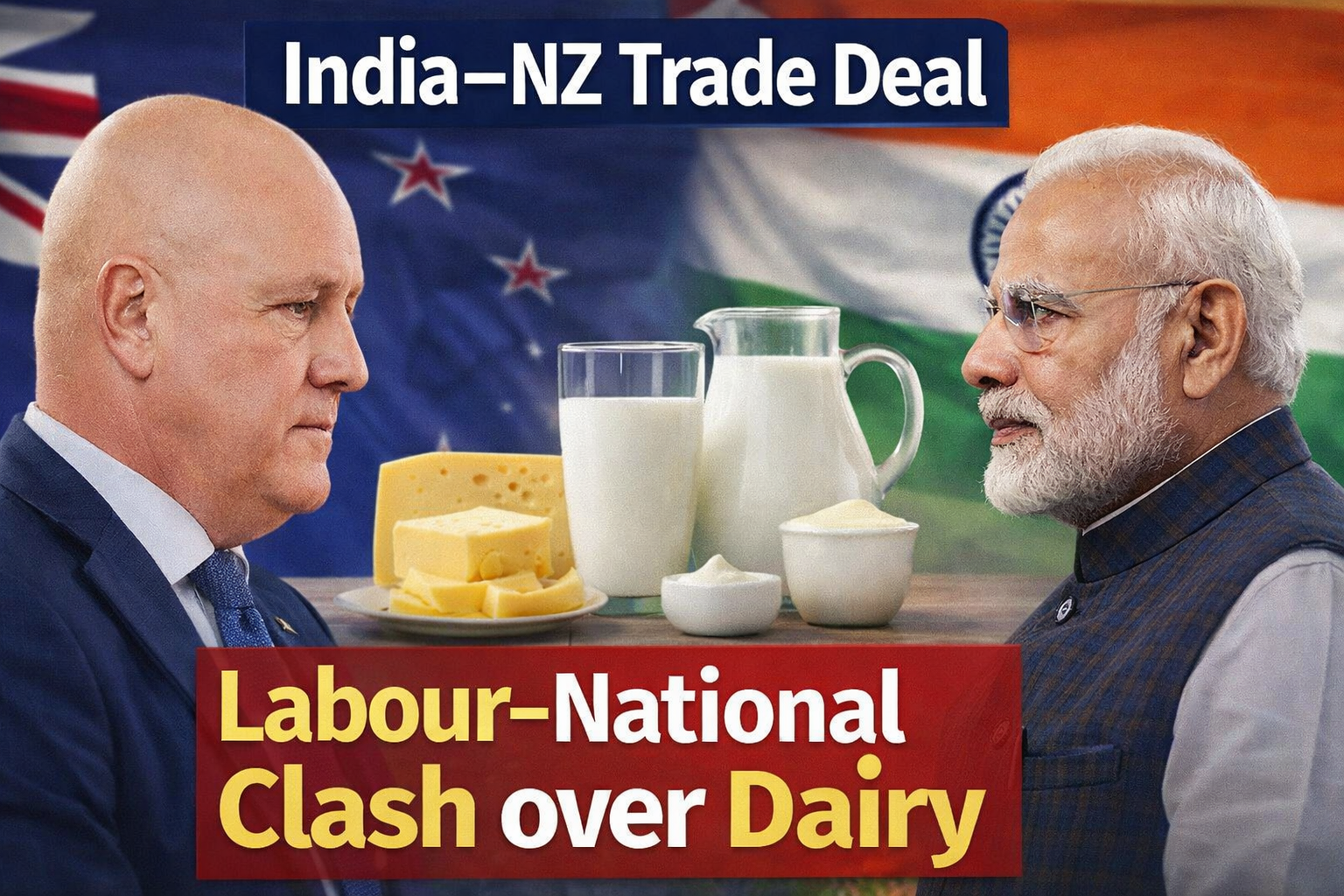
New Zealand has finished negotiations on a Free Trade Agreement with India. The Government calls it a major step forward. However, Labour says the deal does not deliver enough for dairy.
The agreement followed nine months of talks. It now moves into legal checks and a ratification process. If everything clears, both sides expect formal signing in 2026.
What the Government Says the Deal Will Do
According to the Government, the FTA will lower or remove tariffs on many goods over time. As a result, New Zealand exporters may find it easier to sell into India. India has around 1.4 billion people, so the market size matters.
Trade and Investment Minister Todd McClay says the deal supports growth in key sectors. For example, the Government points to opportunities in meat, horticulture, forestry, wool, manufacturing, and services.
In addition, the agreement includes rules for services, investment, and digital trade. It also mentions improved mobility pathways for skilled workers and students.
The Government estimates the deal could lift New Zealand exports by up to NZ$2 billion a year in the long term. Still, that figure depends on how the deal works in practice.
Labour’s View: Dairy Gains Look Thin
Labour agrees the deal is a start. Even so, it says dairy remains the big missing piece.
Labour trade spokesperson Damien O’Connor says the lack of dairy access is disappointing. He argues that dairy is New Zealand’s biggest export sector, so it should sit near the centre of any deal with India.
O’Connor also criticises the speed of the talks. In his view, trade negotiations take time and need careful work. He points to the United Kingdom’s long negotiation timeline with India as an example.
Labour says it will confirm its full position as a caucus in the new year.
Why Dairy Is Always the Hard Part in India
India produces huge amounts of milk and supports many small dairy farmers. Because of this, dairy is politically sensitive there.
For that reason, India often protects its dairy sector. That reality makes dairy access difficult for New Zealand in any negotiation.
So, the current debate is not just about one product. Instead, it is about how New Zealand balances long-term goals with what it can secure right now.
What This Means for New Zealand
For exporters, the deal may open doors in several industries. At the same time, many people in the dairy sector will watch for what comes next.
For the Government, the agreement offers a chance to show it can deliver results on trade. Meanwhile, Labour is positioning itself as focused on outcomes over political wins.
For voters, the argument is simple. Is this deal a practical step forward, or does it give away too much while leaving dairy behind?
The Next Political Test
Parliament will still need to work through enabling steps linked to the agreement. In the background, New Zealand First has signalled opposition to related legislation. Therefore, the political pathway may not be smooth.
Even if the deal proceeds, public debate is likely to continue. That is because trade deals affect jobs, costs, and long-term economic direction.
Bottom Line
This agreement could strengthen trade ties with India and create new options for exporters. However, the dairy question persists.
In the end, New Zealanders will judge the deal on results. If businesses see real gains, support will grow. If benefits stay unclear, critics will keep pushing back.