NEW DELHI, 27 July 2026
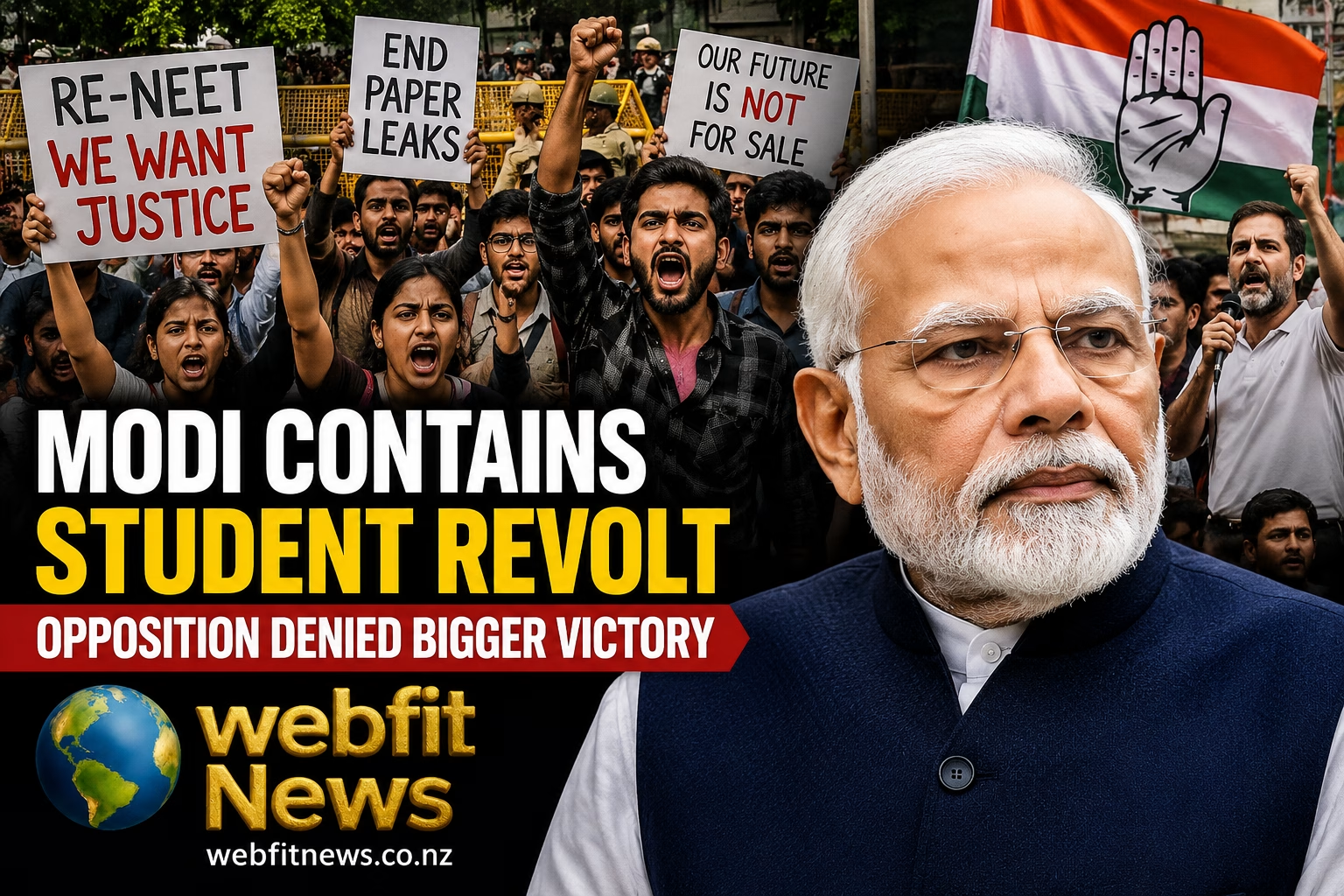
For several tense weeks, India’s youth-led examination protests appeared capable of becoming something much larger than a dispute over leaked test papers.
The movement had attracted thousands of young people, dominated social media conversations and provided opposition parties with a rare opportunity to challenge Prime Minister Narendra Modi on unemployment, education and government accountability.
Comparisons were soon being drawn with youth uprisings elsewhere in South Asia, including Nepal’s recent Gen Z protests, which forced major political changes after demonstrations escalated into a national crisis.
But India did not follow the same path.
Instead of allowing the controversy to grow into an open-ended confrontation, Modi’s government made a calculated concession, removed the minister who had become the focus of public anger and quickly shifted the national discussion towards examination reform.
The protesters secured an important victory. However, the opposition’s hope that the agitation might develop into a broader movement against Modi appears, at least for now, to have been contained.
A Protest With Serious Political Potential
The demonstrations began following allegations of serious irregularities and leaks affecting India’s high-stakes examination system.
The Cockroach Janta Party (CJP) emerged as an unconventional youth movement after unemployed young people adopted an insulting comparison with cockroaches as a symbol of resilience.
What began online quickly moved onto the streets.
The movement demanded examination reform, compensation for affected families and the resignation of Education Minister Dharmendra Pradhan. Demonstrations expanded after confrontations between protesters and police produced images that spread rapidly across social media.
For India’s opposition, the timing offered a significant opening.
Youth unemployment, competition for government jobs and frustration with the education system are politically sensitive issues. With more than half of India’s population under the age of 30, a sustained youth revolt had the potential to become far more damaging than a conventional political dispute.
Opposition leaders supported the demonstrations and intensified demands for accountability.
The political calculation was obvious. Opposition parties hoped that a movement born outside traditional party politics could weaken Modi’s connection with younger voters and create the kind of anti-establishment momentum seen in neighbouring countries.
Modi Chose Containment Instead of Confrontation
The decisive moment came when Dharmendra Pradhan resigned after weeks of protests.
The resignation represented a genuine achievement for the students. They demanded accountability from a senior minister and eventually received it.
However, the government’s handling of the resignation also demonstrated political discipline.
By accepting the departure of one minister, Modi removed the most visible target of the protests. Soon after, the Cockroach Janta Party suspended its demonstrations after its primary demand had been fulfilled.
That prevented the protests from continuing without a clear objective and reduced the opportunity for opposition parties to redirect the movement into a larger campaign against the Prime Minister.
In political terms, Modi sacrificed one minister to protect his government.
The resignation allowed the government to acknowledge public anger without presenting the Prime Minister himself as defeated. It also denied the opposition the prolonged confrontation it needed to transform student frustration into a nationwide anti-government movement.
Reform Announcement Changes the Narrative
Modi followed the resignation by announcing a task force led by Infosys co-founder Nandan Nilekani to recommend technological and structural reforms to India’s examination system.
The proposed reforms are expected to improve transparency, strengthen security and restore public confidence in national examinations. The government has also indicated that stronger legal action will be taken against those responsible for examination paper leaks.
This became the second stage of the government’s response.
The first stage removed the political liability. The second allowed Modi to reposition himself as the leader responsible for fixing the system.
For his supporters, this reinforced the view that Modi knows how to respond under pressure.
Rather than defending a minister indefinitely, he accepted the public demand, appointed one of India’s most respected technology leaders to head reforms and removed the opposition’s central political talking point.
That does not erase the original failures. Examination leaks, student anxiety and concerns over employment remain serious national issues.
Politically, however, the government succeeded in preventing those concerns from developing into a wider movement against the Prime Minister.
Why India Was Not Another Nepal
Comparisons with Nepal attracted attention throughout the protests, but the two situations were fundamentally different.
Nepal’s demonstrations evolved into a much broader movement involving corruption, political instability and widespread unrest that eventually led to the collapse of the sitting government.
India’s institutions, political system and electoral landscape are very different.
More importantly, the student movement remained focused on specific demands rather than immediately seeking to remove the government.
Once the education minister resigned, it became much harder for protest organisers to justify continuing demonstrations on the same scale.
Modi appeared to recognise that distinction.
Had the government refused to compromise, students, opposition parties and other dissatisfied groups might have united behind a broader political campaign.
Instead, a limited concession divided those interests by giving the original protesters something they could legitimately claim as a victory.
It was not the defeat of the protest movement.
It was political containment.
Opposition Denied a Bigger Breakthrough
The opposition can rightly argue that public pressure forced the government to act.
That claim is supported by the facts. A Cabinet minister resigned and examination reforms were announced following sustained public demonstrations.
However, the opposition did not achieve the larger political breakthrough it had hoped for.
The protests did not remove Modi, destabilise the government or trigger a Nepal-style political upheaval.
Instead, the demonstrations concluded after their central demand was met, while Modi remained firmly in control of the government’s broader political direction.
This distinction is important.
The episode exposed a vulnerability in the Modi administration, particularly among young Indians frustrated by limited opportunities and concerns over fairness in the education system.
Yet it also demonstrated why Modi has remained India’s dominant political leader for more than a decade.
He did not attempt to pretend there was no problem.
Instead, he identified what could be conceded, acted before the crisis expanded further and shifted national attention towards a promised solution.
The Real Test Still Lies Ahead
Modi’s political response may have contained the immediate crisis, but the government has not secured a permanent victory.
The promised examination reforms must now produce meaningful results. Those responsible for paper leaks must face accountability, and students must regain confidence that future examinations will be fair and secure.
If those reforms fail, the same frustrations could quickly return.
For now, however, the opposition’s hopes of transforming the student agitation into a wider movement against Narendra Modi have not materialised.
The protesters achieved an important concession.
Modi ensured that concession did not become a larger political defeat for his government.
That may ultimately be the defining political lesson from this episode. A significant challenge emerged, public pressure forced action, but through a carefully managed response, the Prime Minister prevented a serious setback from becoming a wider political crisis.
References
- Reuters reporting on India’s student protests and political developments.
- Press Information Bureau, Government of India.
- Financial Times analysis of India’s youth protests.
- The Economic Times reporting on Dharmendra Pradhan’s resignation.
- Government announcements regarding the examination reform task force.