A war shock. A crude oil spike. A risk reset across Asia.
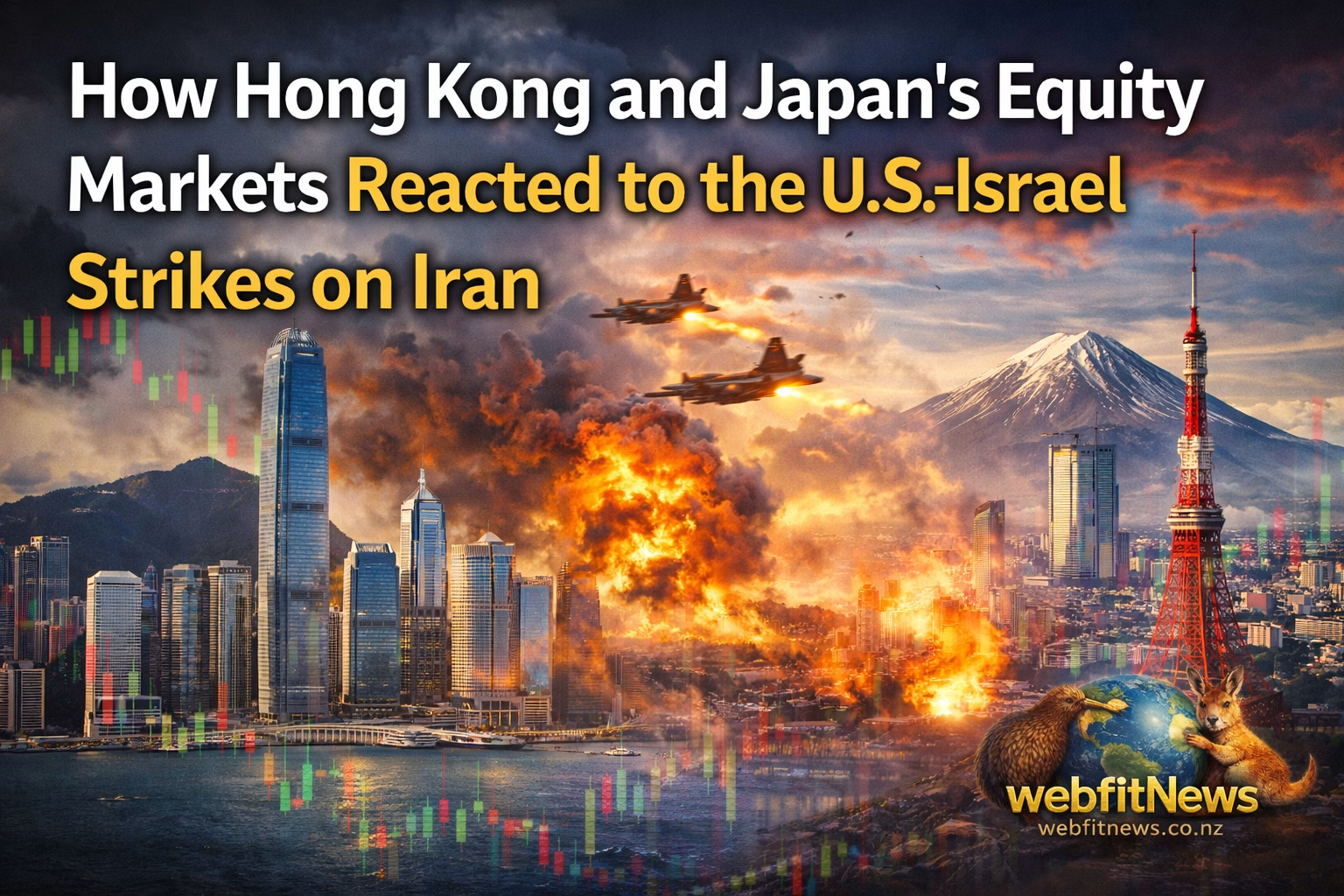
When the United States and Israel launched coordinated strikes on Iranian targets over the final weekend of February 2026, financial markets did what they always do in moments of sudden geopolitical escalation. They repriced risk immediately.
By the time Asia opened on Monday, March 2, investors were no longer debating whether this was a regional flare-up. They were pricing energy disruption, supply chain instability, and the possibility of prolonged conflict centered on the Strait of Hormuz.
The first full Asia trading session became a live test of resilience for two major financial centers: Hong Kong and Tokyo.
The verdict was nuanced.
Neither market collapsed. But they reacted differently.
The Timeline: From Shock to Open
- Saturday, February 28: U.S. and Israeli forces strike Iranian targets. Global news wires report significant military damage and leadership casualties.
- Sunday: Reports emerge of regional retaliation, airspace closures, and shipping insurance concerns.
- Pre-Asia open Monday: Brent crude surges sharply, at one point rising double digits intraday as traders price Hormuz disruption risk.
Asia did not have the luxury of digesting this over multiple sessions. It had to respond in real time.
Hong Kong: A Classic Risk-Off Reaction
The Hang Seng Index fell roughly 2 percent by the close on March 2, after dropping nearly 3 percent in early trading.
The pattern was textbook:
- Heavy selling at the open
- Tech under pressure
- Energy is the only bright spot
The Hang Seng Tech Index dropped more than 3 percent intraday, reflecting investor aversion to growth stocks during periods of geopolitical instability. High-duration tech assets suffer when uncertainty rises and energy prices spike.
Volume indicators suggested elevated activity, though index “volume” data in Hong Kong represents linked activity proxies rather than direct cash equity turnover.
Sector breakdown:
Energy: Outperformed. Major Chinese oil producers listed in Hong Kong attracted capital as crude prices jumped.
Technology: Underperformed sharply. Risk appetite evaporated.
Transportation: Airlines and travel-sensitive stocks declined due to route disruption and jet fuel cost concerns.
What stood out was breadth. Energy was effectively the only major positive sector. That tells you sentiment leaned defensive rather than selective.
Hong Kong behaved like a volatility sponge. It absorbed global shock through broad-based selling.
Japan: Down, But More Selective
Japan’s response was also negative, but more internally differentiated.
The Nikkei 225 closed down about 1.3 percent after being nearly 2 percent lower earlier in the session. The TOPIX fell roughly 1 percent by the close.
That intraday recovery matters.
It suggests the market moved from panic to sorting mode.
Here is where Japan diverged from Hong Kong.
Energy: Japan’s energy explorers surged. The energy index reportedly jumped nearly 9 percent. INPEX Corporation was among the session’s top gainers.
Defense and Heavy Industry: War risk produced gains in industrial and defense-linked names. Mitsubishi Heavy Industries, Kawasaki Heavy Industries, and IHI Corporation saw moves upward.
Semiconductors: Major chip equipment firms like Advantest Corporation and Tokyo Electron declined around 2 percent, contributing to index weakness.
Japan’s structure allows visible sector rotation. Energy hedges, defense hedges, and bond inflows were identifiable in real time.
Hong Kong rotated too, but with narrower dispersion.
Oil: The Transmission Mechanism
The macro driver was crude.
Brent crude reportedly spiked as much as 13 percent intraday as traders priced potential disruption through the Strait of Hormuz, which carries roughly 20 percent of global oil supply.
This mattered more for Japan than Hong Kong.
Japan is heavily reliant on Middle Eastern oil imports. A sustained crude surge combined with currency weakness creates stagflation risk: higher import costs with slowing global growth.
That dynamic weighed on sentiment.
Currency: The Yen Weakens, The HKD Stays Anchored
One of the most telling divergences appeared in foreign exchange.
The Japanese yen weakened roughly 0.6 percent to near 157 per U.S. dollar during the session.
That move amplified Japan’s imported inflation exposure.
In contrast, the Hong Kong dollar operates within a tight band under the Linked Exchange Rate System. It did not function as a shock absorber.
This structural difference matters.
Japan absorbs part of the geopolitical shock through FX. Hong Kong absorbs more through equity repricing and rate expectations.
Transportation and Insurance: The Real Economy Signals
Airlines across Asia fell as fuel costs rose and Middle Eastern hubs temporarily closed. Insurance reports indicated war-risk coverage cancellations in Iranian waters.
Shipping names tied to energy transport saw gains. But broader supply chain risk loomed.
Markets were not pricing just a weekend event. They were pricing logistical friction.
Comparing Sentiment and Resilience
If you measure panic by index magnitude alone, Hong Kong appeared weaker.
If you measure resilience by internal differentiation, Japan looked more adaptive.
Three observations stand out:
- Magnitude: Hang Seng down about 2 percent versus Nikkei down roughly 1.3 percent.
- Recovery: Japan recovered more from intraday lows.
- Rotation Depth: Japan displayed clearer sector sorting across energy, defense, bonds, and exporters.
Hong Kong functioned as a clean risk-off barometer. Japan functioned as a complex economy sorting through winners and losers.
That sorting is often what resilience looks like.
Not optimism.
Discrimination.
The Bigger Question: Is This Just Volatility?
The blunt truth is this.
Markets handled the first shock wave calmly relative to historical crisis episodes. There was no disorderly selloff.
But investors are now anchored to one variable: oil duration.
If crude stabilizes below escalation thresholds, Asia likely reverts to fundamentals.
If supply disruption persists, Japan faces stagflation pressure and Hong Kong faces growth multiple compression.
The Strait of Hormuz is no longer an abstract geography lesson. It is a pricing variable.
Conclusion
Neither Hong Kong nor Japan panicked. But they revealed structural differences in how advanced Asian markets absorb geopolitical shocks.
Hong Kong reflected global risk aversion swiftly and broadly.
Japan displayed sectoral triage and macro recalibration.
In moments like this, markets do not simply fall. They communicate.
On March 2, 2026, Asia’s message was clear:
War risk is manageable.
Oil risk is not.