2 October 2025 | Webfit News
The Government is making a major change to how leave is calculated and taken in New Zealand. The old Holidays Act 2003 will soon be replaced with a brand-new Employment Leave Bill designed to make leave entitlements simpler, fairer, and easier to manage.
For years, the current system has caused headaches for employers and workers alike, with confusing rules leading to payroll errors and compliance costs. The new framework promises clarity by allowing leave to accrue in hours from day one of employment, with straightforward calculations and better transparency.
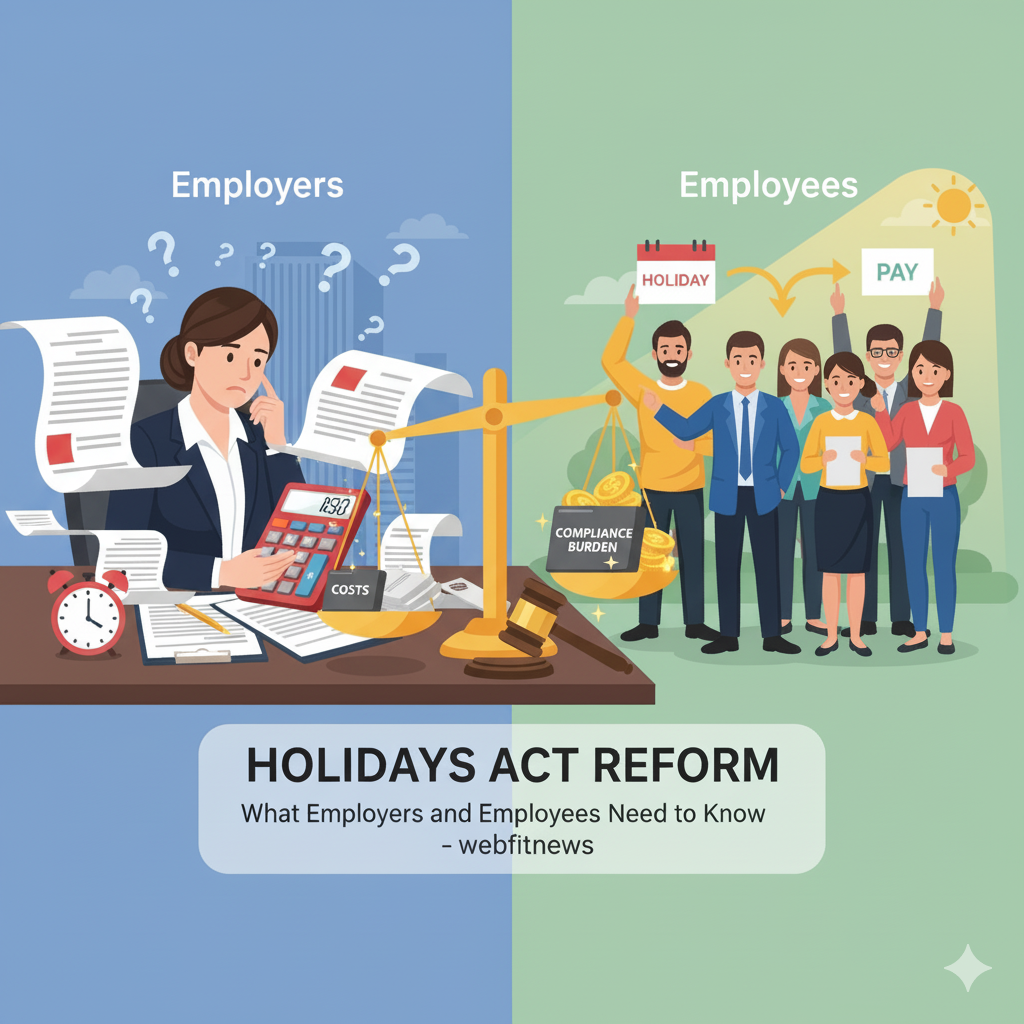
Why the Change Matters
- For employees: More confidence in their leave balances, the ability to use leave more flexibly (in hours or part-days), and the option to cash up part of their annual leave.
- For employers: Less confusion, fewer payroll disputes, and reduced compliance costs with a single method of calculating leave.
Key Changes at a Glance
Annual & Sick Leave
- Leave accrues from day one based on contracted hours.
- Annual leave: 0.0769 hours per contracted hour worked.
- Sick leave: 0.0385 hours per contracted hour worked (capped at 160 hours).
- Accrual continues during paid leave, jury duty, or parental leave.
How Leave Can Be Used
- Leave can be taken in hours, not just full days.
- Workers can cash up 25% of their annual leave each year.
- Sick leave can be used for part-days.
Extra Hours & Casual Work
- Waged workers: Extra hours do not accrue leave but attract a 12.5% leave compensation payment.
- Salaried workers: If paid for additional hours, they also receive a 12.5% compensation.
- Casual workers: Always receive 12.5% compensation instead of accruing leave.
Fixed-Term Workers
- Must accrue and use leave from their first day.
How Leave Pay Will Be Calculated
- A single unified hourly rate based on base wage.
- Bonuses and commissions excluded.
Parental, Bereavement & Family Violence Leave
- Leave continues to accrue during parental leave.
- Bereavement and family violence leave available from day one, and can be taken in part-days.
Public Holidays
- A clearer test for what counts as an “otherwise working day.”
- Entitlements based on actual hours worked.
Pay Transparency
- Employers must provide clear, itemised pay statements each pay period.
When Will It Happen?
The new law will be introduced to Parliament in early 2026, with hopes of passing it by the end of that year. Employers will then have a 24-month transition period to update payroll systems and processes before it becomes fully operational.
Expert View
Employment law specialists BuckettLaw welcomed the reforms, calling them “a step toward fairer, clearer, and easier to manage leave entitlements.” The firm encouraged both employers and employees to review their agreements and policies early to prepare for the shift.
What This Means for You
- Employees: Expect greater flexibility and confidence when planning time off.
- Employers: Prepare for system changes and start reviewing contracts now to ensure compliance during the transition.
✅ Webfit News will continue to follow this story and provide updates as the Employment Leave Bill progresses through Parliament.
📌 Reference
Press Release: BuckettLaw — “Holidays Act Reform: What Employers And Employees Need To Know” (2 October 2025), published on Scoop Media.