
Story by Mr. Bhrigu Bhaskar, volunteer contributor for Webfit News
20 October 2025 | Suva / Manila / Geneva
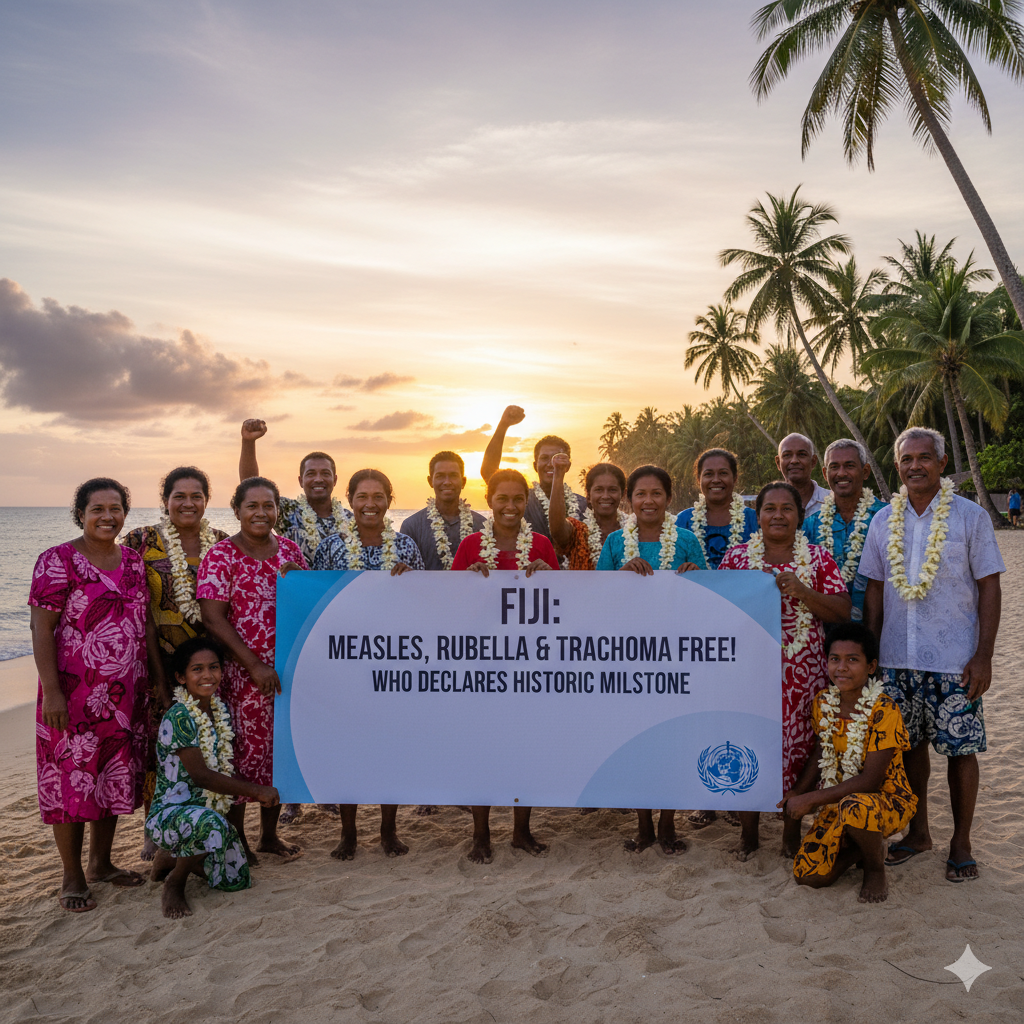
Fiji has achieved a historic milestone. The World Health Organization (WHO) has confirmed that the country has eliminated trachoma as a public health problem. This success makes Fiji the first Pacific nation and the 26th country in the world to do so.
What Is Trachoma and Why Does It Matter
Trachoma is a neglected tropical disease (NTD) and the leading infectious cause of blindness. It spreads through contact with contaminated surfaces or flies that touch the eye or nose discharge. Repeated infections can cause scarring of the eyelids, leading to blindness.
WHO Director-General Dr. Tedros Adhanom Ghebreyesus congratulated Fiji for this achievement. He said that future generations of Fijians will live free from the suffering that trachoma caused for decades.
A Journey from Risk to Recovery
Reports from the 1930s and 1950s showed that trachoma was once widespread in Fiji. By the 1980s, improved hygiene and healthcare helped reduce infections. However, a resurgence in the 2000s raised new concerns, especially among children.
The Fijian government, with WHO support, launched a national plan to control and eliminate the disease. Since 2012, the country has carried out detailed surveys, laboratory tests, and school-based education programs. It also integrated sanitation and clean water initiatives, ensuring communities understood the link between hygiene and eye health.
Leadership and Collaboration
Dr. Saia Ma’u Piukala, WHO Regional Director for the Western Pacific, praised Fiji’s determination. He said the country’s success proves what can be achieved when governments, communities, and partners work together.
Fiji’s Minister of Health, Dr. Ratu Atonio Rabici Lalabalavu, called the milestone a victory for health equity. He credited healthcare workers and local communities for their commitment to a shared goal. The minister urged continued regional cooperation to eliminate other neglected tropical diseases across the Pacific.
A Regional and Global Impact
Fiji met WHO’s strict standards for elimination, including very low infection rates in children and a reliable system for detecting future cases. The achievement aligns with the WHO Road Map for Neglected Tropical Diseases 2021–2030, which aims to control or eradicate 20 major diseases by 2030.
Since 2016, thirteen countries in the Western Pacific Region have eliminated at least one NTD. Six of them, including Cambodia, China, Laos, Papua New Guinea, Vanuatu, and Viet Nam, have also ended trachoma as a public health threat.
The Road Ahead
Although Fiji’s success is remarkable, the WHO advises continued vigilance. Ongoing surveillance, education, and sanitation programs will ensure that trachoma does not return. The Ministry of Health will continue to partner with schools, rural communities, and regional health bodies to keep Fiji trachoma-free.
Dr. Piukala said that Fiji’s elimination of trachoma is more than a medical success. It is proof that determination and collaboration can defeat even the most neglected diseases.
A Model for the Pacific
Fiji’s story stands as an example for the region. It shows how evidence-based planning, community participation, and consistent health investment can transform public health outcomes. The island nation’s achievement brings hope for tackling other diseases that still affect vulnerable communities.
Reference:
World Health Organization (WHO). Fiji becomes the 26th country to eliminate trachoma as a public health problem. Published 20 October 2025.