By Webfit News | January 29, 2026
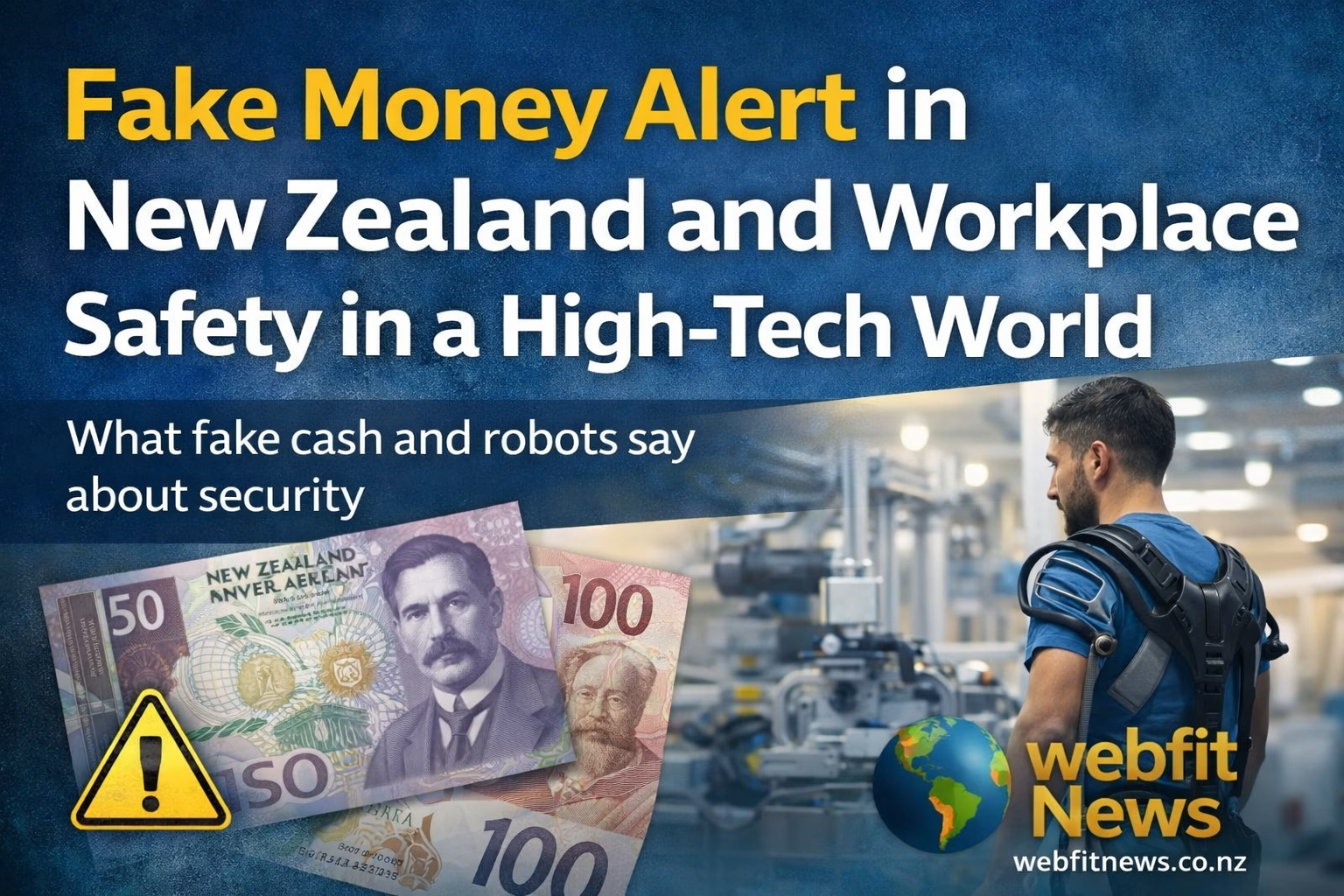
New Zealand Police have issued a nationwide warning after a rise in fake $50 and $100 notes being used across the country.
The alert comes after counterfeit banknotes were found in several regions, particularly in places where cash changes hands quickly. These include petrol stations, supermarkets, dairies, and late-night convenience stores.
Police say the fake notes look convincing at first glance, but they fail basic security checks.
What the fake notes are missing
New Zealand’s real banknotes are made from polymer and include clear security features. Fake notes often miss these details.
Police say to watch out for:
- The clear window with detailed holograms
- The raised lettering that says “New Zealand”
- The silver fern watermark, visible when held up to light
Businesses are encouraged to use UV lights where possible and take extra care during busy periods.
Anyone who receives a suspicious note is advised to not return it, and to contact Police with details of where and when it was received.
Possessing or passing fake money is a serious criminal offence.
Why this story matters beyond money
At first glance, this may seem like just a cash problem. But it highlights something bigger.
In 2026, we live in a world where authenticity and safety are getting harder to judge. Fake money is one example. But the same question appears in workplaces that rely heavily on technology.
That brings us to a second, less visible issue that affects workers around the world, including New Zealand.
Humans in automated workplaces
Across logistics, warehousing, and distribution, machines and robots now do much of the heavy work. This includes lifting, sorting, and moving goods.
This shift has reduced some serious injuries. Fewer people are falling from heights or lifting extremely heavy loads.
But new problems are appearing.
Instead of walking long distances, workers often stand in one spot for hours. Robots bring items directly to them. The work is faster, more repetitive, and mentally demanding.
Experts are seeing:
- More muscle and joint strain
- Increased fatigue and burnout
- Workers feeling mentally drained rather than physically injured
In simple terms, robots removed some dangers, but replaced them with new ones.
The idea of the “industrial athlete”
To deal with this, many companies now treat workers like athletes.
This does not mean pushing them harder. It means protecting their bodies and minds properly.
Some workplaces now use:
- Support suits that reduce strain on the back
- Shorter task rotations to avoid repetition
- On-site trainers who help workers move safely
- Technology that spots risky movements early
Studies overseas show that when this is done properly, injuries drop sharply and workers take fewer sick days.
Watching movement with cameras
New technology can now analyse how people move using normal cameras.
These systems can:
- Spot unsafe lifting
- Identify overuse of certain muscles
- Warn before injuries happen
This is already being used in some factories and warehouses overseas. It works without attaching sensors to the body.
The goal is prevention, not surveillance. When used responsibly, it helps people correct their posture early rather than end up injured.
Mental health is part of safety
Physical safety is only half the story.
Fast-paced, screen-driven work can overload the brain. Tired or stressed workers are more likely to make mistakes, get hurt, or burn out.
Some employers now track:
- Fatigue levels
- Stress patterns
- Workload balance
This allows managers to step in early with breaks, task changes, or support.
The idea is simple. A mentally exhausted worker is just as unsafe as a physically injured one.
What this means for New Zealand
The fake money alert reminds us that not everything is what it appears to be.
In the same way, a modern automated workplace can look safer on the surface while hiding new risks underneath.
As New Zealand businesses adopt more technology, the challenge is balance.
Technology should protect people, not quietly wear them down
The real measure of progress
In the end, safety is not just about machines, cameras, or systems.
It is about whether people:
- Go home healthy
- Feel valued, not replaceable
- Can work without long-term damage to body or mind
Just as a real banknote must be genuine to have value, a workforce must be genuinely protected to be sustainable.
That is the real test of progress in 2026 and beyond.