By Geet G | Webfit News
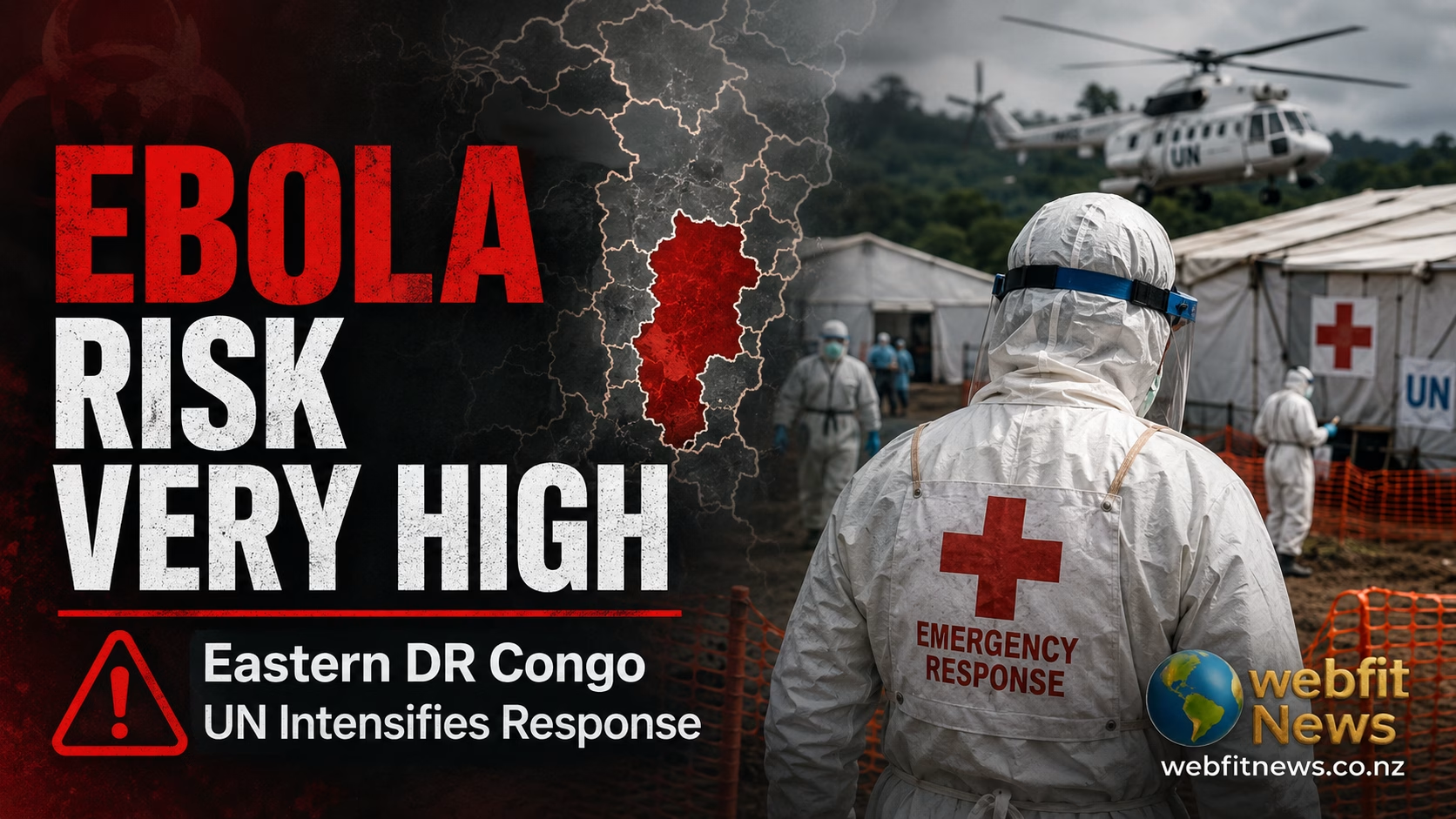
A fast-moving Ebola outbreak in the eastern Democratic Republic of the Congo has triggered serious concern across the international health system, with the World Health Organization raising the national risk level for the DRC to “very high”.
The global risk is still considered low, but that should not make anyone complacent. The warning from health agencies is clear: this outbreak is unfolding in one of the most difficult environments in the world for disease control, where armed conflict, mass displacement, weak health systems and community mistrust are all colliding at the same time.
So far, 82 confirmed cases and seven confirmed deaths have been reported in the DRC. But those numbers are almost certainly not showing the full picture. WHO-linked updates and international reporting point to nearly 750 suspected cases and 177 suspected deaths, raising fears that the outbreak may already be much larger than confirmed laboratory figures suggest.
The outbreak is caused by the Bundibugyo strain of Ebola, a rare strain for which there is currently no approved vaccine or specific approved treatment. That makes containment more urgent and more complicated.
Why This Outbreak Is So Concerning
Ebola is not new to the DRC. The country has faced repeated outbreaks over several decades. What makes this situation especially dangerous is the combination of public health risk and insecurity on the ground.
The current outbreak is centred in eastern DRC, including Ituri and North Kivu, areas that have long suffered from armed violence, displacement and humanitarian need. According to reporting on the UN response, millions of people across the affected provinces already need urgent assistance, with large numbers displaced and many facing acute hunger.
That matters because Ebola containment depends on speed, trust and access. Health workers need to identify cases, isolate patients, trace contacts, carry out safe burials and explain the disease clearly to local communities. Those steps are hard enough in a stable environment. In conflict zones, they become painfully difficult.
Fighting has displaced more than 100,000 people in recent months, making it harder for health teams to track possible chains of transmission. Population movement also increases the risk that infected people may travel before they are diagnosed.
Outbreak Snapshot
| Key Point | Current Situation |
|---|---|
| Country most affected | Democratic Republic of the Congo |
| Main affected region | Eastern DRC, including Ituri and North Kivu |
| Confirmed cases in DRC | 82 |
| Confirmed deaths in DRC | 7 |
| Suspected cases | Nearly 750 |
| Suspected deaths | 177 |
| Virus strain | Bundibugyo Ebola virus |
| WHO national risk level for DRC | Very high |
| WHO regional risk level | High |
| WHO global risk level | Low |
| Confirmed Uganda cases linked to travel | At least 2 earlier, with additional cases later reported |
Mistrust Is Becoming A Major Barrier
One of the most worrying parts of the outbreak is not only the virus itself. It is the mistrust surrounding the response.
In Ebola outbreaks, bodies of people who have died from the disease can remain highly infectious. This means burial procedures must be handled carefully by trained teams. But in many communities, funerals are deeply emotional and cultural events, where touching, washing or being near the body can be part of family mourning.
That tension has already turned dangerous.
In eastern Congo, treatment facilities have reportedly been attacked and set on fire after families became angry over burial restrictions and the handling of deceased relatives. In one incident, suspected Ebola patients reportedly fled after a treatment centre was attacked.
This is exactly where outbreaks can spiral. If people fear health authorities, avoid treatment centres, hide symptoms or reject safe burial teams, the virus gains more opportunities to spread.
The International Federation of Red Cross and Red Crescent Societies has warned that trust and community acceptance can be the difference between containment and wider transmission. Red Cross volunteers have been going door to door to share information, answer questions and support safe and dignified burial practices.
Uganda Cases Show Regional Risk
The outbreak has already crossed borders. Uganda has reported Ebola cases linked to travel from the DRC, including at least one death. Reuters reported that Uganda later confirmed three additional cases, bringing its total to five.
This does not mean a global outbreak is likely. WHO and other agencies still assess the global risk as low. But it does show why regional preparedness matters.
Borders in this part of Africa are active, porous and deeply connected by trade, family ties and work. People move for medical care, markets, safety and survival. In that environment, a disease like Ebola cannot be treated as a problem contained neatly inside one administrative boundary.
What The UN And Health Agencies Are Doing
The UN system and partners are now scaling up the response.
WHO has deployed international staff and released emergency funding. A continental incident management support team is also being established with Africa CDC. The UN relief system has announced up to $60 million to support response efforts in the DRC and neighbouring countries, while WHO has released $3.9 million from its contingency fund.
The response includes:
- contact tracing
- treatment centre support
- emergency supplies
- community engagement
- risk communication
- safe and dignified burials
- logistical support in hard-to-reach areas
- preparation for clinical trials of potential treatments
MONUSCO, the UN peacekeeping mission in the DRC, has also supported logistics, including airlifting emergency supplies such as medicines, tents and protective equipment. In a region where roads can be unsafe or unusable, air transport can become essential for saving time and lives.
No Approved Vaccine For This Strain
One of the hardest scientific challenges is the strain involved.
The Bundibugyo strain has only caused a small number of known outbreaks compared with other Ebola strains. Unlike the Zaire strain, for which vaccines and treatments have been developed, Bundibugyo does not currently have an approved vaccine or specific approved therapeutic.
WHO and partners are looking at experimental options. Reports have mentioned potential clinical trials involving monoclonal antibodies and the antiviral drug obeldesivir for high-risk contacts. Scientists are also working on vaccine candidates that could move into trials.
That research is important, but it will not replace the basics: early detection, isolation, contact tracing, protective equipment and community trust.
Women May Face Higher Risk
Ebola does not spread randomly. It follows social patterns.
Women can be at higher risk because they are often caregivers at home, frontline health workers, market participants and people involved in preparing bodies for burial. During previous Ebola outbreaks in the DRC, women and girls were heavily affected because transmission followed the lines of caregiving, domestic labour and community responsibility.
This outbreak could repeat that pattern unless response teams design their work around real social behaviour, not just medical theory.
Pregnant women may face particular risk, and quarantine measures can also increase vulnerability to gender-based violence if protection systems are weak.
Webfit News Perspective
This outbreak is a reminder that public health is never only about medicine.
It is also about trust, communication, security, poverty, gender, transport and leadership.
Ebola can be contained. History has shown that. But it cannot be contained by fear alone, and it cannot be contained if communities believe outsiders are hiding the truth or disrespecting local customs.
The DRC outbreak needs urgent medical support, but it also needs patient community work. People must understand why safe burials matter. Families must be treated with dignity. Local leaders must be involved. Health workers must be protected. Misinformation must be confronted quickly, but respectfully.
The world should not panic. But it should pay attention.
A very high national risk in the DRC is not just a local warning. It is a test of whether the international system can act early, act seriously and act with the trust of the people most affected.