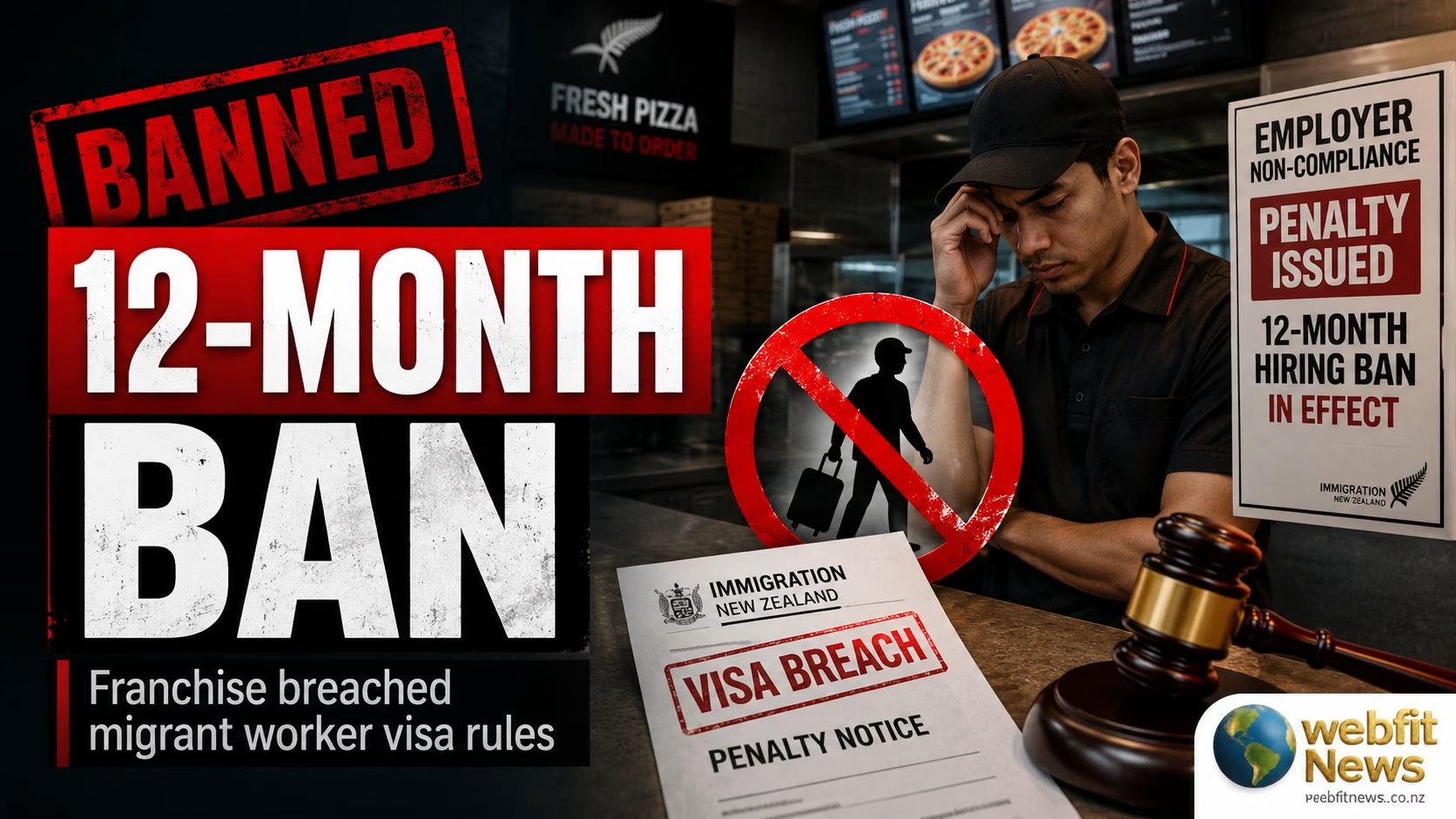
A Domino’s franchise operator has been banned from hiring more migrant workers for 12 months after breaching a worker’s visa conditions, according to a media release issued by the Ministry of Business, Innovation and Employment.
GBN Trading Ltd, trading as Domino’s Pukekohe and Domino’s Pokeno, must also pay $4,500 after challenging an infringement notice through the courts. The amount includes a $3,000 fine and $1,500 in prosecution costs.
The case is another reminder that employers in New Zealand cannot treat visa conditions as a minor admin issue. For migrant workers, visa conditions are legally binding. For employers, breaching them can lead to fines, stand-down periods, reputational damage, and in more serious cases, criminal charges.
From Hurt to Healing: Waikato Hui Sparks Unity Across Cultures – WebfitNews
What Happened?
According to MBIE, the employee’s visa conditions allowed them to carry out administration work in Auckland at Domino’s Pukekohe.
However, Immigration New Zealand found the worker was instead working at Domino’s Pokeno, in Waikato.
That location change matters because many work visas in New Zealand are tied to specific roles, employers, regions, or locations. An employee may be allowed to work for one business or at one site, but not automatically at another.
MBIE’s National Manager Investigations, Jason Perry, said the employer knowingly employed the worker in a way that did not meet the conditions of their work visa.
“The employer knowingly employed someone in a way that did not meet the conditions specified on their work visa and now they must face the consequences,” he said in the release.
Why This Case Matters
At first glance, some people may think this is just a technical location issue between two nearby Domino’s stores. That would be the wrong reading.
The serious issue is that the worker’s visa conditions were not followed. In New Zealand’s immigration system, visa conditions are not optional. They are part of the legal permission that allows someone to live and work in the country.
When an employer places a migrant worker into a role, site, or arrangement outside those conditions, it can put the worker at risk. The worker may not fully understand the consequences. They may also feel pressure to follow instructions because their job and immigration status are closely linked.
That power imbalance is exactly why employer compliance matters.
A 12-Month Ban Sends a Clear Message
The 12-month ban means GBN Trading Ltd cannot hire more migrant workers during the stand-down period.
That is a serious business consequence, especially in sectors such as hospitality, food service, retail, and franchise operations, where migrant workers often form an important part of the workforce.
The case also shows that challenging an infringement notice through the courts does not guarantee a better outcome. Here, the employer still ended up with a fine, prosecution costs, and a one-year ban from hiring more migrant workers.
More Than 300 Infringement Notices Issued
MBIE says the immigration infringement scheme has been in place for two years. During that time, more than 300 infringement notices have been issued, with penalties totalling $1 million.
Jason Perry said this shows immigration breaches are being taken seriously.
“Employers must follow their obligations, and if they don’t, our immigration infringement scheme has proven to be an effective tool in holding them to account,” he said.
The scheme was introduced to give Immigration New Zealand a stronger way to respond to lower-level immigration non-compliance without relying only on full criminal prosecution.
However, the warning from MBIE is clear: more serious breaches may still result in criminal charges.
Immigration New Zealand has previously stated that migrant exploitation and breaches of visa conditions are treated seriously. In a separate 2024 case involving a former Domino’s Kaiapoi franchise owner, Immigration New Zealand said the sentence sent a strong message that breaching the law and exploiting migrant workers would not be tolerated.
The Bigger Issue for Employers
This case should be a wake-up call for employers across New Zealand, not just franchise operators.
Employers must know exactly what a migrant worker’s visa allows before assigning work. That means checking:
- The approved role
- The approved employer
- The approved work location
- The number of hours allowed
- Any specific conditions listed on the visa
A casual “just help at another branch” approach can become a legal problem very quickly.
For franchise businesses, the risk can be even higher. Different stores may look like one brand to the public, but legally, they may operate through separate companies, locations, or employment arrangements. A worker approved for one location may not automatically be approved for another.
This is where weak internal controls become dangerous.
The Bigger Issue for Migrant Workers
For migrant workers, this case is also important.
Many migrant workers want to keep their employers happy. Some may agree to work at different locations or perform different duties because they do not want to risk losing their job. But if the work does not match their visa conditions, it can create immigration risk for the worker as well.
Workers should check their visa conditions carefully and ask questions before agreeing to changes in role, location, or employer.
If something feels unclear, they should seek advice from official sources or a licensed immigration adviser.
Webfit News Perspective
From a Webfit News perspective, this case is not just about one Domino’s franchise. It highlights a wider responsibility in New Zealand’s employment system.
Migrant workers contribute heavily to local businesses, food outlets, aged care, logistics, hospitality, agriculture, and many other sectors. But their contribution must be matched with proper employer responsibility.
New Zealand cannot say it values migrant workers while allowing employers to treat visa conditions casually.
The message is simple: if a business benefits from migrant labour, it must also respect the rules that protect migrant workers.
What Happens Next?
For GBN Trading Ltd, the immediate consequences are clear: a 12-month ban on hiring additional migrant workers and a $4,500 financial penalty.
For other employers, the lesson is even clearer. Immigration compliance must be treated as a core business responsibility, not paperwork that can be ignored until there is a problem.
The Domino’s Pukekohe and Pokeno case shows that Immigration New Zealand is watching, penalties are being issued, and employers who knowingly breach visa conditions can expect consequences.
For migrant workers, the case is a reminder to understand visa conditions and speak up when work arrangements do not match what has been approved.
References
Ministry of Business, Innovation and Employment media release, 18 May 2026: “Domino’s franchise banned from hiring migrant workers for 12 months after visa breach.”
Immigration New Zealand: Domino’s Pizza franchise owner sentenced for migrant exploitation, published 9 July 2024.