
Auckland, 14 Oct 2025
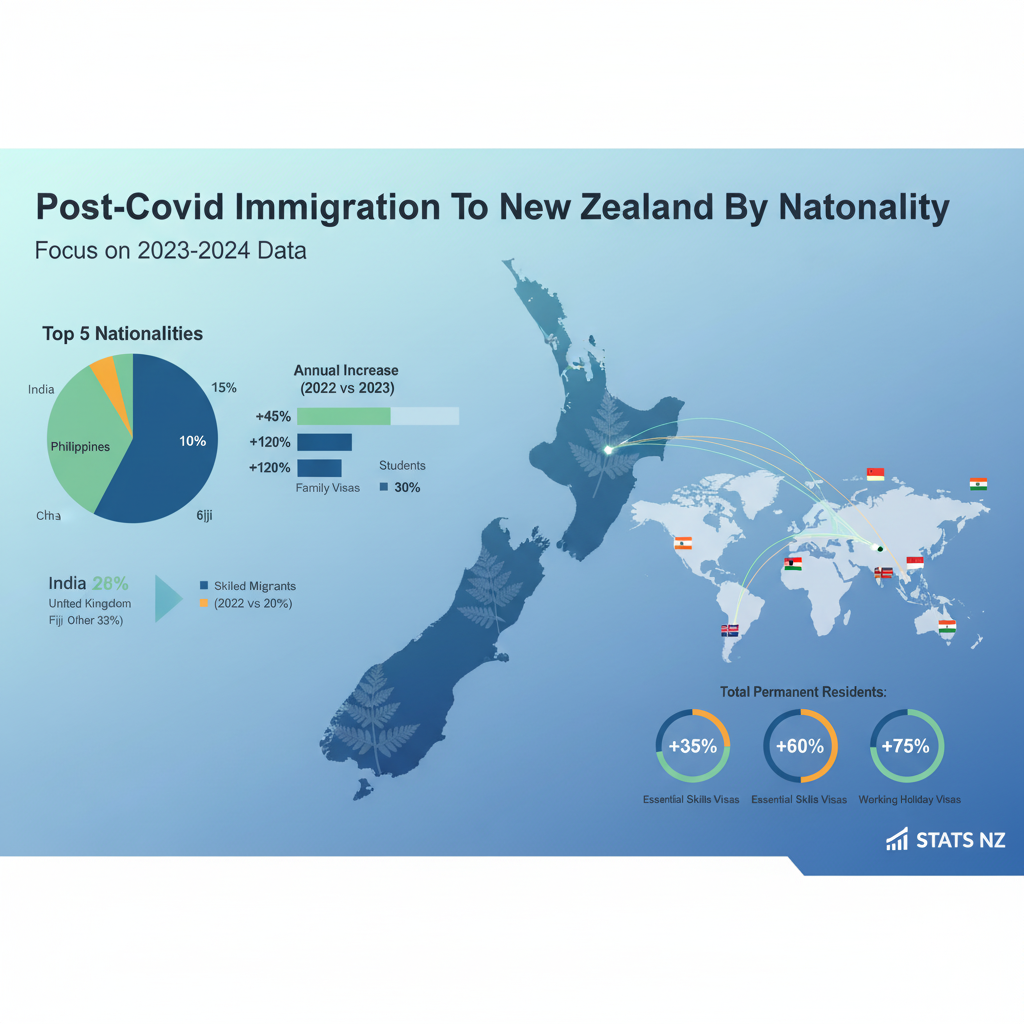
Most new migrants arrive in New Zealand on temporary visas first. Later, some apply for residence or other long-stay visas. According to a new opinion analysis by economist Keith Rankin, the mix of nationalities coming to New Zealand has changed since the pandemic.
The big shift since COVID
- In the late 2010s, a large part of net immigration came from New Zealand citizens returning home.
- That pattern has mostly ended. Today, a growing share of arrivals are foreign citizens starting out on work, study, or family visas.
- Statistics for the year ended August show changes across 31 tracked countries, with some source countries growing faster than others.
- Not every move becomes permanent. Many people do not progress from temporary visas to residence. Reasons include visa rules, job and income tests, personal choices, or better offers elsewhere.
Why this matters
- Employers may see more skilled workers available, but hiring still depends on visa settings and salary thresholds.
- Housing, transport, and schools in high-growth regions can feel pressure if local planning does not keep pace.
- Communities benefit from new businesses, cultural groups, and multilingual skills when settlement is well-supported.
Two common outcomes for new arrivals
- Successful settlement
Temporary visa holders find stable jobs, meet income and skill criteria, and later gain residence. - Unsuccessful or changed plans
Some migrants return home or move to another country if work is not what they expected, if study costs feel high, or if visa steps are harder than planned.
Easy guide for our Indian community
Thinking about moving to New Zealand or already here on a temporary visa? Use this checklist.
- Understand your visa pathway
Know the steps from your current visa to residence. Check work experience, salary bands, points, and English requirements. - Confirm the job match
Ask for a clear job description, location, and roster. Confirm if the employer is accredited and if the role meets visa rules. - Plan your budget
Compare rent, childcare, transport, and groceries in the city you will live in. Keep an emergency fund for three to six months. - Keep records ready
Prepare police certificates, medicals, degree assessments, and proof of experience. Save digital copies in a secure folder. - Build community early
Join local Indian associations, language groups, and professional networks. Community support helps with jobs, housing tips, and schools. - Review long-term options
If your role or city does not fit your goals, talk to a licensed adviser or a trusted community mentor about alternatives.
Key terms in simple words
- Temporary visa
Permission to live, work, or study for a limited time. - Residence visa
Long-term permission to live in New Zealand, often a step toward permanent residence. - Net migration
Arrivals minus departures over a period of time. - Accredited employer
A company approved to hire certain workers from overseas.
What to watch next
- Updates to work visa income bands, skill lists, and residence pathways.
- Regional growth in cities like Auckland, Hamilton, Wellington, and Christchurch, where jobs and study places are concentrated.
- Year-ended August numbers by nationality, which show how migrant flows are changing across the 31 countries tracked by Stats NZ.