A Political Giant Passes Away
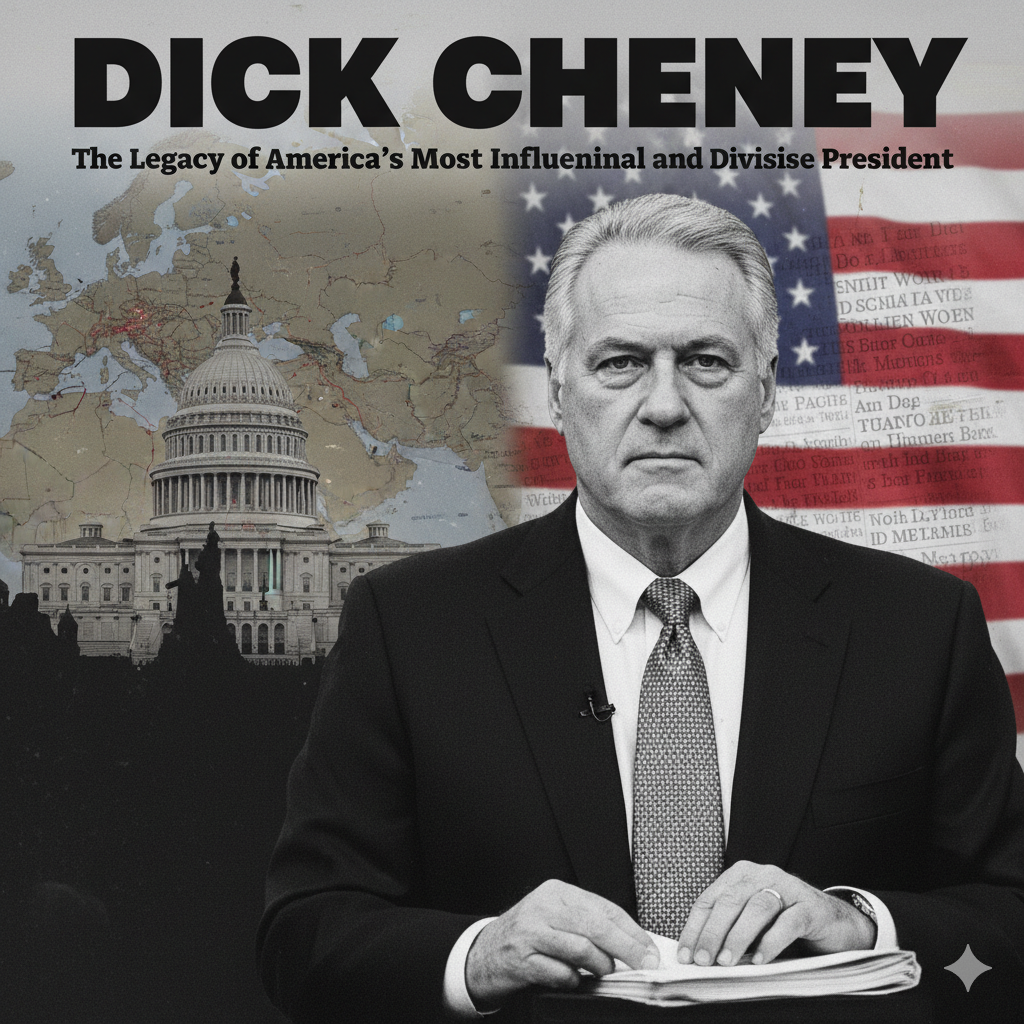
WASHINGTON, D.C. – Former US Vice President Dick Cheney, one of the most powerful and polarising figures in modern American politics, has died at the age of 84.
A family spokesperson confirmed his passing in Washington, citing complications related to heart disease, a condition Cheney battled for decades.
During his long public career, Cheney held some of the most influential roles in American government — from White House Chief of Staff to Defense Secretary under President George H. W. Bush, and finally Vice President during George W. Bush’s presidency from 2001 to 2009.
From Wyoming Roots to Washington’s Inner Circle
Born in Lincoln, Nebraska, and raised in Casper, Wyoming, Richard Bruce Cheney began his political career in the 1960s after serving briefly as a congressional aide. His sharp intellect and reputation for discipline helped him rise quickly through Washington’s power structures.
By 1975, at just 34, he became Chief of Staff under President Gerald Ford, one of the youngest to hold that title. Over the following decades, he built a reputation as a skilled strategist, known for his methodical approach and deep understanding of defense and security.
Architect of the War on Terror
Cheney’s most defining years came during the George W. Bush administration, following the September 11, 2001, attacks. He became the driving force behind America’s War on Terror, advocating for the invasions of Afghanistan and Iraq, expanded surveillance powers, and controversial interrogation programs.
Supporters credited him for his decisive leadership at a moment of national crisis. Critics, however, argued that his policies contributed to years of conflict, civilian suffering, and damaged global perceptions of the United States.
Even after leaving office, Cheney defended the decisions made during that era, maintaining that America’s security required “hard choices that history would one day vindicate.”
A Vice President Like No Other
Unlike many before him, Cheney transformed the role of Vice President from a ceremonial position into one of real power.
He attended top-level intelligence briefings, shaped defense policy, and exercised remarkable influence over the White House.
Political analysts often referred to him as the “shadow president,” citing his behind-the-scenes authority on military and national security issues.
His partnership with George W. Bush was both complementary and controversial — a balance between Bush’s public persona and Cheney’s deep policy machinery.
The Later Years: A Voice of Defiance and Reflection
After leaving office in 2009, Cheney remained an active voice in Republican politics but often stood apart from the party’s newer directions.
He was one of the few high-profile conservatives to publicly criticise Donald Trump, calling him “a threat to democracy.”
In 2021, Cheney’s daughter, Liz Cheney, a US congresswoman from Wyoming, became a vocal critic of Trump and his role in the January 6 Capitol riot, earning both praise and backlash. Cheney strongly supported her stance, even as it isolated the family from much of the Republican base.
Health Struggles and Resilience
Both political and personal battles marked Cheney’s career. He suffered five heart attacks, underwent bypass surgeries, and received a heart transplant in 2012. Despite repeated health scares, he continued to speak publicly and remained a respected – if divisive – voice in political and defense circles.
In his memoir, In My Time, Cheney reflected:
“I did what I thought was necessary to protect the country. History will make its own judgment, but I have no regrets.”
A Legacy That Redefined Power
Whether admired or condemned, Cheney’s imprint on American governance is undeniable.
He redefined the power of the vice presidency, reshaped national security policy, and left a lasting mark on how the United States approaches global threats.
Historians describe his tenure as a study in contrasts – steadfast patriotism mixed with secrecy and controversy.
Cheney’s influence will continue to be debated for decades, but even his critics agree on one point: he changed how power is wielded in Washington forever.
Final Years and Tributes
In his later years, Cheney lived quietly between Wyoming and Virginia, occasionally appearing at policy forums and public events.
Political leaders from both parties have paid tribute to his decades of service, acknowledging his impact on defense, governance, and global affairs.
President George W. Bush released a statement calling Cheney “a man of deep conviction and tireless dedication to the security of the United States.”
Cheney is survived by his wife Lynne, their daughters Liz and Mary, and several grandchildren.
Source: Independent reporting by Webfit News, based on verified statements and public records.