Prime Minister Christopher Luxon has called National Party MPs to an urgent face-to-face caucus meeting in Wellington on Wednesday morning as speculation over his leadership intensifies just 90 days before New Zealand’s general election.
The meeting is scheduled for 9:30am on Wednesday, 12 August, and is expected to become one of the most closely watched political meetings of the election year.
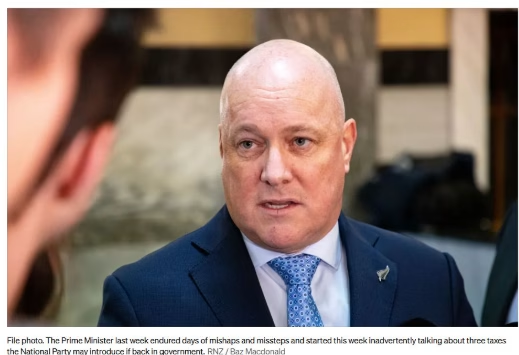
Luxon confirmed the move on Tuesday afternoon, saying growing media reports and internal conversations about his position had become a distraction for the National Party.
“It is clear from various media reports and conversations there is increased speculation about my leadership,” Luxon said in a social media statement.
He said division within the party risked distracting National from the election campaign and needed to be dealt with quickly.
The development was first reported in detail by RNZ political editor Jo Moir, with other New Zealand and international media subsequently reporting the escalating leadership pressure.
Why Luxon Has Called the Meeting
Luxon’s decision follows several days of renewed questions about whether he continues to have the full confidence of National’s caucus.
According to RNZ, the Prime Minister had postponed several prior arrangements before announcing the Wednesday meeting. His team also abruptly postponed an RNZ podcast interview that had been scheduled for Tuesday afternoon.
Luxon said the continuing uncertainty was unfair not only to National Party candidates and volunteers but also to voters preparing for the November 7 election.
He argued that the leadership question had to be settled rather than allowed to dominate National’s campaign.
The meeting comes only four months after Luxon called a confidence vote in his own leadership in April following an earlier round of speculation about his position.
The official result of that secret caucus vote was never publicly released.
A Difficult Political Period for Luxon
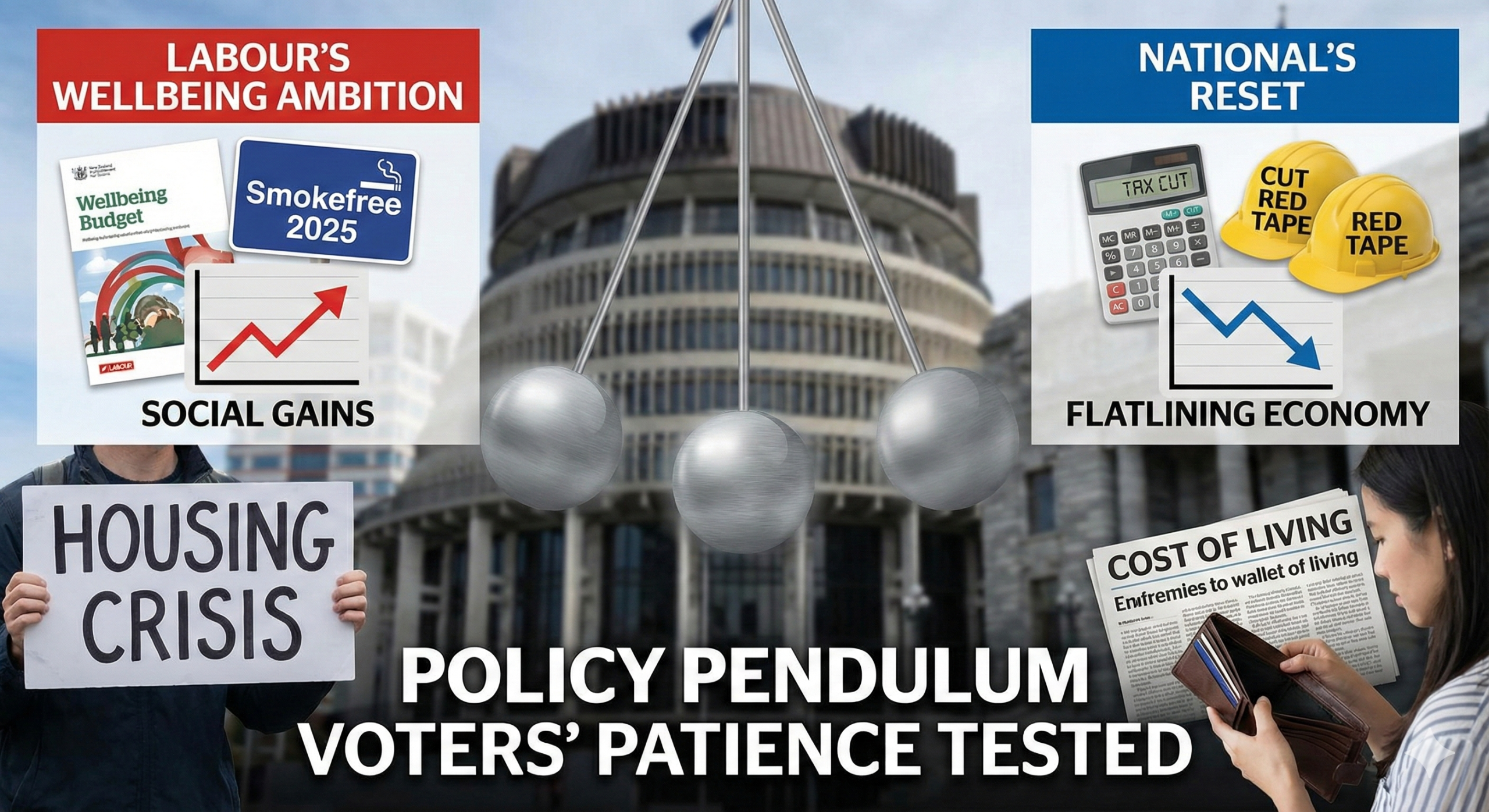
The latest leadership questions follow a difficult period for the Prime Minister involving several political controversies and communication problems.
Last week, Luxon apologised following criticism of comments made to Rotorua business leaders, where he accused businesses of having what he described as a “parent-child mentality” towards government assistance.
He also attracted attention after unexpectedly signalling support for a referendum on New Zealand’s MMP electoral system.
That announcement appeared to catch members of his own caucus off guard and quickly became another issue the Prime Minister was required to explain publicly.
Luxon has also faced questions over his handling of comments made by Foreign Minister Winston Peters towards Green MP Lawrence Xu-Nan.
The combination of those controversies has intensified scrutiny of Luxon’s political leadership at a particularly sensitive point in the election cycle.
National MPs Offer Mixed Signals
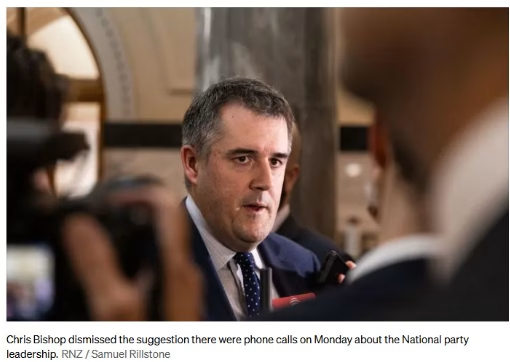
Senior National MP Chris Bishop publicly backed Luxon on Tuesday and rejected suggestions that he was involved in organising a leadership challenge.
Bishop, who is frequently mentioned as a possible future National leader, said MPs should stop speaking anonymously to journalists about internal party matters.
He described such briefings as unhelpful.
Auckland MP Rima Nakhle also gave Luxon emphatic support, describing him as “the man and the boss” and saying she backed him “150 percent”.
However, RNZ’s conversations with approximately 10 National MPs on Monday night produced a more complicated picture.
Some MPs declined to comment, while others rejected suggestions of an impending leadership challenge. At least one MP reportedly acknowledged that anonymous comments appearing in media reports suggested there could be substance behind the speculation.
The NZ Herald had earlier reported that National MPs were making phone calls regarding a potential leadership change, including an anonymous MP suggesting change at the top was increasingly likely.
Bishop and Stanford Remain in the Spotlight
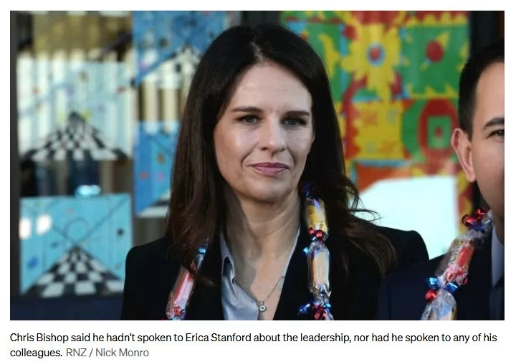
Whenever questions about Luxon’s leadership emerge, two senior National figures are regularly discussed as possible alternatives: Chris Bishop and Education Minister Erica Stanford.
Bishop has repeatedly denied plotting against Luxon.
On Tuesday, he said he had not spoken with Stanford about National’s leadership and rejected suggestions that discussions with colleagues were evidence of a coordinated challenge.
International reporting has also identified Bishop and Stanford among the politicians who could potentially succeed Luxon if National MPs decided to change leader.
For now, neither has publicly challenged the Prime Minister.
Polling Adds Pressure
The political backdrop remains difficult for National.
The July RNZ-Reid Research poll put National on 28.7 percent, down 2.1 percentage points and recording its fourth consecutive decline in that polling series.
It was National’s weakest Reid Research result since Luxon became party leader in November 2021.
Other recent polling has painted a somewhat more competitive picture. A Taxpayers’ Union-Curia poll released this week placed National on 31 percent and showed Luxon ahead of Labour leader Chris Hipkins in the preferred prime minister measure.
That contrast demonstrates why National’s internal debate is particularly significant.
The election remains competitive, but MPs worried about protecting marginal seats will be closely examining both National’s overall support and Luxon’s personal appeal to voters.
Why Wednesday’s Meeting Matters
Leadership speculation is always serious for a governing party, but the timing makes the current situation considerably more significant.
New Zealanders are due to vote on November 7.
Changing National’s leader now would mean replacing not just a party leader but the sitting Prime Minister during the final three months of an election campaign.
Reuters noted that a governing New Zealand party has not replaced a sitting prime minister between general elections since 1997.
That makes Wednesday’s meeting potentially historic.
It could end the speculation by giving Luxon another clear endorsement from his MPs.
Alternatively, if MPs conclude that leadership uncertainty cannot continue into the campaign, the meeting could trigger one of the biggest political developments of the 2026 election year.
For National, the immediate question is no longer whether leadership speculation exists. Luxon’s decision to summon MPs to Wellington confirms that the issue has become serious enough to require a direct caucus response.
By Wednesday morning, the party will have to decide whether it enters the final 89 days of the election campaign firmly behind Christopher Luxon or takes a dramatically different path.
References
Primary source: RNZ, reporting by Political Editor Jo Moir, 11 August 2026.
Additional verification: Reuters, 11 August 2026.
Additional reporting: 1News, 11 August 2026.
Webfit News will continue to follow developments from Wednesday’s National Party caucus meeting.