On January 9, 2026, China’s top competition authority quietly triggered what could become the most consequential regulatory reset of the country’s digital economy since 2021.
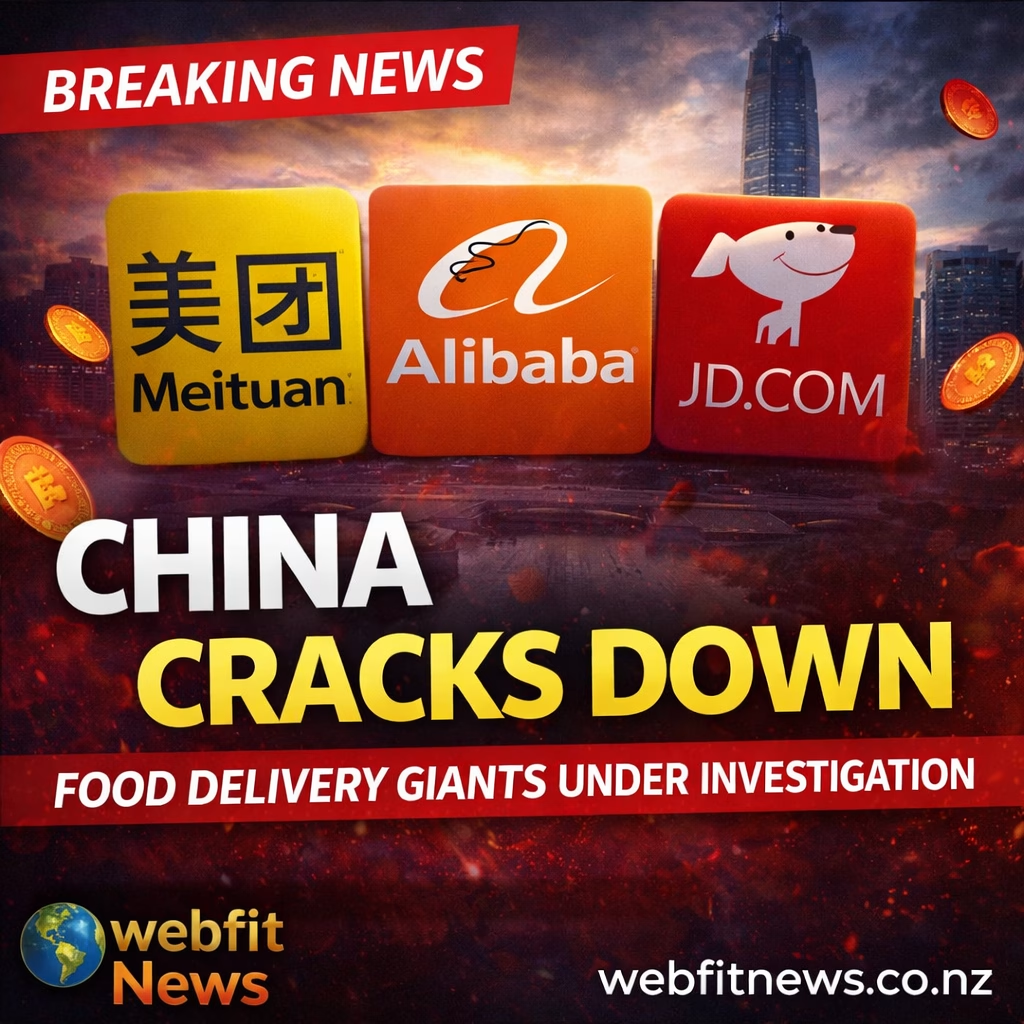
The Office of the Anti-Monopoly and Anti-Unfair Competition Commission under the State Council announced a formal investigation into the food delivery and instant retail sector. While framed as an antitrust probe, the move reflects something far larger: a strategic attempt to stop destructive price wars, stabilise a deflation-prone economy, and bring order to a platform ecosystem caught in a relentless race to the bottom.
At the centre of the investigation are China’s tech heavyweights: Meituan, Alibaba, and JD.com.
Why China Is Stepping In Now
By early 2026, China’s food delivery market had become a textbook case of what Chinese policymakers call “involution” or neijuan.
In simple terms, companies were working harder, spending more, and competing more aggressively, yet producing fewer real economic gains.
Key warning signs included:
- Massive subsidies pushing consumer prices below cost
- Persistent operating losses across major platforms
- Small merchants squeezed despite rising order volumes
- Consumers conditioned to expect constant discounts
- Growing deflationary pressure in the wider economy
With China’s Consumer Price Index stuck at 0.0 percent at the end of 2025, regulators concluded that unchecked digital competition was no longer just a business issue. It had become a macroeconomic risk.
Who Is Running the Investigation
The probe is led by the State Council’s Anti-Monopoly and Anti-Unfair Competition Commission, the highest coordination body for competition policy in China.
Unlike earlier crackdowns, this investigation is not focused on ownership or monopoly structure. Instead, it targets behaviour.
What Regulators Are Examining
- Excessive subsidies and irrational discounting
- Predatory below-cost pricing
- Algorithm-driven traffic control that favours certain merchants
- Price wars designed to exhaust competitors
- Platform conduct that harms merchants, riders, and consumers
The investigation will involve on-site inspections, interviews, and large-scale surveys of merchants, delivery riders, and consumers.
The Core Problems Identified by Regulators
The State Council has outlined several structural issues driving the intervention.
| Issue | What Is Happening | Why It Matters |
|---|---|---|
| Excessive subsidies | Platforms fund deep discounts below fulfilment cost | Destroys profits and distorts prices |
| Price wars | Companies burn capital to gain market share | Fuels deflation and market instability |
| Traffic control | Algorithms favour merchants who accept deeper discounts | Squeezes small businesses |
| Industry involution | Extreme effort with diminishing returns | Wastes capital and blocks innovation |
Regulators believe this model damages both the digital economy and the offline businesses that depend on it.
How the 2025 Price War Escalated
For years, China’s food delivery market was dominated by two players: Meituan and Alibaba’s Ele.me. That balance broke in 2025.
JD.com Enters the Market
In February 2025, JD.com launched its “Seconds Delivery” service, leveraging its massive supply chain and lower commission rates.
This triggered a fierce response.
Estimated market shares by mid-2025:
| Platform | Market Share | Strategic Strength |
|---|---|---|
| Meituan | 45–52 percent | Rider network, local dominance |
| Alibaba (Ele.me) | 30–40 percent | Super-app integration, cash reserves |
| JD.com | 10–25 percent | Supply chain and logistics |
By Q2 and Q3 of 2025 alone, platforms are estimated to have spent more than 100 billion yuan on subsidies and promotions.
Financial Damage Mounts
The cost of competition has been severe.
- Meituan returned to heavy losses, reporting an operating loss of nearly 20 billion yuan in Q3 2025
- Alibaba’s operating profit fell more than 80 percent year-on-year
- JD.com’s adjusted net profit dropped by nearly half despite delivery growth
What regulators see is not healthy competition, but large-scale value destruction.
Why Small Merchants Are Paying the Price
Despite rising order volumes, many restaurants and retailers report shrinking margins.
Common merchant complaints include:
- Forced co-funding of platform vouchers
- Prices pushed close to wholesale levels
- Loss of visibility unless discounts are offered
- High costs from instant delivery models
In sectors like alcohol, high-end dining, and pharmaceuticals, some merchants say they are selling more but earning less.
Regulators refer to this as “invisible growth”.
The Legal Shift Behind the Crackdown
The 2026 probe is the first major test of China’s updated competition laws.
Key Provisions Now in Force
| Law Article | What It Prohibits | Relevance |
|---|---|---|
| AUCL Article 13 | Illegal data crawling | Prevents unfair data advantage |
| AUCL Article 14 | Below-cost pricing | Targets algorithm-forced discounts |
| AUCL Article 15 | Abuse of market power | Protects small merchants |
| AUCL Article 30 | Algorithm abuse penalties | Fines for price manipulation |
This marks a shift from regulating market structure to regulating platform conduct and algorithms.
Gig Workers Under Pressure
Delivery riders are a major focus of the investigation.
The 2025 price war pushed platforms to cut costs, often at the expense of rider income and safety.
In response, China introduced a new national standard in late 2025.
| Requirement | Rule | Intended Outcome |
|---|---|---|
| Speed limits | Average delivery speed capped | Fewer accidents |
| Environmental factors | Weather and buildings considered | Realistic deadlines |
| Cost rules | Subsidy costs not passed to riders | Income stability |
| Safety reporting | Accidents reported within 8 hours | Insurance access |
Regulators will assess whether competitive pressure has undermined these protections.
Why Instant Retail Is the Real Prize
Food delivery is no longer just about meals. It is the entry point to instant retail.
This includes:
- Alcohol and beverages
- Pharmaceuticals
- Electronics and digital products
- Fresh groceries
The instant retail market exceeded 650 billion yuan in 2023 and is projected to cross 1 trillion yuan by 2025.
Platforms use food delivery traffic to cross-sell higher-margin products, intensifying competition even further.
Global Expansion as a Pressure Valve
As domestic regulation tightens, platforms are expanding overseas.
Meituan’s international brand Keeta has grown rapidly across the Middle East and entered Bahrain in January 2026. Meituan has also committed to a multi-year investment in Brazil.
While these moves offer long-term potential, they are currently adding to short-term financial strain.
What Comes Next
Regulators have signalled that the era of subsidy-driven chaos is ending.
Expected outcomes include:
- Limits on extreme discounting
- Greater transparency in algorithms
- More sustainable pricing models
- Reduced pressure on merchants and riders
- Slower but healthier sector growth
Consumers may see fewer ultra-cheap promotions, but policymakers believe stability matters more than short-term bargains.
Why This Matters Beyond China
China’s approach could set a global benchmark for regulating platform economies.
The focus on algorithmic accountability, real-economy protection, and labour safeguards goes beyond traditional antitrust thinking.
For countries grappling with similar issues, China’s 2026 intervention offers a glimpse of how governments may recalibrate digital markets without dismantling them.
Final Take
China’s investigation into food delivery platforms is not a crackdown for punishment’s sake. It is an attempt to restore balance.
By confronting involution, deflationary pricing, and algorithm-driven excess, regulators are signalling that the digital economy must serve long-term economic health, not just growth metrics.
For Meituan, Alibaba, and JD.com, the message is clear. The next phase of competition will be about quality, sustainability, and responsibility, not who can burn the most cash the fastest.
This analysis is brought to you by WebfitNews.co.nz, where we track how global policy shifts shape technology, markets, and everyday life.