By Webfit News Desk
As New Zealand heads toward the 2026 general election, political debates are expected to focus on the economy, cost of living, and leadership stability.
But a quieter warning raised during a New Year’s Eve political podcast points to a very different risk.
One that could reshape how voters experience the campaign altogether.
Artificial intelligence.
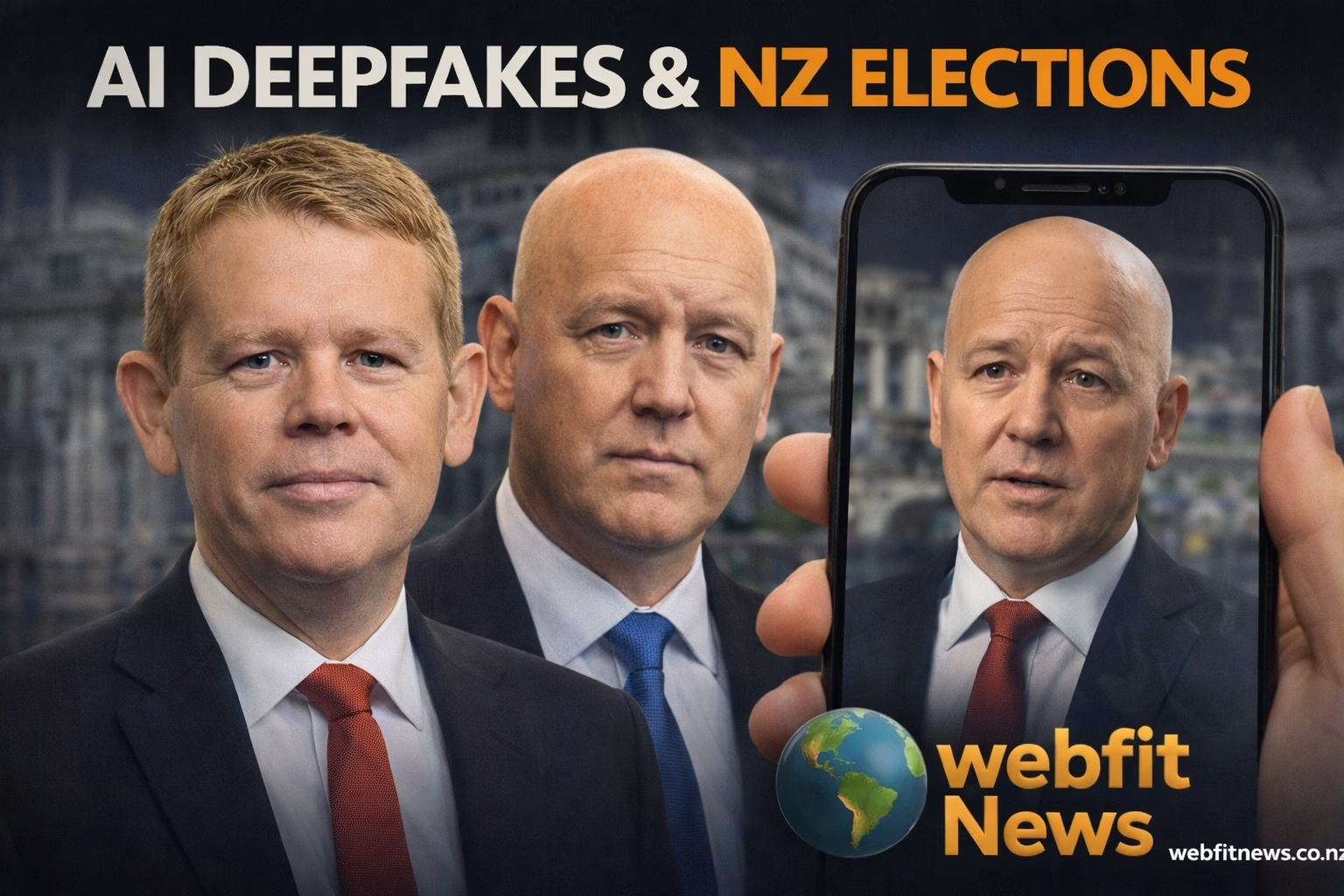
More specifically, AI-generated fake videos and audio involving politicians.
A Prediction That Deserves Attention
During the discussion, a clear prediction stood out.
The 2026 election campaign will likely see at least one AI-generated fake scandal involving a New Zealand politician.
Not a rumour.
Not a misleading headline.
But a convincing video or audio clip that appears real, spreads fast online, and leaves a lasting impression even after it is disproven.
This is not science fiction. It is already happening overseas.
Why This Matters More Than Past Election Tactics
Traditional misinformation relied on selective quotes or edited footage.
AI deepfakes are different.
They can show a political leader saying words they never said.
They can replicate voice, facial movement, and tone with unsettling accuracy.
And they move faster than fact-checking ever can.
Even when proven false, the damage is often done.
Psychologists and digital researchers have found that first impressions linger, especially when content triggers emotion such as anger, fear, or outrage.
Social Media Is the Weak Link
The concern is not just about technology.
It is about distribution.
Short-form platforms reward speed, not verification.
Content spreads before journalists, regulators, or even the platforms themselves can react.
Once shared widely, fake content can live on in screenshots, reposts, and fringe channels long after official corrections appear.
That creates a serious challenge for an election conducted under trust-based democratic norms.
Regulation Is Likely to Become a Campaign Issue
The same discussion also highlighted another likely flashpoint.
Social media regulation.
Expect arguments around:
- Protecting children online
- Preventing digital harm and manipulation
- Free speech versus platform responsibility
Overseas examples show that attempts to regulate social platforms can mobilise younger voters in unexpected ways. New Zealand may face similar pressure.
What starts as a technology issue could quickly become a political dividing line.
A Test for Political Leadership
New Zealand’s political leaders, including figures such as Chris Hipkins, Christopher Luxon, and Winston Peters, may all find themselves dealing with challenges their predecessors never faced.
Not just policy debates.
But digital credibility itself.
How quickly leaders respond to false content, how transparently they communicate, and how calmly they correct the record could matter as much as any manifesto promise.
What Voters Should Watch For
As the campaign approaches, voters should be alert to a few warning signs:
- Sensational videos with no clear source
- Clips shared widely without coverage from credible outlets
- Emotional content designed to provoke outrage rather than inform
Scepticism is no longer cynicism.
It is digital literacy.
The Bottom Line
The 2026 election may not be decided by one viral clip.
But trust could be.
AI will not replace politics.
But it may redefine how politics is experienced, debated, and believed.
That makes this election not just a contest of ideas, but a test of how resilient New Zealand’s democracy is in the digital age.
Webfit News will continue to track how technology, regulation, and political culture collide as the country moves toward election day.