By Geet G | Webfit News
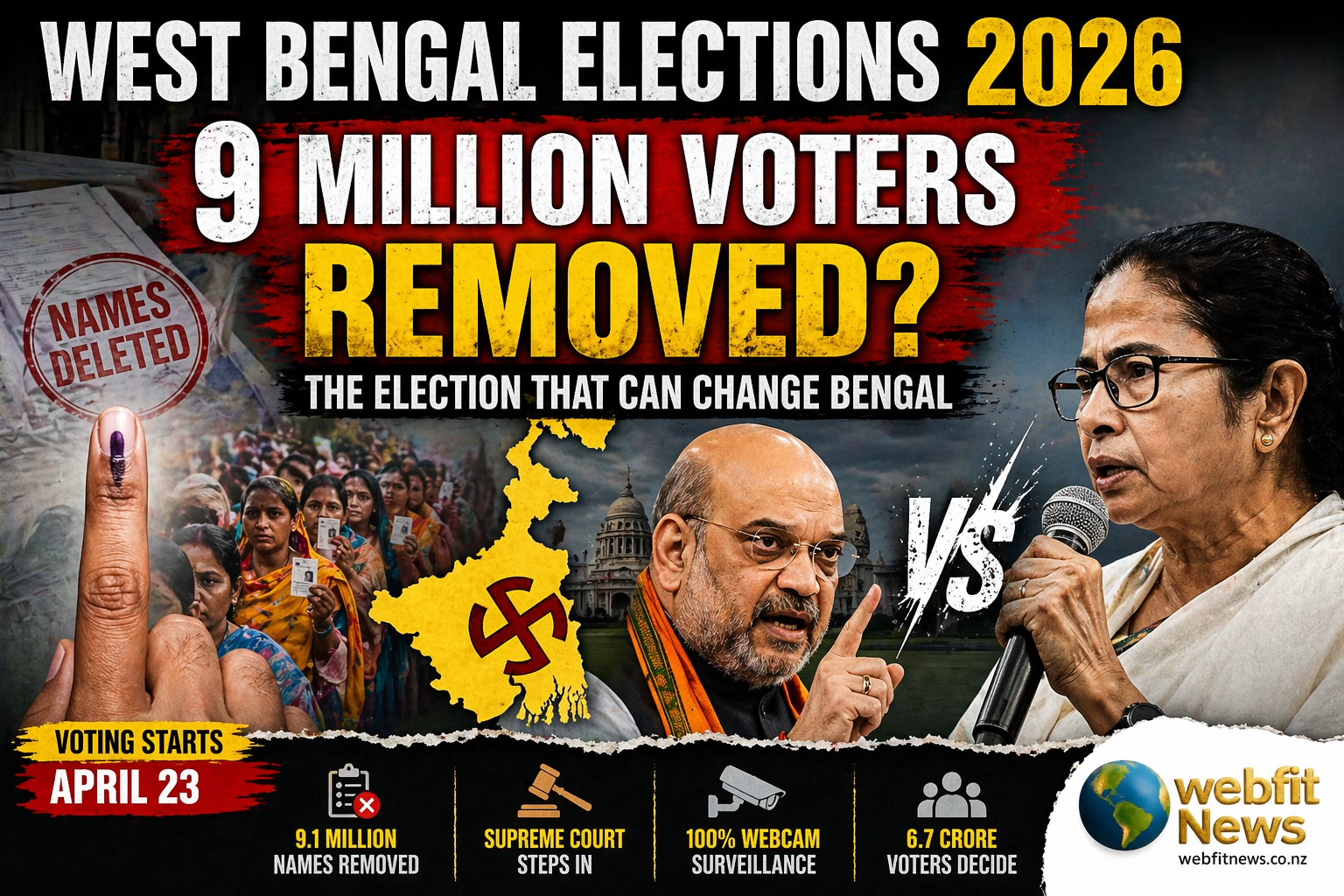
West Bengal heads into voting this week under intense national attention, after nearly 9.1 million names were removed from the electoral roll, raising serious concerns over voter access and electoral fairness.
Polling for the 2026 Assembly elections will begin on April 23, with over 6.7 crore eligible voters set to decide whether Chief Minister Mamata Banerjee secures a fourth consecutive term or the Bharatiya Janata Party makes a historic breakthrough in the state.
The Election Commission has compressed the entire election into two phases, a sharp shift from the eight-phase schedule seen in 2021, citing improved efficiency and reduced risk of prolonged violence.
Compressed Election, Massive Scale
The first phase of polling will cover 152 constituencies across 16 districts, including politically sensitive regions such as Murshidabad, Malda, and Cooch Behar. The second phase on April 29 will focus on the remaining 142 constituencies, including Kolkata and surrounding urban belts.
More than 80,000 polling booths have been set up, with voting scheduled from 7:00 AM to 6:00 PM. Voters present in line before closing time will still be allowed to cast their vote, according to Election Commission guidelines.
Security deployment is at record levels, with approximately 2.5 lakh central forces personnel stationed across the state to maintain order.
Voter Roll Revision Becomes Election Flashpoint
The biggest issue overshadowing the election is the Special Intensive Revision (SIR) of voter rolls.
The exercise has resulted in:
- 9.1 million deletions
- Nearly an 11.9 percent reduction in the electorate
- Around 4.5 million cases are still under review
The revision required voters to establish “legacy linkage” to older electoral records, which has proven difficult for migrant communities and younger voters.
Opposition parties have sharply criticised the move, alleging large-scale disenfranchisement. The matter escalated to the Supreme Court, which directed authorities to allow eligible voters cleared through last-minute verification to participate.
The outcome of these disputed voter entries could influence results in several closely contested seats.
TMC vs BJP: Welfare vs Governance Narrative
The election is being fought on two sharply contrasting narratives.
TMC’s Position
The Trinamool Congress is relying heavily on its welfare-driven governance model, including:
- Direct cash transfer schemes
- Grassroots administrative programs
- Strong regional identity messaging
The party continues to position itself as the protector of Bengali identity, while accusing opponents of attempting to alter the state’s demographic balance.
BJP’s Strategy
The BJP has focused its campaign on:
- Allegations of corruption
- Employment and economic growth
- Law and order concerns
- Issues related to illegal migration
The party has also introduced higher financial support promises aimed at attracting youth voters, along with commitments around governance reforms and administrative transparency.
Technology and Surveillance Shape This Election
The 2026 election marks a significant shift in how technology is used in Indian elections.
For the first time:
- 100 percent of polling stations will be webcast live
- AI-based monitoring systems will track irregularities in real time
- Automated alerts will be triggered in cases of overcrowding or suspicious activity
Political parties are also using AI tools for:
- Voter targeting
- Localised campaign messaging
- Digital outreach in regional languages
While these tools improve efficiency, concerns remain around misinformation and manipulation through synthetic content.
Key Battlegrounds and Voter Sentiment
North Bengal remains a crucial region, especially for the BJP, which performed strongly there in previous elections.
At the same time, communities such as the Matua voters, who hold influence across multiple constituencies, have emerged as a critical swing factor due to dissatisfaction linked to voter roll deletions.
Urban areas, particularly Kolkata, are expected to reflect issues like:
- Employment
- Governance
- Public services
While rural regions remain influenced by welfare delivery and local political networks.
Candidate Profile Raises Questions
Data from the first phase shows:
- A significant number of candidates facing serious criminal charges
- High concentration of wealthy candidates, with average declared assets exceeding ₹1 crore
This has raised concerns about the growing gap between political representation and ground realities, especially in a state facing economic challenges.
Webfit News Perspective
This election is not just about who forms the next government in West Bengal.
It reflects a deeper shift in Indian politics.
On one side is a model driven by welfare and identity.
On the other is a push for governance reform and structural change.
But the real issue lies elsewhere.
When millions of voters question whether they are even eligible to vote, the focus moves beyond politics to the credibility of the electoral process itself.
The results on May 4 will decide the government.
But the larger question is whether trust in the system emerges stronger or weaker after this election.
What Happens Next
- Phase 1 Voting: April 23
- Phase 2 Voting: April 29
- Counting of Votes: May 4
West Bengal now moves from campaign noise to decision mode.
References
- Election Commission of India data and polling schedule
- Voter roll revision statistics and SIR analysis
- Supreme Court directions on voter eligibility
- Political party manifestos and public statements