
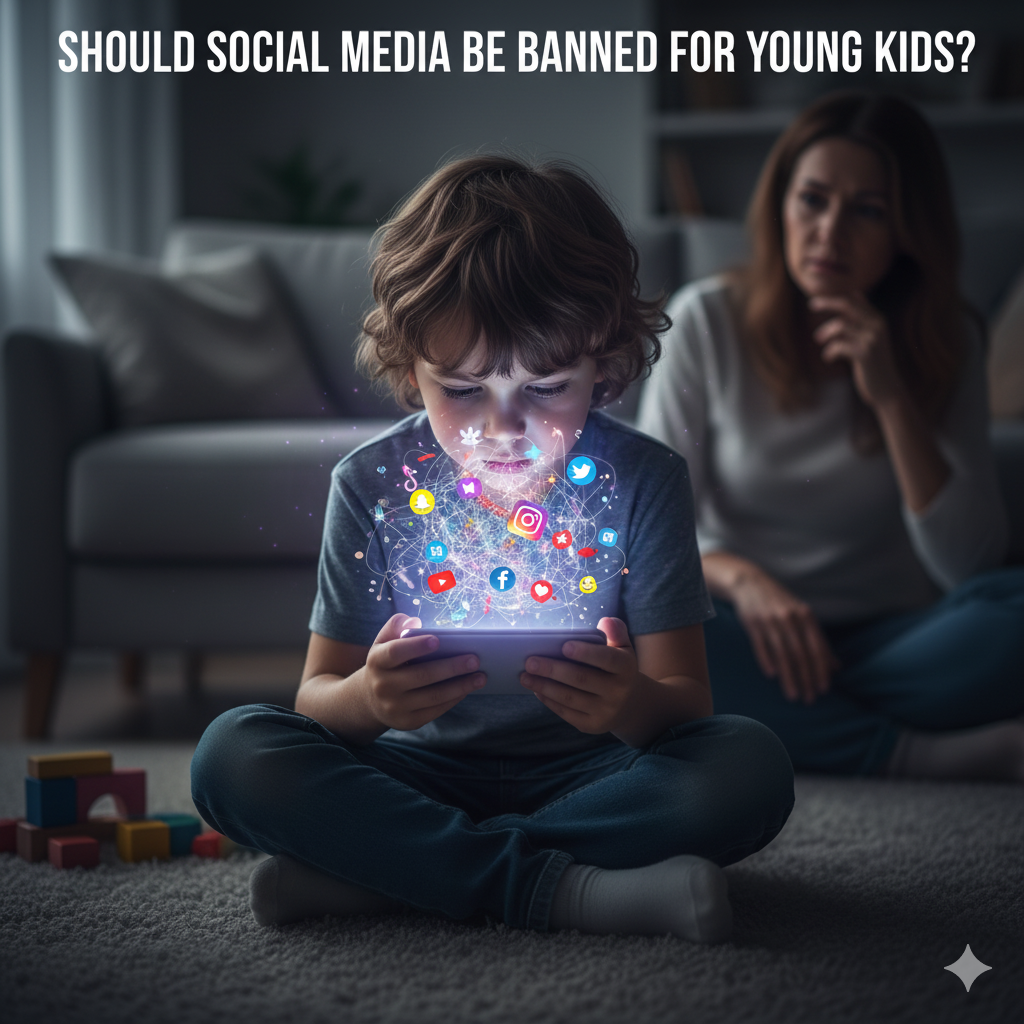
The Debate That Touches Every Family
Governments in Australia and New Zealand are once again debating a new rule for a possible social media ban for children under 16 years old. Some politicians want the age limit to be 14, while others believe it should be 16.
The idea sounds simple: protect young minds from the harmful side of social media. But in reality, the topic is not that simple. It raises important questions about privacy, safety, freedom, and the role of parents.
The Big Question: Can We Really Stop Kids from Getting Online?
Anyone who has raised a teenager knows how hard it is to completely block internet use. Many young people today are tech-savvy and can easily find ways around restrictions. Using VPNs or fake accounts is not new for them.
But that is not the biggest concern. Experts are warning that if every social media user must go through an age-verification process, it could create new risks for everyone’s privacy.
To prove your age, you might need to share personal information or even upload an ID or face scan. This means millions of people’s private data could be stored by the same social media companies that already have a poor record of protecting privacy.
The Privacy Dilemma
Human rights groups like Amnesty International have said that age-verification technology is still new and untested. They worry that it could give companies more control over people’s personal data.
Think about it this way: many adults do not feel comfortable giving detailed ID information just to browse online or watch videos. Why would they want to hand that information to social media companies?
It also raises another question: how will the government punish foreign websites that do not follow the new rules? Many social media and entertainment platforms are based overseas, making enforcement nearly impossible.
What Exactly Is a Social Media Platform?
This is another legal puzzle. The proposed law in Australia includes apps like TikTok, YouTube, and Snapchat. But the way it defines social media could also include platforms like Wikipedia, which is mainly an educational site.
If the rule applies to any website that allows users to post and comment, then many learning and discussion platforms could get trapped in the same net. Non-profit sites like Wikipedia cannot afford the cost of managing strict verification systems.
The Risk of Isolation
The rule aims to protect young people from online bullying, hate, and misinformation, which are real problems. But what happens to kids who find comfort and connection online?
For many teenagers, especially those who feel lonely or different, online spaces are where they find friends, community and support. Banning social media completely until they are 16 could make them feel even more isolated.
Yes, social media can be toxic. But it can also be a lifeline. For some young people, online connections have helped them stay mentally strong during difficult times.
The Bigger Picture
The argument to protect kids sounds good, but it may be more about political image than real care. Governments often talk about mental health and safety for young people while cutting support programs and benefits at the same time.
For example, recent decisions to cut financial help for 18 and 19-year-olds whose parents earn just over $65,000 a year show a strange kind of logic. Families already struggling with rent and food prices are now being asked to pay more, while their teenage children lose support.
This is not how real care looks. Punishing struggling families while pretending to care about kids’ wellbeing sends a mixed message.
What We Really Need
If the goal is to build healthier and happier young people, then the answer cannot just be a ban. We need education, guidance, and open family discussions about using social media safely.
Parents and schools should work together to teach kids how to identify fake news, respect others online, and take breaks from the screen.
Instead of locking the door to the online world, it may be better to teach young people how to walk through it wisely.
A Final Thought
The world has changed, and social media is now part of growing up. The challenge is to prepare children to face that world with confidence, awareness, and emotional strength, not simply to cut them off until it is too late.
Real protection means empowering them to use technology responsibly, not making laws that look good on paper but are impossible to enforce.