
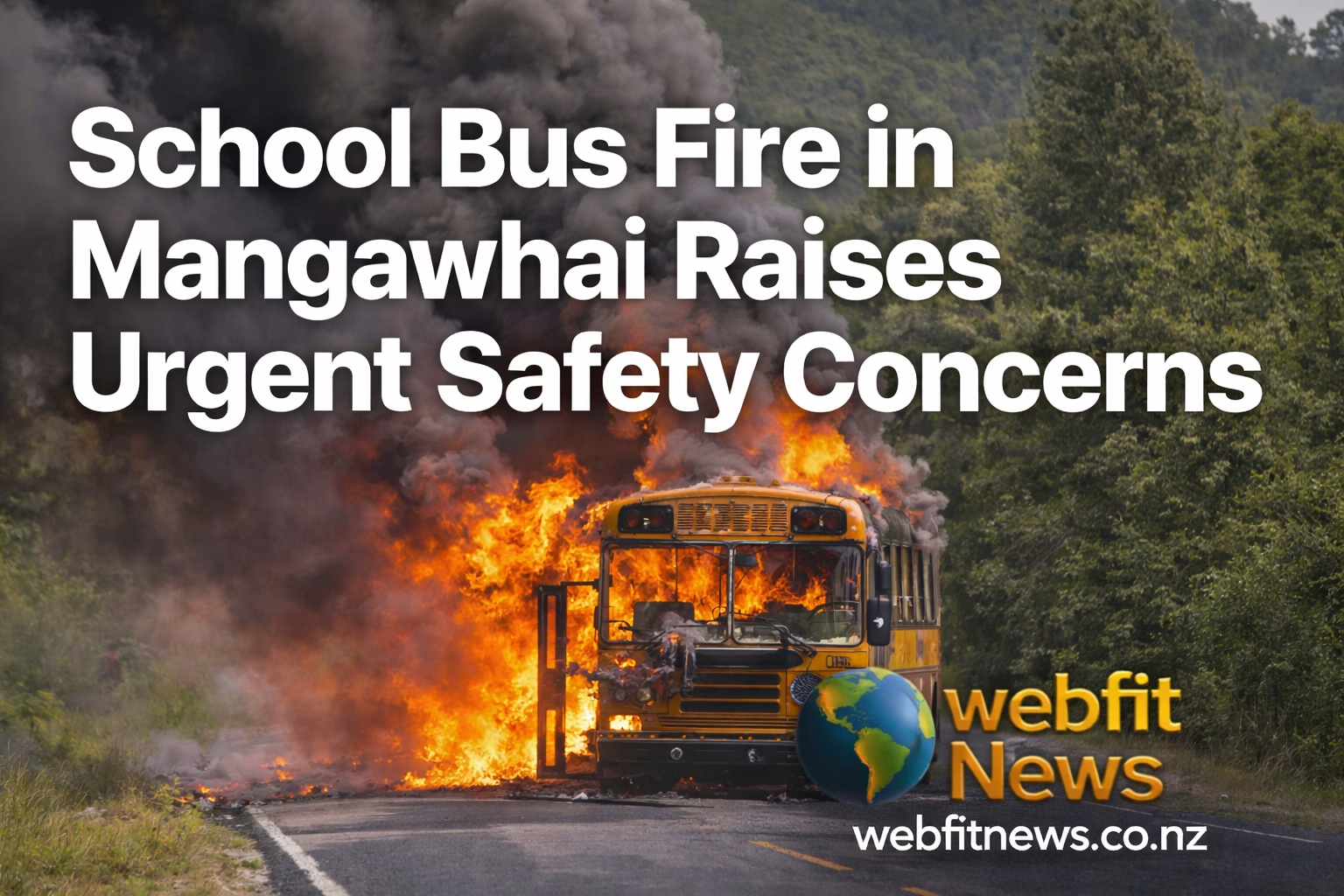
On 9 February 2026, a school bus carrying 19 students and its driver caught fire on Mangawhai Road, just south of the township of Mangawhai, around 60 kilometres north of Auckland. Authorities confirmed that all 20 people on board were evacuated safely. However, the incident has raised serious concerns about vehicle safety after reports that the main bus doors failed to open, forcing students to escape through the driver’s side.
Fire and Emergency New Zealand crews responded to the blaze shortly before 4 p.m. and worked to extinguish the fire. Police closed a section of Mangawhai Road near Carter Road to protect public safety while emergency services attended the scene.
The incident has triggered urgent discussion among parents, transport safety advocates, and authorities about emergency exit reliability, vehicle maintenance standards, and school transport protocols in New Zealand.
Why the Mangawhai Bus Fire Is a National Concern
While no injuries were reported, the circumstances of the evacuation have heightened anxiety among families and the wider community. Reports that the main exit doors failed to open have prompted calls for a review of several critical areas, including:
- Emergency exit systems on school buses
- Maintenance and inspection standards for student transport
- Regulatory enforcement by road safety authorities
- Driver training for mechanical and fire emergencies
A father of one student told media his daughter had to climb out through the driver’s side because the regular doors would not open. He described the situation as deeply concerning and questioned why an emergency override did not function as expected.
Public reaction reflects a broader expectation that vehicles carrying children must meet the highest possible safety standards and perform reliably during emergencies.
Incident Summary: What We Know So Far
| Detail | Information |
|---|---|
| Location | Mangawhai Road near Carter Road, Mangawhai, Northland |
| Date and time | 9 February 2026, approximately 3.55 p.m. |
| People on board | 19 students and 1 driver |
| Injuries | None reported |
| Cause | Possible mechanical issue, under investigation |
| Emergency response | Fire and Emergency NZ extinguished the fire |
| Road closure | Section of Mangawhai Road temporarily closed |
| Evacuation issue | Main doors reportedly failed to open |
Sources include RNZ, NZ Herald, and local reporting.
How School Bus Safety Works in New Zealand
School buses in New Zealand are required to comply with standards set under the Land Transport Rule: Passenger Service Vehicles 1999 and related safety regulations. These rules cover:
- Emergency exits and signage
- Regular vehicle inspections and certifications
- Driver training and licensing requirements
- Fire safety and emergency preparedness
However, incidents like the Mangawhai bus fire raise questions about whether existing rules are being enforced consistently and whether safety systems are being tested under real emergency conditions.
Voices From the Community
Parents and residents shared shock and relief across social media following the incident.
Several comments highlighted similar concerns:
- “Thank goodness the driver acted quickly, but what if the doors had completely failed?”
- “Children should never be in a situation where they have to scramble out under stress.”
One local resident described the fire as a frightening sight and said early information suggested a mechanical issue, although official investigations are still underway.
What Safety Experts Are Warning About
Road safety advocates say emergency systems on school buses must be fail-safe, especially during fires. Key concerns raised by experts include:
- Reliability of emergency door mechanisms
- Frequency and depth of maintenance checks
- Independent compliance audits of bus fleets
- Practical emergency training for drivers
As school transport demand grows across both urban and rural regions, these concerns are increasingly relevant nationwide.
Broader Policy and Transport Implications
The Mangawhai incident has prompted wider debate about whether New Zealand’s school transport system is sufficiently resilient. Key policy questions now being discussed include:
- Should emergency exit systems be redesigned to ensure fail-safe operation?
- Are current inspection and compliance checks adequate for vehicles carrying children?
- Does the Ministry of Transport need stronger enforcement powers?
- Should near-miss incidents be reported nationally, not just accidents with injuries?
These questions are likely to be raised with local MPs, school boards, and transport authorities in the coming weeks.
What Happens Next
The cause of the fire remains under investigation, with mechanical failure identified as a possible factor. Authorities will examine the vehicle and evacuation sequence to determine:
- Why the main doors failed to open
- Whether maintenance requirements were met
- If emergency procedures were followed correctly
Parents and school communities are calling for transparency and regular updates as the investigation continues.
NZ News Angle: A Wake-Up Call for School Transport Safety
The Mangawhai school bus fire should serve as a clear warning for school transport systems across New Zealand. It shows how quickly a routine school run can turn dangerous when critical safety systems fail.
Even without injuries, the failure of a primary exit raises serious questions about readiness, regulation, and accountability. In a country that places a strong emphasis on child safety, this incident goes beyond a single fire. It highlights the urgent need to ensure that systems designed to protect children work exactly as intended when it matters most.