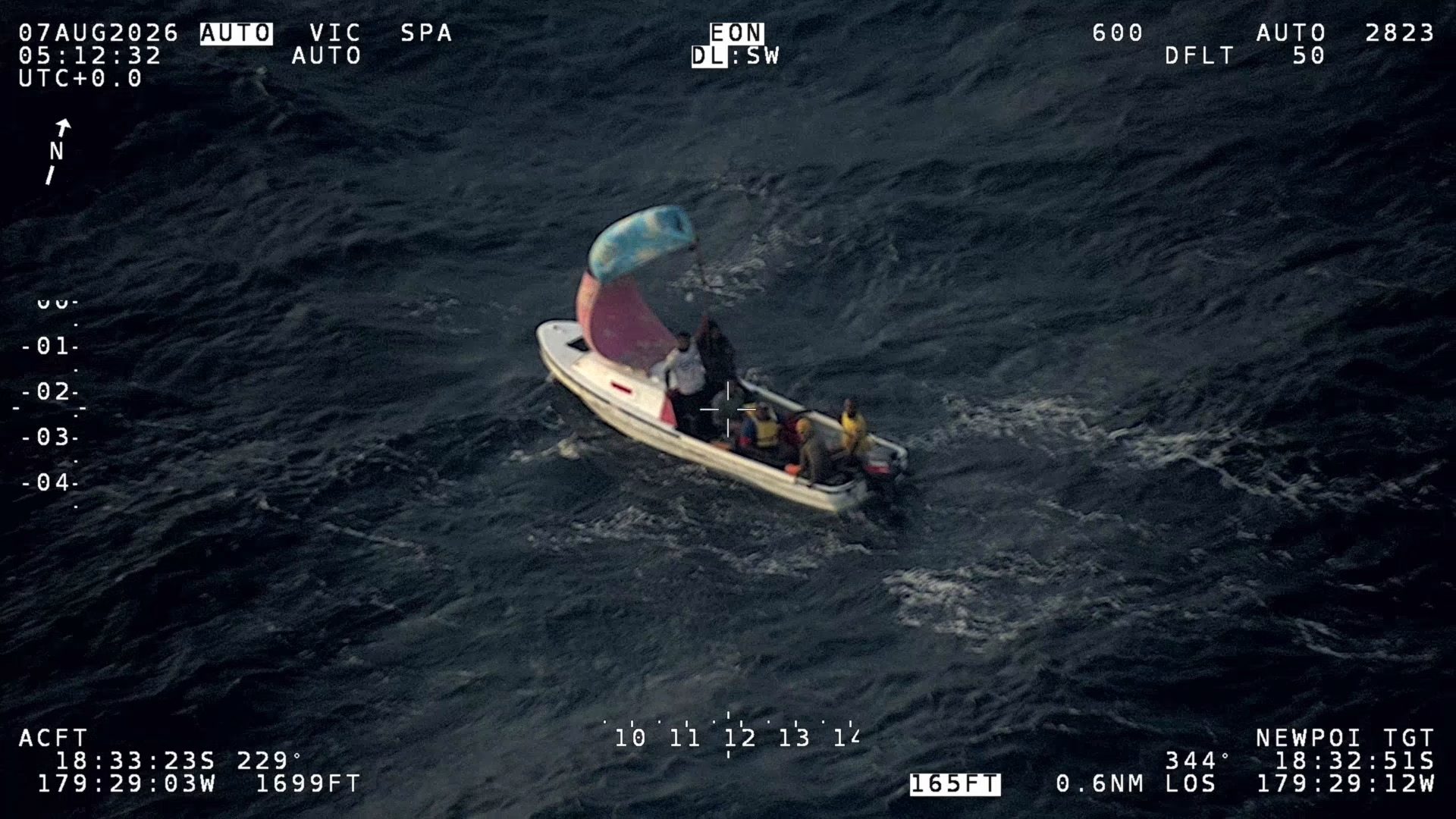
A Royal New Zealand Air Force P-8A Poseidon crew has helped locate six people reported overdue in Fijian waters, triggering a successful rescue by the Republic of Fiji Navy in rough and challenging sea conditions.
The operation unfolded after the six people left Namuka Island for Fulaga in Fiji’s Lau Group on Thursday morning but failed to arrive at their destination.
Local vessels initially searched for the missing boat. The effort was later expanded, with a chartered local aircraft and the Royal New Zealand Air Force joining the search on Friday.
The RNZAF crew had originally been preparing to conduct a fishery patrol in Fiji when the Joint Rescue Coordination Centre Fiji requested assistance.
The mission quickly changed from routine patrol work to an urgent search and rescue operation.
Search launched in difficult conditions
The RNZAF P-8A Poseidon crew re-planned its mission and headed towards the designated search area.
Conditions at sea were difficult.
According to the RNZAF, strong winds and swells of around 3.5 metres were creating heavy salt spray and reducing visibility.
Despite the poor conditions, the Poseidon crew began a combination of radar and visual searches across the area where the missing boat was believed to be.
The search continued for around six hours.
As daylight began to fade, the crew eventually spotted the overdue vessel at approximately 5.30pm.
The small boat was located 14.6 nautical miles southwest of Vanuavatu.
The discovery was a critical turning point in the operation.
Fiji Navy vessel directed to survivors
Once the missing boat had been located, the RNZAF crew contacted the Republic of Fiji Navy Ship Savenaca, which was operating close to the search area.
The Fijian Navy vessel then made its way towards the group.
Because of the rough sea conditions, the Poseidon remained overhead to maintain contact and support the rescue effort until the navy vessel arrived.
Shortly after 8pm, the six people were successfully picked up.
They were later transported to Suva for medical assessment before being reunited with their families and loved ones.
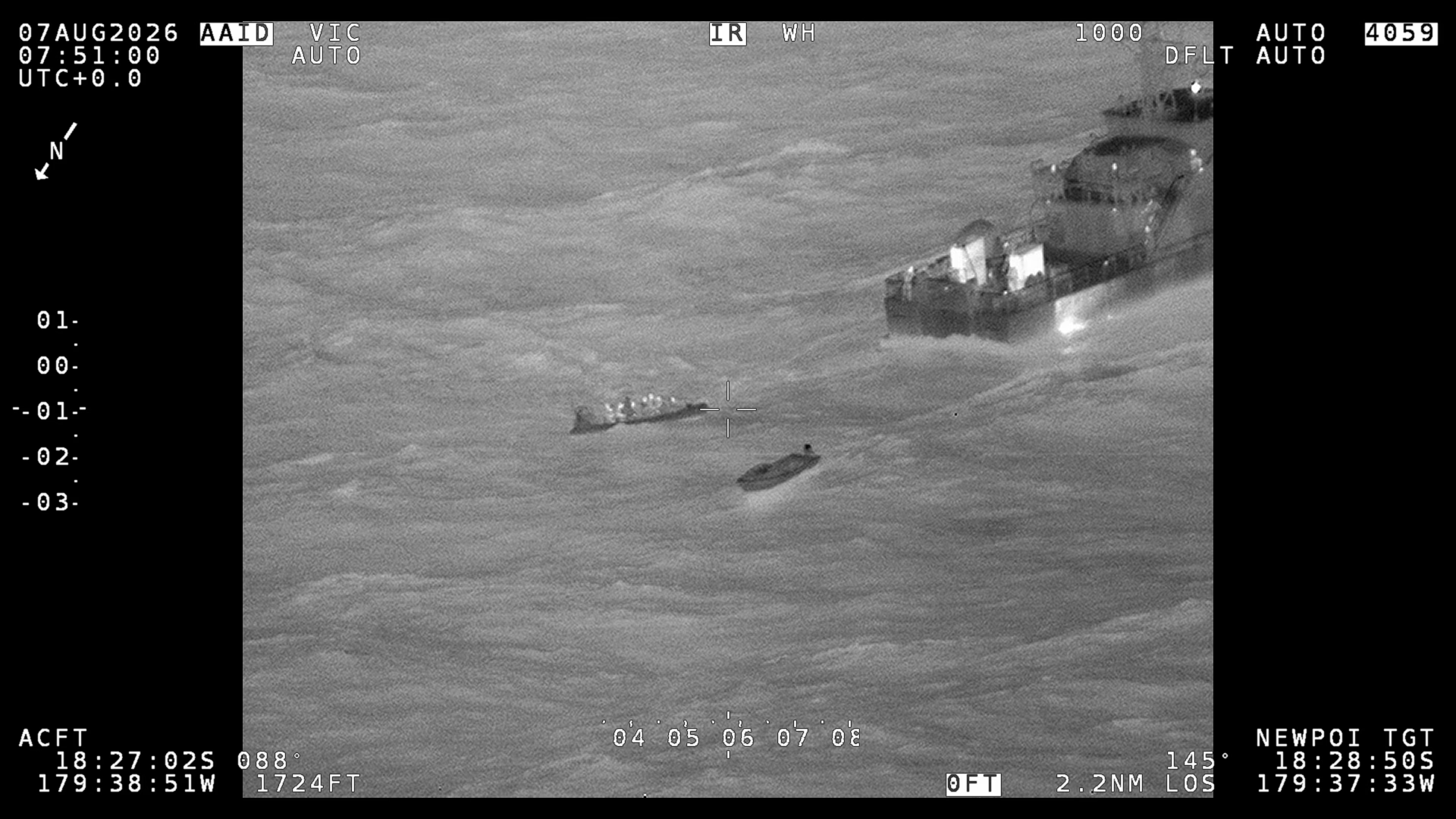
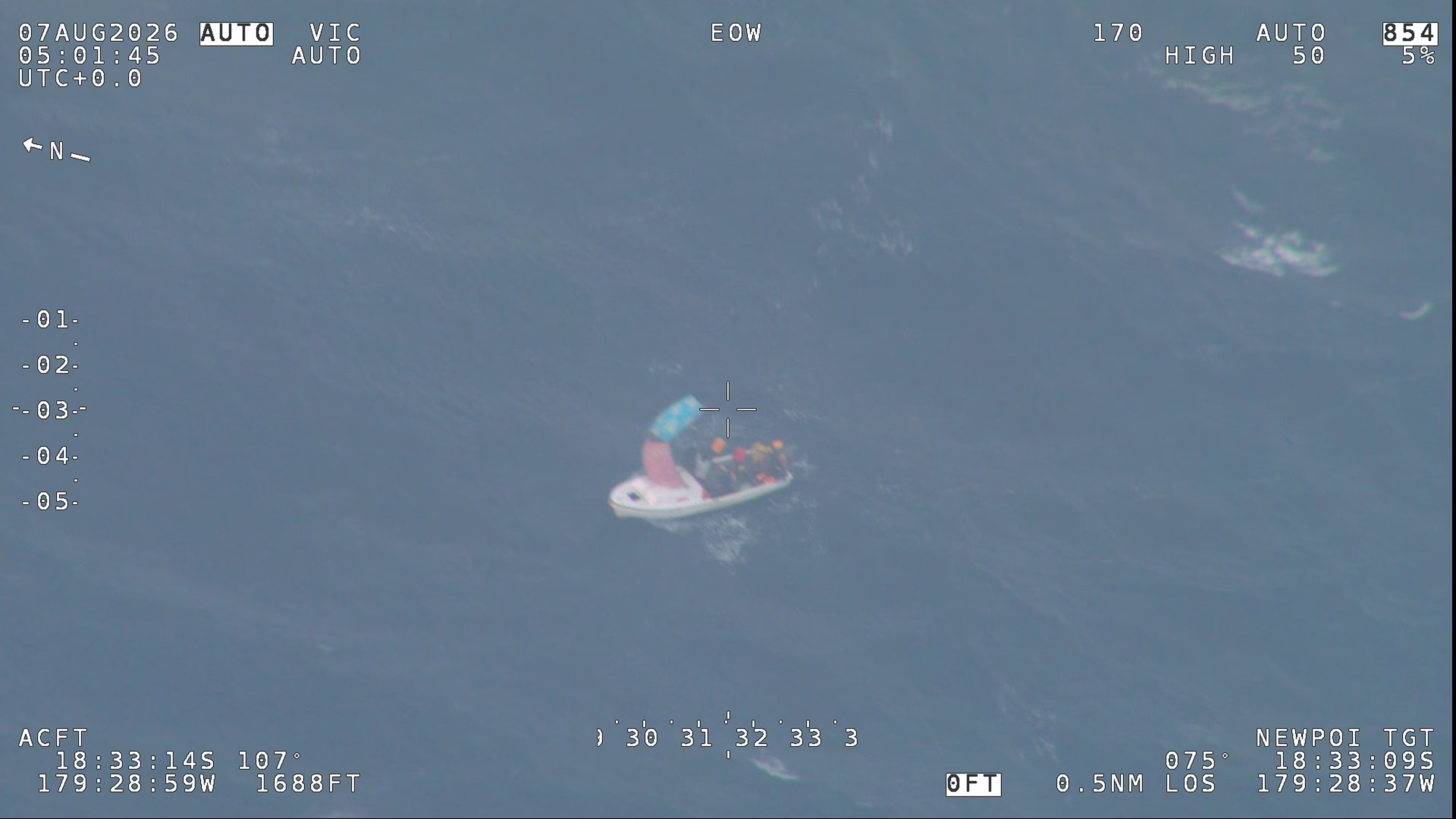
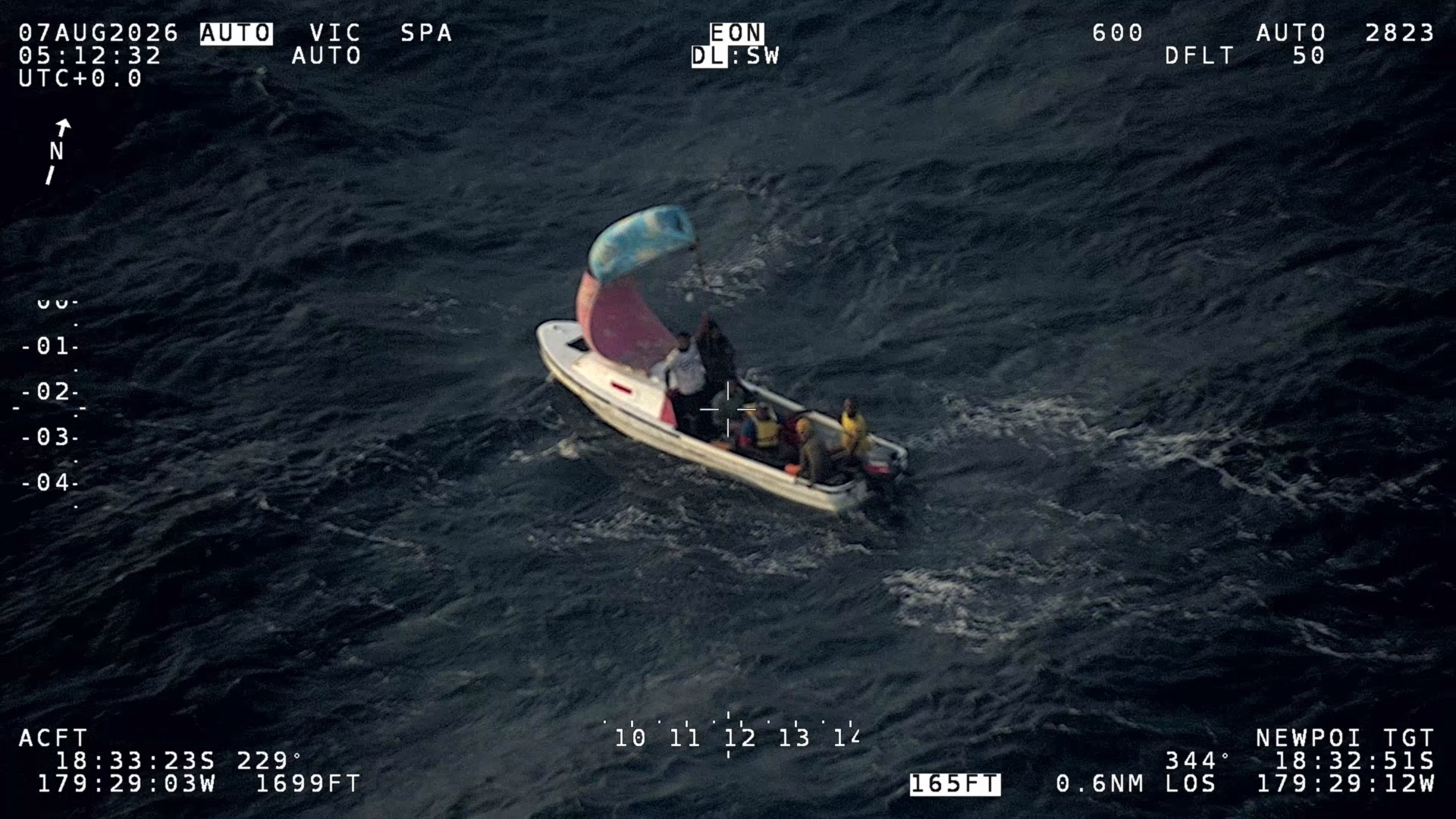
The aerial images released following the rescue show just how exposed the small boat was in the open ocean and the scale of the challenge facing both the people onboard and the rescue crews.
Crew re-tasked at short notice
No. 5 Squadron tactical coordinator and crew member Flight Lieutenant Holly Graham said the aircraft had been preparing for its planned fishery patrol when the team received the request to assist.
“We quickly re-planned and headed out to the search area,” she said.
She described the weather as particularly difficult, with high winds and significant swells affecting visibility.
“The weather was challenging with strong winds and 3.5m swells creating salt spray which decreased visibility,” Graham said.
The aircraft’s radar capability and the crew’s visual search were both important in locating the vessel.
Despite modern surveillance systems, search and rescue work in open ocean conditions can still be extremely demanding, particularly when trying to identify a relatively small craft over a large search area.
Six hours before the breakthrough
The crew eventually found the boat after approximately six hours of searching.
With the sea remaining rough, the aircraft stayed overhead rather than leaving the area immediately.
That allowed the RNZAF crew to continue observing the situation and support coordination until the Republic of Fiji Navy reached the survivors.
Graham said the entire crew was pleased with the outcome.
“It was a long day, but the crew was delighted with the outcome,” she said.
“Our thanks to all who assisted, particularly the crew of RFNS Savenaca. Our best wishes to the survivors and their families.”
Regional cooperation proves critical
The rescue highlights the importance of cooperation between New Zealand and Pacific partners during maritime emergencies.
Fiji’s vast maritime environment means search and rescue missions can cover extremely large areas, where local vessels, aircraft, defence forces and regional partners may all need to work together.
In this case, the rescue involved local search vessels, a chartered aircraft, Fiji’s Joint Rescue Coordination Centre, the RNZAF and the Republic of Fiji Navy.
The outcome demonstrates how aerial surveillance capability can make a major difference when time, visibility and deteriorating weather conditions are working against search teams.
The P-8A Poseidon is used by the Royal New Zealand Air Force for maritime surveillance and patrol operations. Its ability to cover large ocean areas and use radar alongside visual search techniques makes it particularly valuable during maritime search and rescue operations.
A successful ending after anxious wait
For the families of the six people onboard, the operation ended with the news they had been hoping for.
After being located in increasingly difficult sea conditions, all six were successfully rescued and taken for medical assessment.
The incident could easily have ended very differently.
The combination of persistent searching, regional coordination and the ability of the RNZAF crew to locate the small vessel before darkness fully set in proved decisive.
For the crews involved, the mission also reinforced how quickly routine defence operations can turn into life-saving assignments.
What began as preparation for a fishery patrol ended with six people being found alive in rough Fijian waters and brought safely back to shore.
Photo captions: Images taken from the RNZAF P-8A Poseidon show the small boat after it was located and the subsequent rescue by the Republic of Fiji Navy.
Source: New Zealand Defence Force / Royal New Zealand Air Force
References
- New Zealand Defence Force media release on the RNZAF P-8A Poseidon search and rescue operation in Fiji
- Joint Rescue Coordination Centre Fiji
- Republic of Fiji Navy rescue response