AUCKLAND: New Zealand is increasing its military activity across the Indo-Pacific while simultaneously developing a new generation of short-range drone capability at home, highlighting how rapidly the Defence Force is adapting to a changing security environment.
From August to October, the New Zealand Defence Force will deploy naval ships, aircraft and personnel across the Indo-Pacific for sanctions monitoring, multinational exercises, humanitarian response training and wider regional security activities.
At the same time, the New Zealand Army has begun specialist training in First Person View, or FPV, drones, including teaching soldiers to build, repair and operate unmanned aircraft that can conduct surveillance and, if required in future operations, potentially carry out strikes.
Together, the developments offer a broader picture of where New Zealand defence planning is heading.
The traditional military assets remain important, including frigates, helicopters and long-range surveillance aircraft. But relatively inexpensive drones, advanced sensors, 3D printing and resilient battlefield supply systems are becoming increasingly important as modern conflicts change the way militaries operate.
Te Mana moves from RIMPAC to North Asia
Royal New Zealand Navy frigate HMNZS Te Mana will move from Exercise Rim of the Pacific, known as RIMPAC, into maritime security operations in North Asia.
The frigate will monitor for possible breaches and evasions of United Nations Security Council sanctions imposed on North Korea.
The sanctions are intended to restrict resources supporting North Korea’s nuclear weapons and ballistic missile programmes.
New Zealand has participated in the Pacific Security Maritime Exchange since 2018 and regularly contributes naval and air assets to sanctions-monitoring activities.
Commander Joint Forces Major General Rob Krushka said that work would continue during 2026.
For Te Mana, this deployment represents a first.
It is the first time the Anzac-class frigate has been deployed specifically to support United Nations sanctions monitoring.
Aotearoa provides support at sea
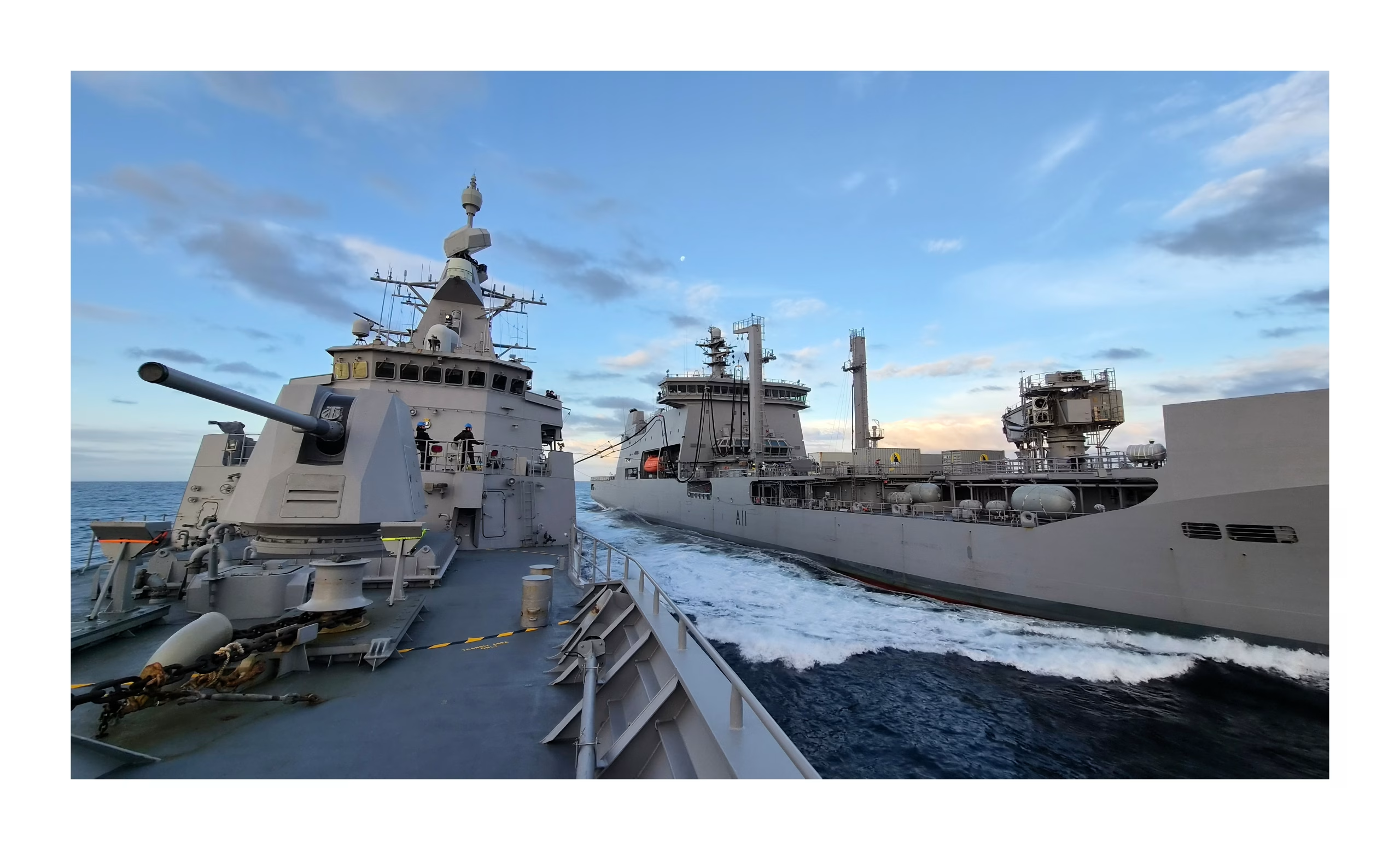
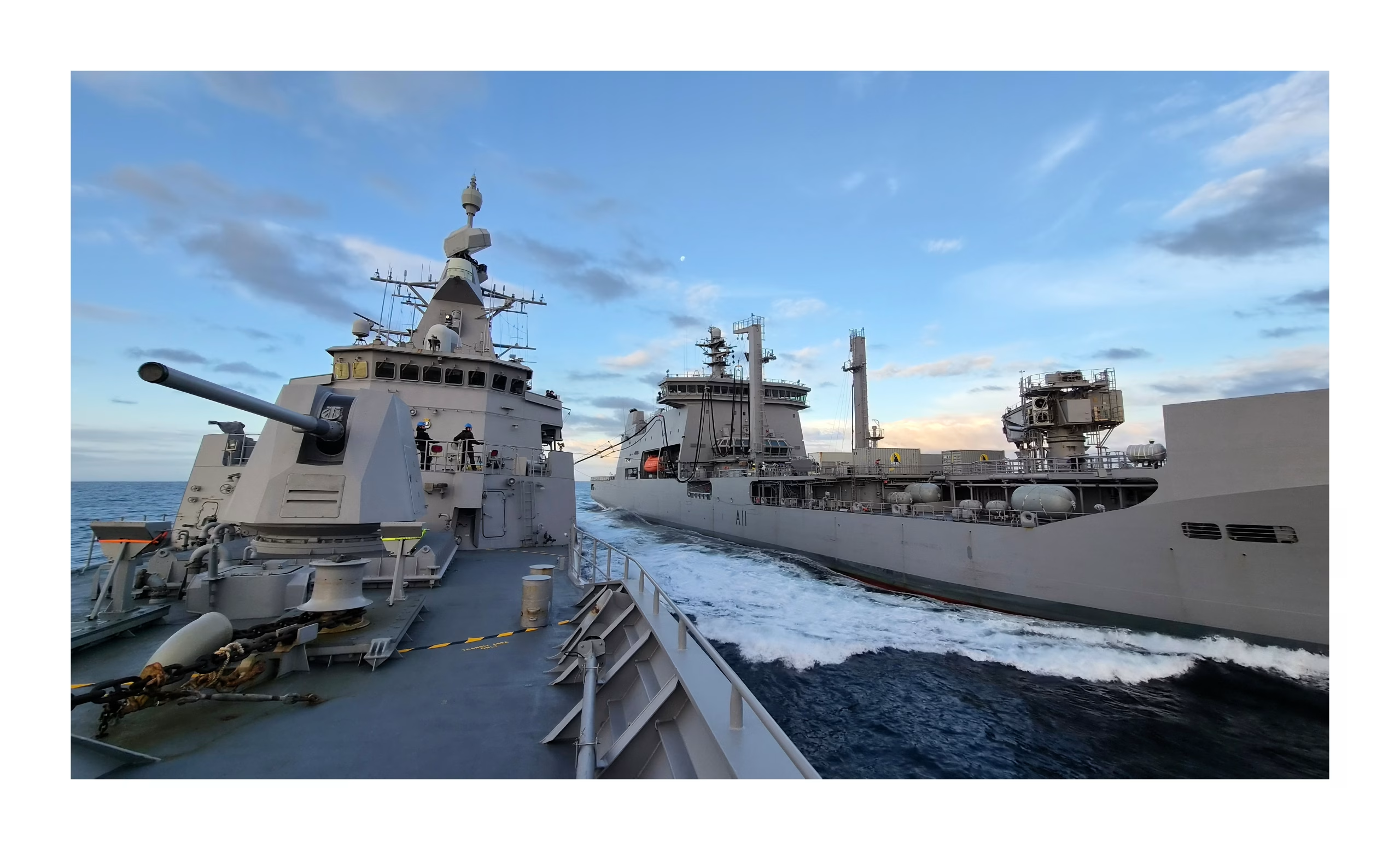
Te Mana is operating alongside HMNZS Aotearoa as part of a Royal New Zealand Navy Task Group.
Aotearoa provides an important logistical capability, allowing warships to receive fuel and supplies while remaining at sea for longer periods.
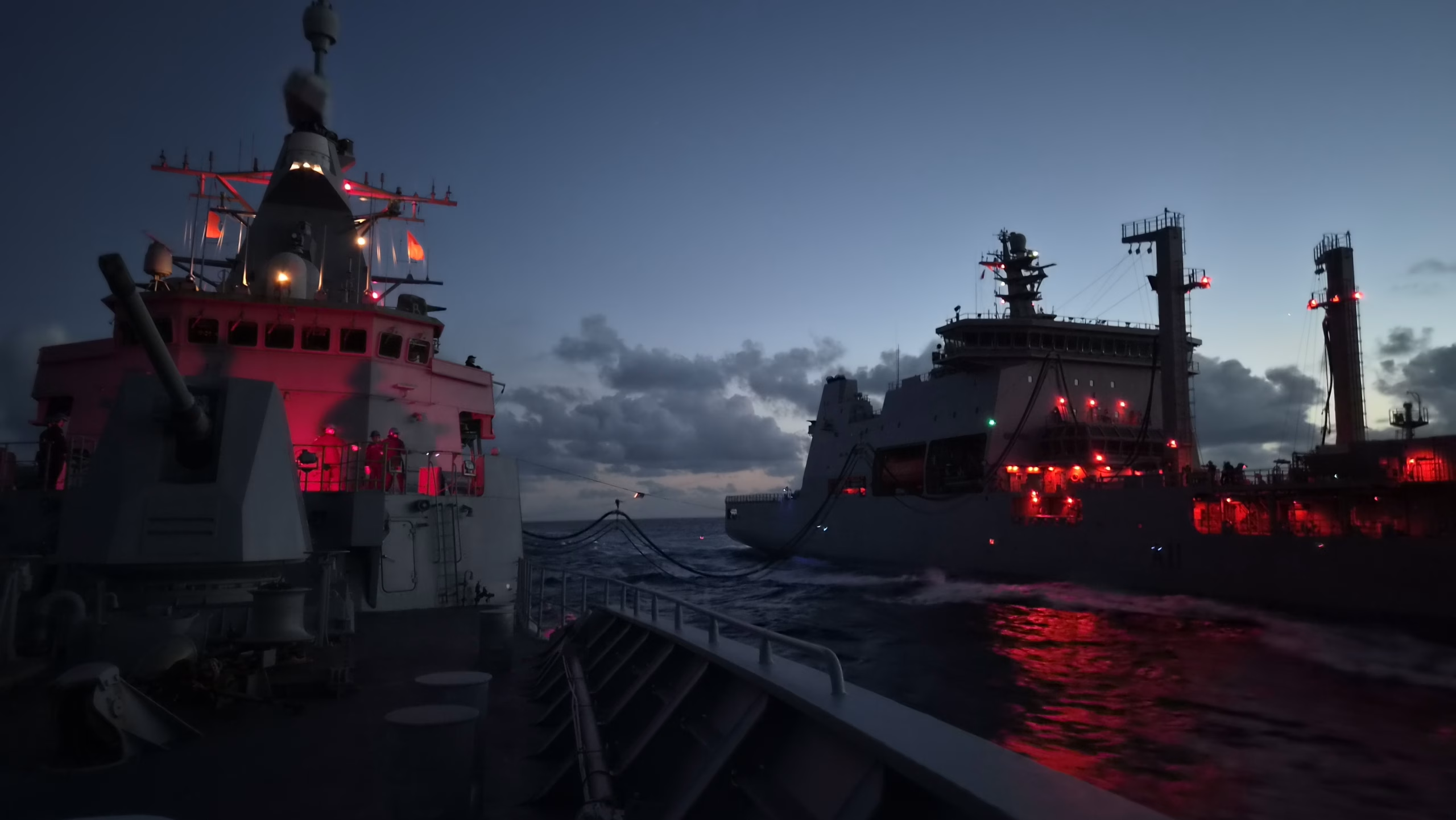
The two vessels recently conducted day and night replenishments at sea during RIMPAC.
Both ships are also carrying SH-2G(I) Seasprite helicopters, which can support surveillance, transport and other maritime activities.
During the Indo-Pacific deployment, the task group is expected to participate in an ASEAN maritime cooperative activity and undertake port visits in Australia, Japan, Papua New Guinea, the Philippines and the Republic of Korea.
These engagements give New Zealand personnel the opportunity to work alongside other regional militaries and develop common procedures before those forces are required to respond to a real security or humanitarian crisis.
P-8A Poseidon also heading into the region
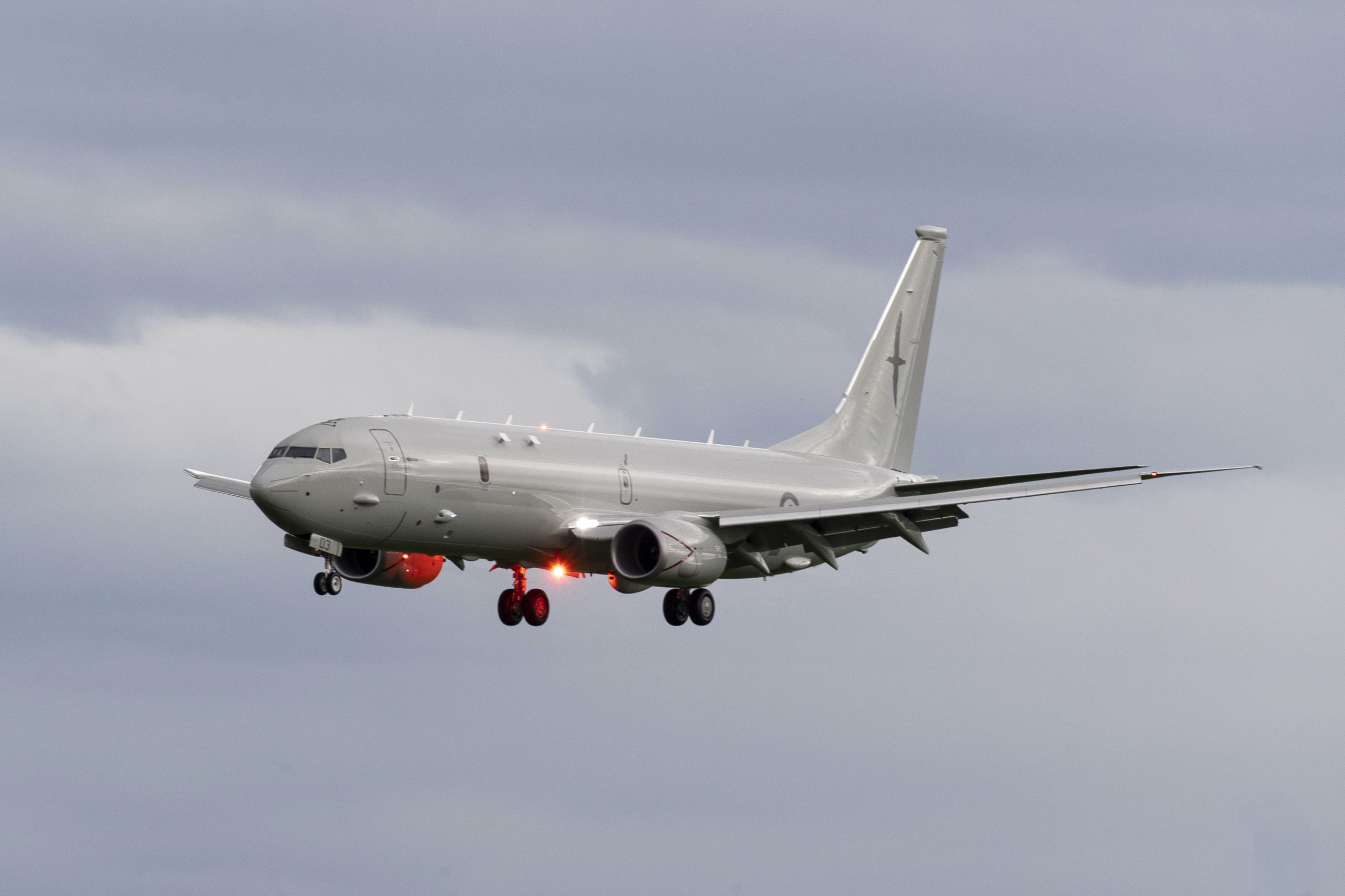
The Royal New Zealand Air Force will contribute personnel and a P-8A Poseidon maritime patrol aircraft to multinational exercises.
One of those deployments will involve the Five Power Defence Arrangements’ Exercise Bersama Lima in Singapore.
The Five Power Defence Arrangements bring together New Zealand, Australia, Malaysia, Singapore and the United Kingdom.
For New Zealand, participation allows crews to practise operating inside a larger multinational force and strengthens interoperability with countries the NZDF may work alongside during future operations.
The P-8A Poseidon is capable of conducting long-range maritime surveillance and other intelligence-related missions.
Its role in the Indo-Pacific reflects the growing importance of understanding what is happening across large areas of ocean, particularly as regional competition becomes more complex.
Humanitarian response remains part of the mission
The NZDF deployment is not entirely focused on military confrontation.
Personnel and specialist capabilities will also take part in a multinational ASEAN exercise in Indonesia focused on humanitarian assistance and disaster relief.
That capability is particularly relevant in the Indo-Pacific, where earthquakes, cyclones, volcanic eruptions and tsunamis can create major humanitarian emergencies.
Military aircraft and naval vessels can be valuable during those events because they can move personnel, supplies, fuel and equipment into areas where civilian infrastructure may have been damaged.
Major General Krushka said New Zealand remained committed to working alongside regional partners on enforcement operations, regional stability and practical cooperation.
The NZDF says all of its activities are conducted in accordance with international law, including the United Nations Convention on the Law of the Sea.
But the transformation is also happening inside the Army
While New Zealand’s larger military platforms operate around the Indo-Pacific, the Army is also investing in technology that looks very different from a conventional frigate or surveillance aircraft.
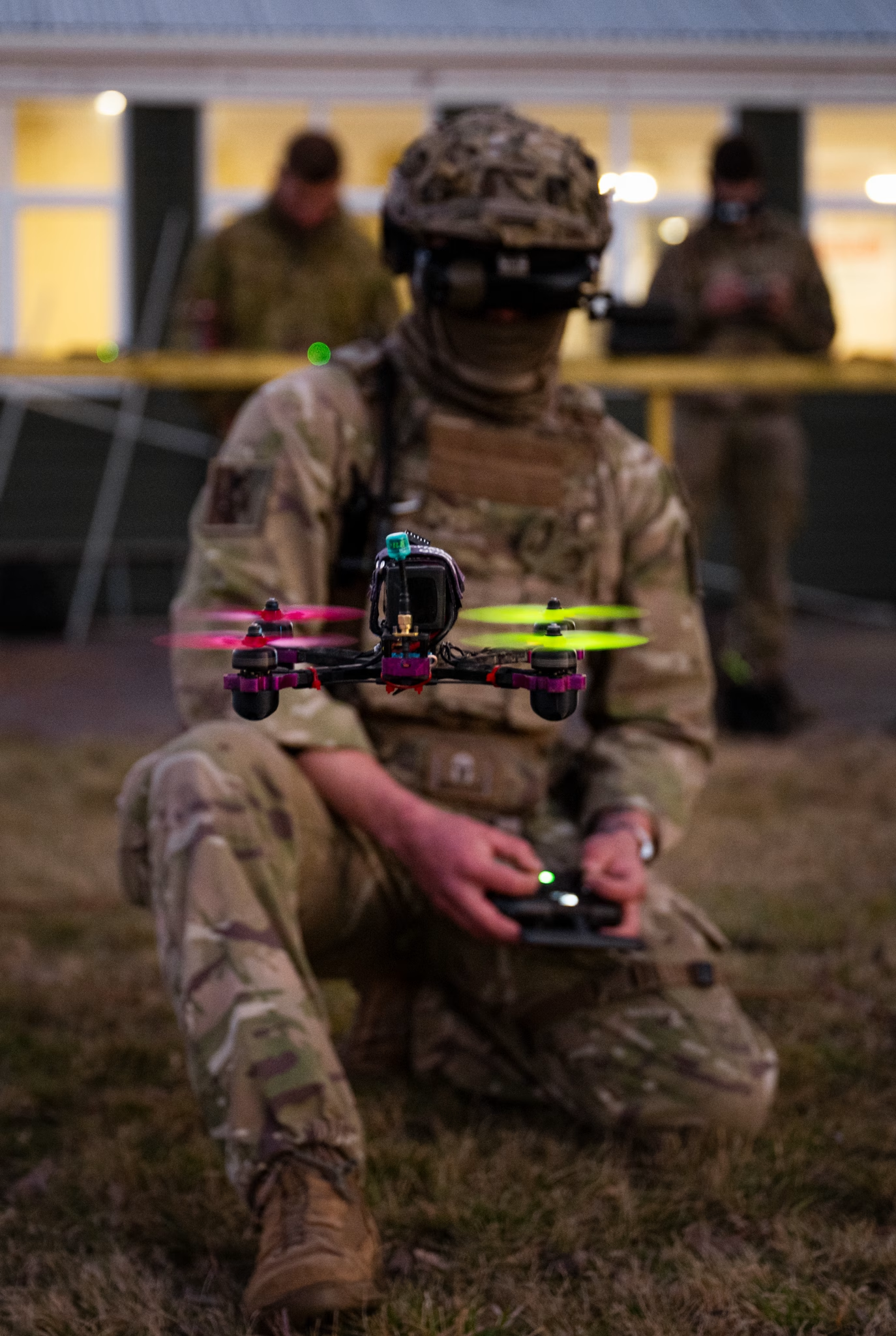
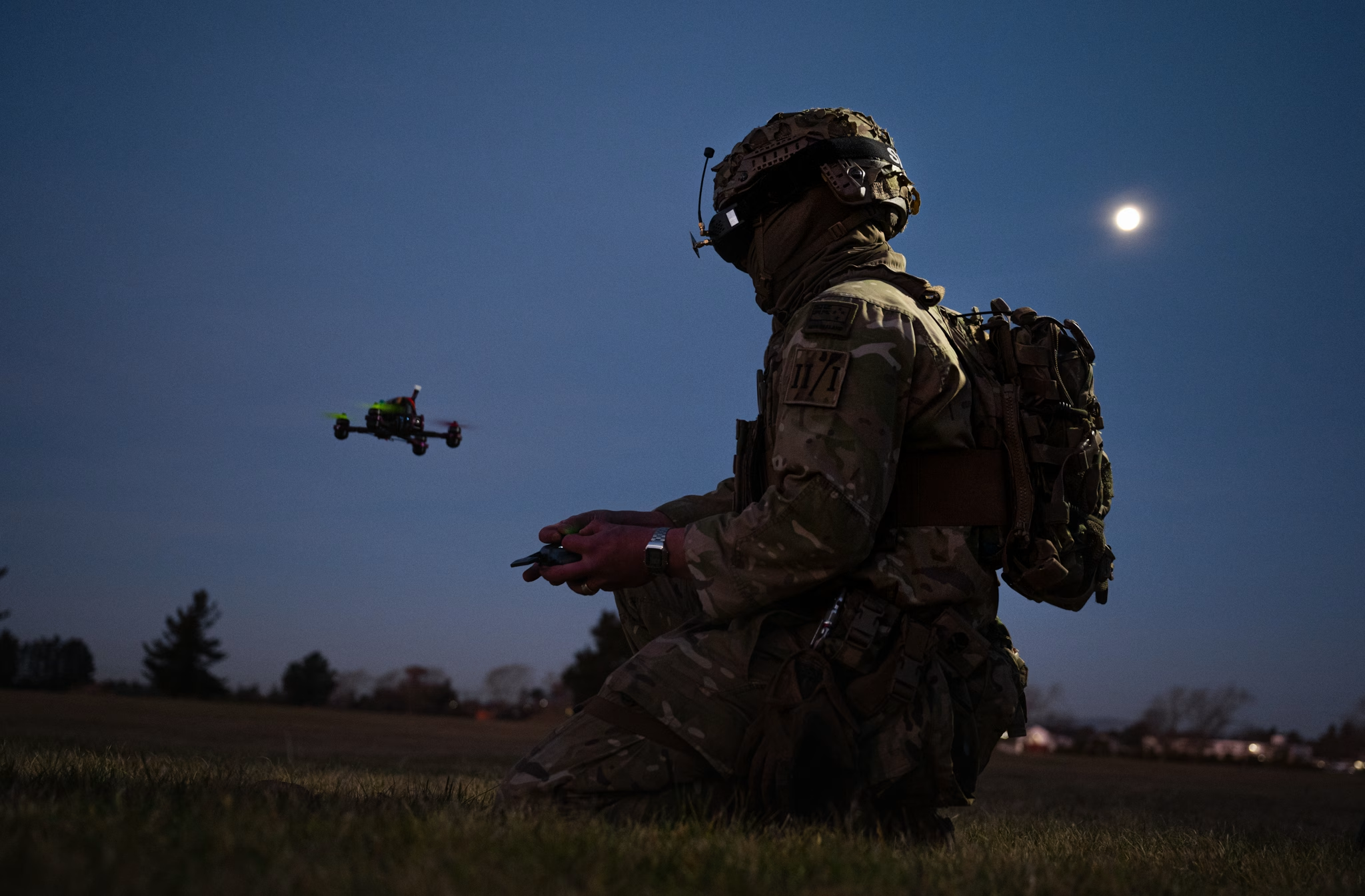
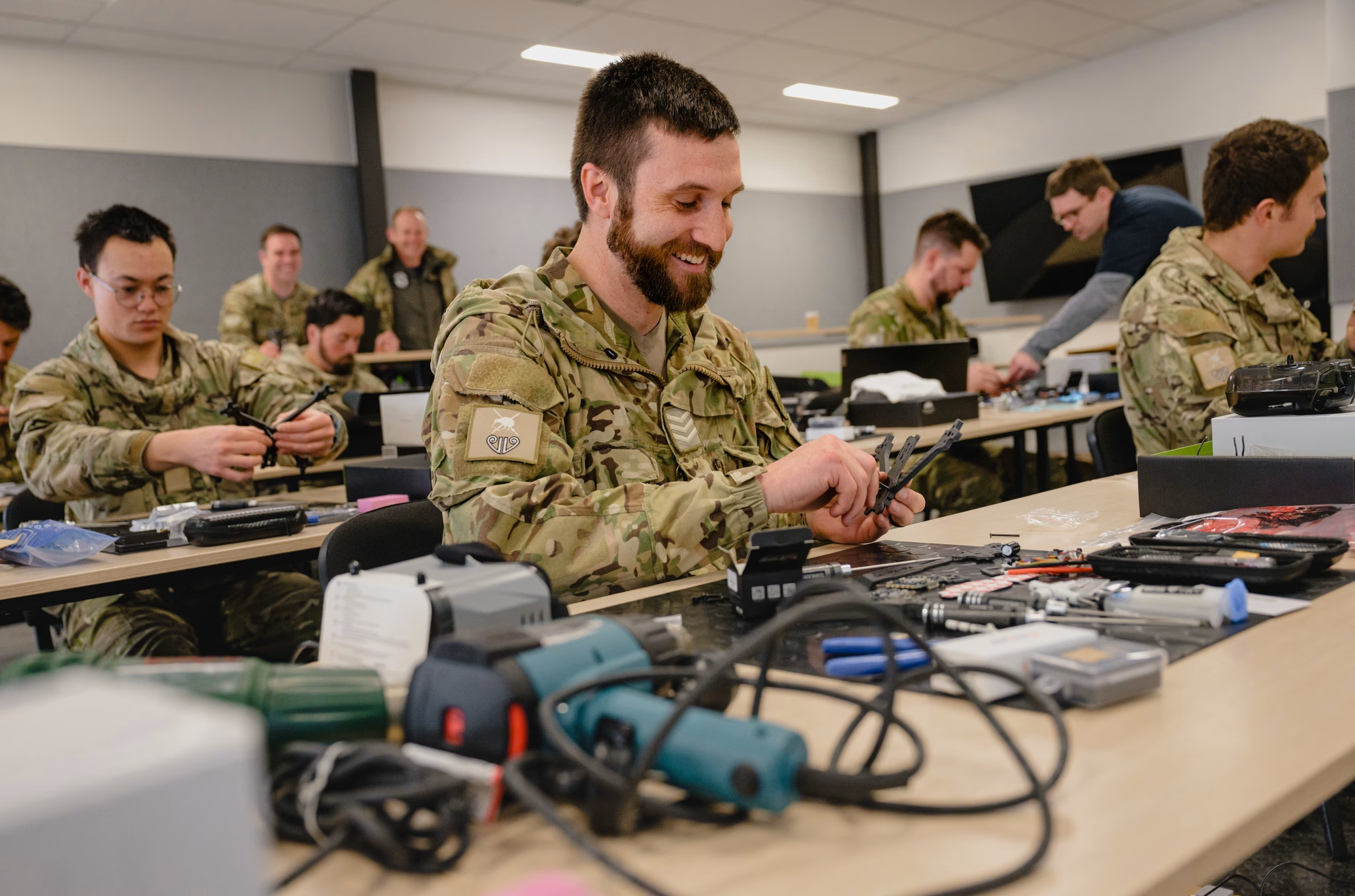
The New Zealand Army has introduced a new specialist First Person View drone course designed to expand its short-range uncrewed aerial system capability.
The three-week course is being delivered by 2nd/1st Battalion, Royal New Zealand Infantry Regiment.
Soldiers attending are already qualified drone operators, but the new course provides additional training in emerging UAS platforms and how they can be integrated into military operations.
The training goes much further than simply learning to fly a drone.
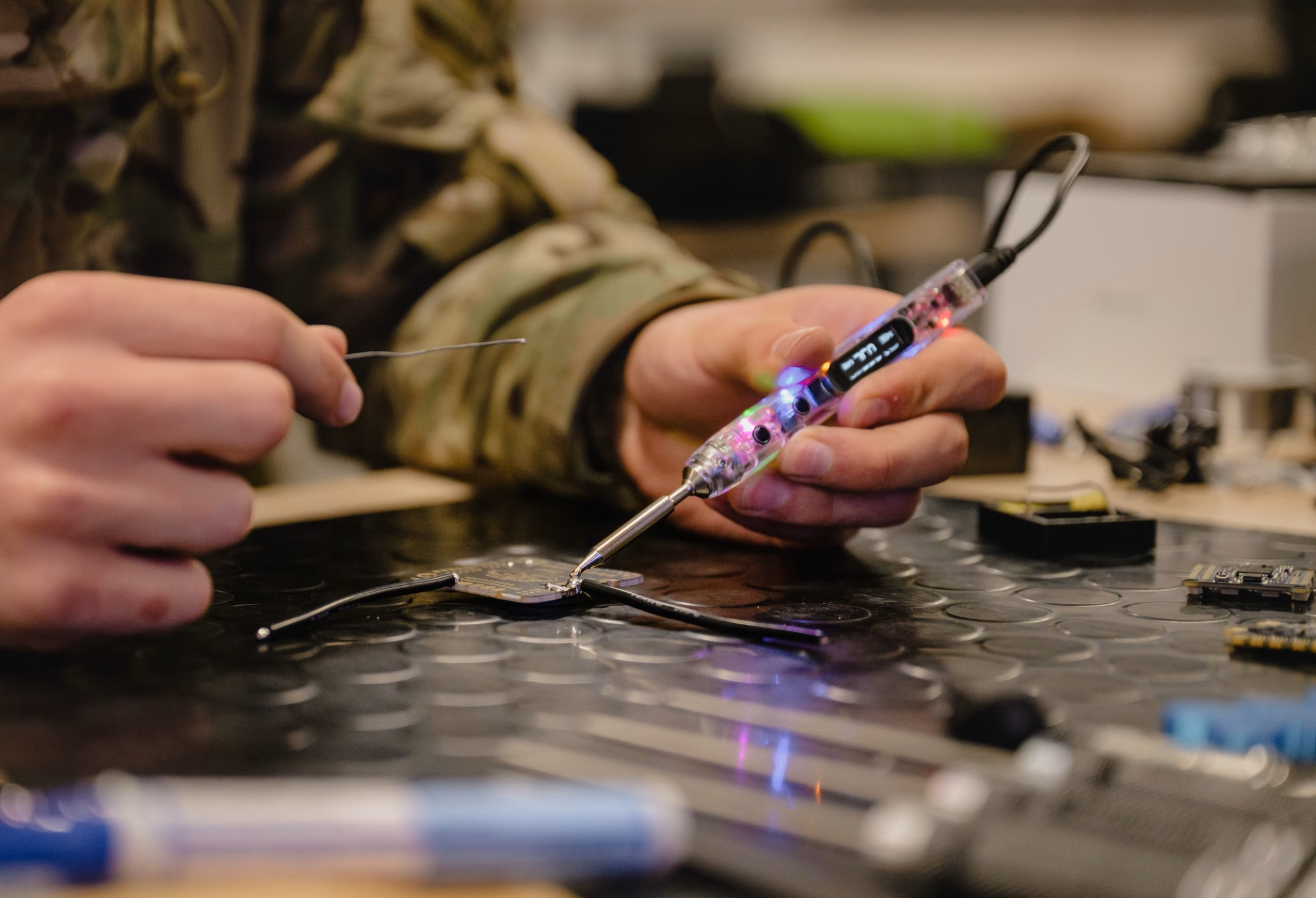
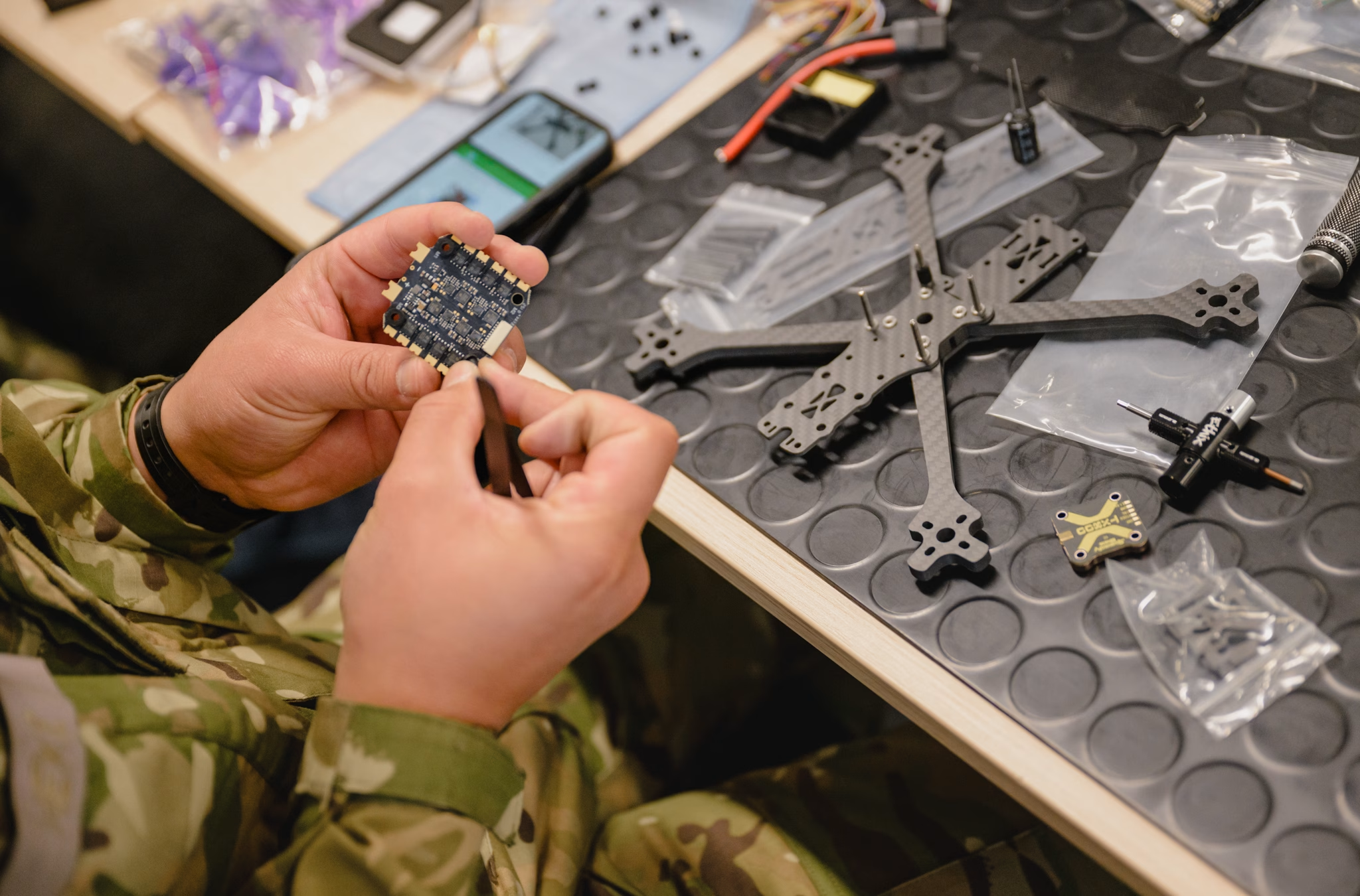
Soldiers start by building the aircraft they will eventually operate.
That includes 3D printing components and developing fibre-optic control systems.
Why teach soldiers to build drones?
The idea is partly about cost, but it is also about resilience.
Lieutenant Colonel Jerry Mateparae, Commanding Officer of 2/1 RNZIR, said building the systems themselves provided realistic training while reducing cost.
More importantly, soldiers who understand how their equipment is constructed are better placed to diagnose problems and repair systems in the field.
That matters in an operational environment where replacement parts may not arrive quickly.
The Army says this approach can reduce reliance on external supply chains and allow personnel to maintain capability with limited resources.
That lesson has become increasingly important in modern conflicts, where relatively cheap drones can be used in huge numbers and are frequently damaged, jammed or destroyed.
Australia helping develop the capability
The course draws on training delivered by the Australian Army’s Land Combat College and includes support from Australian instructors.
That cooperation fits into the wider Plan ANZAC relationship between the New Zealand and Australian armies.
For two relatively small defence forces, compatibility matters.
If New Zealand and Australia operate together in a future deployment, having personnel trained around similar equipment, procedures and tactical concepts can make joint operations significantly easier.
The course therefore serves two purposes.
It gives New Zealand soldiers new technical skills while also strengthening interoperability with Australia’s Army.
What will these drones actually do?
During the course, soldiers develop mission plans, conduct operational briefings and use the drones in realistic tactical scenarios covering a battalion-sized area.
The systems are equipped with both daylight and thermal imaging cameras.
That means they can operate during the day or at night.
Their main training role will be intelligence, surveillance and reconnaissance.
In practical terms, that could mean looking ahead of troops, identifying potential threats, observing movement or providing commanders with information about terrain and activity beyond their immediate line of sight.
But the Army is also acknowledging another reality.
The same technology can potentially be armed.
Lieutenant Colonel Mateparae said the NZDF was not flying the drones with live explosives during the course.
However, he said the technology had matured and was already being used in current conflicts, meaning the Army needed to develop the skills required to operate such systems if that capability was needed in future.
That is an important distinction.
New Zealand is not announcing that armed FPV drones are now being routinely deployed.
It is training personnel so the knowledge and technical foundations exist if future operational requirements change.
Why FPV drones have changed modern warfare
FPV drones were originally widely associated with recreational flying and racing.
Modern conflicts have changed that dramatically.
Small drones can now provide infantry units with surveillance that once required much more expensive aircraft.
They can fly close to the ground, operate around buildings and terrain, and transmit live imagery directly to operators.
Their relatively low cost also changes military economics.
A sophisticated missile or aircraft can cost millions of dollars.
A small drone can cost a tiny fraction of that amount while still providing useful battlefield intelligence.
That has forced militaries around the world to think differently about both attack and defence.
It has also created another challenge: how to protect troops, vehicles and installations from large numbers of relatively cheap unmanned aircraft.
New Zealand’s decision to train soldiers not just to operate drones but to construct and repair them suggests the Army is taking those lessons seriously.
One Defence Force, two very different forms of technology
The contrast between the Indo-Pacific deployment and the Army’s new drone course is striking.
HMNZS Te Mana is a sophisticated frigate designed for major naval operations.
HMNZS Aotearoa provides large-scale logistical support.
The P-8A Poseidon is an advanced long-range maritime surveillance aircraft.
At the other end of the spectrum is a small FPV drone that soldiers can partly manufacture themselves using 3D-printed components.
Modern defence increasingly requires both.
Large platforms provide range, endurance, deterrence and strategic presence.
Smaller unmanned systems provide speed, flexibility and relatively inexpensive battlefield awareness.
The NZDF appears to be preparing for an environment where those capabilities need to work together rather than choosing one over the other.
Why should ordinary New Zealanders care?
Defence announcements can appear distant from the daily concerns of households dealing with mortgages, rent, food prices and the cost of living.
But New Zealand’s location makes regional stability particularly important.
The country depends heavily on international shipping and trade routes running through the Indo-Pacific.
Disruption caused by conflict, territorial disputes or wider instability can eventually affect freight costs, fuel, supply chains and export markets.
Humanitarian preparedness also matters.
New Zealand regularly assists Pacific neighbours following major natural disasters, and military aircraft, ships and specialist personnel often form an important part of that response.
There is also a financial question.
Defence technology is expensive, and governments need to demonstrate that investment is producing capability relevant to the threats and challenges New Zealand is likely to face.
The Army’s FPV programme is interesting partly because it explores how relatively inexpensive technology and local manufacturing can provide useful military capability without relying exclusively on costly platforms.
The bigger shift
Taken together, the two NZDF announcements point towards a Defence Force trying to prepare for several different types of challenge at once.
It must maintain traditional naval and air capability.
It must work effectively with allies and regional partners.
It needs to help enforce international rules and United Nations sanctions.
It must remain capable of responding to natural disasters.
And increasingly, it needs soldiers who understand drones, sensors, digital systems, rapid manufacturing and technology that can change within months rather than decades.
Between August and October, New Zealand’s ships and aircraft will be highly visible across the Indo-Pacific.
But the quieter development may ultimately prove just as significant.
Inside the Army, soldiers are learning how to build and operate a category of aircraft that can fit into a relatively small case, cost dramatically less than conventional military platforms, and still alter what commanders can see and do on the battlefield.
That is a significant shift in the way New Zealand prepares for the future of defence.