A major shift in New Zealand’s global position comes with growing domestic concerns
By Webfit News | April 2026
A quiet agreement with big consequences
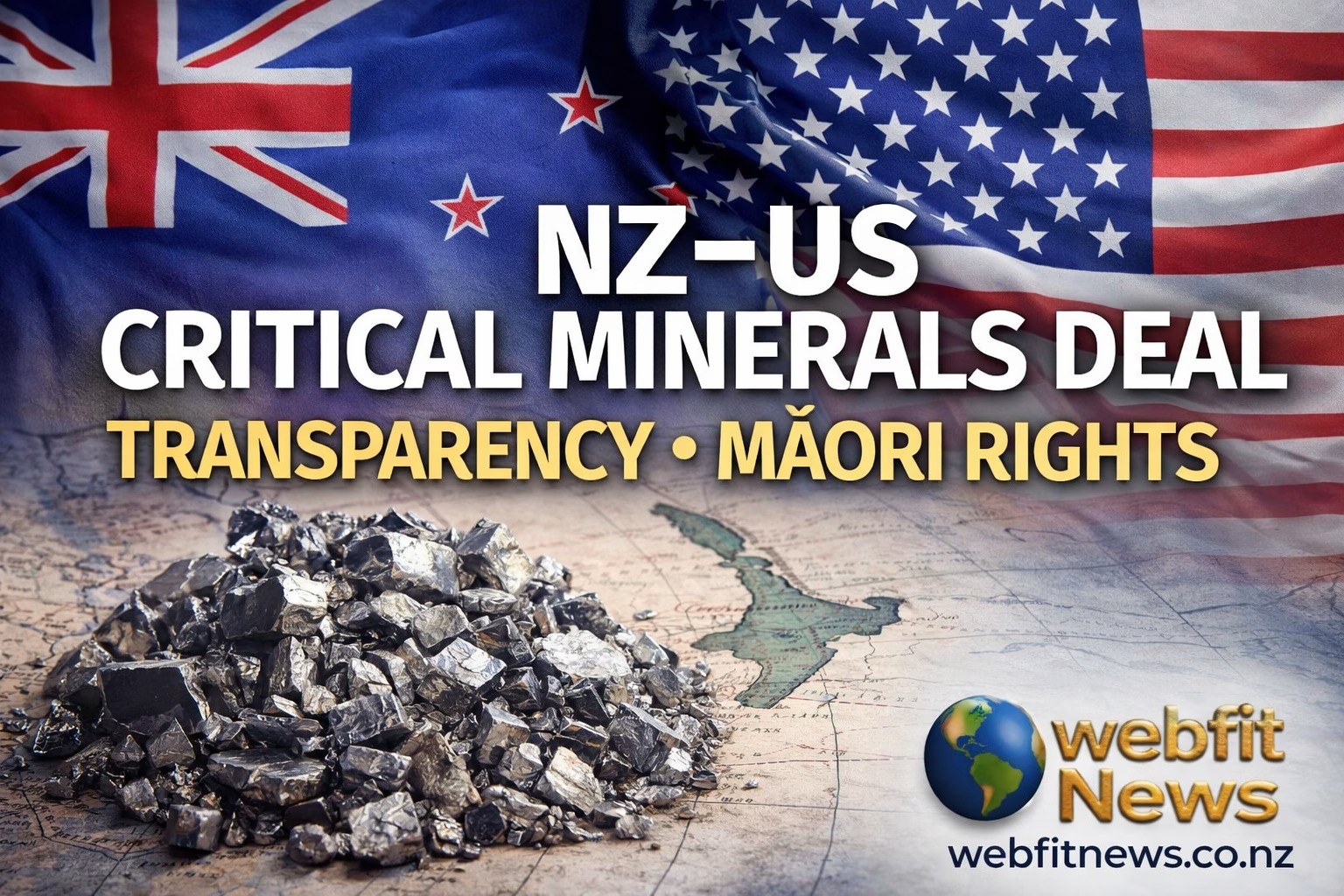
A proposed critical minerals framework between New Zealand and the United States is drawing increasing attention, not just for its strategic importance, but for the way it has been handled behind the scenes.
At a time when global demand for minerals is rising due to clean energy and technology needs, New Zealand is positioning itself as part of a Western-led supply chain. But the process, speed, and lack of transparency around this deal are now raising serious questions.
Why critical minerals matter now
Critical minerals are no longer just industrial resources. They are now at the centre of global power.
They are essential for:
- Electric vehicles and batteries
- Renewable energy systems
- Defence and military technology
- Advanced electronics and AI
The challenge is simple.
Most of the world depends heavily on China for processing these minerals.
This has pushed countries like the United States to build alternative supply chains, and New Zealand is now part of that plan.
How New Zealand entered the deal
New Zealand’s involvement did not happen overnight.
Key steps include:
- Launch of a national minerals strategy targeting export growth
- Joining international mineral partnerships
- Direct engagement with the US through diplomatic channels
By late 2025, the United States had already shared a draft framework, and by early 2026, discussions were moving quickly.
The speed of these negotiations is now one of the biggest concerns.
What the framework actually aims to do
Although the agreement is officially described as non-binding, it outlines clear areas of cooperation:
- Attracting US investment into mining and processing
- Developing advanced technologies for mineral extraction and recycling
- Aligning policies to strengthen global supply chains
In simple terms, this is about integrating New Zealand’s resources into a Western strategic system, not just boosting exports.
The risks nobody is ignoring
Behind the scenes, officials have already identified multiple risks.
1. Geopolitical tension with China
New Zealand has strong trade ties with China.
Aligning closely with the US could create friction or economic consequences.
2. Economic uncertainty
There are concerns about:
- Price instability
- Government financial exposure
- Long-term viability of mining projects
3. Environmental and legal challenges
Fast-tracking mining approvals is facing resistance, especially where environmental impact is unclear.
The biggest issue: Māori rights and sovereignty
This is where things get serious.
Māori groups have raised strong concerns about:
- Lack of consultation
- Ownership and control over natural resources
- Environmental protection
The debate is not just about mining.
It is about who has the right to decide how land and resources are used.
Some experts have even described the current approach as “green extractivism”, where climate goals are being used to justify resource exploitation.
This issue is already being examined under the Waitangi Tribunal, which means legal challenges are likely.
Transparency controversy shakes trust
The situation escalated further after reports that government officials asked a media outlet to destroy sensitive information related to the deal.
The explanation given was an “administrative error”.
But critics are not buying it.
This raises serious concerns:
- Was important information being hidden?
- Was the public being kept out of a major national decision?
- Is the process being driven more by urgency than accountability?
In a democracy, this kind of move damages trust quickly.
Global pressure shaping local decisions
This framework is not just about New Zealand.
It is part of a larger global strategy where:
- The US is securing supply chains
- Western countries are reducing dependence on China
- Resource control is becoming part of national security
Recent global tensions, including disruptions in key shipping routes, have made these resources even more critical.
That is why discussions around minerals are now happening alongside defence and geopolitical strategy.
Economic reality: Not as simple as a mining boom
There is a gap between political messaging and ground reality.
While the government talks about increasing mineral exports, internal analysis suggests:
- New Zealand may not have enough raw volume for large-scale mining
- The real opportunity may lie in technology and research, not extraction
- Infrastructure limitations remain a major barrier
This means the benefits may take longer to materialise than expected.
Webfit News Perspective
Let’s be clear.
This is not just an economic policy.
This is a strategic shift in New Zealand’s global position.
And right now, three things are not aligned:
- International pressure is high
- Domestic consultation is low
- Public transparency is weak
That combination creates risk.
If the government wants this to succeed, it must:
- Bring Māori stakeholders into real decision-making
- Be transparent about risks and commitments
- Clearly explain what New Zealand gains and what it gives up
Otherwise, this deal will face resistance, delay, and possibly failure.
What happens next
The future of this framework depends on how the government handles the next phase.
Key things to watch:
- Legal challenges from Māori groups
- Public and political response
- Further disclosures around negotiations
- Real investment and project announcements
Final word
New Zealand is stepping into a new role in global resource politics.
That comes with opportunity.
But it also comes with responsibility.
Right now, the direction is clear.
But the execution is still uncertain.