
By Geet G | Webfit News
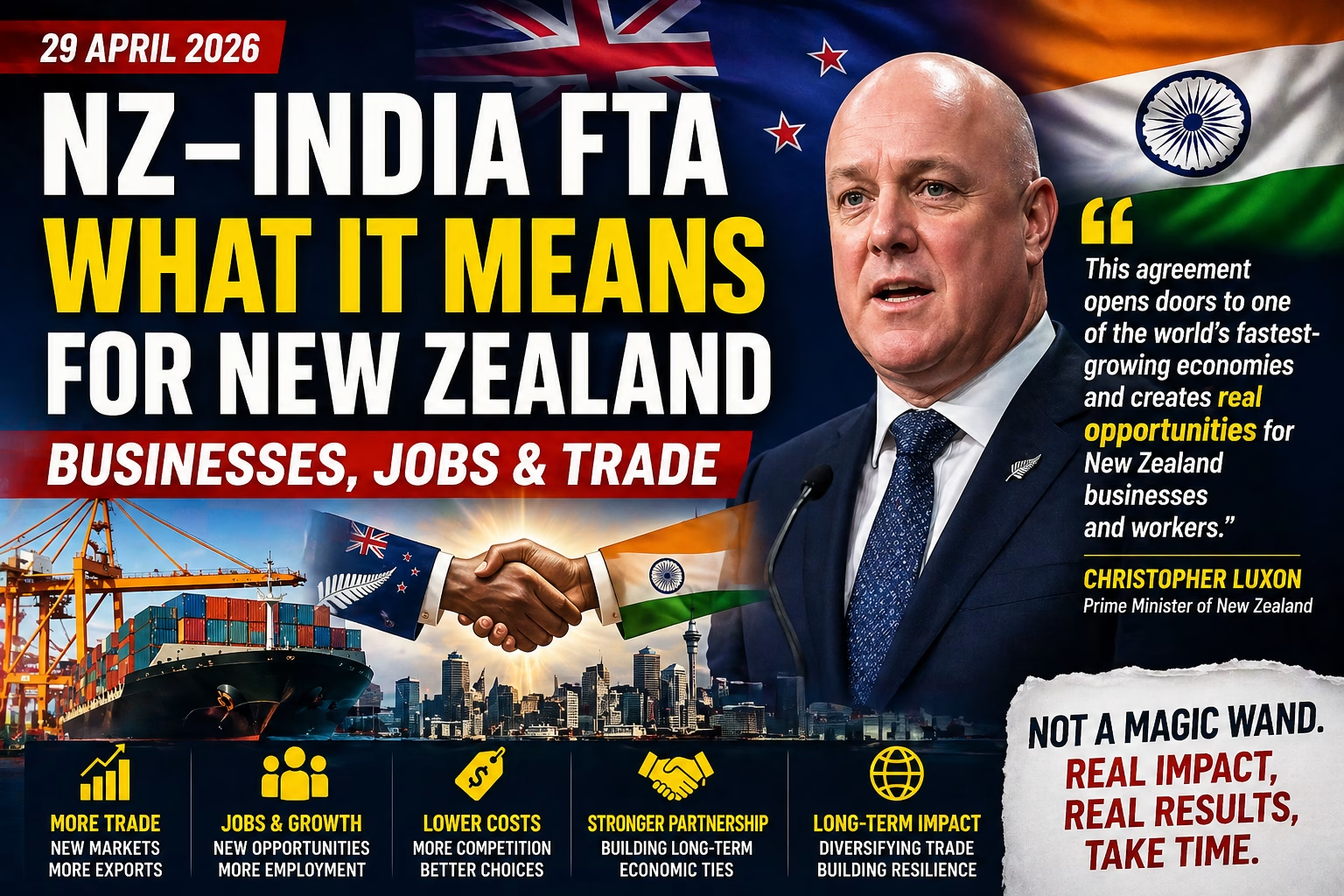
New Zealand’s push toward a Free Trade Agreement with India is gaining momentum. But beyond the headlines, the real question remains clear. What does this actually change for New Zealand businesses and workers?
The answer is straightforward. This deal is about access, competition, and long-term positioning. It is not an instant economic boost.
Why This Deal Matters
Current NZ–India Trade Snapshot India–New Zealand FTA Signed in New Delhi: A Strategic Shift That Could Redefine Trade, Trust, and Opportunity – WebfitNews
NZ–India Trade Snapshot (Recent Estimates)
| Category | Approx Value (NZD) | Notes |
|---|---|---|
| Total Trade | ~$3 billion | Growing but still small vs China/Australia |
| NZ Exports to India | ~$1.5 billion | Mainly primary sectors |
| NZ Imports from India | ~$1.5 billion | Pharmaceuticals, machinery, textiles |
| Rank (India as partner) | Top 15–20 | Not yet a major partner |
What this shows:
India is a growing but underdeveloped trade partner for New Zealand.
New Zealand relies heavily on a small number of trade partners, particularly China and Australia. That concentration creates risk.
India offers scale. With over 1.4 billion people and a growing middle class, demand for food, education, and services is rising. For New Zealand, this presents an opportunity to expand beyond its current trade base.
The objective is simple. Reduce dependency and open a new growth channel.
What Changes for Businesses
Sector Impact (Who Wins, Who Struggles)
Expected Impact by Sector
| Sector | Current Situation | Potential Impact from FTA | Reality Check |
|---|---|---|---|
| Dairy | High tariffs | Better pricing access | Still tough due to India protection |
| Meat | Limited access | Gradual entry possible | Slow growth likely |
| Horticulture | Growing demand | Export expansion | Logistics and pricing matter |
| Education | Strong demand | More student inflow | Depends on visa + policy |
| Tourism | Recovering | Increased travel | Depends on flights + affordability |
| Tech/Services | Early stage | Partnership growth | Requires local presence |
The core of any free trade agreement is tariff reduction.
At present, many New Zealand exports entering India face high duties, making them less competitive. Lower tariffs would improve pricing, increase margins, and potentially drive higher volumes.
However, access does not guarantee success.
India is a difficult market:
- Strong domestic competition
- Price-sensitive consumers
- Complex regulations
This is not an open door. It is a competitive market where only prepared businesses will succeed.
Which Sectors Benefit
Example: How Tariff Reduction Actually Works
Let’s take a simple case.
- A New Zealand dairy product currently faces 30% import duty in India
- Product base cost = $100
- After tariff = $130
If the tariff is reduced to 10%:
- New price = $110
Impact:
- The product becomes more competitive
- Exporter can sell more OR improve margins
But:
- Indian local alternatives may still be cheaper
- Distribution and marketing costs still apply
Conclusion:
Tariff reduction helps, but it does not guarantee success.
The impact will not be uniform.
Likely beneficiaries include:
- Dairy and food exporters, if meaningful access is negotiated
- Meat and horticulture sectors
- Education providers targeting international students
- Tourism operators, if travel flows increase
There may also be opportunities in technology and services.
However, smaller businesses without export capability will find it difficult to take advantage of this deal.
Jobs and Economic Impact
Trade agreements can support job creation, but the effect is indirect.
The sequence is clear:
- Exports increase
- Production expands
- Supply chains grow
- Hiring follows
This takes time and depends on business performance.
There will be no immediate surge in employment. The impact will be gradual and limited to sectors that successfully expand.
Auckland’s Role
Although this is a national agreement, Auckland will be central to its execution.
The city acts as New Zealand’s main economic and logistics hub. Many export-focused companies operate from Auckland, and increased trade activity will flow through its ports and infrastructure.
If exports grow, Auckland will see:
- Increased logistics and supply chain demand
- Greater pressure on infrastructure
- More activity in service sectors
This is where policy turns into actual economic movement.
What This Deal Will Not Do
There are clear limitations that should not be ignored.
This agreement will not:
- Reduce the cost of living in the short term
- Immediately create jobs
- Guarantee success in the Indian market
It creates opportunity, but results depend on execution.
It Is Not a Shortcut to Cheaper Prices
This agreement is not a magic solution for everyday costs.
Consumers should not expect immediate price drops in supermarkets or lower household expenses. Trade agreements typically take years to translate into visible benefits. Even if tariffs are reduced, the impact depends on supply chains, competition, currency movements, and business pricing decisions.
In some cases, New Zealand may see better product variety or more competitive pricing over time, especially in sectors where imports increase or competition improves. But any noticeable change in prices or product quality will likely be gradual and uneven.
For most households, the cost of living in the near term will continue to be driven by local factors such as rent, wages, energy prices, and domestic inflation, not by this agreement alone.
Risks to Watch
Several risks remain:
- Market access may still be limited after negotiations
- Indian domestic industries are strongly protected
- Regulatory barriers could slow entry
- Businesses may overestimate demand
There is also a risk of expectation mismatch. If results take time, public perception can turn negative.
Where This Fits Politically
This deal will feature in the lead-up to the 2026 General Election, but it will not be the deciding factor.
The government will present it as progress in trade and economic strategy. Opposition parties will question its real impact.
However, voters are more likely to focus on everyday issues such as:
- Cost of living
- Job security
- Household pressure
If those do not improve, trade agreements will carry limited political weight.
Key Takeaway
- This deal is about long-term growth, not short-term relief
- Benefits will be sector-specific, not economy-wide
- Real impact depends on execution, not agreements
Webfit News Perspective
The NZ–India FTA is a strategic move, not a quick solution.
It offers a pathway to diversify trade and reduce reliance on existing partners. That is important for long-term stability.
But success depends on execution. Businesses need to enter the market effectively, and policymakers need to manage expectations.
The real measure of this agreement will not be the signing. It will be whether it translates into sustained economic activity.
That is what should be tracked next.
References
Ministry of Foreign Affairs and Trade
Trade and export sector analysis
Economic policy discussions