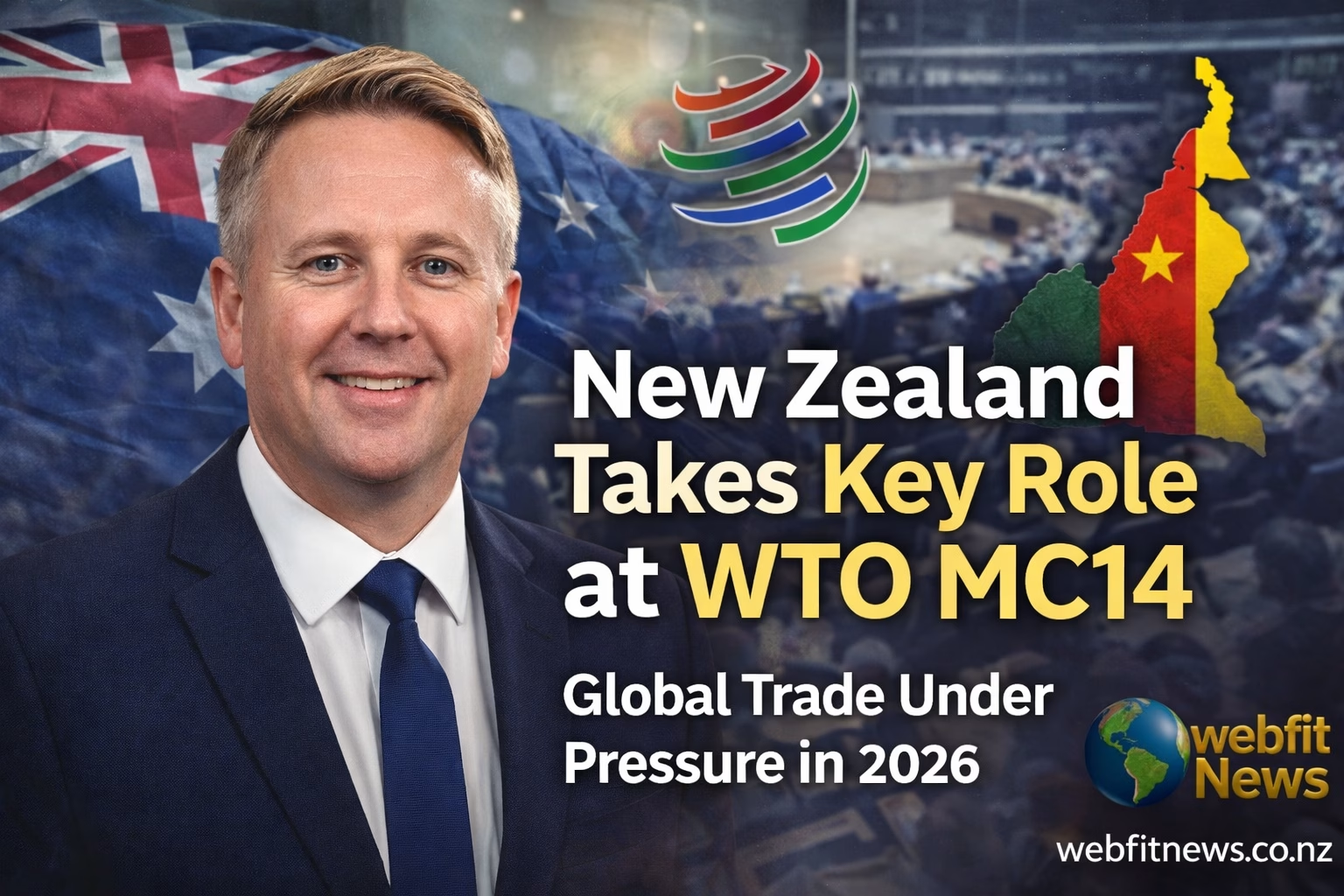
As global trade rules come under growing pressure, New Zealand has stepped into a position of influence at a critical moment. Trade and Investment Minister Todd McClay has been appointed Vice Chair of the World Trade Organisation 14th Ministerial Conference, known as MC14, to be held in Yaoundé, Cameroon, from March 26 to 29, 2026.
This is the second consecutive time McClay has been selected for the role, following his Vice Chair position at MC13 in Abu Dhabi. The repeat appointment signals strong trust in New Zealand’s ability to act as a steady and practical bridge builder in a divided global trading system.
At Webfit News, we see this appointment as more than a diplomatic title. It reflects how smaller, open economies like New Zealand are being asked to help stabilise a system that many fear is losing relevance.
Why MC14 Matters More Than Ever
The WTO is facing one of the most challenging periods in its history. Global trade growth is slowing. Major economies are increasingly acting alone rather than through shared rules. Disputes between countries are rising, yet the WTO’s main dispute settlement body remains largely paralysed.
MC14 comes at a time when trust in global trade governance is fragile. Many countries feel the system no longer protects them fairly, especially developing economies and agricultural exporters. Others worry that digital trade, climate pressures, and geopolitical tensions are moving faster than trade rules can adapt.
Against this backdrop, the Yaoundé meeting is expected to focus less on grand declarations and more on practical survival of the system itself. World News Nobody Is Talking About: 5 Stories of Hope and Progress – WebfitNews
New Zealand’s Role at the Table
As one of three Vice Chairs, alongside Jamaica and the Philippines, New Zealand will support the Conference Chair, Cameroon’s Trade Minister Luc Magloire Mbarga Atangana. The leadership group is deliberately balanced.
Jamaica represents small island and Caribbean states.
The Philippines brings the perspective of fast-growing Asian economies.
New Zealand speaks for open, export-driven economies, particularly in agriculture.
This mix reflects the WTO’s core challenge: aligning very different national interests without allowing the system to fracture.
McClay’s role will involve guiding negotiations, narrowing agendas, and helping countries reach consensus where possible. Much of this work happens before ministers even arrive in Cameroon, through technical talks in Geneva and bilateral meetings with major trading partners such as China, the European Union, India, and the United States.
A Tough Global Economic Climate
The economic environment heading into MC14 is not forgiving. Growth is slowing in both the United States and China. Trade uncertainty is rising. Protectionist policies, including new tariffs and subsidies, are making global supply chains more expensive and less predictable.
For New Zealand, this matters deeply. As a small economy that relies on exports, New Zealand depends on clear, enforceable global trade rules. Without them, larger countries can tilt markets through subsidies and unilateral decisions that smaller players cannot match.
This is why New Zealand has consistently pushed for a strong rules-based trading system, even when progress is slow.
Fixing the WTO’s Broken Referee System
One of the biggest issues at MC14 will be the WTO’s dispute settlement crisis. For years, the Appellate Body, which acts as the final referee in trade disputes, has been unable to function due to blocked appointments.
As a result, some trade disputes now go unresolved, weakening confidence in the system. To manage this, New Zealand and several other countries have joined an interim arrangement that allows binding arbitration outside the standard process. While helpful, it is not a full solution.
At Webfit News, this is one of the clearest examples of why reform is urgent. A trading system without enforcement is little more than a suggestion box.
Agriculture, Food Security, and Fairness
Agriculture will again be a central issue in Yaoundé. Many developing countries are pushing for more flexibility to support food security, including the ability to hold public food stocks without being penalised under trade rules.
At the same time, agricultural exporters like New Zealand want to see reductions in trade-distorting subsidies that skew global markets.
The challenge is balancing fairness with practicality. MC14 is unlikely to solve agriculture disputes outright, but progress on road maps and future commitments could help rebuild momentum.
Digital Trade Faces a Deadline
Another major decision point is digital trade. The WTO’s long-standing agreement not to impose customs duties on electronic transmissions is set to expire at the end of March 2026 unless extended.
This moratorium underpins everything from cloud services to online education and digital healthcare. Letting it lapse could fragment the digital economy and raise costs for businesses and consumers alike.
New Zealand has played a key role in keeping this agreement alive in the past and is expected to do so again.
A Moment of Responsibility
Beyond policy details, MC14 carries symbolic weight. It is the first WTO ministerial conference held in Africa in nearly a decade. That alone sends a message about inclusion and shared ownership of the global trading system.
For New Zealand, serving as Vice Chair is both an opportunity and a responsibility. It places the country in a position to influence outcomes that affect not just exporters, but workers, consumers, and future generations.
The WTO may not emerge from Yaoundé fully reformed, but MC14 will help determine whether the system adapts or continues to drift.
At Webfit News, we will be watching closely. Trade may seem distant to many, but its rules quietly shape jobs, prices, and economic security at home and abroad.