Wellington, 7 August 2026
The New Zealand Defence Force has formally taken over the hosting and leadership of the Pacific Response Group, a multinational military coordination capability created to support humanitarian assistance, disaster relief and crisis response operations across the Pacific.
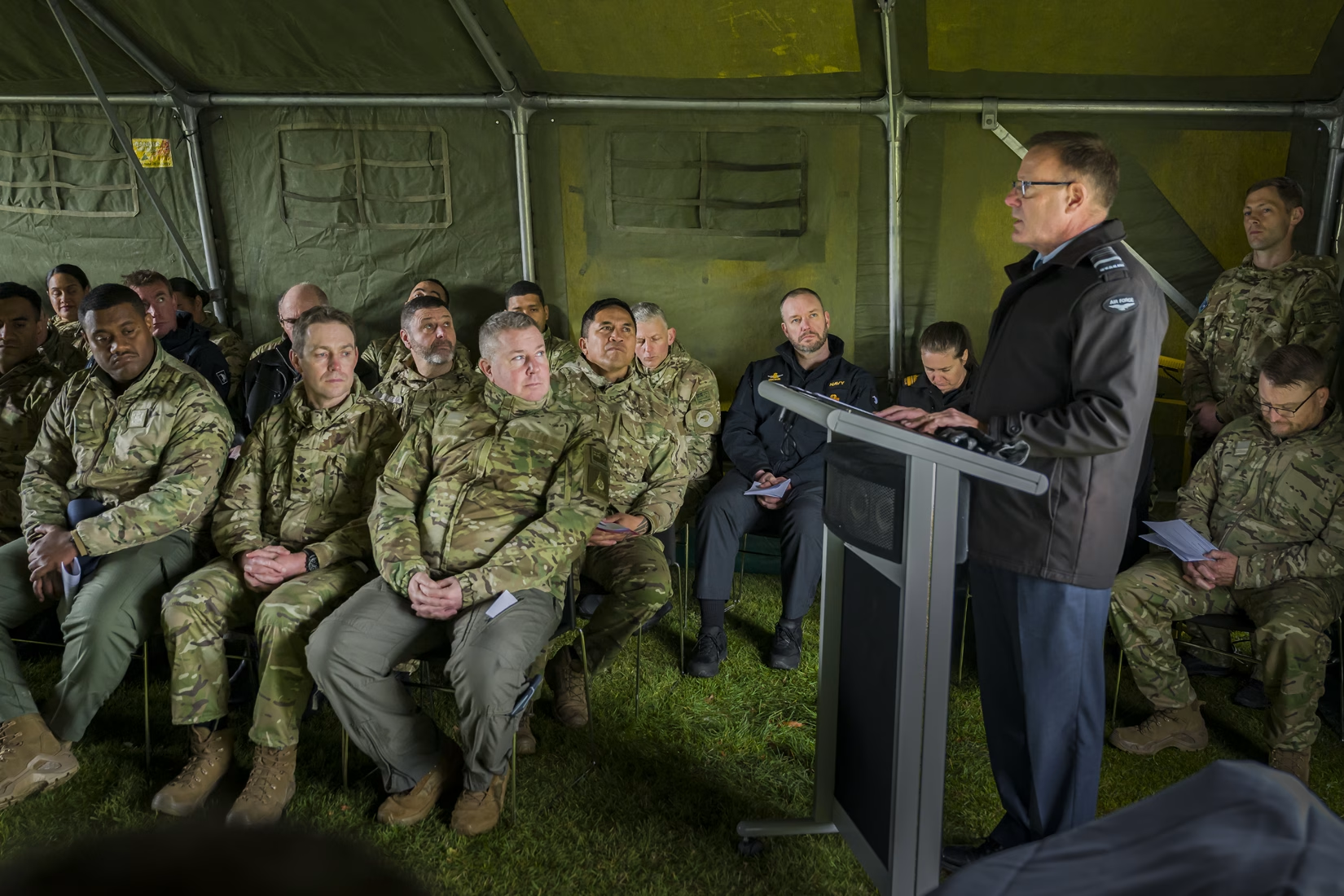
The leadership handover from the Australian Defence Force was marked by a ceremony at Headquarters Joint Forces New Zealand in Trentham, Upper Hutt, as the Pacific Response Group, known as the PRG, moves into its third year of development.
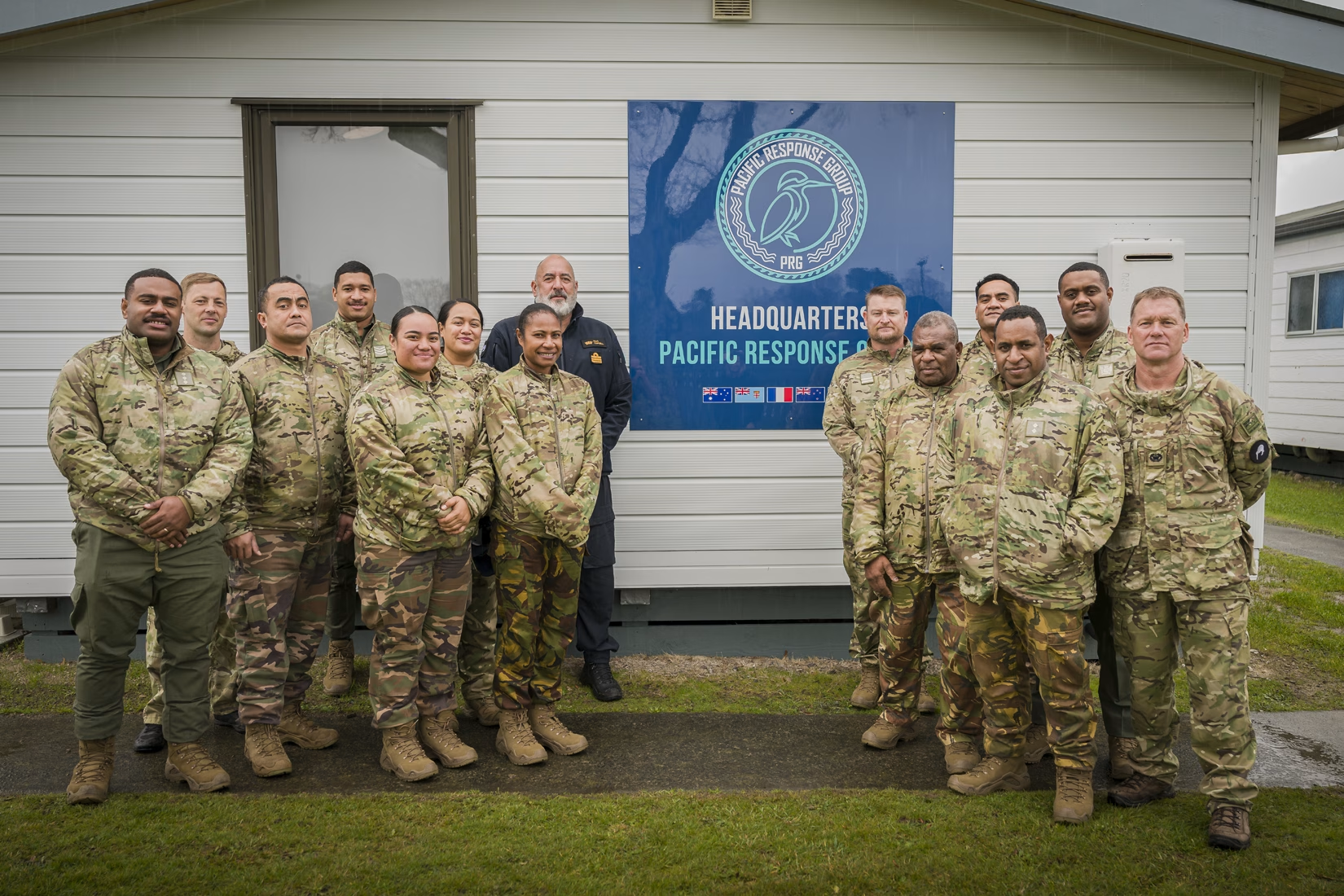
Established in 2024 under the South Pacific Defence Ministers’ Meeting, the PRG brings together defence personnel from New Zealand, Australia, Fiji, France, Papua New Guinea and Tonga, while Chile participates in a supporting role.
The group is designed to help Pacific nations respond more quickly and effectively when natural disasters or other major emergencies place pressure on local authorities and communities.
What is the Pacific Response Group?
The Pacific Response Group is not intended to replace national emergency agencies.
Instead, it functions as a deployable military planning and coordination headquarters that can support civilian-led disaster responses.
Each participating country contributes specialist personnel in areas such as:
- operations
- logistics
- intelligence
- health
- communications
- planning and coordination
When a disaster occurs, the PRG can deploy planning teams to an affected country to assess what assistance is required.
It can then help coordinate military capabilities offered by participating nations, working alongside national disaster management authorities and other civilian agencies.
This structure is particularly important in the Pacific, where cyclones, earthquakes, volcanic activity, flooding and other severe weather events can quickly overwhelm local infrastructure.
New Zealand takes over from Australia
The transition of leadership from Australia to New Zealand reflects the shared ownership model behind the PRG.
Rather than remaining permanently under one country’s command, leadership is designed to rotate between participating nations.
Under the new arrangement, the PRG team will be based alongside the NZDF’s operational headquarters at Trentham until mid-2028.
After that, the leadership role is expected to pass to another host nation.
Commander Joint Forces New Zealand Major General Rob Krushka said the group represents a practical way for Pacific partners to support each other.
“Natural disasters in our region are increasing in frequency. The PRG ensures we can respond smarter, together,” he said.
“This is about supporting our Pacific neighbours, respecting sovereignty, and working alongside civilian agencies to deliver the right assistance at the right time.”
That emphasis on sovereignty is important.
The PRG is designed to assist at the request of affected countries rather than operate independently of them.
A Pacific-focused response capability
For many Pacific nations, emergency response capacity is closely linked to geography.
Countries are spread across enormous ocean areas, communities can be isolated, and key infrastructure such as ports, airports, communications networks and roads can be vulnerable during major disasters.
Military forces can provide capabilities that are difficult to mobilise quickly through civilian systems alone, including aircraft, ships, engineering teams, medical support, communications equipment and logistics.
The PRG is intended to bring those resources together in a more coordinated way.
It also provides a mechanism through which Pacific countries without standing militaries can request military support when major disasters occur.
The model builds on decades of cooperation between Pacific defence forces during cyclones, earthquakes and other emergencies, but seeks to formalise that cooperation into a more predictable and prepared regional system.
Experience already being tested
Since becoming operational in late 2024, the Pacific Response Group has taken part in multinational exercises designed to test how effectively different countries can work together.
One of those was Exercise Croix du Sud in New Caledonia, where the PRG tested its ability to coordinate a complex, large-scale disaster response involving multiple nations.
Exercises of this kind allow planners to identify gaps before real emergencies occur.
They also help participating countries become familiar with each other’s command structures, communications systems and operating procedures.
That matters in a real crisis, where delays in coordination can directly affect the speed at which food, shelter, medical supplies and other assistance reach communities.
Focus on readiness and interoperability
Under NZDF leadership, the PRG is expected to continue focusing on three core areas: preparedness, interoperability and readiness.
Preparedness means having plans and personnel ready before a disaster strikes.
Interoperability means ensuring personnel from different countries can operate together effectively.
Readiness means being able to deploy quickly when requested.
Major General Krushka said the leadership transition represents both continuity and progress.
“The transition of leadership reflects the shared ownership of the PRG. Together, we are strengthening a capability that is by the Pacific, for the Pacific,” he said.
“New Zealand is proud to assume leadership of this important initiative, building on the strong foundations established by Australia and our regional partners.”
Ceremony marks transition
The handover ceremony at Trentham also reflected the Pacific character of the group.
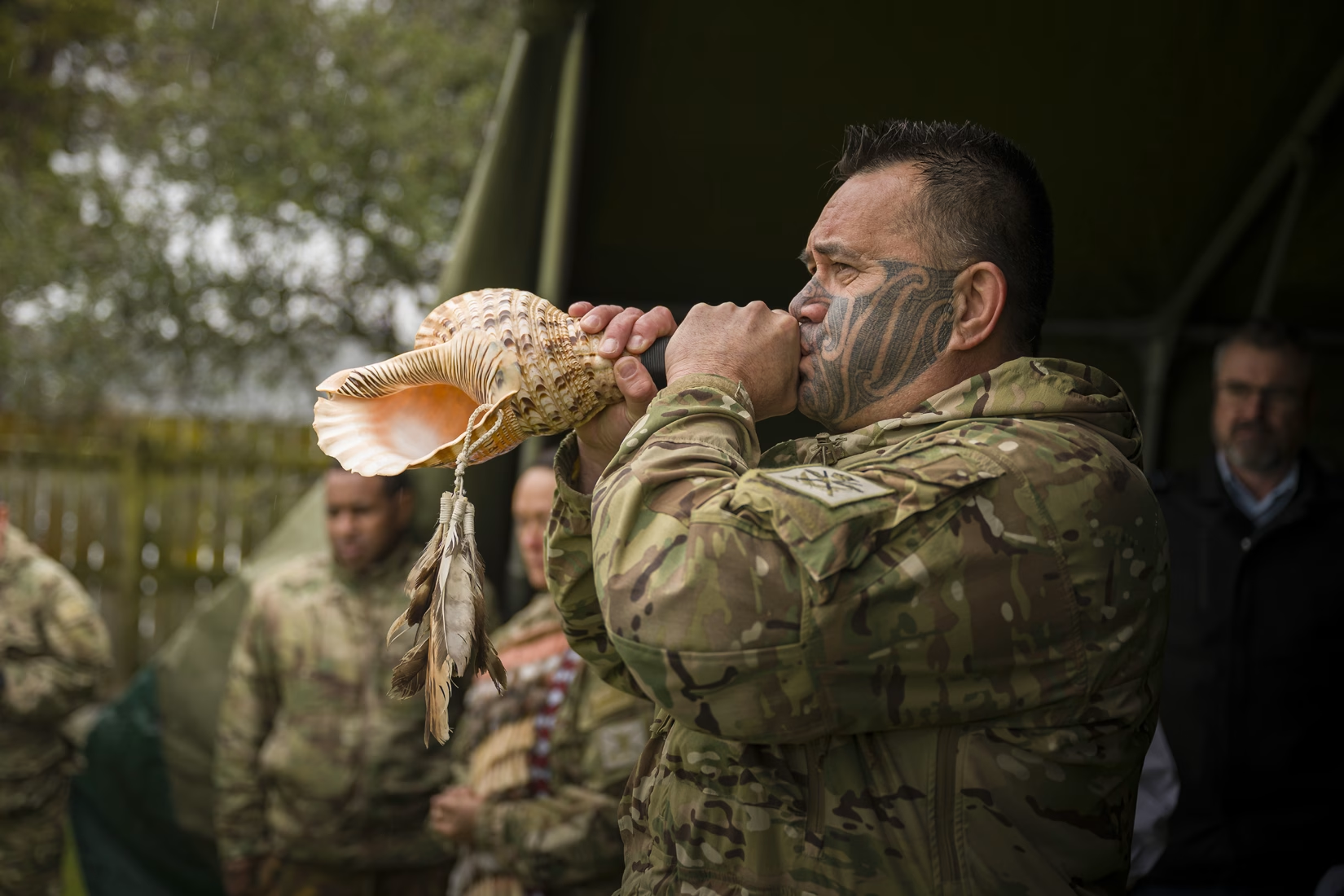
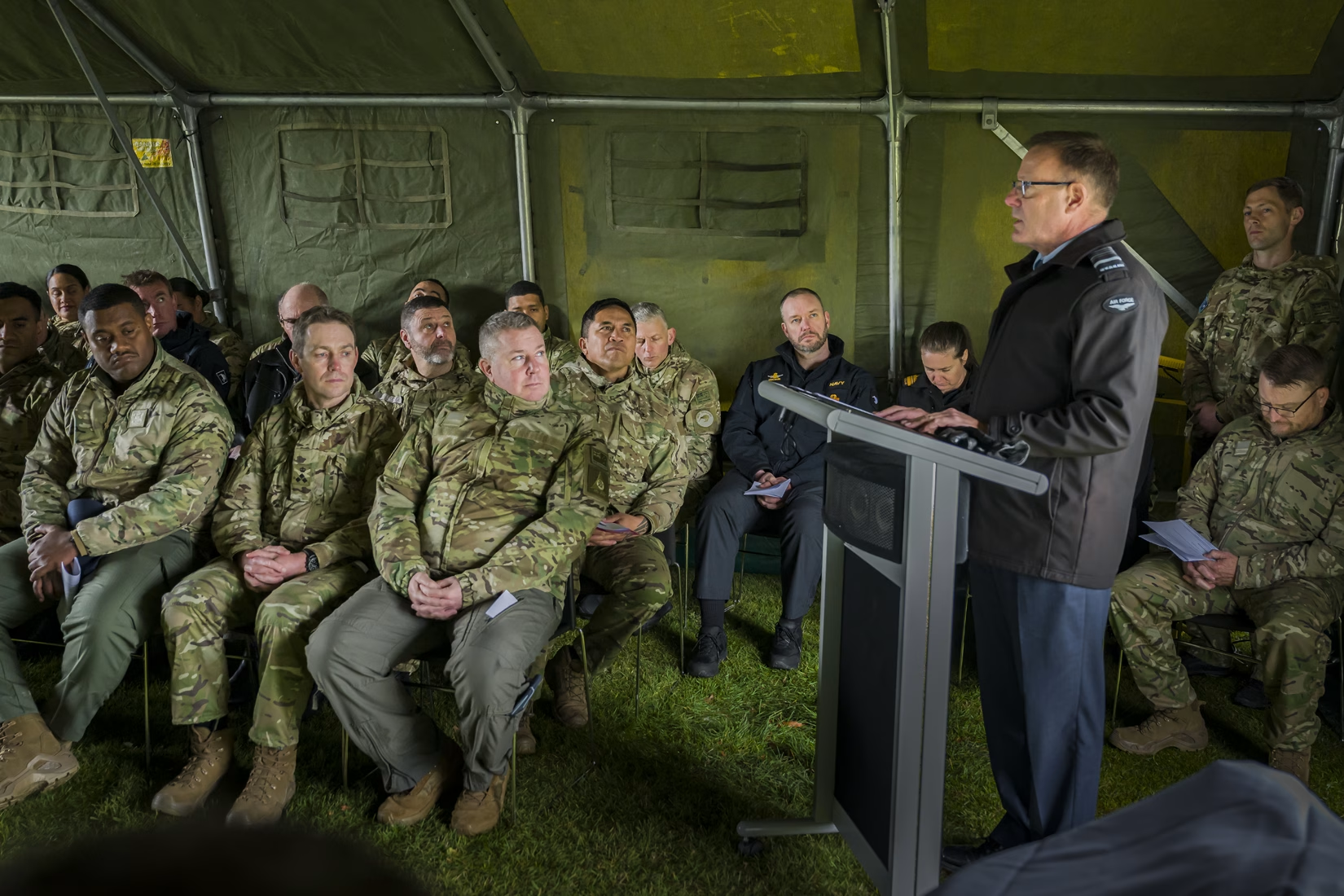
Warrant Officer One Brent Pene blew a conch to begin the pōwhiri, while Chief of Defence Force Air Marshal Tony Davies addressed those attending.
The presence of personnel from across the participating countries highlighted the multinational nature of the initiative.
For New Zealand, taking over leadership also places the NZDF in a central coordinating role at a time when regional disaster resilience is becoming increasingly important.
Why it matters for the Pacific
The Pacific Response Group is significant because major disasters rarely affect only one government agency or one country.
When severe weather or other emergencies damage infrastructure, isolate communities or disrupt essential services, effective response often depends on how quickly countries can combine capabilities.
The PRG is intended to make that process faster, more coordinated and better prepared.
Its long-term value will ultimately be judged during real emergencies.
For now, the handover to New Zealand marks another step in building a standing regional structure that can bring Pacific partners together when communities need assistance most.
Source: New Zealand Defence Force
Photo captions
Photo 1: The Pacific Response Group includes personnel from New Zealand, Australia, Fiji, France, Papua New Guinea and Tonga, with Chile participating in a supporting role.
Photo 2: Warrant Officer One Brent Pene blows the conch to begin the pōwhiri during the leadership handover.
Photo 3: Chief of Defence Force Air Marshal Tony Davies addresses personnel during the Pacific Response Group ceremony at Trentham.