
WELLINGTON, 5 August 2026
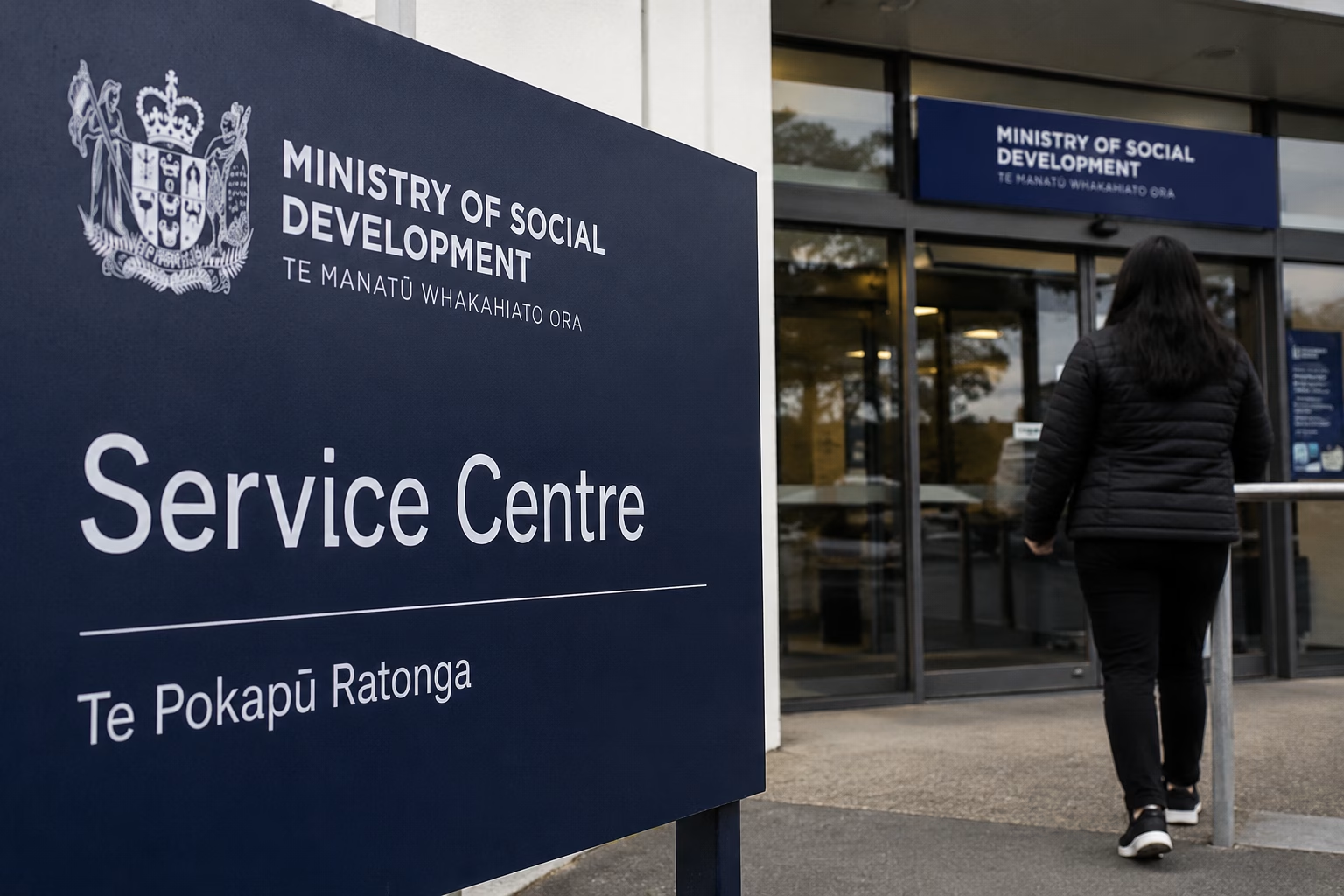
The Public Service Association is calling on the Ministry of Social Development to abandon a proposal that would reduce security staffing at 22 service centres across New Zealand.
Under the proposal, each affected site would move from three security guards to two.
One guard would remain inside and manage visitor access through CCTV, while the second would move around the site.
The PSA says the plan is unsafe and could leave staff, clients and members of the public more exposed to aggressive or violent incidents.
The union is calling for at least three security guards at every MSD service centre in the country.
Consultation with staff at the affected locations is due to close on 12 August.
Security already reduced at 20 sites
The latest proposal follows earlier changes that reduced security staffing at 20 regional MSD service centres.
The PSA says the Ministry is now considering similar cuts at another 22 locations.
The affected sites are:
| North Island service centres |
|---|
| Dargaville |
| Flaxmere |
| Huntly |
| Johnsonville |
| Kamo |
| Kāpiti |
| Kawakawa |
| Kawerau |
| Kerikeri |
| Morrinsville |
| Mount Maunganui |
| Ōpōtiki |
| Paeroa |
| Ruatoria |
| Te Awamutu |
| Te Puke |
| Tokoroa |
| Tūrangi |
| Waihi |
| Wairoa |
| South Island service centres |
|---|
| Motueka |
| Richmond |
The PSA says the proposed staffing model would leave only one guard immediately available inside the building if the other guard was elsewhere on the site.
Staff say they already feel unsafe
PSA National Secretary Fleur Fitzsimons said workers had told the Ministry they were concerned about safety at MSD offices.
“We’re very disappointed that MSD has forged ahead with their plan to reduce security guard numbers at its sites, even as staff feed back to them that they already feel unsafe at work,” Fitzsimons said.
She said the fatal shootings at the Ashburton Work and Income office in 2014 remained in the minds of many staff.
“The tragedy at Ashburton looms large in workers’ minds, with many people saying that it’s just a matter of time before another major act of violence and even loss of life,” she said.
“Every worker deserves to be safe at work. No-one’s whānau should have to worry about whether their loved one is coming home.”
The union says safety protections are also necessary for people visiting service centres.
Many clients attending MSD offices may be dealing with financial hardship, housing stress, employment problems, benefit sanctions or other difficult circumstances.
The PSA argues that reducing visible security at a time of increasing pressure could make already tense situations harder to manage.
Reports of aggression and threats
According to the union, staff regularly experience aggressive behaviour at MSD sites.
Workers have reported incidents involving people jumping over desks, spitting, throwing objects and making threats involving guns or bombs.
The PSA says some incidents are becoming more serious and aggressive.
It also claims that violence and intimidation may be under-reported because workers do not always have time to complete reports or believe reporting will lead to meaningful change.
MSD’s official data shows security incidents have decreased this year.
However, the PSA disputes whether those figures present the full picture.
The union says some aggressive behaviour has become so common that workers may no longer view every incident as unusual enough to report.
It also says high workloads mean staff often move quickly from one client to another without enough time to document what has happened.
Pressure from benefit system changes
The PSA has linked workplace tension to changes within the welfare system.
It says the coalition Government’s traffic light system and stricter benefit sanctions have increased pressure on some people visiting MSD service centres.
The traffic light system places beneficiaries into different categories depending on whether they are meeting employment, training or other obligations.
The PSA argues that clients facing financial penalties or uncertainty may arrive at service centres already under significant stress.
Frontline staff are then required to explain decisions, manage complaints and assist people who may be facing immediate financial or personal hardship.
The union says employees are dealing with heavy workloads and often feel rushed.
It also says staff responsible for training colleagues do not always have enough time or resources to perform that work properly.
The PSA has not suggested that all clients pose a safety risk.
Its argument is that the combination of high workloads, financial pressure and reduced security could increase the consequences when serious incidents occur.
Union proposes additional protections
The PSA wants MSD to retain at least three security guards at every service centre.
Some staff have also supported returning security personnel to positions outside service centre entrances.
The union says placing guards outside could allow them to observe and assess visitors before they enter the building.
Workers have also proposed installing polycarbonate screens between staff desks and public areas.
Such screens could provide an additional physical barrier during incidents involving thrown objects, attempts to enter staff areas or direct aggression towards employees.
The PSA says these measures would strengthen safety rather than reduce it.
Balancing security and service delivery
MSD service centres provide direct support to people seeking income assistance, employment services and other forms of government help.
They must remain accessible and welcoming while also protecting staff and visitors.
Security decisions therefore involve a difficult balance.
Too little protection may leave workers and clients exposed.
Heavy security arrangements can also make public service environments feel intimidating or institutional.
The PSA’s position is that three guards per site represent a necessary minimum given the risks staff say they face.
The Ministry’s proposal appears to be based on a different assessment of incident levels and operational needs.
The release does not include MSD’s detailed reasoning, expected savings or a formal response to the union’s claims.
Consultation closes on 12 August
Staff at the 22 affected service centres have until 12 August to provide feedback on the proposal.
The PSA says it will support workers who oppose the changes and will continue pushing for stronger security across all MSD sites.
The consultation process gives the Ministry an opportunity to consider staff experiences, official incident data and the practical effects of operating with fewer guards.
For frontline workers, the central issue is not whether a serious incident will happen at every site.
It is whether enough protection will be available if one does.