By Webfit News | 11 August 2026
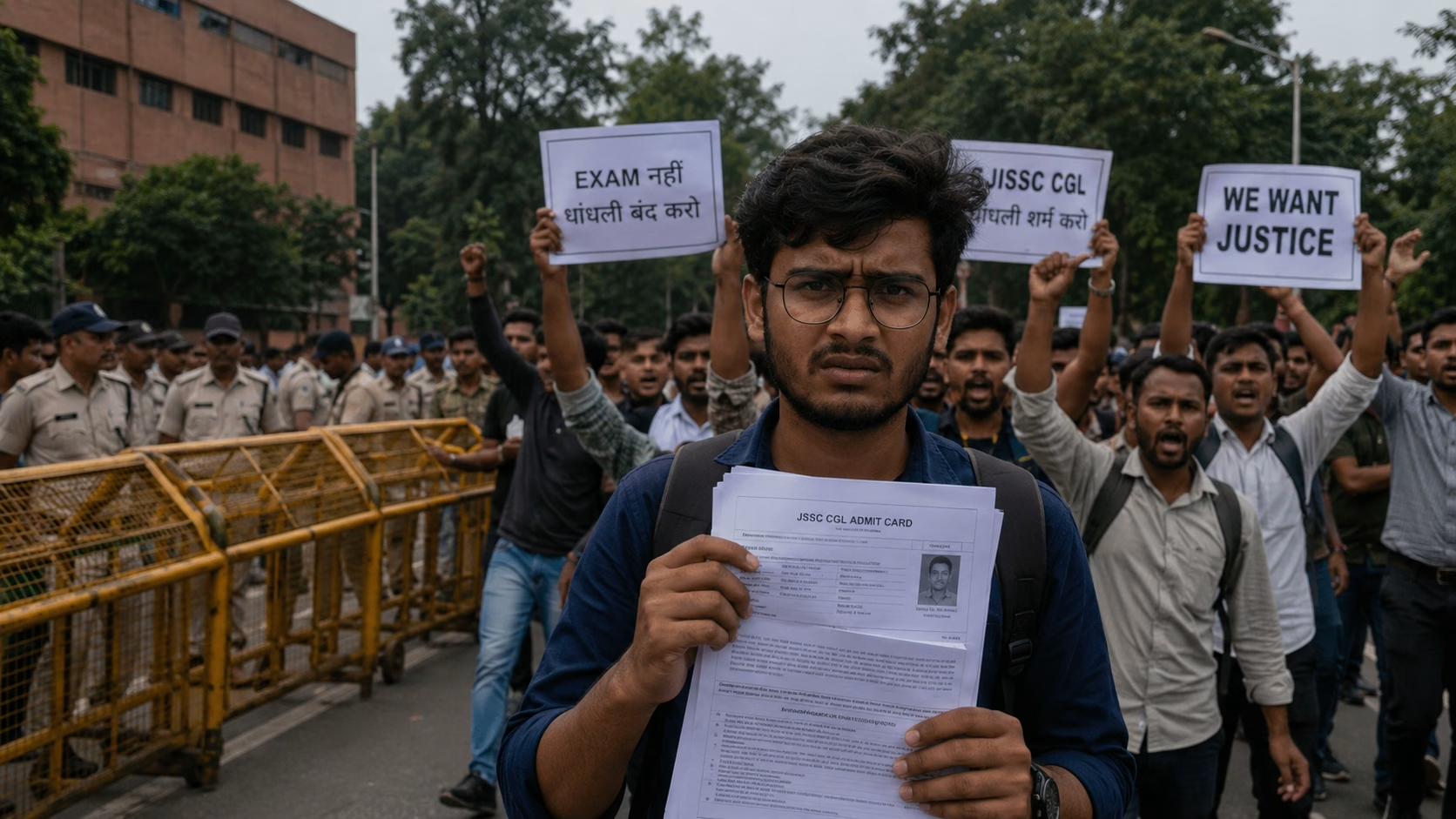
Thousands of young job seekers have taken to the streets of Jharkhand in eastern India in one of the country’s most significant recent protests over government recruitment examinations.
What began as anger over alleged irregularities in examinations conducted by the Jharkhand Public Service Commission, commonly known as JPSC, and the Jharkhand Staff Selection Commission, or JSSC, has developed into a much wider confrontation involving students, police, political parties and the state government.
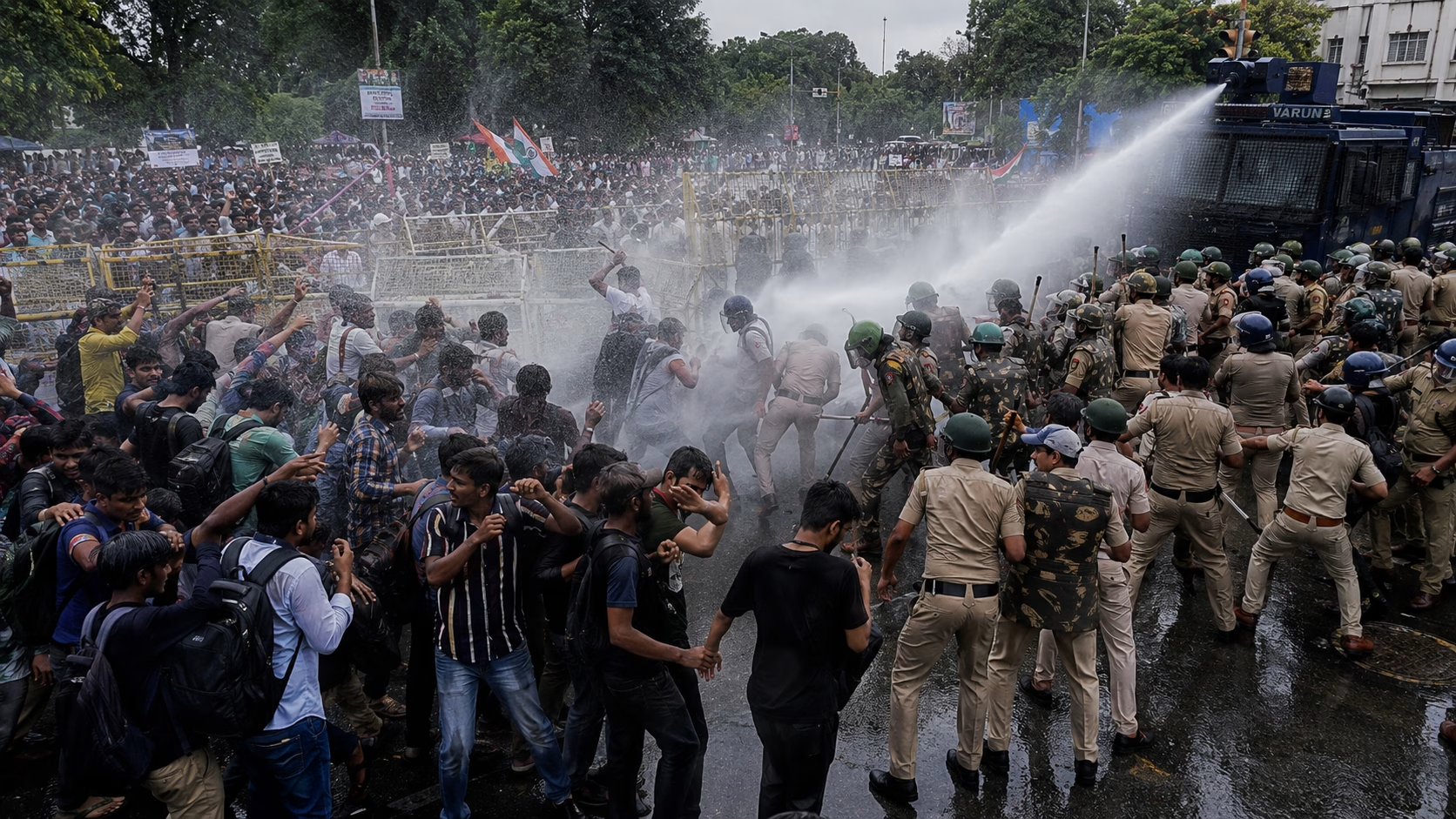
The situation escalated sharply on Monday, 10 August, when thousands of protesters marched towards the Jharkhand Legislative Assembly in Ranchi. Police used water cannon, tear gas and batons after demonstrators crossed or attempted to break through barricades. Reuters reported injuries during clashes between protesters and police.
The developments have now pushed a dispute over recruitment examinations into the centre of Jharkhand politics.
What are the students protesting about?
At the heart of the agitation are allegations involving examinations and recruitment processes conducted by JPSC and JSSC.
Government jobs are highly sought after across India, particularly among young graduates who may spend years preparing for competitive examinations. When candidates believe an examination has been compromised, the consequences can therefore extend far beyond losing a single test.
Protesting candidates have raised allegations involving paper leaks, irregularities in recruitment examinations, transparency in marking and selection, and the role of agencies responsible for conducting examinations.
Among the demands reported by Indian media are:
- A Central Bureau of Investigation, or CBI, investigation into alleged irregularities
- Investigation of organisations or individuals allegedly responsible for examination malpractice
- Greater transparency in cut-off marks, OMR sheets and candidate response sheets
- Cancellation or review of examinations that protesters believe were compromised
- A predictable recruitment calendar similar to systems used by national recruitment bodies
- Stronger safeguards against examination leaks and manipulation
Some protesters have also called for investigations by the Enforcement Directorate.
These remain allegations and demands raised by protesters. They should not be interpreted as proof that every examination being challenged was fraudulent.
How did the movement grow?
The current confrontation did not suddenly begin on 10 August.
Students and job aspirants had already been demonstrating in Ranchi, including gatherings at Jaipal Singh Munda Stadium. The agitation intensified during late July and early August as protesters demanded government action and an independent investigation.
Reuters reported that the demonstrations began on 25 July before growing into much larger gatherings in Ranchi.
The movement subsequently attracted support from student organisations, activists, political groups and public figures.
Actor and musician Piyush Mishra appeared among protesters, while representatives associated with the youth-led Cockroach Janta Party also publicly expressed solidarity with the Jharkhand aspirants.
Jharkhand Loktantrik Krantikari Morcha leader Devendra Nath Mahto also became a prominent figure in the agitation and began a hunger strike. His health reportedly deteriorated and he was later taken to hospital.
The 10 August Assembly march changes the story
The biggest escalation came with the march towards the Jharkhand Assembly on Monday.
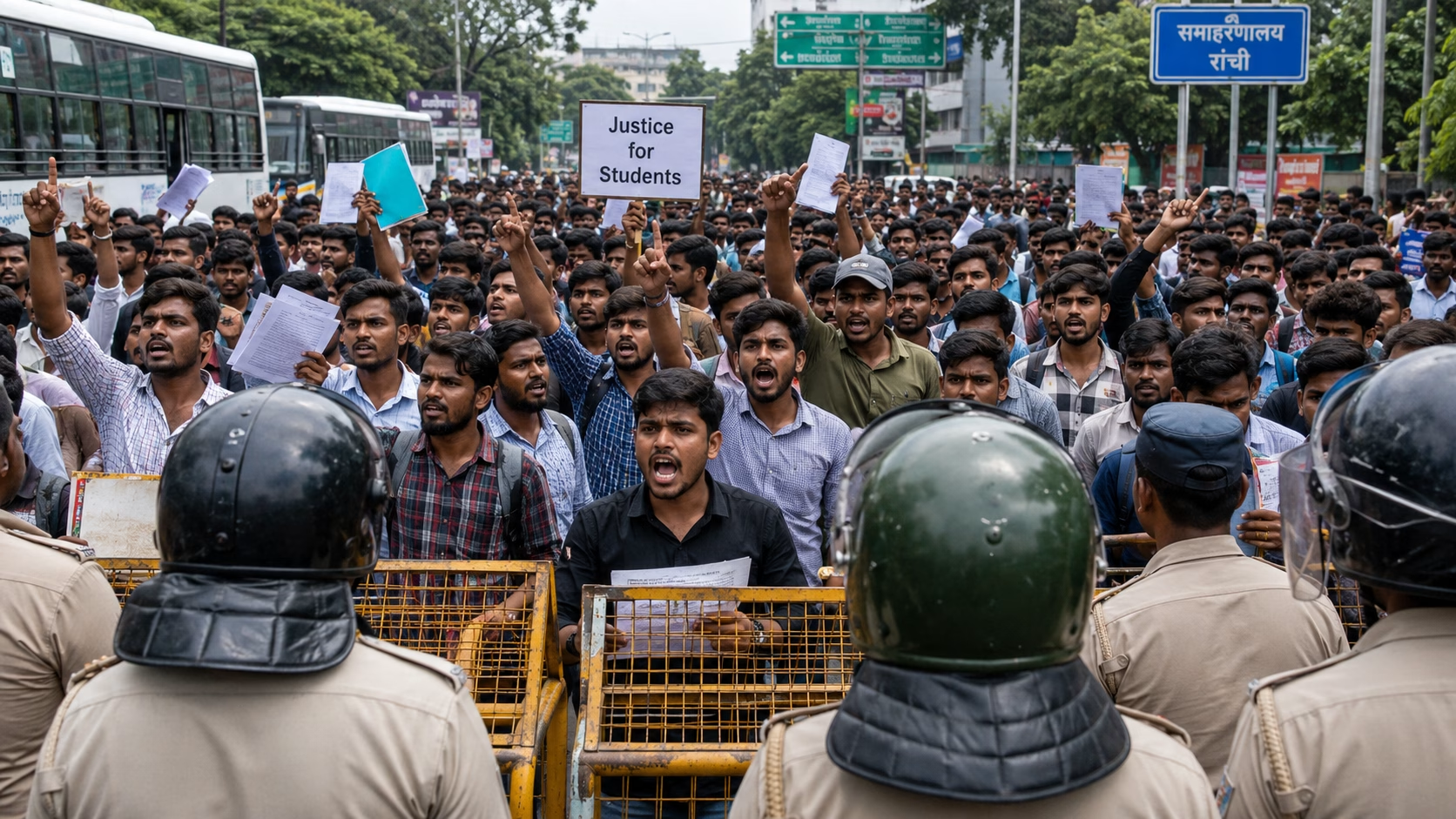
Thousands assembled in Ranchi before attempting to move towards the legislative complex.
Police had announced before the demonstration that peaceful protesters would be allowed to demonstrate without punitive action, while significant security arrangements and barricades were installed around the Assembly area.
Student organisers had also appealed to participants to maintain discipline and keep the march peaceful.
However, the situation deteriorated when sections of the crowd confronted police barricades.
Authorities responded with water cannon, tear gas and baton charges. Reuters reported that police used those measures to disperse demonstrators after some protesters became violent.
Other reports said protesters breached multiple barricades while attempting to reach the Assembly.
Reports also stated that 14 police personnel were injured.
This distinction matters.
The legitimate grievances of candidates demanding transparent recruitment cannot automatically justify violence or attacks on police. Equally, allegations of excessive police force against demonstrators require scrutiny rather than automatic acceptance of the authorities’ version.
Both questions can be examined simultaneously.
BJP calls Jharkhand bandh
The police action quickly became a political issue.
The Bharatiya Janata Party called a statewide Jharkhand bandh on Tuesday, 11 August, protesting the police response and demanding accountability over the recruitment controversy.
Reports from India on Tuesday said the shutdown disrupted normal activity in parts of the state.
The BJP has demanded a CBI investigation and criticised the Hemant Soren-led government over its handling of the students.
The dispute has therefore moved beyond student activism and into an intense political battle between the government and opposition.
That political involvement creates another challenge for the original protesters.
A movement that began around examination transparency can easily become absorbed into party politics. Maintaining clarity around the students’ original demands will be important if the movement is to retain broader public credibility.
What has the Jharkhand government said?
The government has not simply rejected the protesters.
A ministerial committee was created to engage with student representatives, and Congress leader K Raju, whose party supports the Jharkhand government, publicly welcomed dialogue with the protesting candidates.
Reuters reported that the state government says it has addressed many of the protesters’ demands and remains willing to continue discussions.
Chief Minister Hemant Soren has also called for dialogue as the situation has intensified.
The central unresolved issue is whether that dialogue will satisfy candidates demanding an investigation independent of the state administration.
Why this issue has become so emotional
For many Indian students, government recruitment examinations represent years of preparation, financial investment and family expectations.
Competition is enormous.
A secure government position can provide long-term employment, social mobility and financial security. When allegations of leaked examination papers or manipulated recruitment arise, candidates can feel that years of work have been rendered meaningless.
The Jharkhand demonstrations also follow wider youth anger in India over examination integrity and recruitment practices, giving the state protest a larger national context.
This is why dismissing the movement simply as political agitation would miss the deeper issue.
Trust in the examination system is itself at stake.
What about Auckland and New Zealand?
Events in India frequently generate strong reactions within diaspora communities around the world, including New Zealand.
Webfit News searched available reports and public sources on 11 August but could not independently establish that a specific Auckland demonstration connected directly with the current Jharkhand JPSC/JSSC movement had taken place or been formally announced.
That distinction is important because media organisations should not connect separate events without evidence.
There is, however, a broader question about political demonstrations concerning overseas disputes taking place in New Zealand.
New Zealand law protects freedom of expression and peaceful assembly. Section 16 of the New Zealand Bill of Rights Act 1990 protects the right to peaceful assembly, while New Zealand Police repeatedly recognise people’s right to peaceful and lawful protest.
That right applies even when other people strongly disagree with the cause.
At the same time, protest rights do not provide permission for intimidation, violence, threats, racial hostility, deliberate confrontation or unlawful disruption.
Police have previously stated the principle clearly: people have the right to protest, but other members of the public also have the right to carry out their lawful activities.
For a diverse country such as New Zealand, that balance is particularly important.
Diaspora communities should be free to debate developments in their countries of origin. They should also recognise that New Zealand’s multicultural society works best when disagreements remain peaceful, lawful and respectful.
Imported political disagreement should never become imported community hostility.
Where does Jharkhand go from here?
Three questions will determine what happens next.
First, whether the Jharkhand government agrees to an investigation that protesting candidates consider genuinely independent.
Second, whether evidence emerges that substantiates or disproves the broader allegations concerning recruitment examinations.
Third, whether student leaders, political parties and police can prevent another confrontation like the one seen outside the Assembly.
The statewide bandh has increased political pressure, but shutdowns and street confrontation cannot ultimately resolve questions about examination integrity.
That requires evidence, investigation and institutional reform.
Students deserve recruitment systems they can trust. Authorities deserve the opportunity to respond to allegations through evidence rather than assumption. Police actions during the demonstrations should also be open to scrutiny where questions about proportionality arise.
The strongest outcome for Jharkhand would not be victory for one political party or another.
It would be a recruitment system in which young candidates no longer believe they need to occupy streets simply to be confident that an examination is fair.
For now, that trust has clearly been damaged, and rebuilding it may be the most difficult task facing the Jharkhand government after the streets eventually become quiet.
References
Reuters, 10 August 2026, reporting on the Jharkhand Assembly march and clashes between protesters and police.
Deutsche Welle, 10 August 2026, reporting on the origins and wider context of the Jharkhand youth protests.
Economic Times, 11 August 2026, reporting on the statewide bandh, Devendra Nath Mahto’s hospitalisation and demands for a CBI investigation.
Business Standard, August 2026, background on the demands raised by JPSC and JSSC aspirants.
New Zealand Legislation, New Zealand Bill of Rights Act 1990, freedom of peaceful assembly.
New Zealand Police, statements concerning lawful and peaceful protest.