
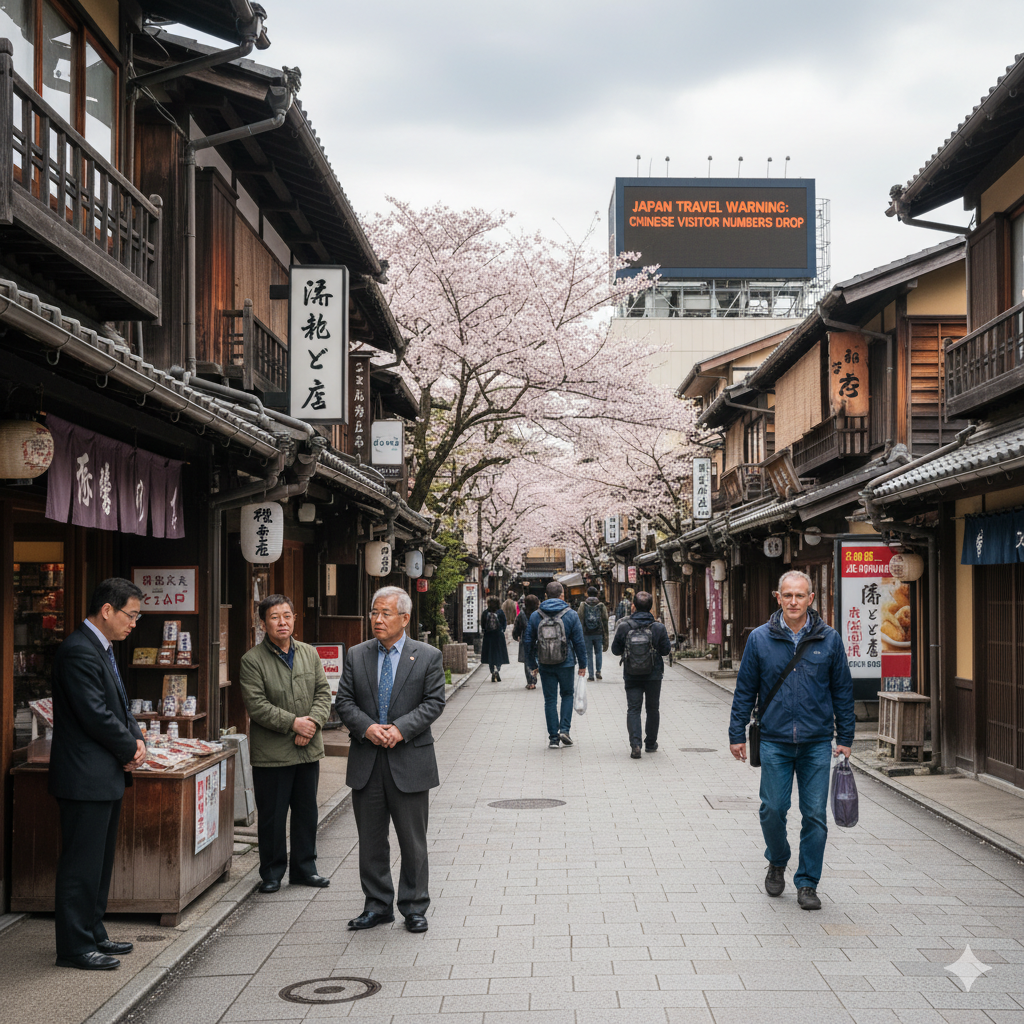
Japan’s tourism industry is preparing for possible disruption after Chinese authorities advised citizens to avoid traveling or studying in Japan. The alert has raised concern among business owners, especially with the busy Lunar New Year period approaching in mid-February.
Tourist Cities Fear Early Impact
In Kyoto, crowds still fill the Arashiyama area for the autumn season. Many shops say business is normal for now. Even so, they fear what may happen next. A souvenir shop manager said that the Lunar New Year brings many Chinese tourists each year. She worries that a long advisory could affect sales during one of the most important seasons.
Business groups are watching closely, too. Toshikazu Mitsuhashi from the Fujisawa Chamber of Commerce said they may work with other organisations if they see any drop in visitors. He hopes travel between the two countries continues without interruption.
Fujisawa hosts the popular Enoshima tourist spot. Local estimates show that travelers from China make up nearly 40 percent of all visitors. Because of this, even a small decline can affect hotels and shops almost immediately.
Okinawa Businesses Share the Same Concerns
Okinawa expects more than ten million tourists this year. The region remains a top destination for Chinese travelers. Tourism operators worry about cancellations. They fear a decline in hotel bookings and duty-free sales if the travel warning continues.
A spokesperson from the Okinawa Convention and Visitors Bureau said the situation is disappointing. The region will monitor government responses and hopes tensions ease soon.
Retail Stores Prepare for Changes
Large retailers such as Takashimaya are also assessing risk. The company said it expects a drop in customer numbers. Stores will watch how both governments act over the coming weeks. Although visitors from other Asian markets are increasing, a fall in Chinese arrivals would still affect overall sales.
Political Tensions Add Pressure
The travel warning followed recent comments by Prime Minister Sanae Takaichi about Taiwan. Her remarks triggered strong responses from Chinese officials. Several Chinese ministries then issued warnings that advised citizens to delay travel or study plans in Japan.
Some travel agencies in China have already told customers that tours may change or face suspension. Travel analysts also noted that hundreds of thousands of airline tickets to Japan were cancelled between November 15 and 17.
Japan Tourism Agency Responds Carefully
Japan Tourism Agency Commissioner Shigeki Murata said it is too early to predict the full impact. He said the government will continue its tourism promotions while monitoring the situation. Officials plan to keep communication open and maintain stability in the industry.
A Key Moment for Tourism Recovery
Chinese visitors account for a major share of Japan’s tourism income. Any decline can affect transport, retail, and hospitality businesses across the country. As the Lunar New Year approaches, the tourism sector hopes the advisory will be temporary.
Japan’s regions and tourism leaders are now preparing for different scenarios. Many hope diplomatic tensions will settle soon so that travel confidence can return.