By Geet G | Webfit News
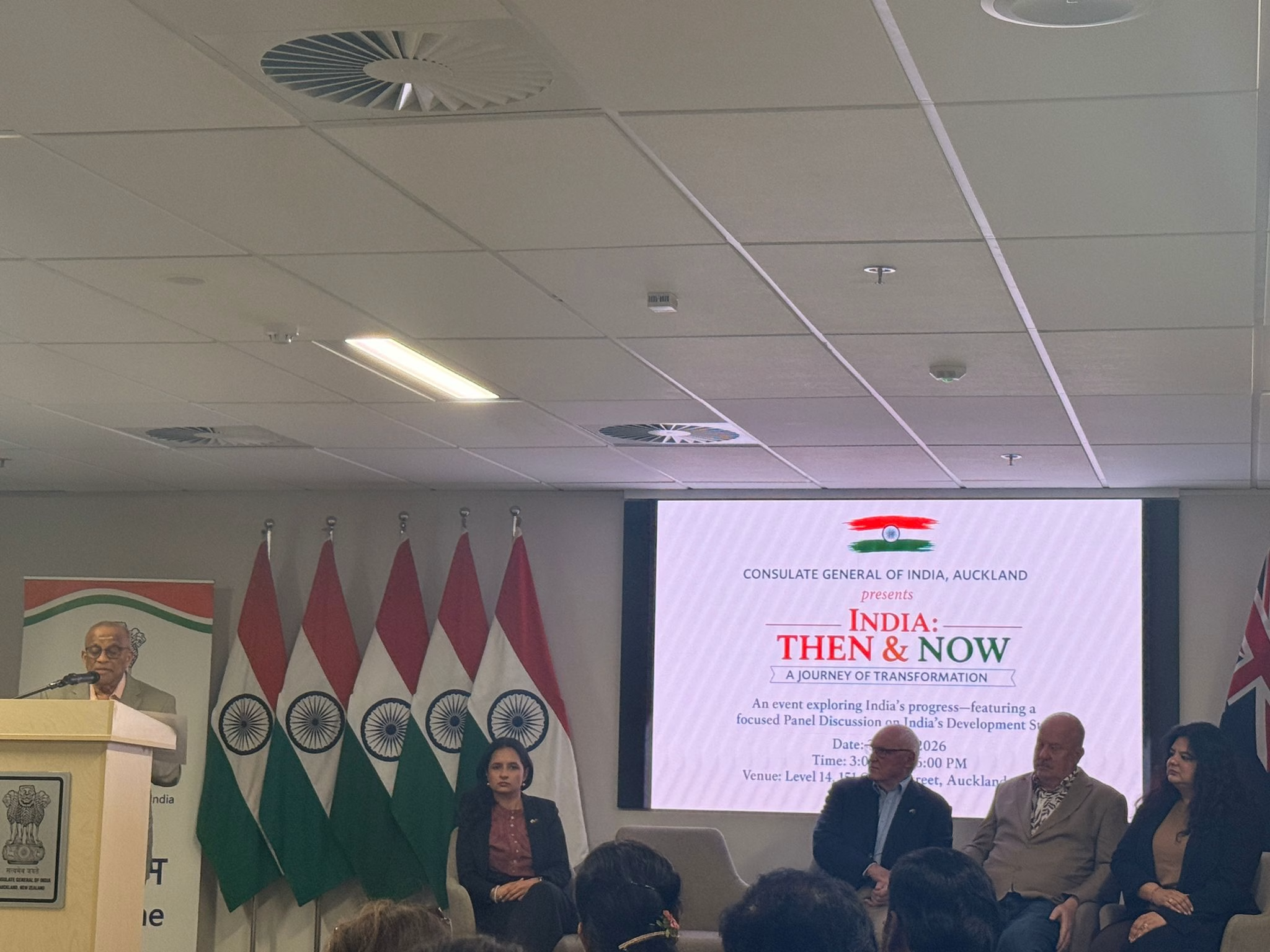
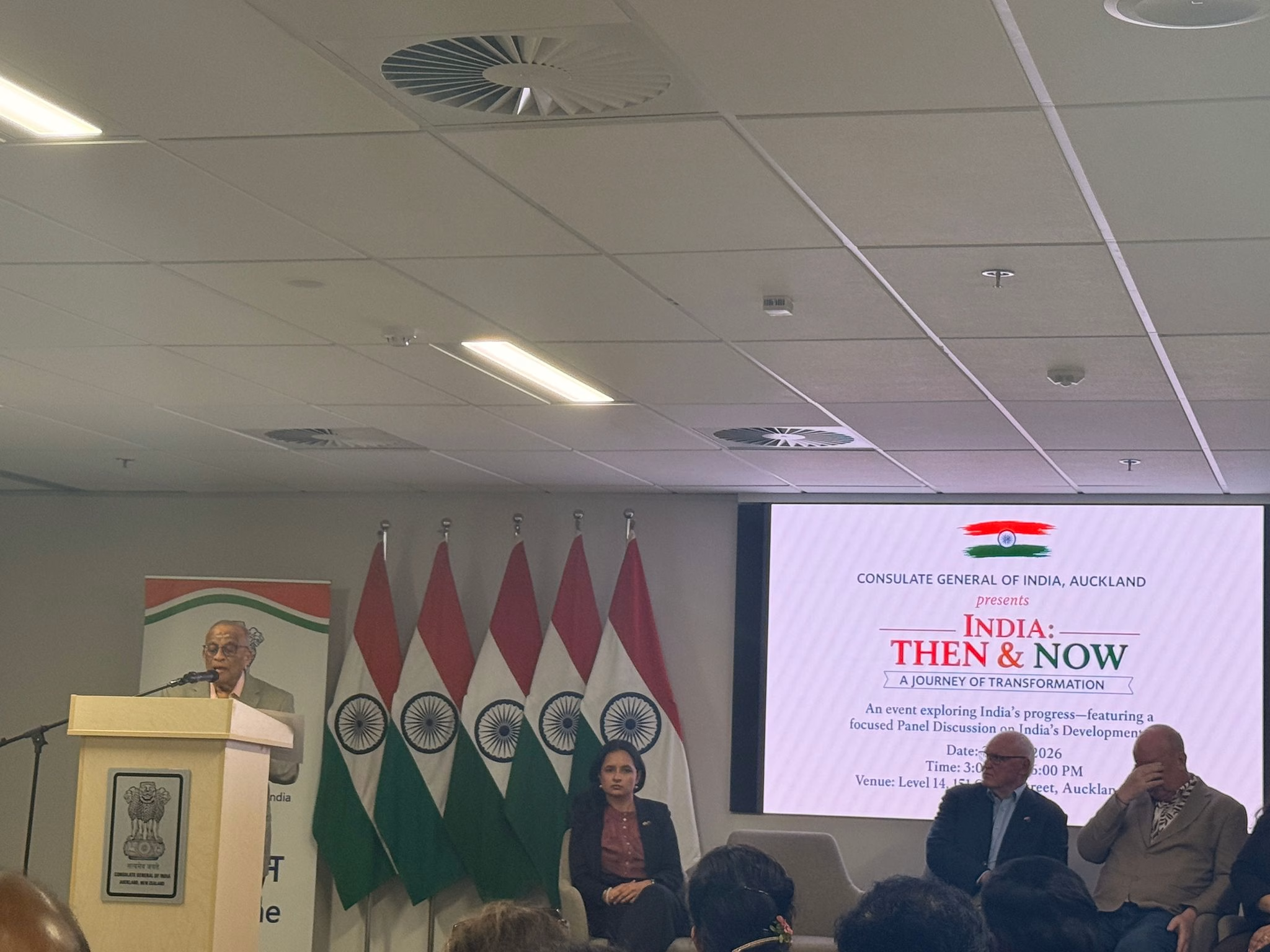
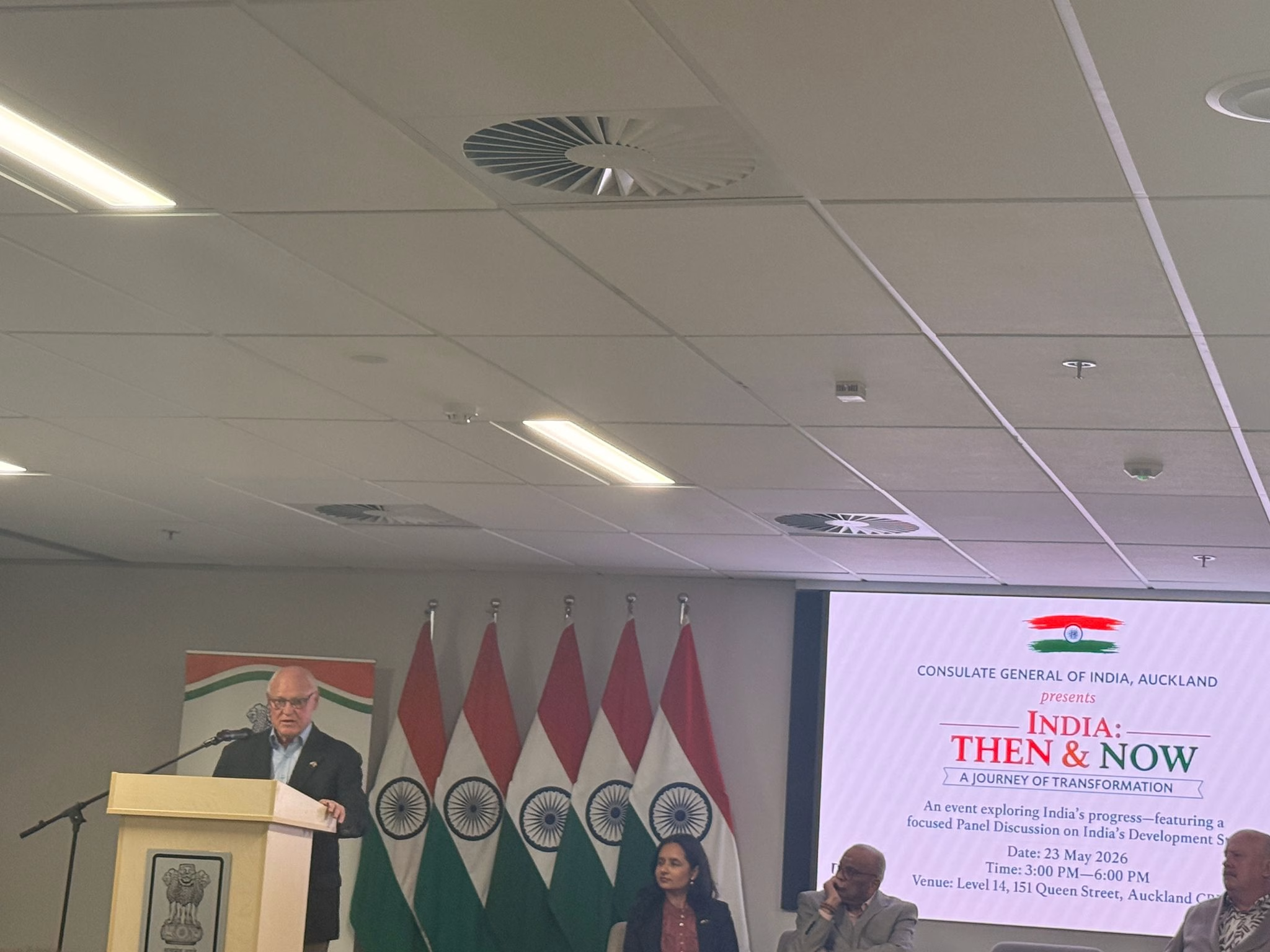
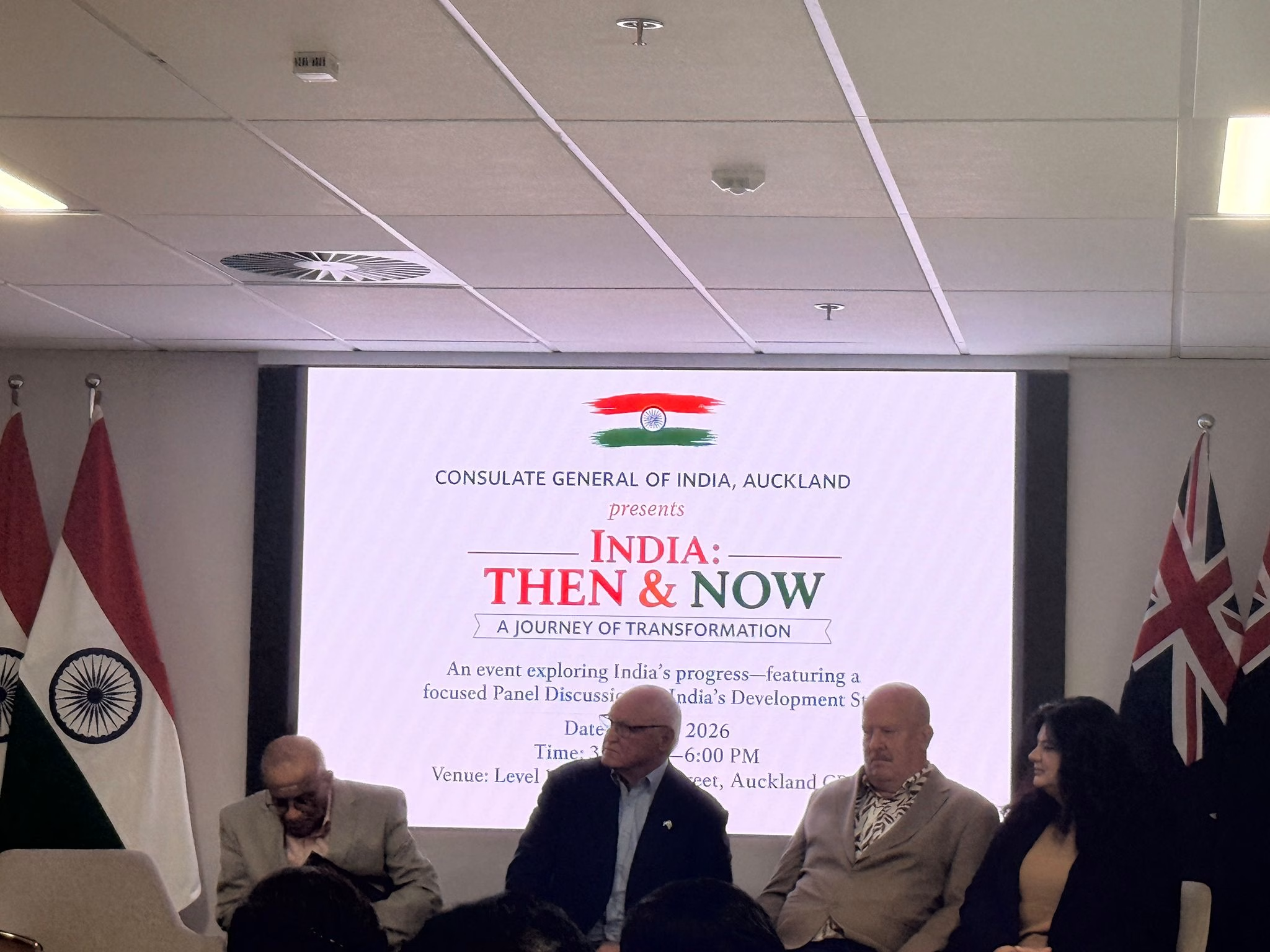
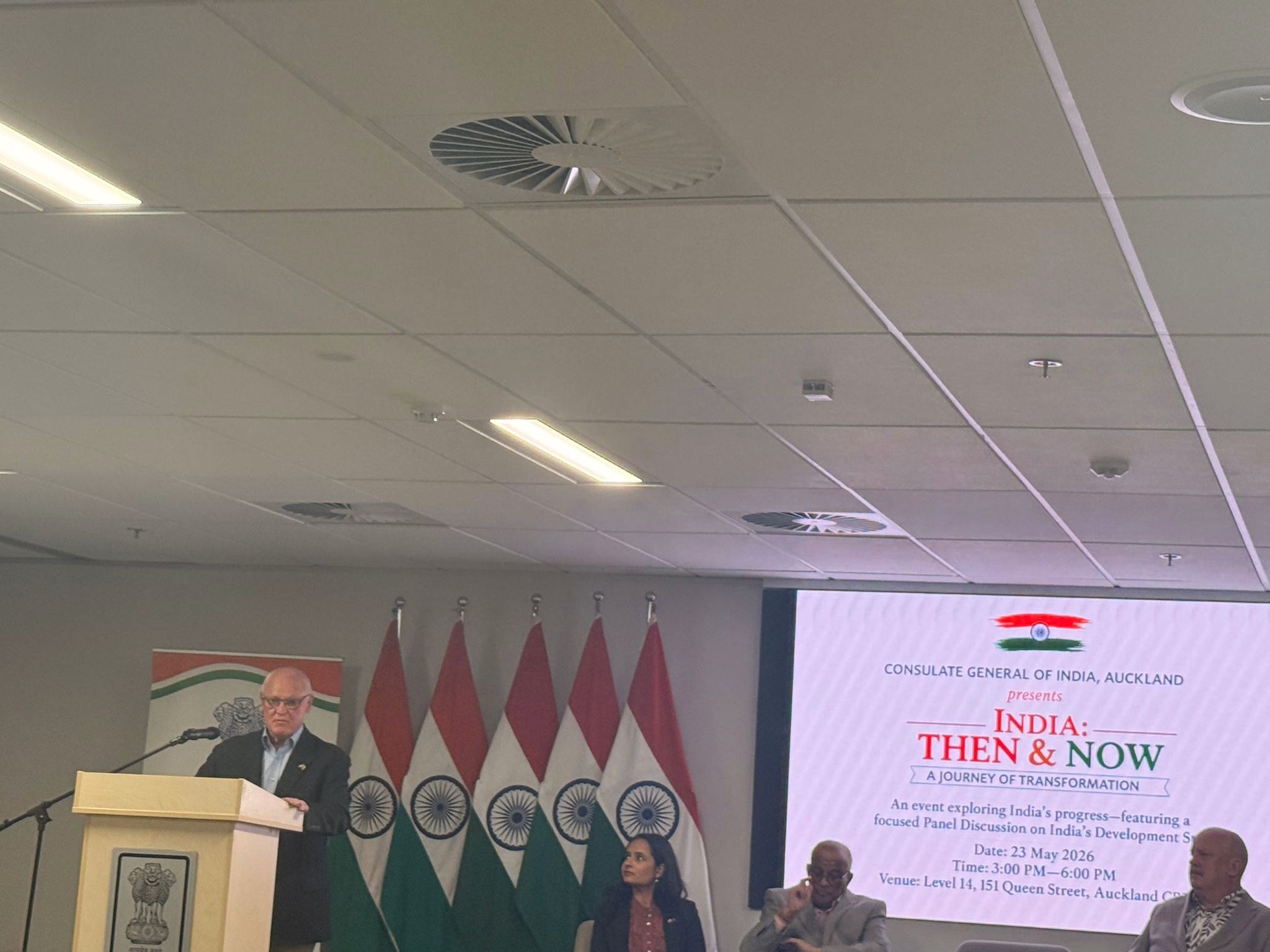
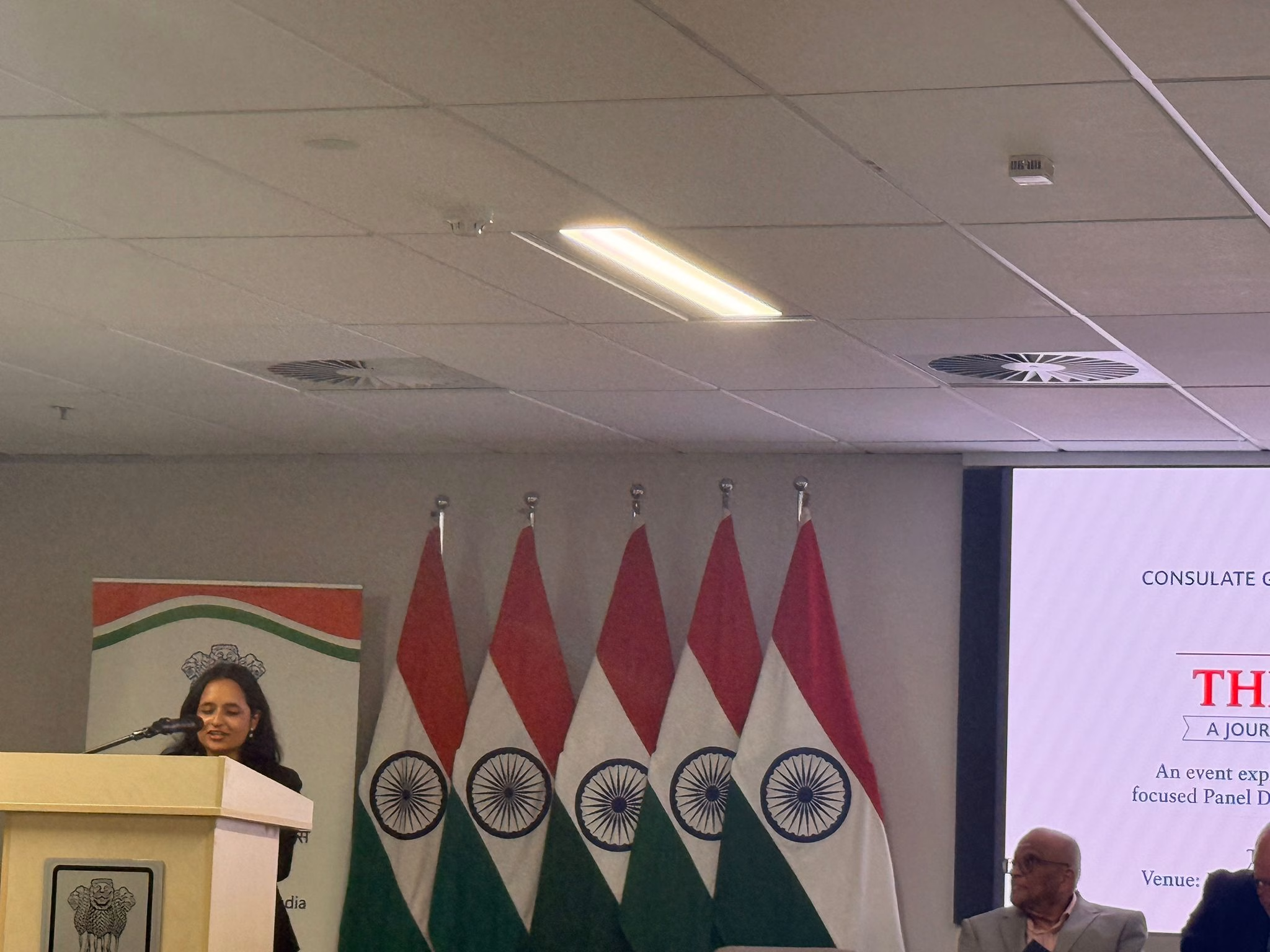
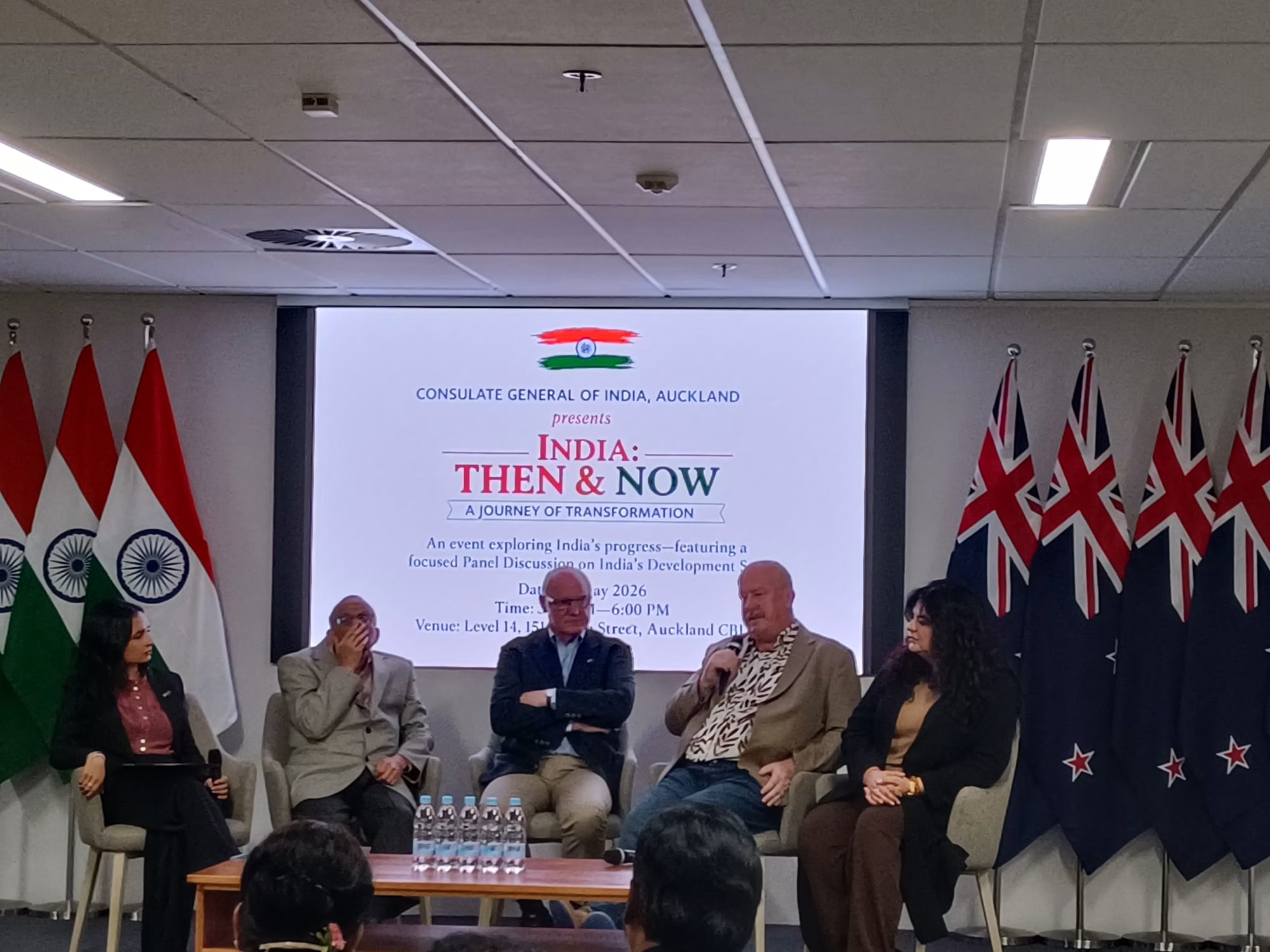
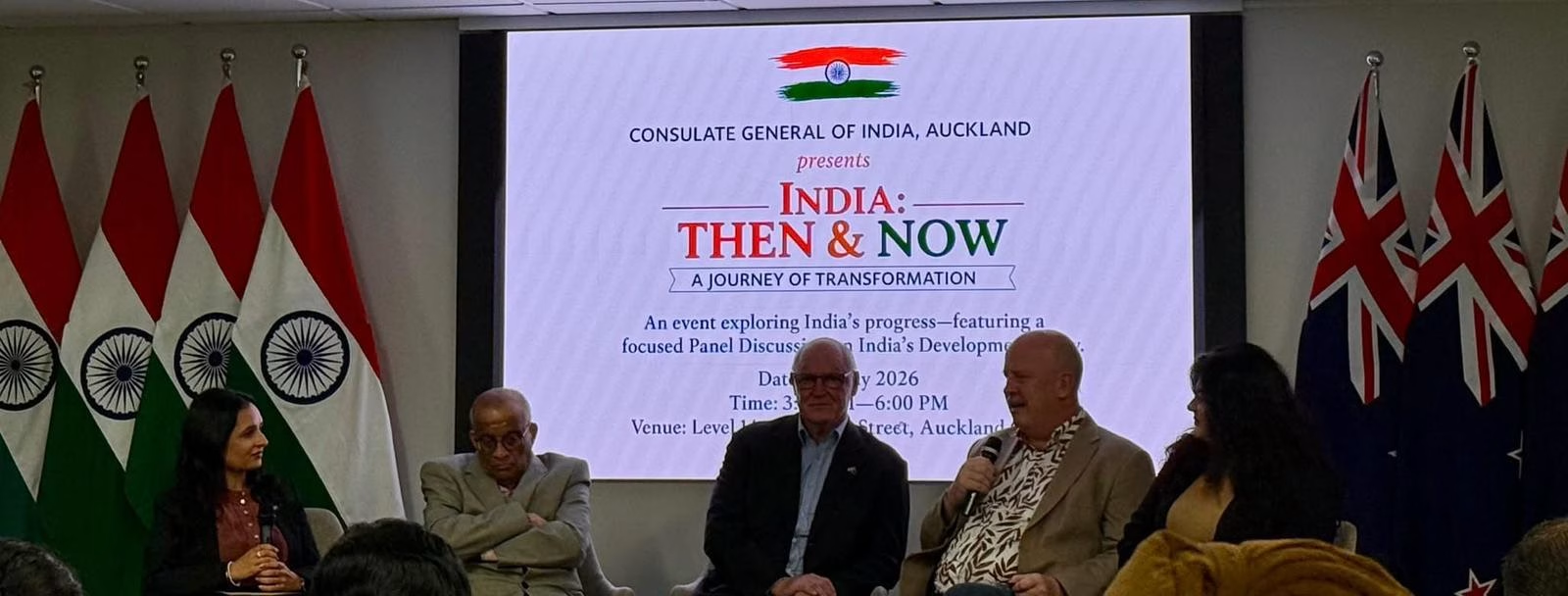
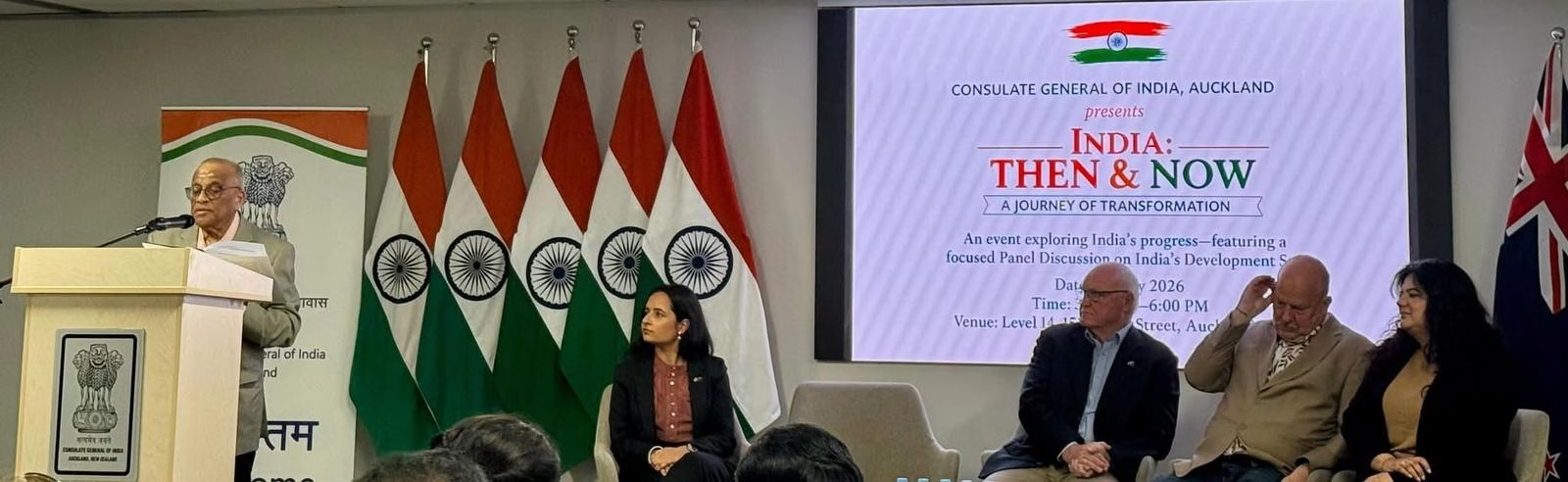
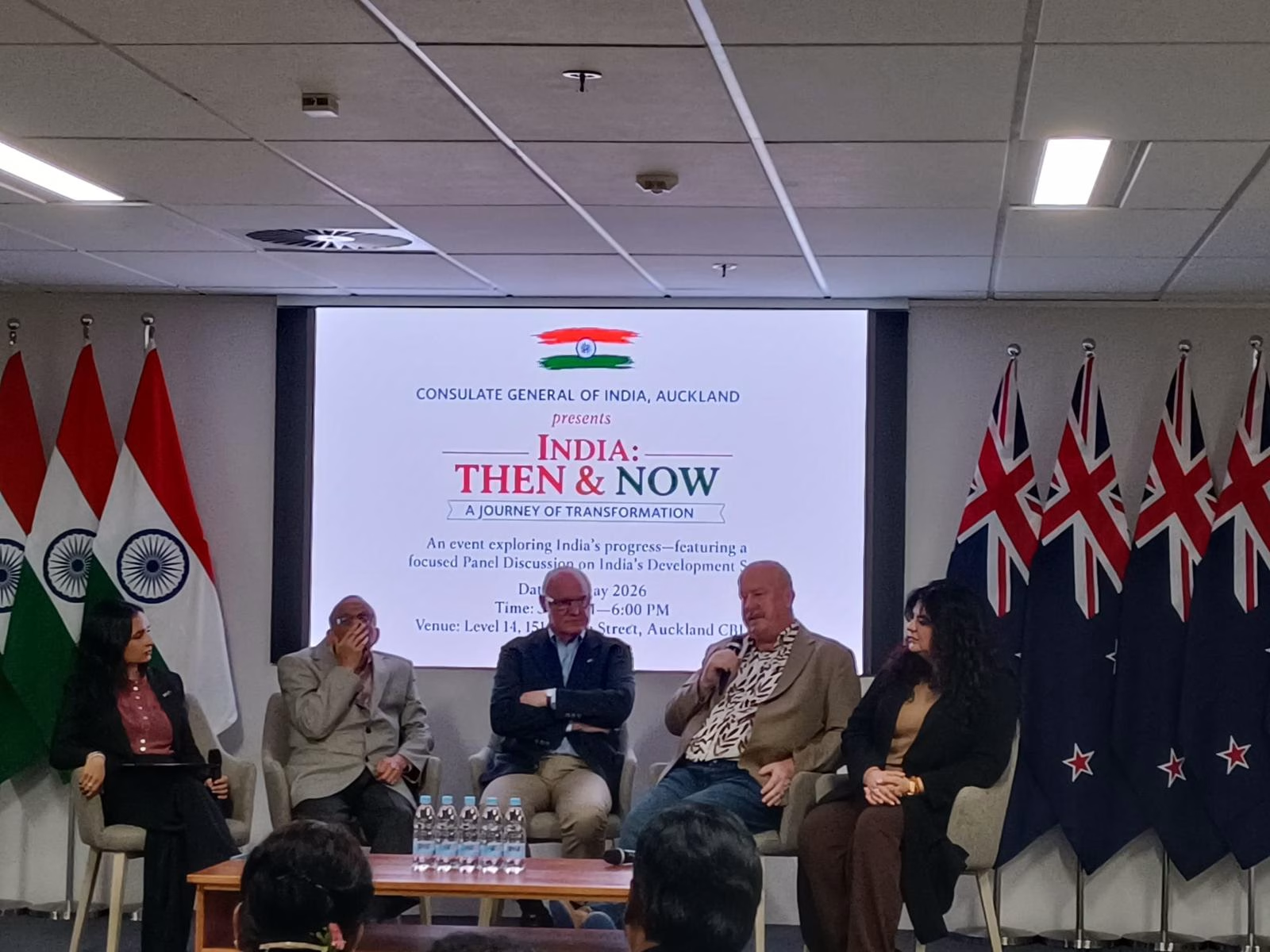
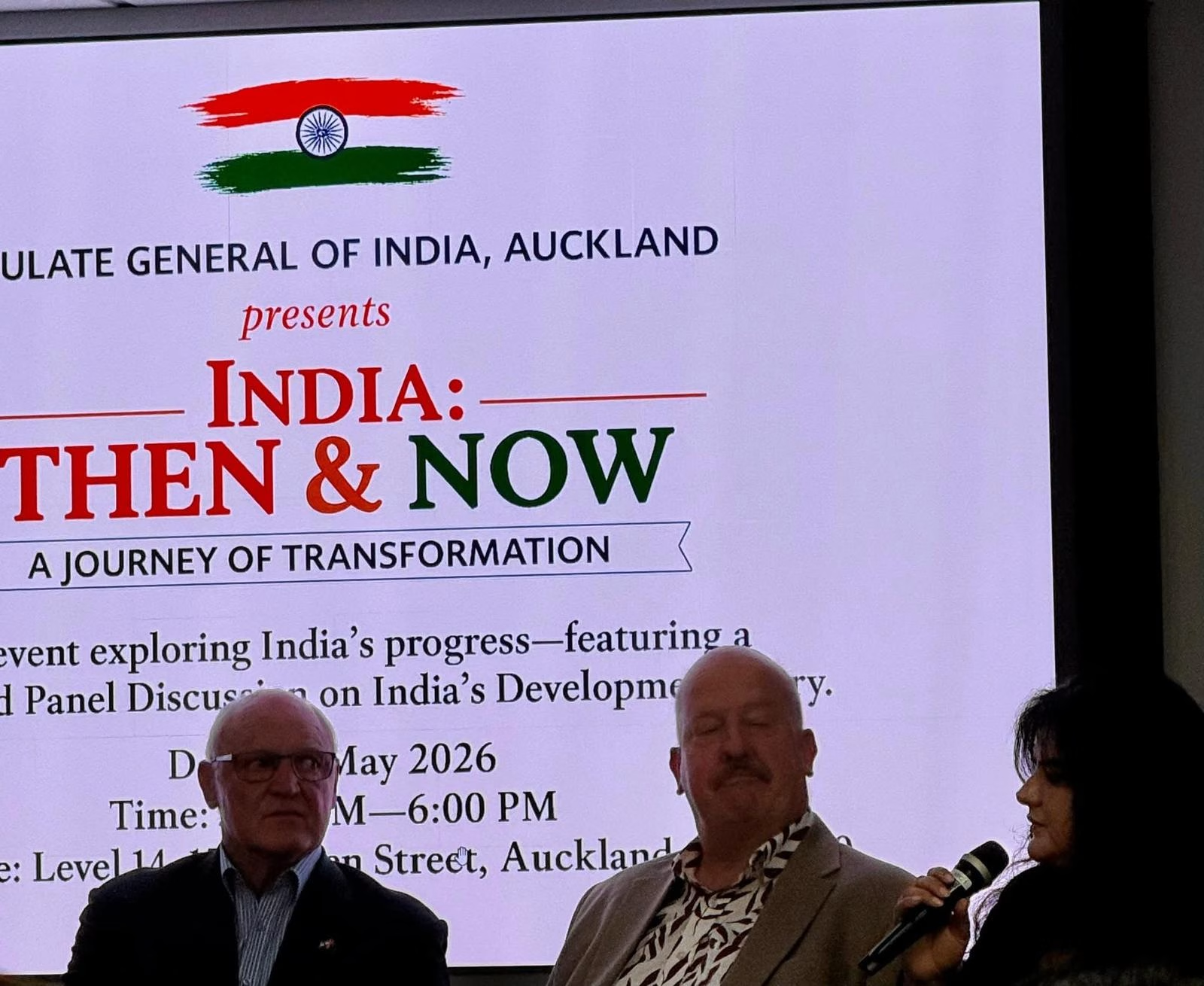
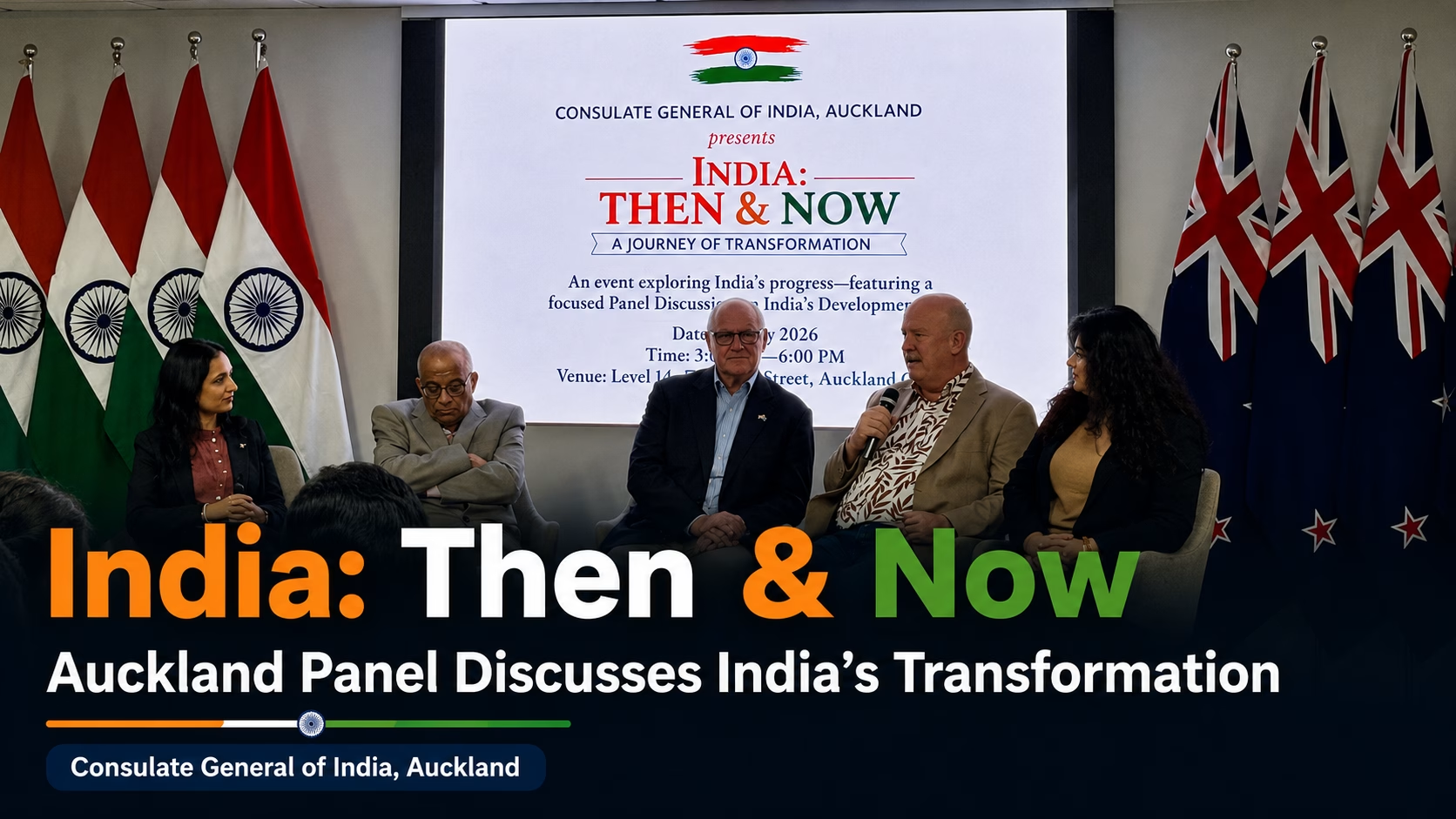
The Consulate General of India in Auckland hosted “India: Then & Now – A Journey of Transformation” on 23 May 2026, bringing together community members, professionals, business leaders and speakers for an engaging discussion on India’s transformation and the growing opportunity between India and New Zealand.
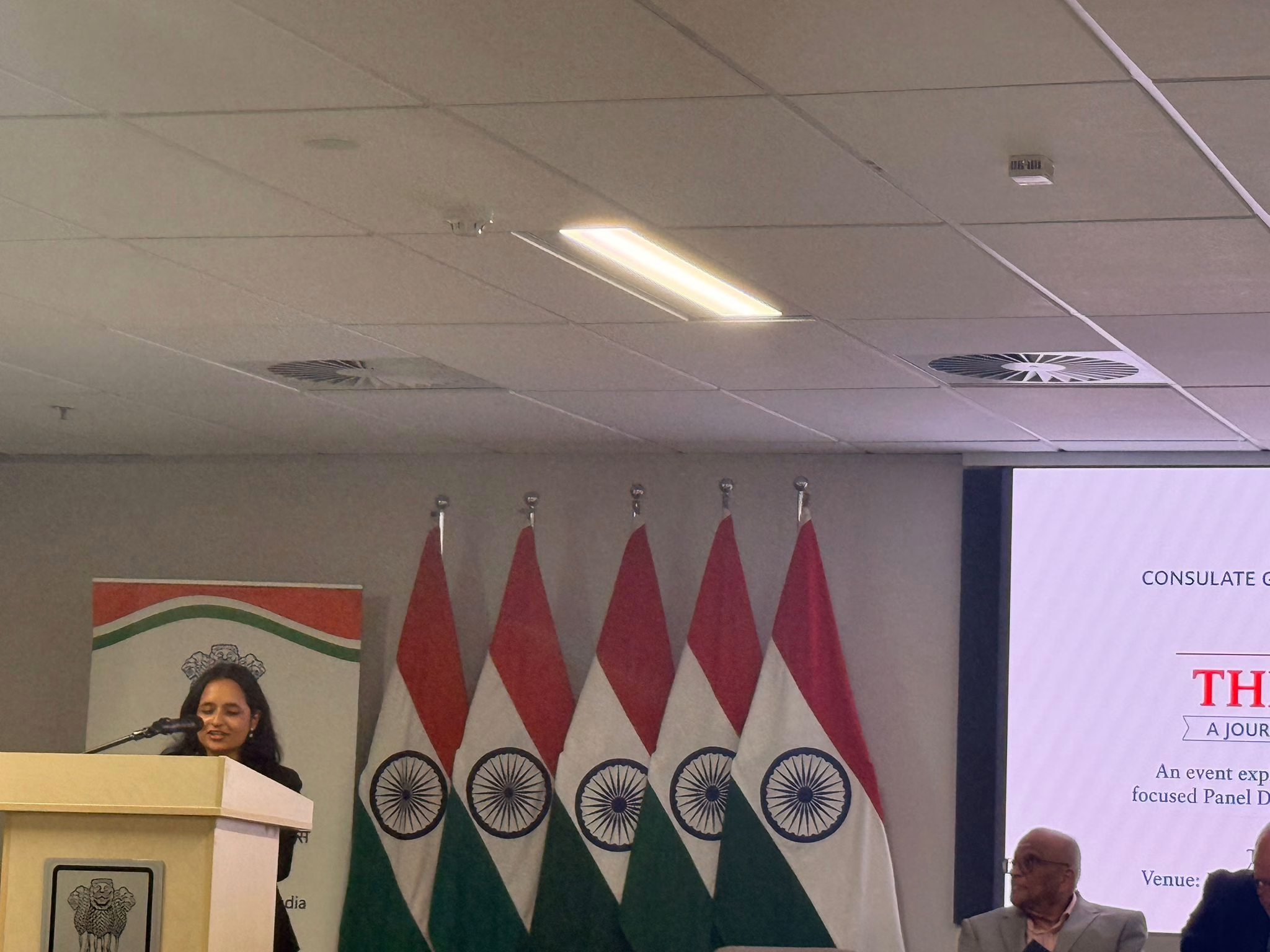
The event was held at Level 14, 151 Queen Street, Auckland CBD, and was attended by the Consul General of India in Auckland, Mr. Madan Mohan Setty, Mrs Swagatika Mohanti, Mr. Sanjeev Kumar [Consul & Head of Chancery], invited guests, community members and Webfit News.
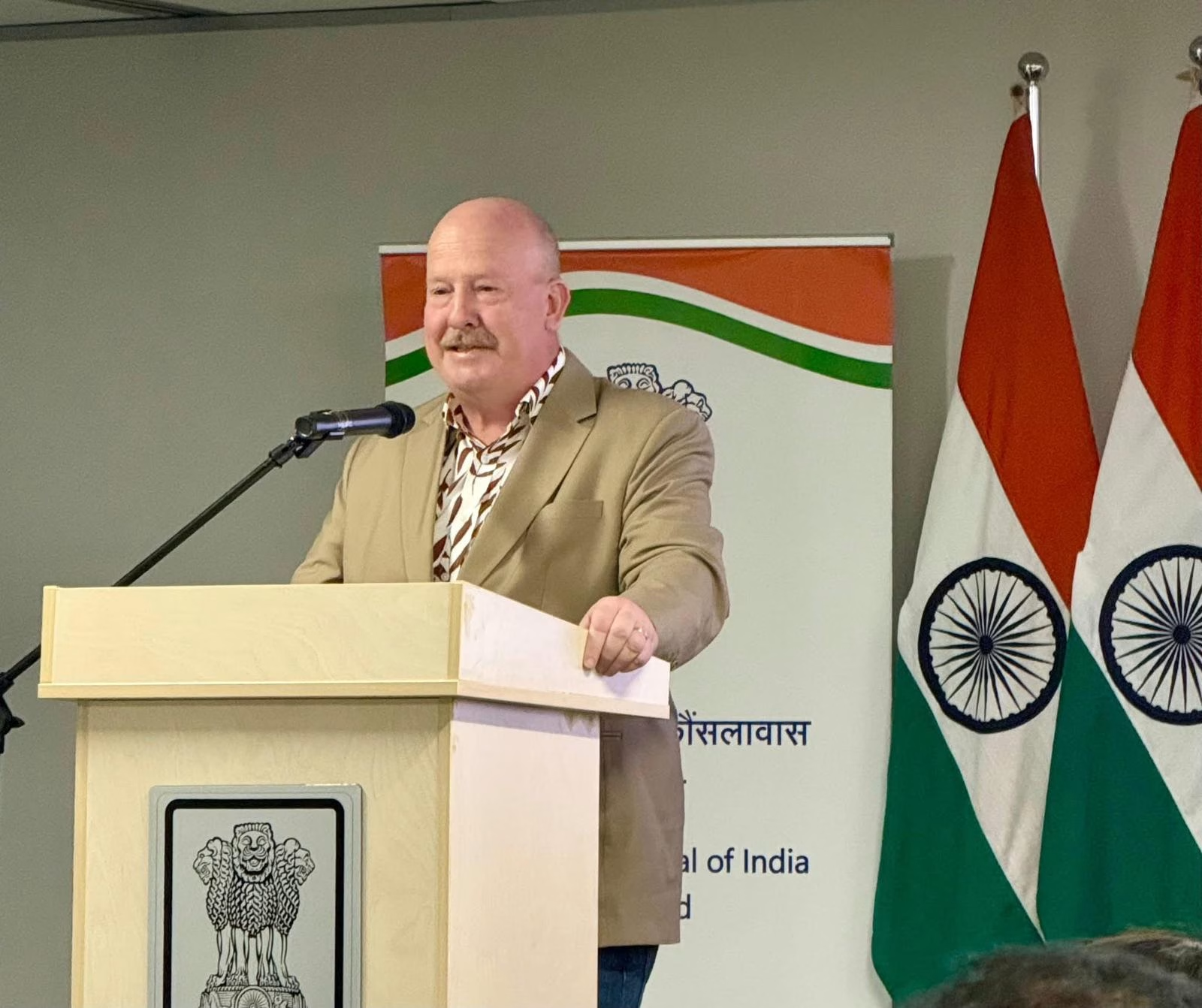
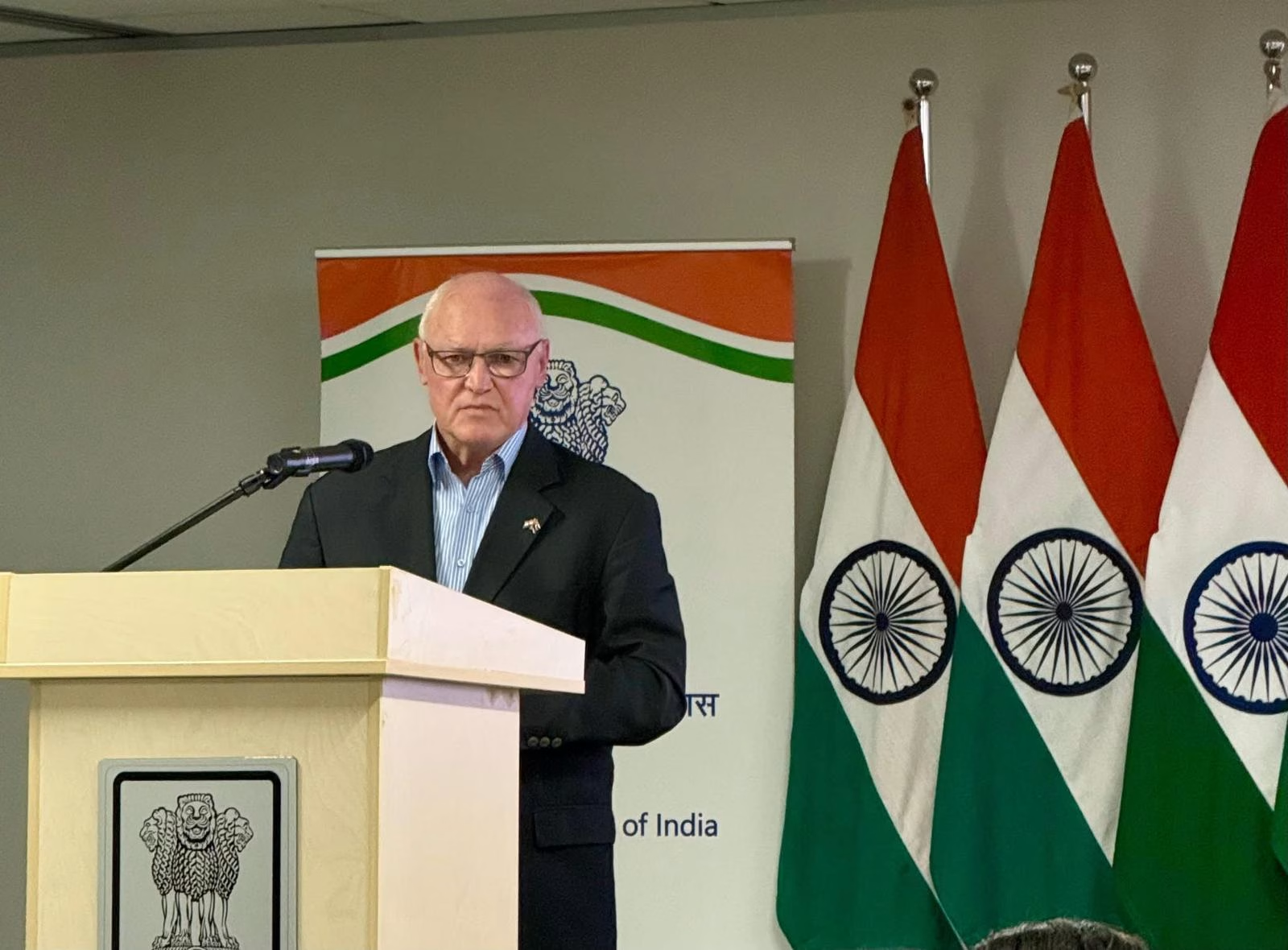
The session was moderated by Kritika Selachi and featured panel speakers including Professor John Tookey from Auckland University of Technology, Nalini Dutt from AA New Zealand, Earl Rattray from Dairy Link Ltd and Binsar Farms, and Venkat Raman, Editor of Indian Newslink.
What made the event stand out was its tone. It was not just a formal celebration of India’s progress. It was a thoughtful discussion about perception, scale, infrastructure, trust, diaspora responsibility and the real opportunity that exists when India and New Zealand understand each other beyond stereotypes.
Looking Beyond What We Think We Know
One of the early themes of the session was the need to question inherited perceptions.
A presentation slide titled “What We Think We Know” captured the issue clearly. It noted that New Zealanders often associate India with scale and population, Bollywood and culture, technology talent, crowded cities and rapid growth. At the same time, India often associates New Zealand with natural beauty, farming and sustainability, cricket, peaceful lifestyle and a small but developed nation.
The speaker reminded the audience that some of these perceptions may be true, but they are incomplete.
That idea shaped much of the conversation. India cannot be understood only through population, poverty, Bollywood or technology. New Zealand cannot be understood only through landscapes, sheep, cricket or peaceful living.
Both countries are more layered than the common images attached to them.
Two Nations, Two Evolving Realities
A key slide described the relationship as “Two Nations. Two Evolving Realities.”
The discussion compared the India many people still imagine with the India emerging today.
The old image of India often includes:
- developing economy
- bureaucracy and slow systems
- outsourcing hub
- crowded cities
The India emerging today includes:
- digital infrastructure
- innovation and startups
- major infrastructure growth
- global technology talent
- rising economic confidence
The same comparison was made for New Zealand. New Zealand may be small in population, but it remains globally respected for trust, governance, quality systems, food production, sustainability and stability.
The numbers also showed the contrast clearly:
- India has around 1.4 billion people
- New Zealand has around 5 million people
- Indian New Zealanders now number more than 200,000
This difference in scale does not reduce the relationship. It makes the partnership more interesting.
India brings scale, speed, talent, ambition and market depth. New Zealand brings trust, quality, reliable governance, sustainability thinking and strong institutional systems.
The real opportunity lies in combining those strengths.
India’s Infrastructure Story Draws Strong Attention
Professor John Tookey reflected on India’s infrastructure growth through the lens of someone who has visited India regularly over more than two decades.
He described India as an “ongoing miracle” in terms of construction, infrastructure and urban transformation. He spoke about arriving in Indian cities and seeing constant change, from airports and roads to mass transit systems and large-scale public assets.
He compared this with New Zealand’s slower progress on major infrastructure projects, noting that while New Zealand continues to debate some critical projects for years, India has been building at massive scale.
His remarks also carried an important warning. He said acquiring infrastructure is only one part of development. Once a country builds roads, bridges, hospitals and transport systems, it also inherits a long-term maintenance challenge.
That was one of the most balanced observations of the afternoon. India’s infrastructure push is impressive, but the next test will be how well the country maintains and protects those assets over time.
Confidence Is The Real Transformation
Another strong theme was confidence.
One speaker reflected that the India many people grew up with was ambitious, but still seeking validation from the world. The India visible today is different. It is more confident in its own ability, ambition and interest.
That confidence is visible in several areas:
- hundreds of millions of digital transactions
- rapid infrastructure expansion
- one of the world’s largest startup ecosystems
- strong technology talent
- increasing global influence
- fast-growing consumer and professional markets
The discussion made clear that India’s transformation is not only economic. It is also psychological.
India is no longer only trying to catch up. It is increasingly shaping global conversations in technology, infrastructure, education, supply chains and strategy.
Ambition, Productivity And The Indian Professional Mindset
The panel also explored whether India’s ambition has changed in recent years, especially as the idea of a developed India by 2047 becomes part of public conversation.
Nalini Dutt spoke about the confidence of Indian professionals and the hunger she sees among young Indians. She reflected on her own move from a high-pressure corporate environment in India to New Zealand, where she initially had to adjust to a very different workplace culture and a stronger emphasis on work-life balance.
Her point was not that one system is better than the other. It was that India and New Zealand operate with different rhythms.
India brings pace, ambition and a strong drive to grow. New Zealand brings balance, systems and trust. The challenge is to understand both, rather than forcing one country to behave exactly like the other.
Professor Tookey also observed the strong work ethic among Indian students and graduates in New Zealand. He said many Indian students show remarkable commitment, often seeking additional experience and opportunities while making a meaningful contribution to the New Zealand economy after graduation.
This part of the discussion gave the event a very human angle. India’s rise is not only about government policy or infrastructure spending. It is also about people, students, workers, professionals and families who carry ambition across borders.
Digital India And The Question Of Responsibility
The panel discussion also turned toward India’s digital revolution.
Speakers noted how digital payments have transformed everyday life in India. From tea stalls and auto-rickshaw drivers to hotels and small vendors, UPI and mobile payments have changed the way millions of people interact with money.
One speaker noted that people in India are now less worried about losing their wallet and more worried about losing their mobile phone, because the phone has become the centre of payments, communication and access.
This drew strong agreement across the panel.
However, the conversation did not become blind celebration. Speakers also raised important questions about data security, cyber safety and the risks that come with large-scale digitisation.
The discussion around artificial intelligence was equally balanced. Professor Tookey welcomed technological change but cautioned against treating AI as a replacement for human intelligence, critical thinking and craftsmanship. His warning was simple: societies should not only ask whether they can use a technology, but whether they should use it in a certain way.
Nalini Dutt also reflected on the opportunity for India and New Zealand to work together in this space. India can bring scale and speed. New Zealand can contribute digital maturity, safety frameworks and trusted governance.
This was one of the strongest future-facing parts of the event. It showed that the India-New Zealand relationship does not have to be limited to traditional trade. It can also extend into digital trust, cybersecurity, AI governance, startups and responsible technology.
A Relationship That Has Matured, But Still Needs Work
The speakers also discussed how the professional and economic relationship between India and New Zealand has changed over time.
One panelist noted that New Zealand has taken too long to fully recognise the importance of India, pointing out that India is now too significant to be treated as a distant or occasional partner. There was also discussion about the limited number of high-level political visits between the two countries over previous decades, and the need for both governments to do more.
The panel recognised recent positive movement, including growing diplomatic engagement, trade discussions and increased public attention around India-New Zealand relations. But the message was clear: progress has been made, but the relationship is still far from reaching its full potential.
New Zealand has goodwill in India, but it must build stronger visibility. India has scale and opportunity, but New Zealand must be more intentional in how it engages with that scale.
As one speaker suggested, New Zealand probably needs the India relationship more urgently than India needs New Zealand. That does not weaken New Zealand’s position, but it does mean New Zealand must be sharper, more active and more serious.
Where The Real Opportunity Begins
A presentation slide titled “Where the Real Opportunity Begins” gave three simple messages:
- Stay curious
- Invest in relationships
- Act with intention
This became one of the most practical takeaways from the event.
Speakers emphasised that the India-New Zealand relationship cannot grow only through formal agreements or official visits. It requires people who are willing to build trust, understand systems, ask better questions and move beyond surface-level assumptions.
The event highlighted that both countries are still discovering each other.
That discovery is not a weakness. It is the opportunity.
The Human Bridge: Role Of The Diaspora
The Indian diaspora was described as a powerful human bridge between India and New Zealand.
A slide titled “The Human Bridge” explained how Indian professionals and entrepreneurs bring ambition, context and empathy across borders. It also highlighted the role of Indian New Zealanders in communication, business, institutions and community life.
This was one of the most important messages of the event.
The diaspora is not only a migrant community. It is a connector.
Earlier generations focused on stability, family security and building a better life. Today, many Indian New Zealanders are moving into a broader role. They are helping both countries understand each other better.
They understand India’s ambition, speed and complexity. They also understand New Zealand’s trust-based systems, expectations and processes.
That places the diaspora in a unique position to help convert awareness into real partnership.
The panel also challenged the diaspora to think more deeply about its own responsibility. One speaker asked how closely the next generation remains connected to India, and whether families are passing on that relationship with meaning, not just nostalgia.
That question matters. The future diaspora will not look exactly like the first generation. The second, third and fourth generations may carry identity differently. But the conversation about India, belonging and contribution must continue at home, in community spaces and in public platforms.
From Awareness To Partnership
Another slide used a simple but powerful framework: “From Awareness to Partnership.”
It outlined three steps:
- Challenge assumptions
- Build genuine relationships
- Create long-term value
The areas of opportunity discussed included talent and education, agri-tech, technology and innovation, sustainability, business relationships and people-to-people connections.
These are not abstract ideas. They are practical areas where India and New Zealand already have shared interests.
The discussion also made clear that future partnerships will not be built only by signing documents. They will be built through trust, repeated engagement and a better understanding of each other’s strengths.
Hope, Action And The Road Ahead
As the panel moved toward its conclusion, the speakers were asked what gave them the most optimism about India’s future.
The answers returned to hope, ambition and action.
One speaker said hope drives the life of a nation, but hope alone is not enough. Enthusiasm must be followed by action.
Another reflected that India’s path of growth is already set, supported by population, aspiration and rising income. He said India’s younger generation is demanding world-class systems, infrastructure and opportunities, and that expectation itself will help drive change.
Professor Tookey described India’s development as broad-based, touching education, infrastructure, environment and capability at the same time. He also warned that challenges around climate change, coastal vulnerability and priorities will require serious attention.
Nalini Dutt expressed strong optimism about India’s growth, noting that India is managing the scale of 1.4 billion people while building ambition across government, institutions and individuals. She said India can bring scale, speed and ambition, while New Zealand can bring quality, standards and frameworks.
That combination may become one of the strongest foundations for future cooperation.
Webfit News Perspective
The event was valuable because it treated India’s transformation with both pride and maturity.
It celebrated India’s rise, but did not reduce it to slogans. It recognised infrastructure growth, digital transformation, startup energy and global confidence. At the same time, it acknowledged that scale brings responsibility, including maintenance, sustainability, inclusion and long-term planning.
For New Zealand, the message was equally important. India should not be viewed through old assumptions about population, poverty or outsourcing. New Zealand should also not be underestimated because of its smaller size.
The opportunity between India and New Zealand is not just about trade. It is about trust, talent, education, innovation, diaspora connection and long-term relationship building.
Perhaps the strongest message from the afternoon was this: the future of the India-New Zealand relationship will not be built by assumptions.
It will be built by people willing to stay curious, build relationships and act with intention.
That is where the real opportunity begins.