Auckland, Tuesday 14 October 2025 | Webfit News
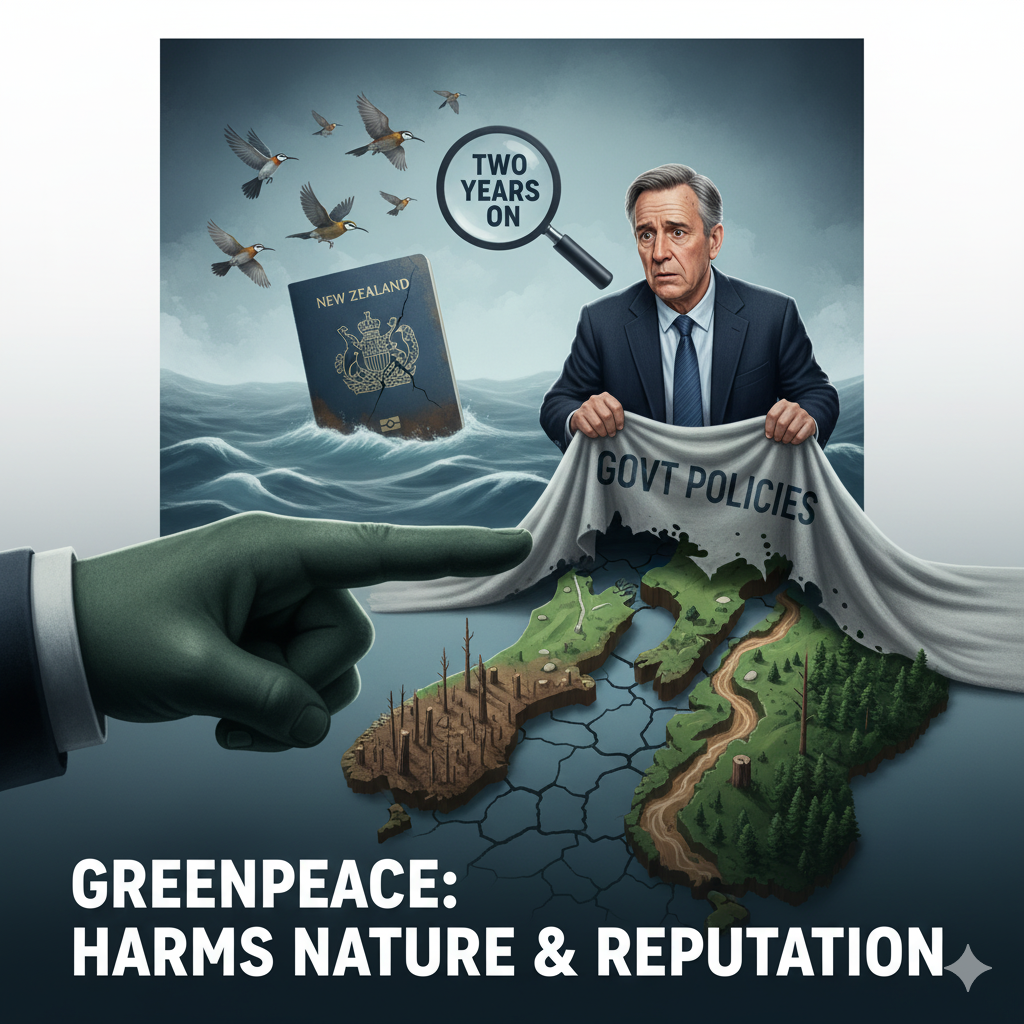
Greenpeace has marked two years since the 2023 election with a timeline of environmental decisions that it says amount to a war on nature. The group argues the cumulative impact is already visible in energy, freshwater, climate targets, and international reputation.
What Greenpeace claims has changed
- Oil and gas exploration reopened after the earlier ban was overturned
- Seabed mining and other projects advanced through fast-track pathways
- Freshwater protections weakened, with rising concern about nitrates in key regions
- Agriculture is permanently excluded from the Emissions Trading Scheme
- Methane target signaled at 14 to 25 percent by 2050, lower than the 24 to 47 percent range set under the Zero Carbon Act
- The NZ Battery initiative at Lake Onslow was canceled on 3 December 2023
Dr Russel Norman, Executive Director of Greenpeace Aotearoa, says these choices undermine the shift from fossil fuels to renewables and risk higher long-term costs for households and businesses. He argues the changes also weaken New Zealand’s clean and green brand at a time when overseas buyers expect low-emission and nature-positive production.
Trade, farmers, and credibility
Greenpeace warns that stepping back from climate and water commitments could make it harder to compete in markets that screen for sustainability, including the United Kingdom, the European Union, and the United States. The group says most farmers support the Paris Agreement and want clear tools and certainty to reduce emissions, and that policy resets should help them move faster rather than lower the bar.
What the Government says
Ministers have previously framed policy changes as necessary for energy security, cost-of-living relief, and faster investment. Supporters of the resets say streamlining approvals will speed up major projects and that New Zealand must keep options open while building new renewable generation. Critics, including Greenpeace, say the overall direction slows the transition and increases environmental risk.
What to watch next
Key tests ahead include final settings for methane targets, the treatment of agriculture in climate policy, regional responses to water quality pressures, and the balance between fast-track approvals and environmental safeguards. Greenpeace says it will continue publishing updates as decisions progress.
Source and reference: Greenpeace press release carried by Scoop Media
Disclaimer: Webfit News is neutral and independent. We share verified releases and public updates in the public interest. For corrections or context, write to webfitnews@gmail.com.