By Geet | Webfit News
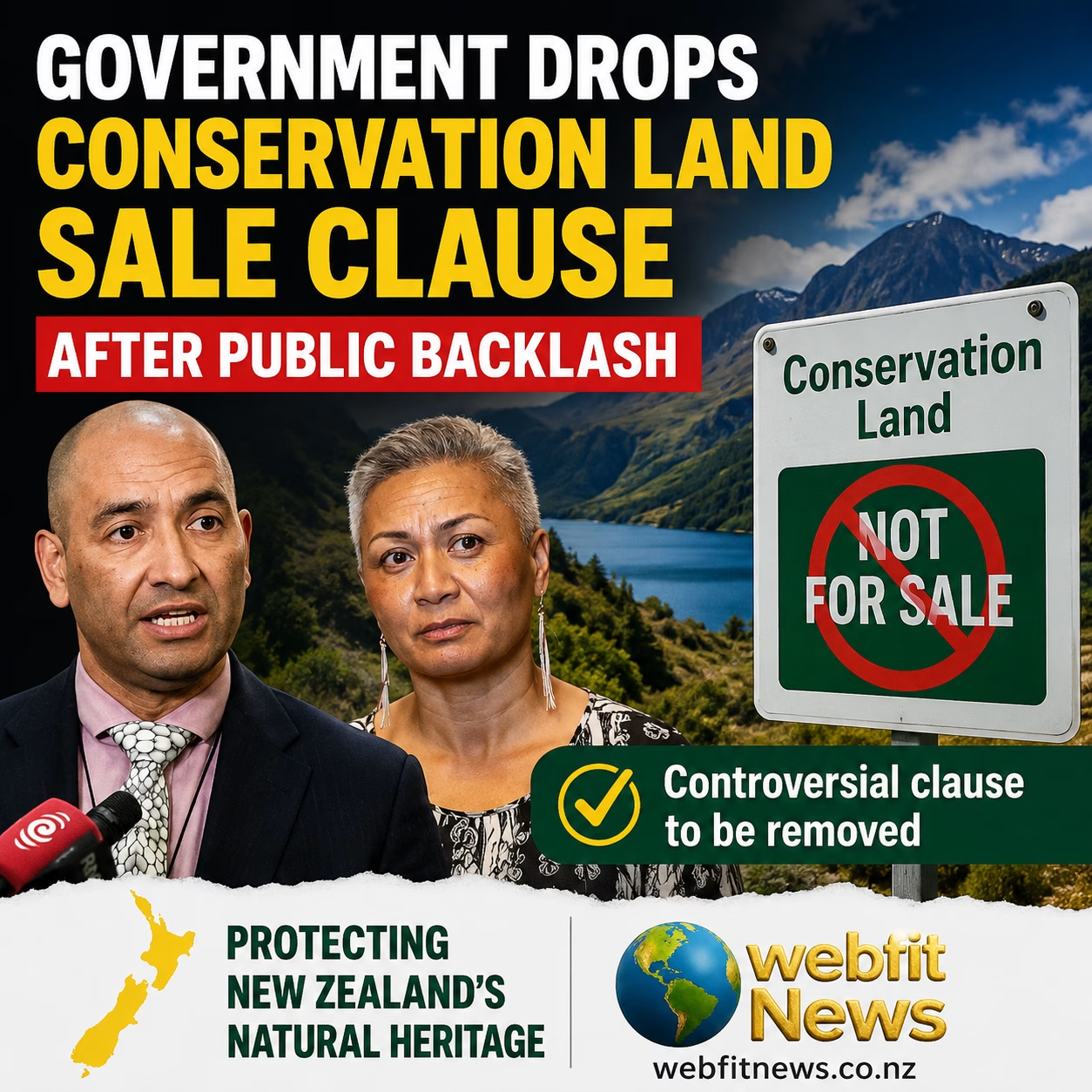
Auckland, New Zealand: The New Zealand Government has announced it will remove one of the most controversial provisions from the proposed Conservation Amendment Bill after widespread criticism from conservation groups, environmental organisations, opposition parties, and thousands of New Zealanders.
The decision marks a significant political shift and highlights how public engagement can influence major legislative reforms, particularly when they involve New Zealand’s natural heritage.
According to reporting by RNZ, Conservation Minister Tama Potaka confirmed that the Government would remove provisions that could have expanded the amount of conservation land eligible for sale, acknowledging that the wording of the bill created confusion and concern.
A Significant Policy Reversal
The original proposal would have expanded the pool of conservation land that could potentially be sold by adding approximately 2.8 million hectares to the 2.4 million hectares of stewardship land already eligible for disposal under certain conditions.
The Government maintained that there was never any intention to sell large areas of national parks or iconic conservation land. Instead, officials said the changes were intended to deal with small, isolated parcels of land such as unused government buildings or redundant reserves where proceeds could be reinvested into biodiversity and conservation projects.
However, critics argued that the legislation created a legal pathway that future governments could potentially use to dispose of much larger areas of protected land.
That concern quickly became the centre of the national debate.
A Lesson in Public Trust
While the Government insists the proposal was misunderstood, the episode demonstrates that when legislation involves public assets, perception can become just as important as policy.
New Zealanders generally place a high value on public conservation land, seeing it as part of the country’s national identity rather than simply government-owned property.
Environmental groups argued that even if no immediate land sales were planned, the legislation weakened long-standing protections by changing the legal framework itself.
Recognising those concerns, Potaka told delegates at the Environmental Defence Society conference that the wording of the bill did not properly reflect the Government’s intentions.
“We’ve heard New Zealanders, we’ve listened to New Zealanders, and as a result, we’re taking action,” the minister said.
More Than Just Land Sales
Although the Government is removing the controversial land sale provisions, debate over the wider Conservation Amendment Bill is far from over.
One of the remaining areas attracting criticism is the proposal requiring the Department of Conservation to place greater emphasis on economic opportunities when making decisions involving conservation land.
Supporters argue that carefully managed economic activity can help fund conservation work while improving public access and regional development.
Critics fear it could make it easier for commercial developments including mining projects, tourism infrastructure, private resorts or other commercial ventures to gain approval on protected land.
That debate is expected to continue as submissions on the bill remain open until 2 July.
Coalition Partners Seek Common Ground
New Zealand First deputy leader Shane Jones also welcomed the decision to remove the disputed provisions.
Speaking alongside Potaka, Jones acknowledged that the original proposal had become difficult for many New Zealanders to accept.
He said there remained broad support for allowing the Department of Conservation to dispose of genuinely redundant parcels of land but stressed that people did not want to see any suggestion of widespread privatisation of conservation areas.
His comments indicate that coalition partners are now attempting to strike a balance between improving administrative efficiency while maintaining strong public confidence in conservation protections.
Environmental Groups Say More Changes Are Needed
Despite welcoming the Government’s retreat on land sales, environmental organisations believe the changes do not go far enough.
Greenpeace Aotearoa has called for the entire Conservation Amendment Bill to be withdrawn, arguing that other provisions continue to prioritise commercial interests over environmental protection.
The Green Party also said the Government’s decision demonstrates that sustained public pressure can influence policy.
Co-leader Marama Davidson said removing one controversial clause does not resolve wider concerns surrounding the bill’s direction.
What This Means for Future Conservation Reform
The Government’s decision may prove to be one of the most significant examples in recent years of how public consultation shapes environmental legislation in New Zealand.
Rather than simply becoming another political dispute, the debate has reinforced an important democratic principle.
Major reforms involving public land require not only sound policy but also public confidence that long-standing protections will remain intact.
The controversy may ultimately encourage future governments to engage more extensively with communities, iwi, conservation organisations and environmental experts before introducing substantial changes to conservation laws.
Looking Ahead
The Conservation Amendment Bill will continue through the parliamentary select committee process, where further amendments remain possible before it returns to Parliament.
Public submissions close on 2 July, providing New Zealanders with another opportunity to influence the legislation.
While one of the bill’s most controversial proposals is now expected to disappear, the wider debate over balancing environmental protection with economic development is likely to continue well beyond this legislation.
For many New Zealanders, the discussion has become about more than land ownership. It is about defining how future generations will manage one of the country’s greatest national assets.
Source: This article includes information first reported by RNZ and has been expanded with additional reporting, analysis and context by Webfit News.