
By Webfit News
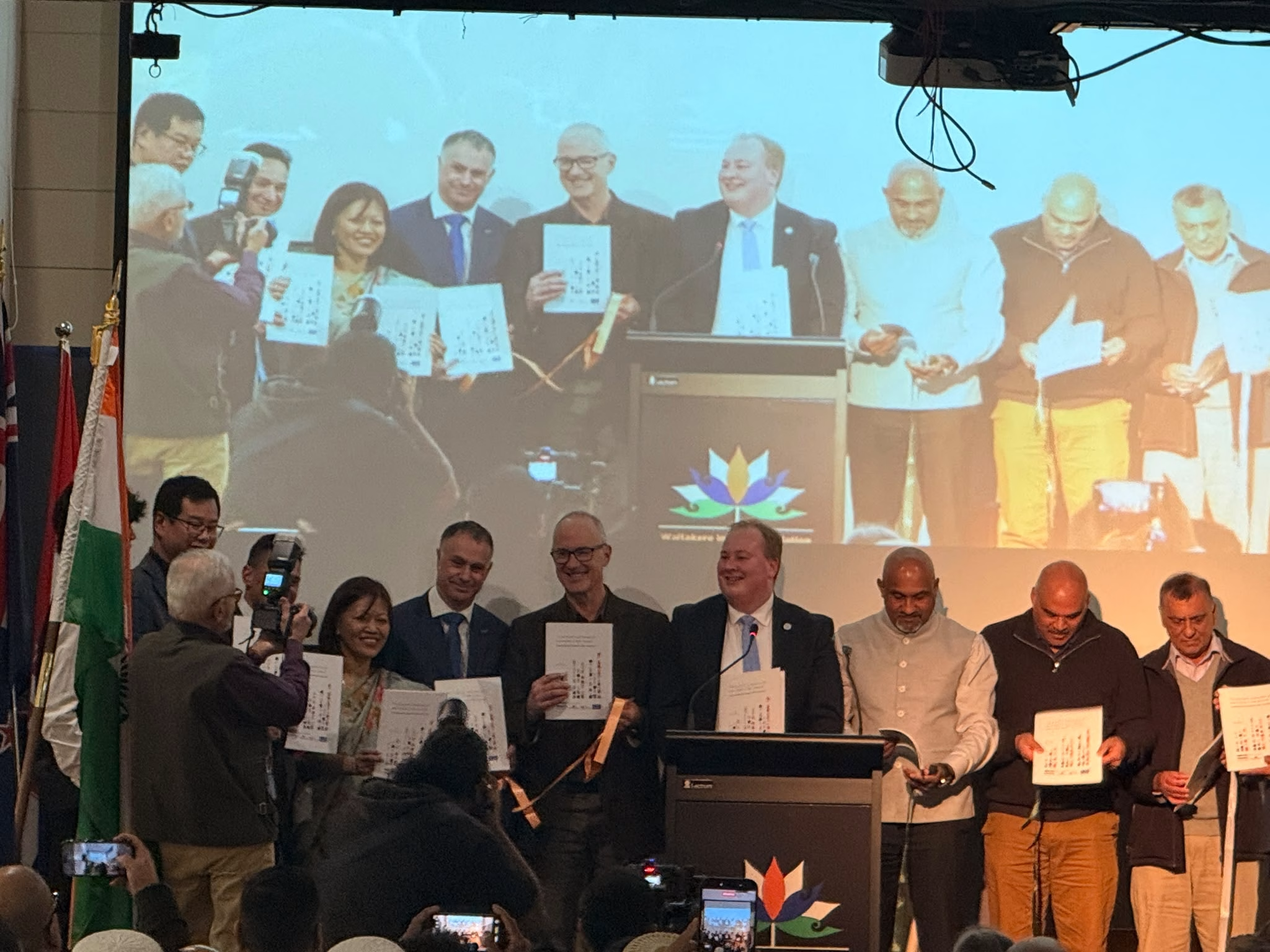
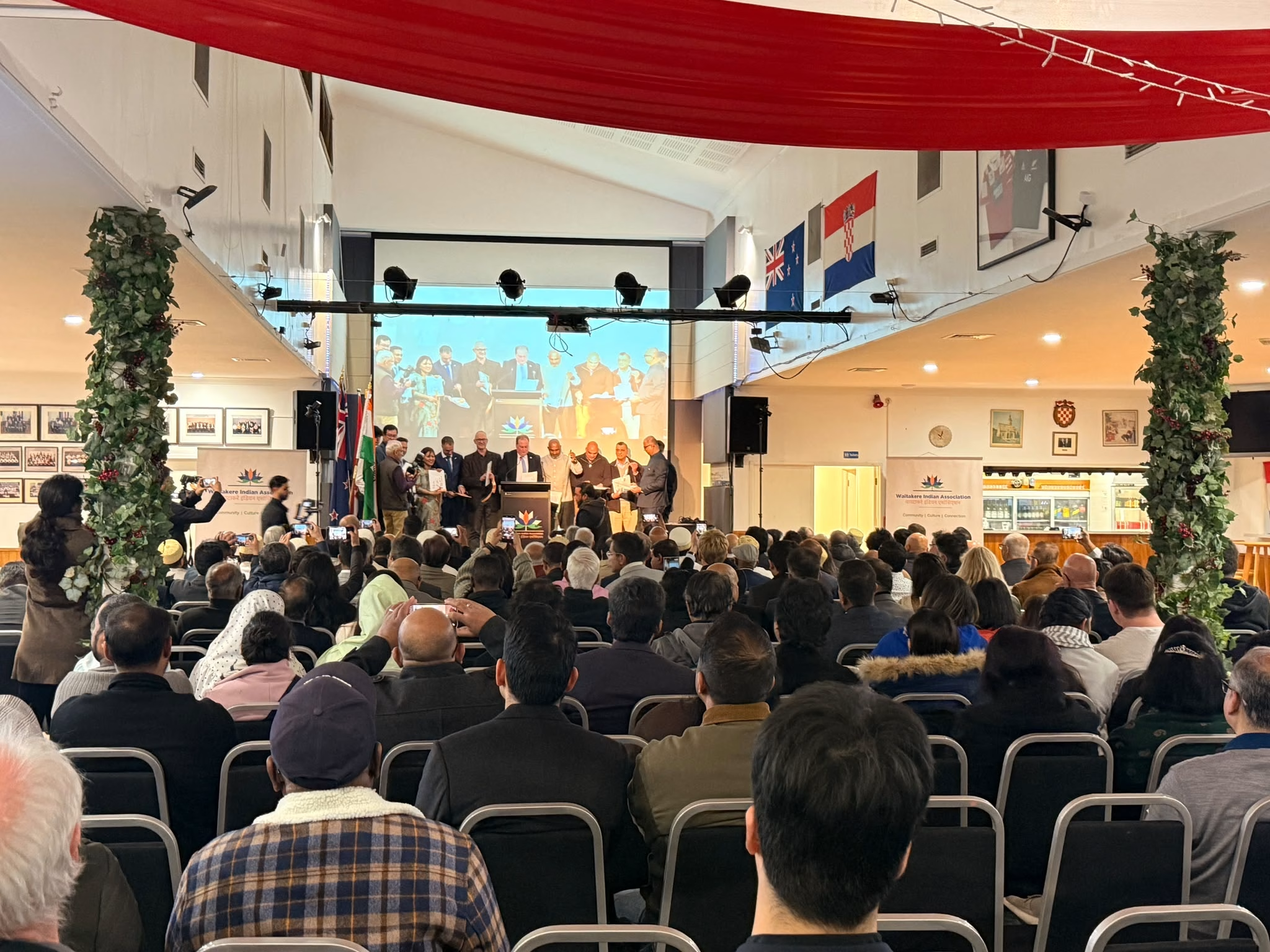
Auckland’s Indian community stepped into the national spotlight this week as the Waitakere Indian Association launched a major new economic report showing the scale of Kiwi Indian contribution to New Zealand’s economy, workforce and society.
The report, prepared by Infometrics and launched at a community event in Auckland, estimates that Kiwi Indians contribute $37.3 billion to New Zealand’s GDP, equal to about 8.6 percent of the national economy. It also points to the community’s role in supporting more than 220,000 jobs, operating thousands of businesses, strengthening professional sectors and deepening people-to-people links between India and New Zealand.
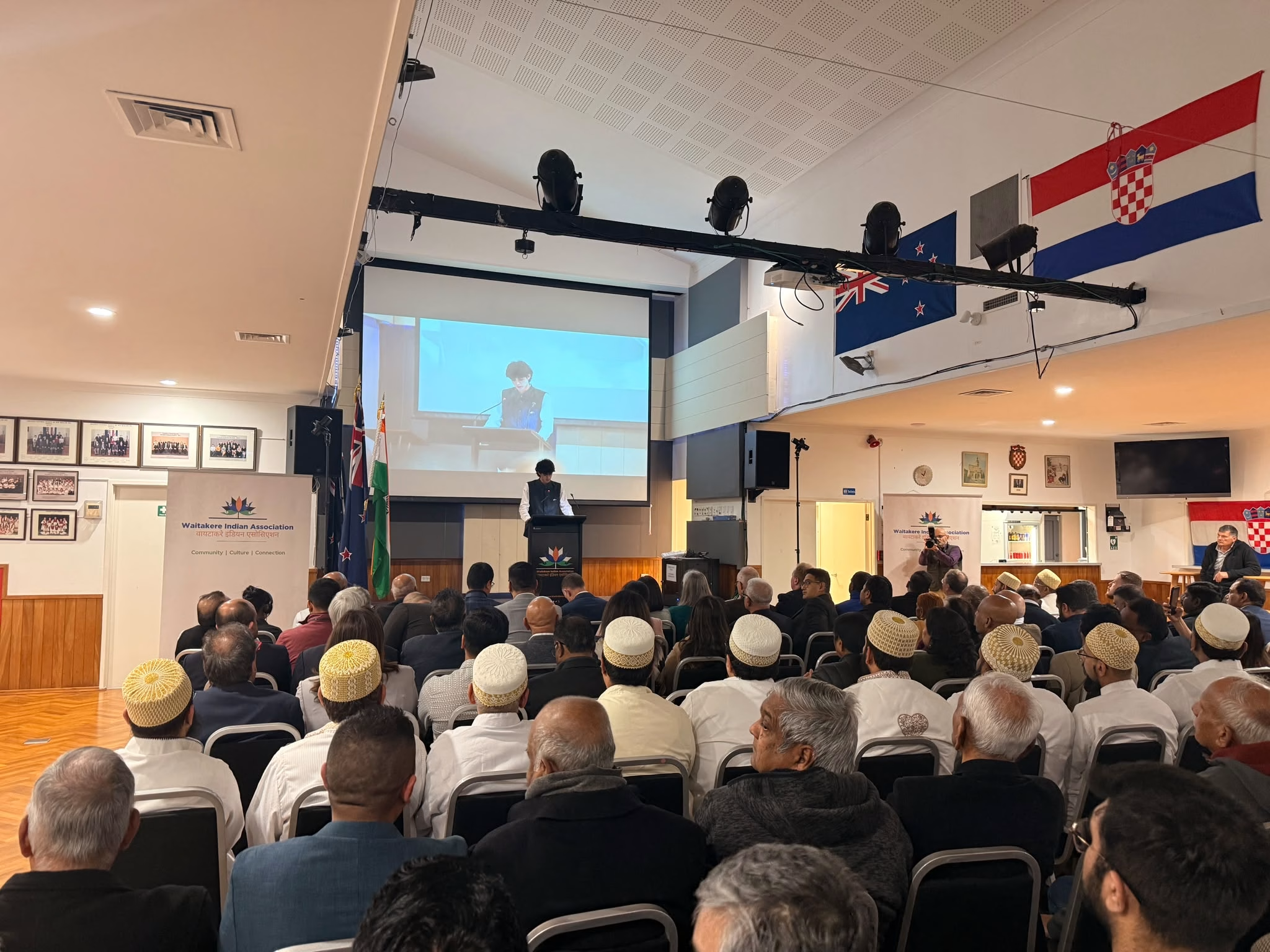
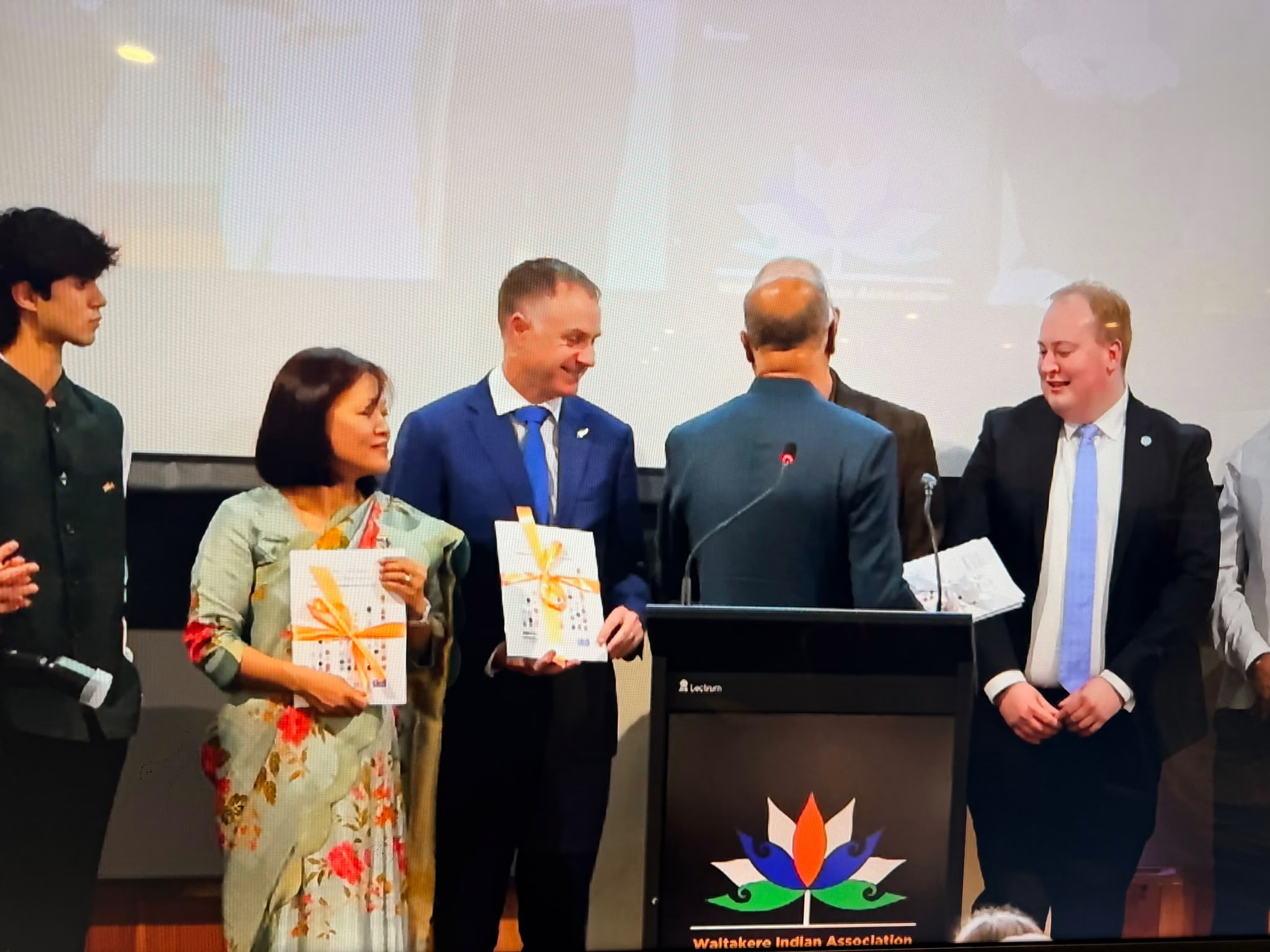
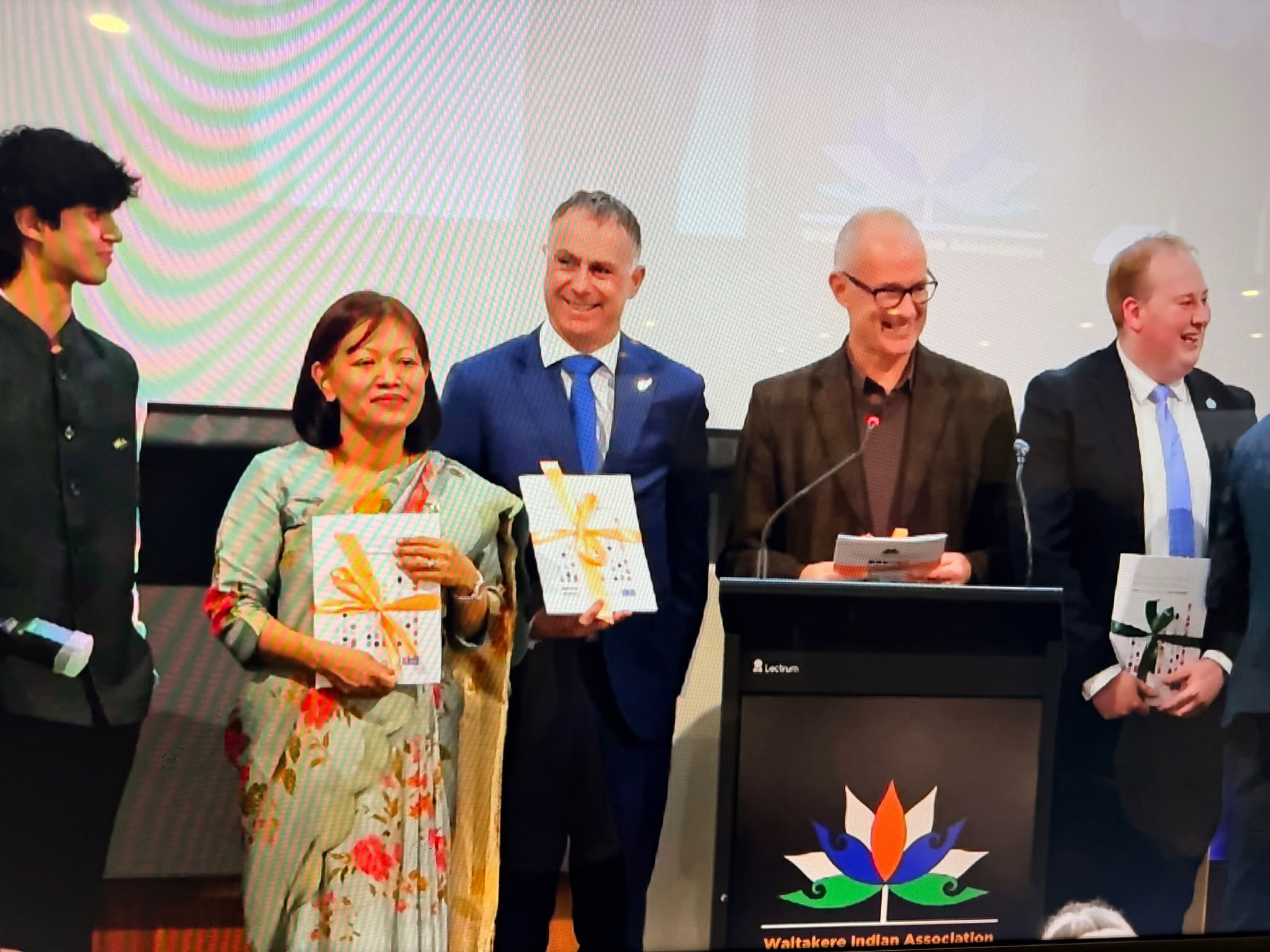
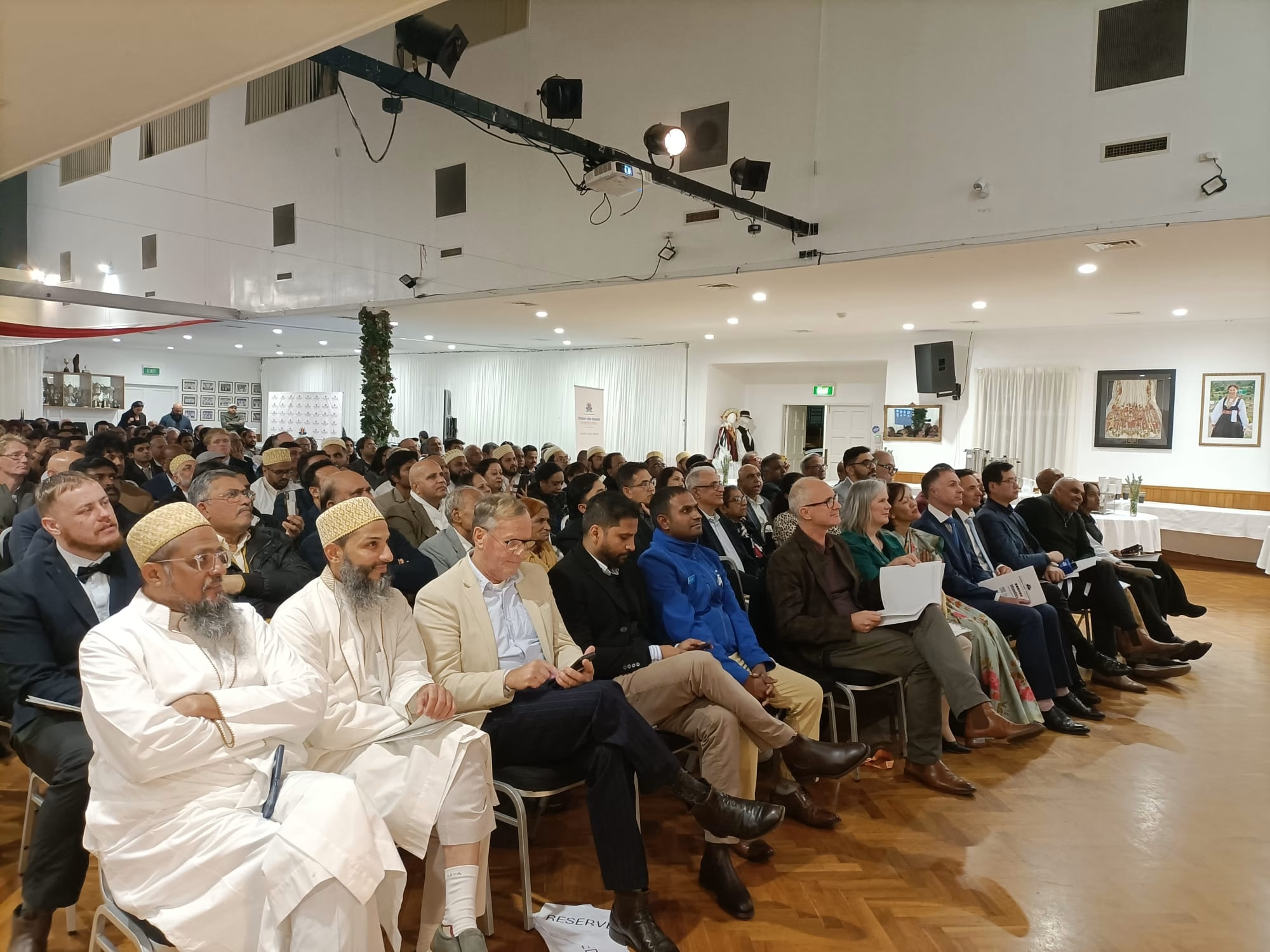
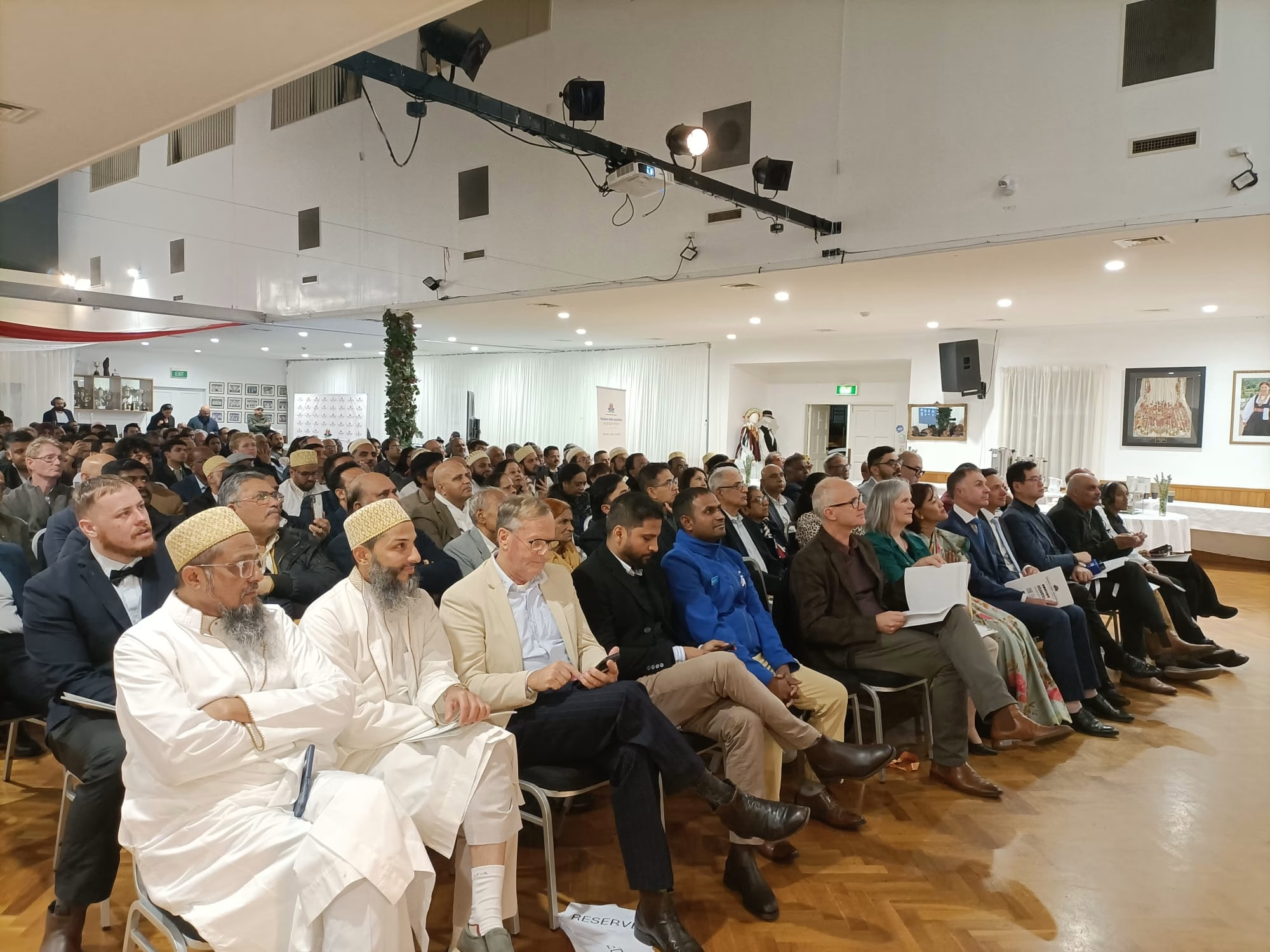
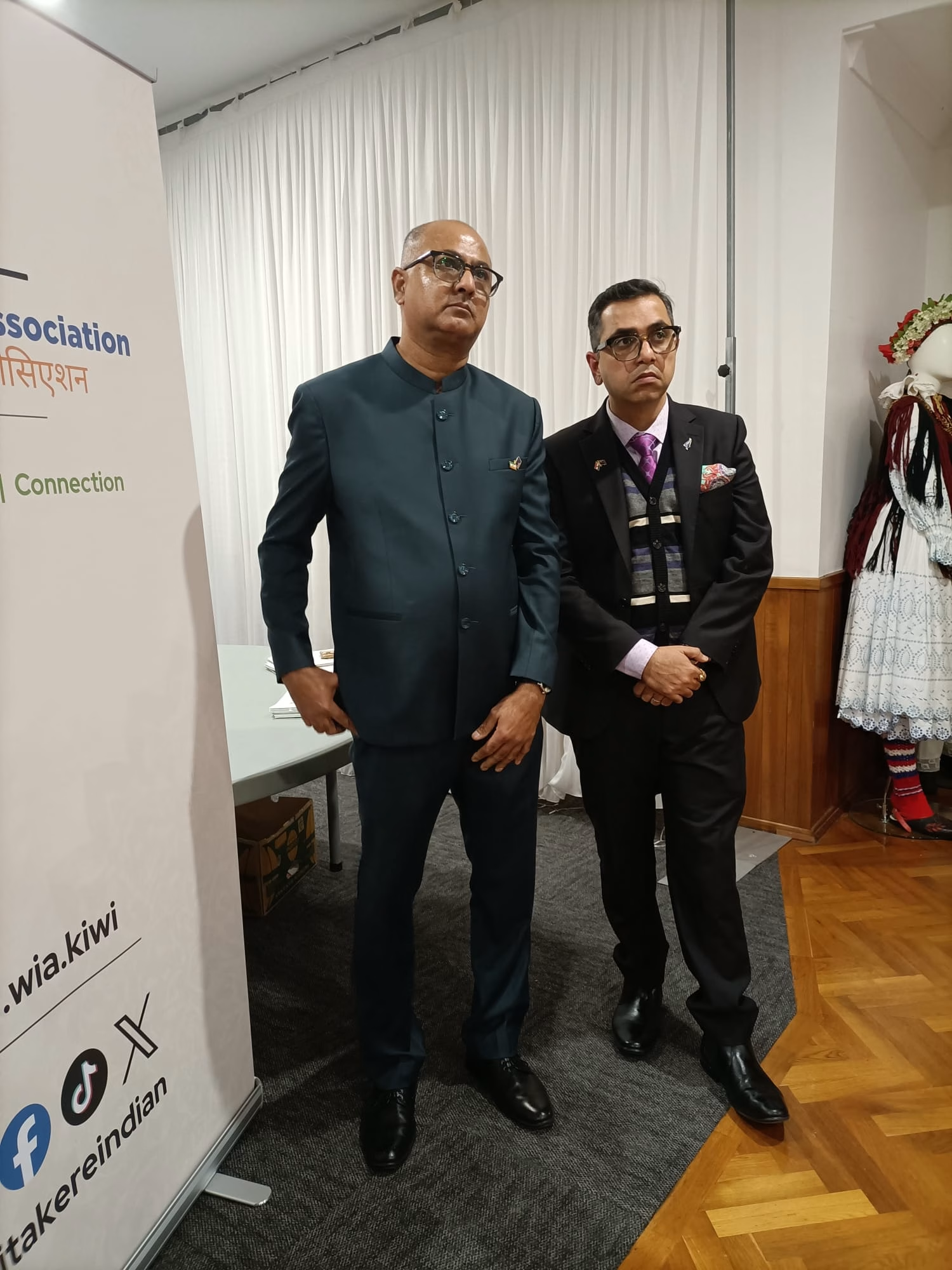
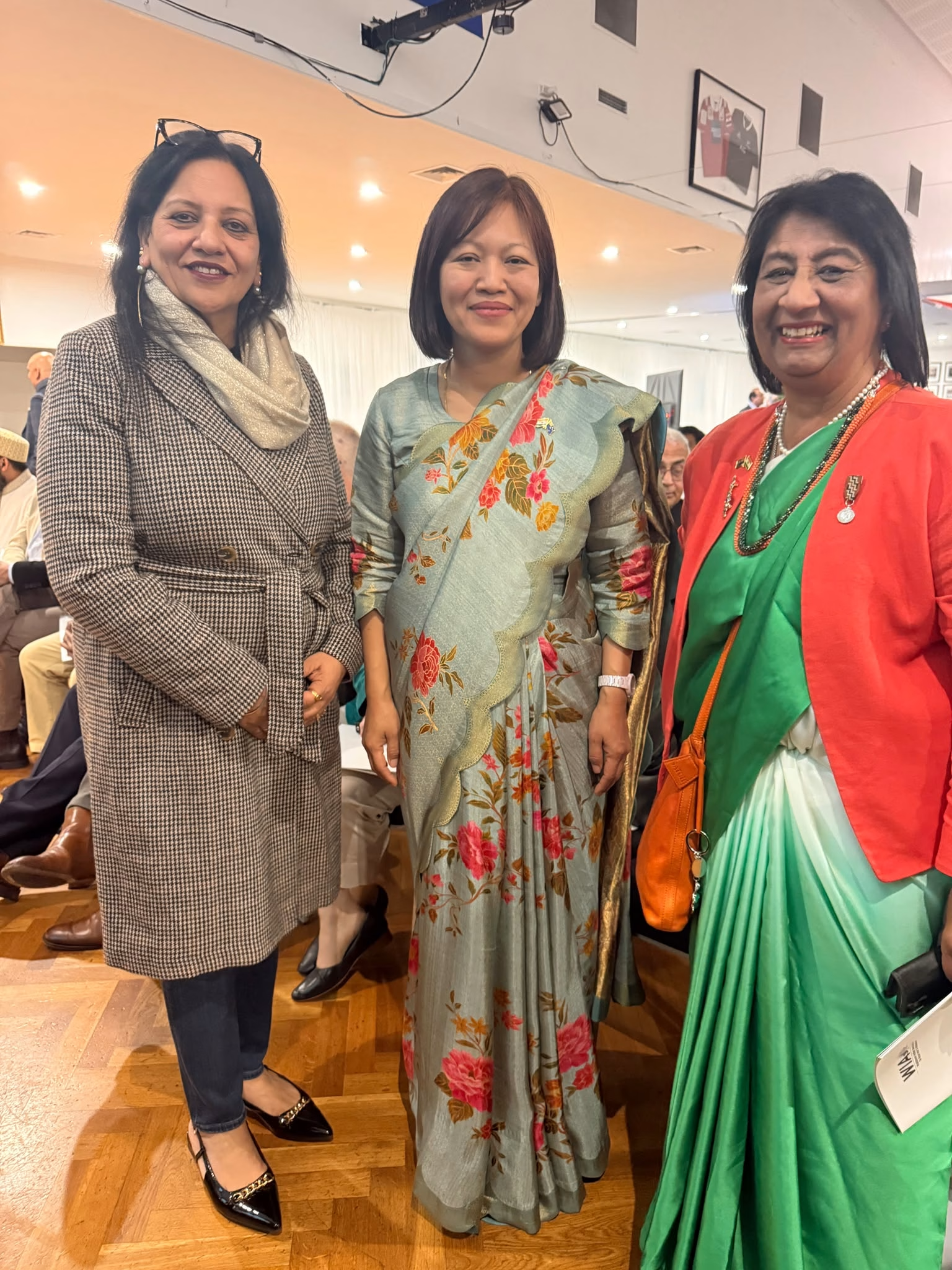
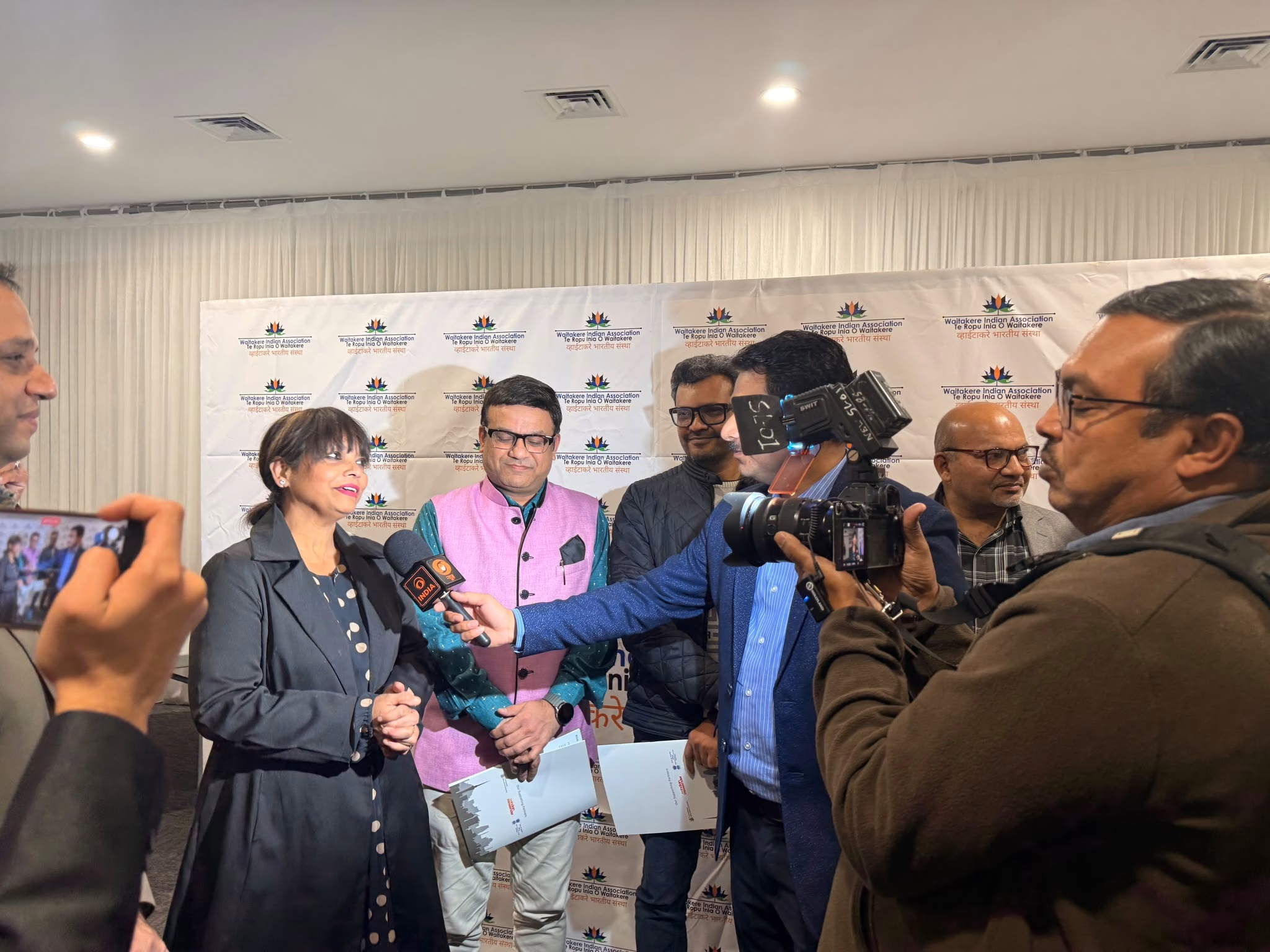
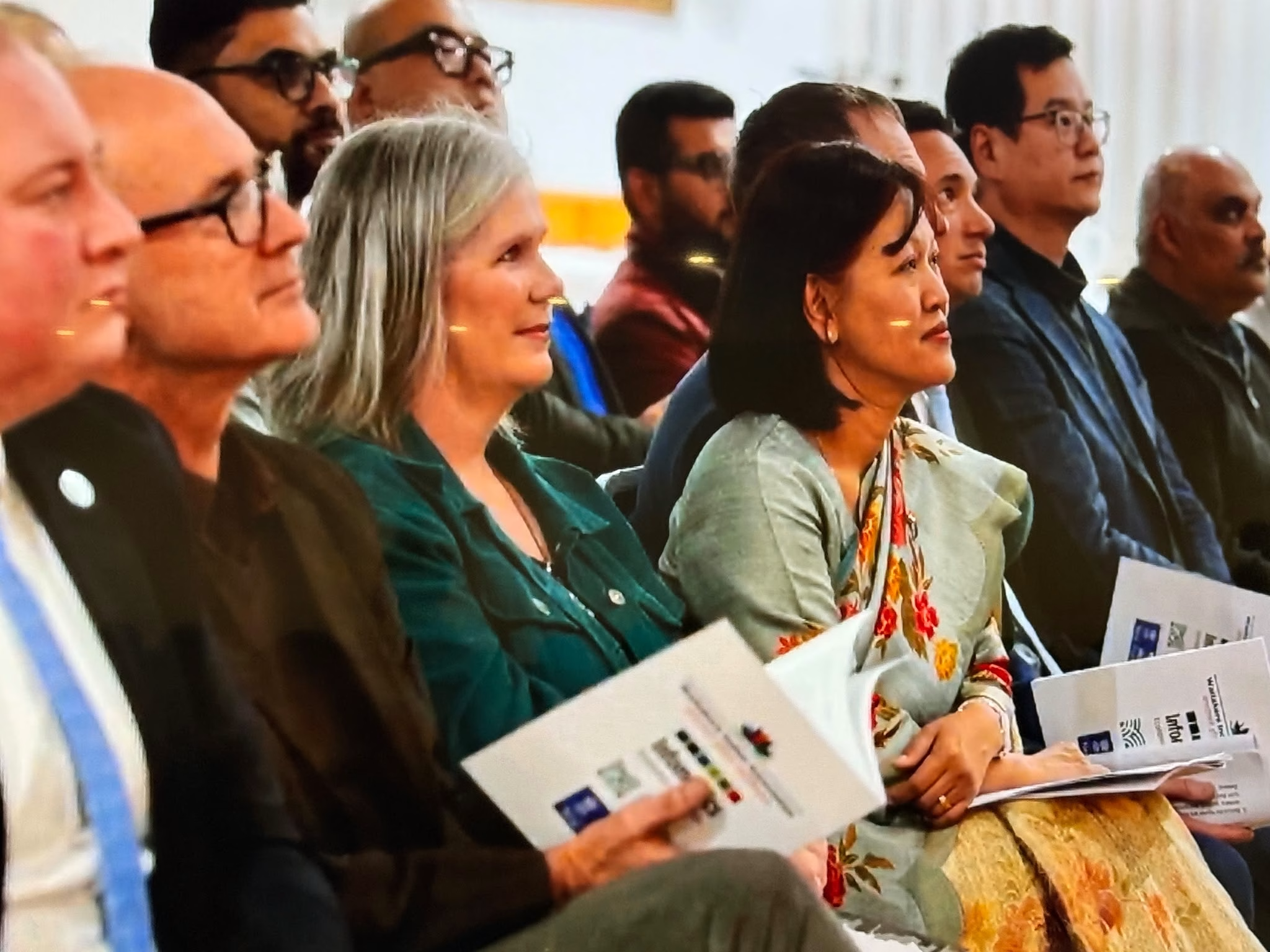
The event brought together community leaders, the High Commissioner of India to New Zealand, government ministers, MPs, economists, business representatives and media from India, including All India Radio and Doordarshan, ahead of Indian Prime Minister Narendra Modi’s expected Auckland visit on 11 July 2026.
But the evening was not only about numbers. It became a wider conversation about leadership, belonging, migration, trade, public life and New Zealand’s future.
Sunil Kaushal: “Do not see this community only through the lens of settlement”
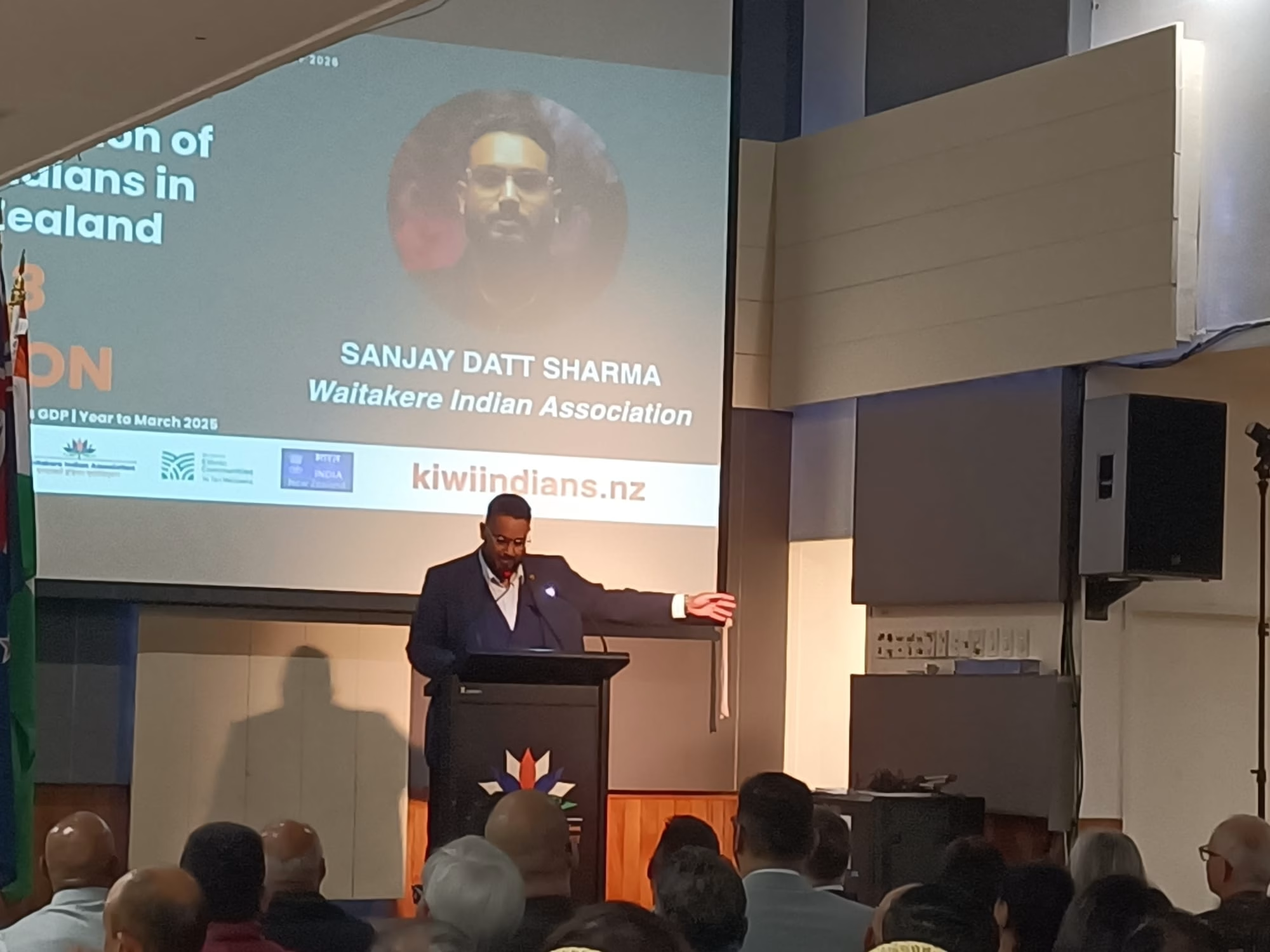
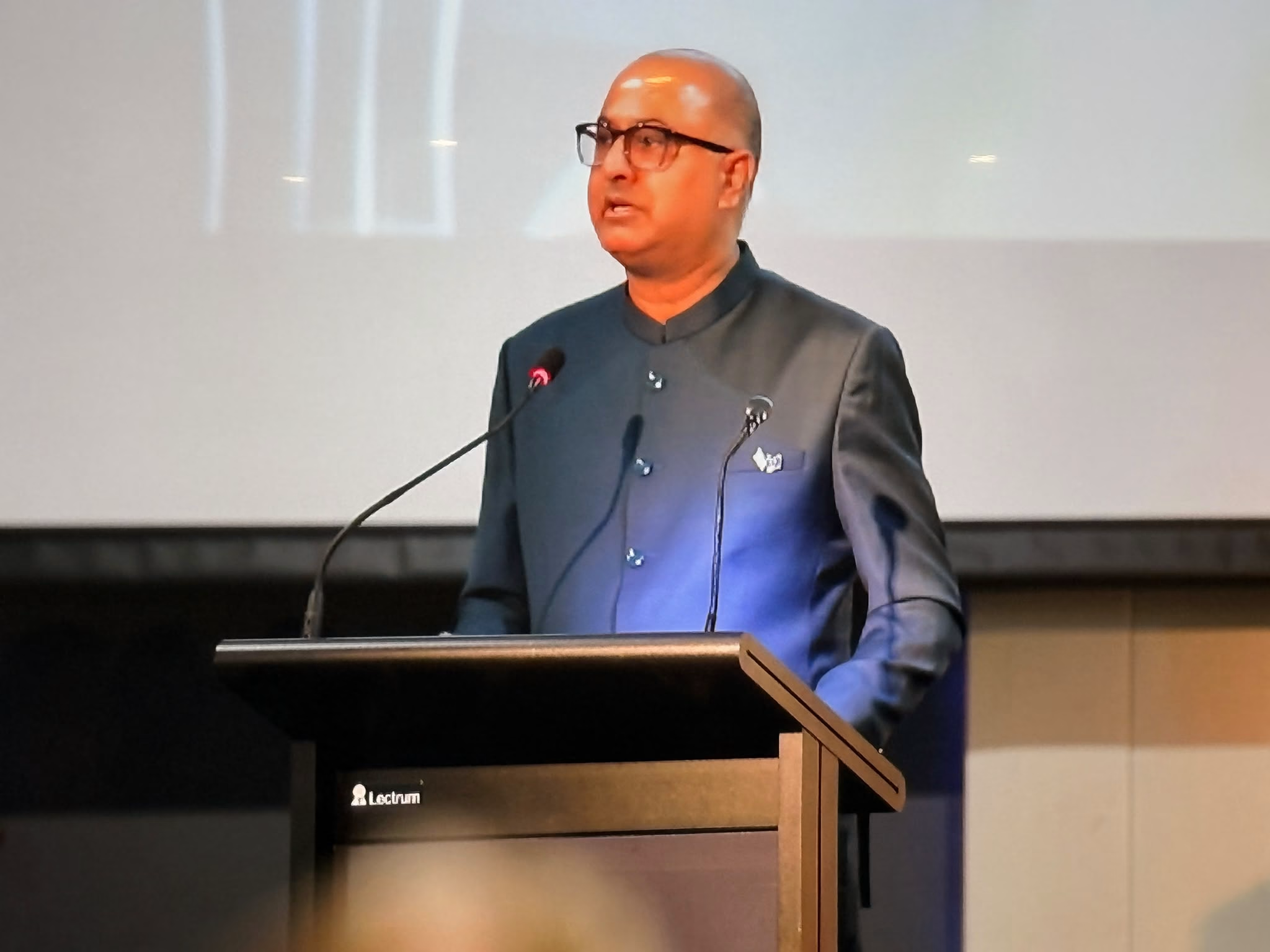
Speaking at the launch, Sunil Kaushal, President of the Waitakere Indian Association, said the report should be seen as both recognition and responsibility.
Kaushal said the Indian community could not only ask to be recognised, but must also be ready to lead, support young people, help new migrants, protect vulnerable workers, grow stronger businesses and take pride in public life.
His message to policymakers was direct.
He urged them not to see the Indian community only through the lens of settlement or migration, but through the lens of national growth.
That line matters because it reframes the debate. Too often, migrant communities are discussed as communities needing services, support or integration. Kaushal’s argument was sharper: Kiwi Indians are not simply settling in New Zealand, they are helping build it.
He said when qualified people are able to enter professional workforces more quickly, New Zealand benefits. When Indian businesses are supported to grow, local economies benefit. When education, skills and talent links with India are strengthened, both countries benefit.
Kaushal also said the report was not only an ethnic community issue. It was a productivity issue, a workforce issue, a growth issue and a future issue for New Zealand.
He thanked Infometrics for preparing the report, the Ministry for Ethnic Communities for supporting the work, the High Commissioner for attending, and the trustees and executive of the Waitakere Indian Association for their work behind the scenes.
He said the report belonged to every person who had worked long hours, studied late at night, opened a business early in the morning, served customers, cared for patients, driven through traffic and helped keep families and communities strong.
His closing message was that the next chapter for Kiwi Indians must be about leadership, partnership and contributing at a higher level.
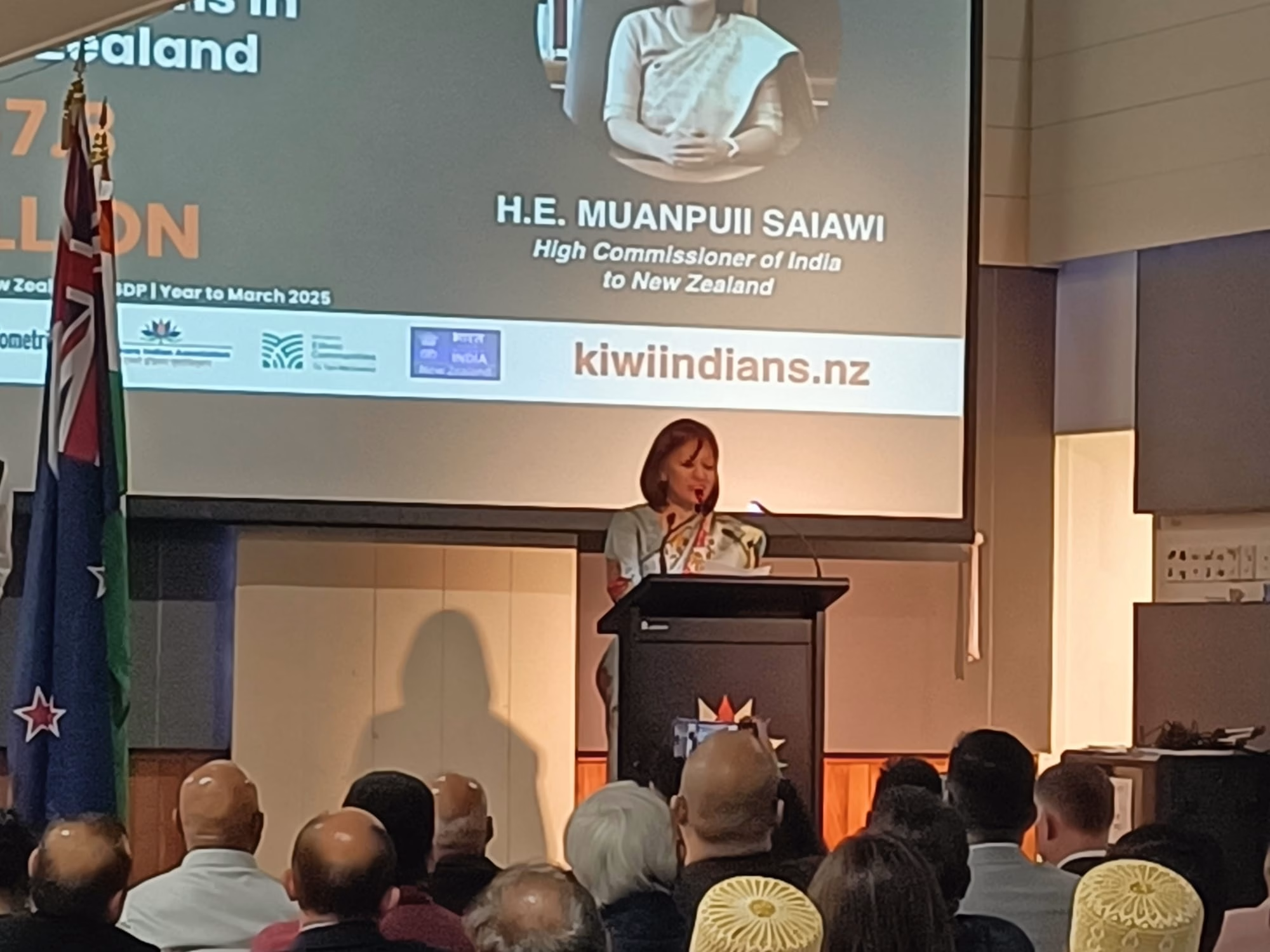
High Commissioner: Kiwi Indians are a “living bridge” between India and New Zealand
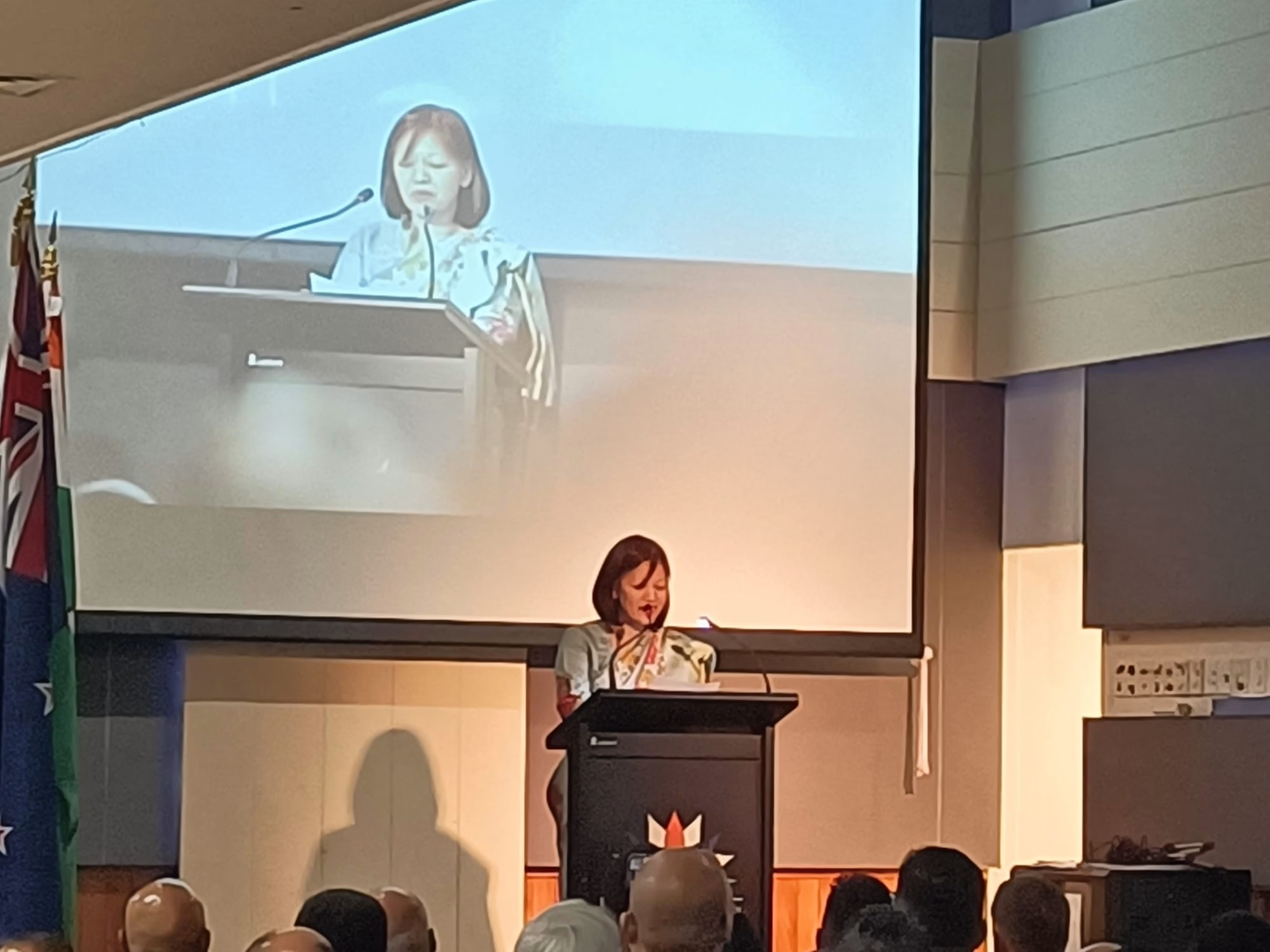
The High Commissioner of India to New Zealand described the launch as timely and significant, especially with Prime Minister Narendra Modi’s visit approaching.
She noted that she had been in New Zealand for only a few months, but during that time the India-New Zealand relationship had already seen major movement, including the signing of a free trade agreement and preparations for Modi’s historic visit.
She said work was underway with the New Zealand Government to ensure the visit produced meaningful outcomes across trade, maritime cooperation, counterterrorism, horticulture, agriculture, tourism, culture, sport and other areas.
The High Commissioner said the report was important because it put hard data behind something that had long been visible: the Indian community’s contribution to New Zealand.
She reflected on the history of Indians arriving in New Zealand more than 100 years ago, building lives in a foreign land, facing challenges, and gradually becoming part of the country’s social and economic fabric.
She said Kiwi Indians had remained deeply connected to the traditions, culture, food, language and values of India while also becoming proud citizens and residents of New Zealand.
Today, she said, the community includes entrepreneurs, professionals, innovators, CEOs, public servants, business owners and philanthropists. She highlighted examples of Indians contributing in areas such as green steel, aviation, innovation and professional services.
A key theme in her speech was service. She said giving back to society is deeply embedded in Indian values, and that Kiwi Indians had shown this during the pandemic, floods, natural disasters, the Christchurch terror attack and everyday community service.
The High Commissioner said Kiwi Indians have “heft and confidence” today, and that India itself is also no longer the country it was 100 years ago. She described India as the fastest-growing large economy, a country that has reached the south side of the moon, democratised digital payments, and provided humanitarian support to friends in need.
She said the Indian diaspora in New Zealand should be seen as a bridge between the two countries, carrying talent, experience, knowledge and skills that can help strengthen the growing relationship.
Simon Watts: Kiwi Indians contribute beyond their population share
Simon Watts, Minister for Revenue and MP for North Shore, said it was a privilege to attend the report launch and celebrate the contribution of the Kiwi Indian community.
Watts said the headline numbers were significant.
He noted that Kiwi Indians make up around 6 percent of New Zealand’s population, but contribute close to 9 percent of the national economy. He described this as a powerful sign of the community’s role in driving national growth.
He said the community contributes across business, employment, innovation and local communities, and that its influence continues to evolve.
Watts also highlighted the educational strength of Kiwi Indians, saying nearly half of the community has a university qualification, compared with just over a quarter of the wider population.
He pointed to strong representation in medicine, engineering, nursing, teaching, accounting and other professional fields. He also said incomes within the community are rising faster than the national average.
Watts linked the report to the broader India-New Zealand relationship, saying Prime Minister Modi’s visit would be a historic moment and the first visit by an Indian Prime Minister to New Zealand in more than 40 years.
He said the India-New Zealand Free Trade Agreement was already opening new opportunities, and that every market opened, every tariff cut and every business supported would give more room for growth.
Watts said one export deal can ripple through local communities, supporting jobs, local businesses, supermarkets, shops and service providers.
He described Kiwi Indians as a “living bridge” between India and New Zealand, built by families, students, businesses and communities with ties across both countries.
His central argument was that the Kiwi Indian story is also a New Zealand story: people working hard, backing their children, taking risks, building businesses and leaving the country better than they found it.
Phil Twyford: Contribution debate must confront anti-migrant politics
Phil Twyford, Labour MP and former minister, praised the Waitakere Indian Association for producing what he called a timely and high-quality report.
He said West Auckland had long been shaped by people coming from around New Zealand and around the world to work hard, build lives, create businesses and find opportunities for their families.
Twyford said the South Asian diaspora is now a vital part of that story.
He also used his speech to address what he called an “inconvenient truth” in the wider national debate.
Twyford warned that anti-migrant rhetoric was being recycled in New Zealand politics and said some political messaging was increasingly directed toward Indian and migrant communities.
He said this mattered because such rhetoric can embolden extremists, social media abuse and wider racism.
His comments came in the wider context of recent tensions around anti-Indian and anti-migrant comments in public life. Twyford said racism damages social cohesion, hurts neighbours, friends, families and workplaces, and is also economically irrational.
He argued that New Zealand is an immigration nation and needs young, hardworking, skilled and dynamic migrants to build lives and contribute to national development.
Twyford said the economic contribution of Kiwi Indians is important, but economics is only part of the story. He said New Zealand is richer because of the relationship, culture, skills and community life that Indian and South Asian communities bring.
Infometrics: The numbers show momentum, not just contribution
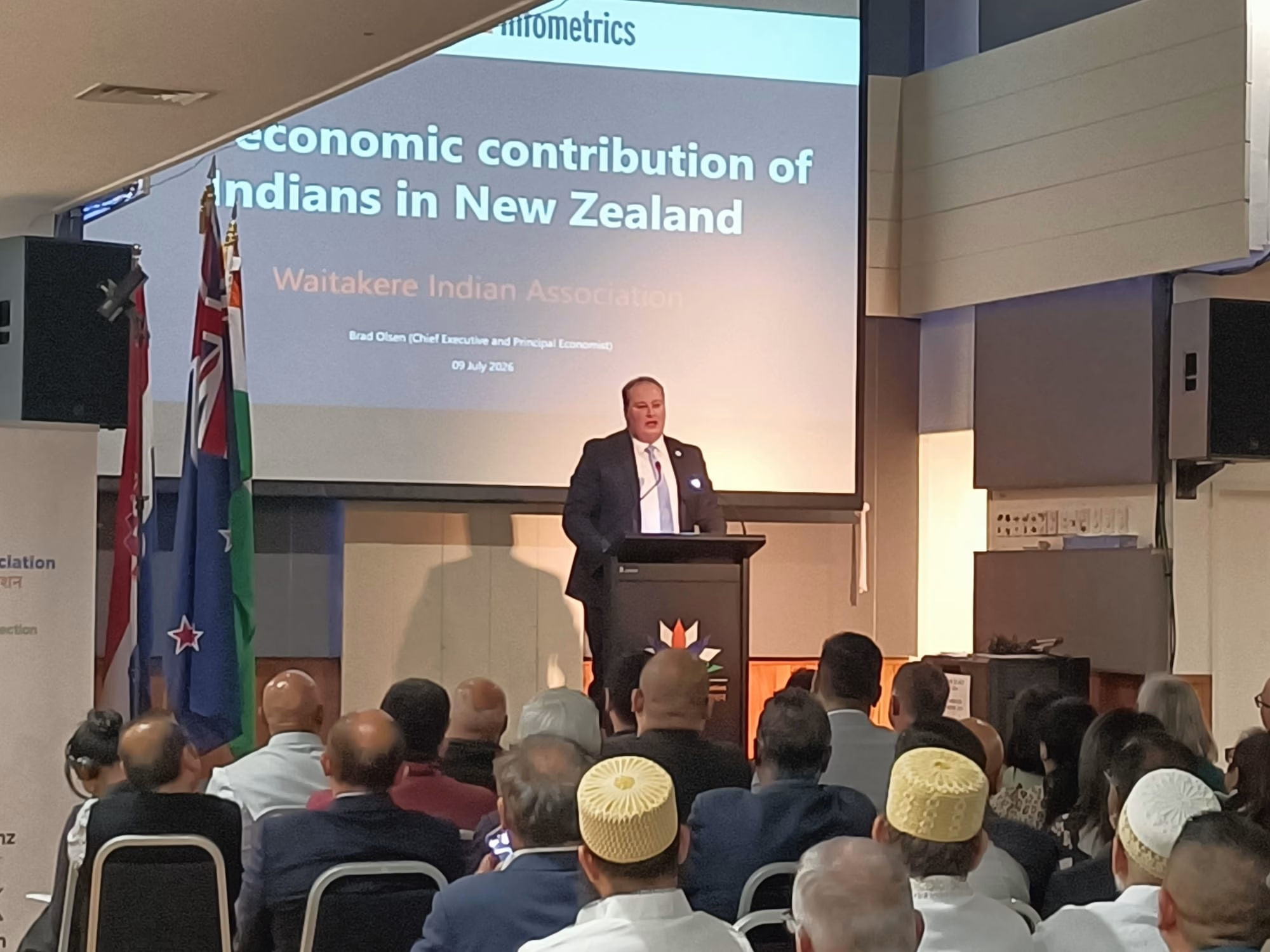
Brad Olsen, Chief Executive and Principal Economist at Infometrics, said the report aimed to turn a complex story into clear evidence.
He said the purpose of the report was to elevate the data and show the momentum behind the Indian community’s role in New Zealand.
Olsen explained that Infometrics used data from Statistics New Zealand, including the Integrated Data Infrastructure and Longitudinal Business Database, to better understand the full contribution of the community.
He said business activity is one of the hardest areas to measure, but also one of the most important. Many people put years of time, savings and effort into businesses that create jobs, buy goods and services, support supply chains and contribute to local economies.
According to the report, about 24,000 businesses in New Zealand have some form of Indian connection. Around 173,000 Indian people are in the workforce.
Olsen also highlighted strong income growth. Between 2018 and 2023, average earnings among Kiwi Indians rose by 47 percent, compared with around 31 percent across the wider economy. He said about 11 percent of the Indian population now earns more than $100,000.
The report also points to around 330,000 Kiwi Indians in New Zealand, with the population expected to keep growing strongly in coming decades.
Olsen noted the importance of Indian visitors and students, with around 81,000 visitors from India in 2025 and about 9,100 Indian students, making India a major source of international education and people-to-people connection.
He said the contribution flows through multiple layers of the economy. There is the direct impact of businesses and workers, the indirect impact through supply chains, and the wider induced impact when people spend their income in the economy.
The report shows strong Indian economic contribution in property, retail, hospitality, transport and logistics, professional services, finance, healthcare and other sectors.
Olsen said one of the most important trends was the shift into higher-skilled and higher-value areas, including professional services, healthcare, finance and public-facing roles.
He said the high level of qualifications among Kiwi Indians, especially bachelor’s, postgraduate and master’s degrees, is now translating into stronger employment and income outcomes.
His message was that the $37.3 billion GDP figure is not just a large number. It represents living standards, opportunity, business growth, skills, reinvestment and long-term momentum.
A report launched at a historic moment
The timing of the report launch was significant.
With Prime Minister Modi expected in Auckland on 11 July, the India-New Zealand relationship is receiving unusual levels of public and diplomatic attention. The presence of Indian media at the event showed that this story is not only local. It is also part of the wider India-New Zealand relationship.
The report gives policymakers, business leaders and community organisations a stronger evidence base for discussing the future.
It also challenges New Zealand to think differently about the Indian community.
The story is no longer only about settlement, migration or cultural celebration. It is about GDP, jobs, skills, businesses, exports, students, visitors, diplomacy and national growth.
More than economics
The report’s central finding is economic, but the evening made clear that the contribution of Kiwi Indians cannot be measured only in dollars.
It is also visible in temples, sports clubs, classrooms, hospitals, businesses, community organisations, food banks, disaster responses, cultural festivals and public service.
The launch showed a community that is confident, organised and increasingly ready to participate not just as a migrant group, but as a national partner in New Zealand’s future.
The message from the night was clear: Kiwi Indians are not sitting on the margins of New Zealand’s growth story. They are helping write it.