As political debate intensifies, experts warn that both free GP visits and strict cost-cutting may reshape New Zealand’s health system for decades.
Auckland | October 2025
New Zealand’s healthcare system stands at a turning point. Two sharply different approaches now dominate the national conversation. One side argues for tighter spending and efficiency, while the other focuses on removing barriers and expanding access. Both promise to protect public health, but the real question is which path can secure the country’s long-term wellbeing.
Photo: Webfit News / Labour Party Announcement Event
The Twin Pressures: Access and Sustainability
Hospitals across the country are under growing strain. Health New Zealand (Te Whatu Ora) is facing a projected $1.1 billion operational deficit this financial year, even after cost-cutting measures that trimmed an earlier forecast. Emergency departments recorded 1.3 million visits last year, up 50,000 from the previous year, while specialist waiting lists continue to rise.
Behind these numbers lies an aging infrastructure problem. Experts estimate New Zealand must invest $115 billion over the next 30 years to modernise hospitals and clinics built decades ago. This figure highlights that the issue is not only about budgets, but about renewing an entire generation of healthcare facilities.
Two Competing Visions
The National–ACT coalition believes economic growth must come first. Its policy combines tax relief with strict spending limits, setting the lowest operating allowance in ten years at $1.3 billion per year. The government has also introduced new performance targets for emergency care, cancer treatment, and immunisation to improve efficiency.
Critics, including doctors’ unions and opposition parties, argue that this approach risks weakening an already strained system. Nearly 6,000 senior doctors and dentists have gone on strike this year over pay offers below inflation. Medical leaders warn that underfunding could drive staff away just when patient demand is climbing.
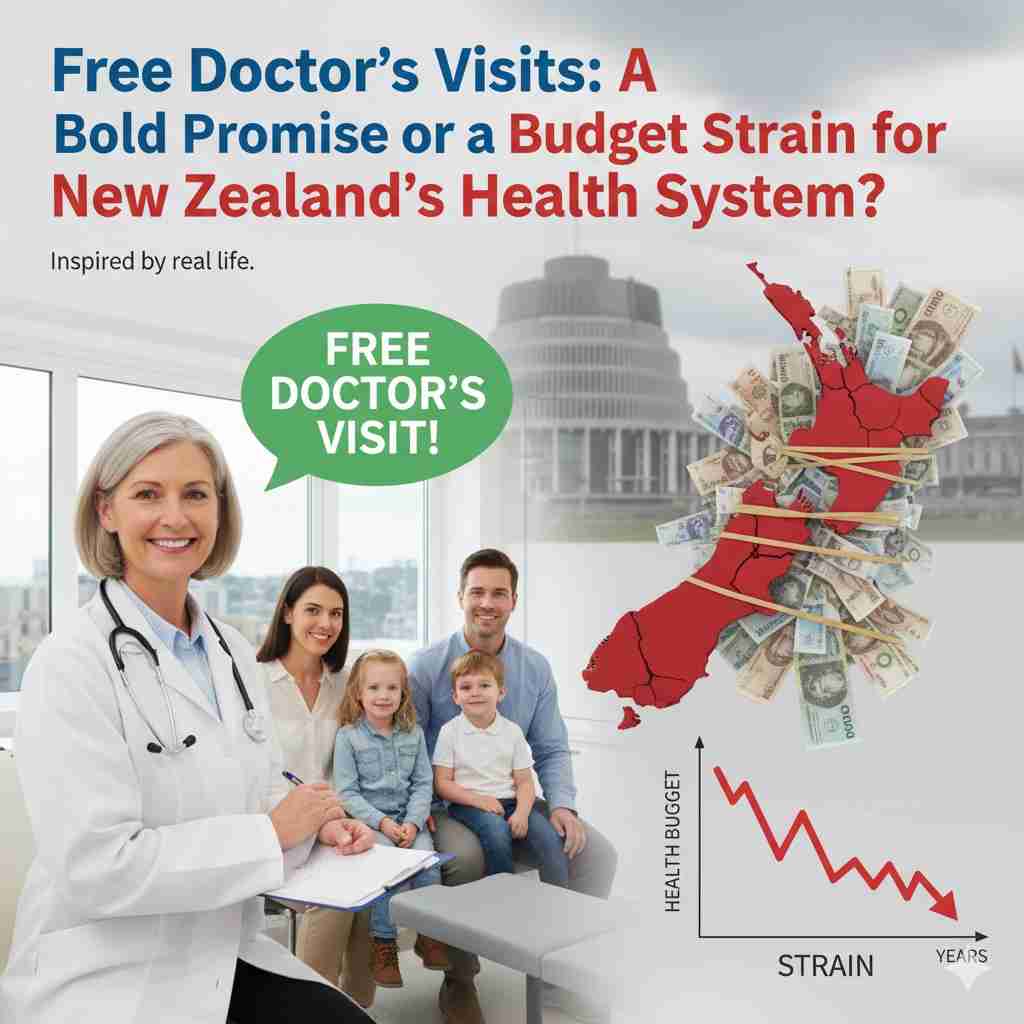
On the other hand, the Labour opposition has promised free GP visits to make primary care more accessible. The idea is simple: when people avoid doctors because of a $90 consultation fee, illnesses worsen, leading to higher hospital costs later. However, analysts warn that the policy might cause a “demand shock.” With general practices already recording over 21 million visits last year, free care could create long waits unless the workforce grows first.
The Trade-Off: Today’s Relief vs. Tomorrow’s Stability
Both strategies come with trade-offs.
- Tax cuts give households about $30 a week in savings but cost the Crown $10.3 billion in lost revenue over four years, money that could fund new clinics or staff training.
- Free GP visits would improve access and equity but add large, ongoing costs that compete with infrastructure upgrades.
According to Treasury projections, even without new initiatives, health spending will rise from 7.1 percent of GDP today to 10 percent by 2065. That growth reflects an aging population and higher wage expectations. Experts warn that economic growth alone will not close that gap.
The Workforce Bottleneck
The biggest challenge for both sides is the same: too few healthcare workers. Burnout, pay freezes, and migration have drained hospitals of nurses and doctors. Without a long-term workforce strategy, neither cost control nor free healthcare can succeed.
Restrained funding risks empty wards, while free care without enough staff risks overcrowded waiting rooms. Sustainable healthcare, experts say, requires people before policy.
What Experts Propose
Policy analysts suggest a middle path that balances access and sustainability instead of political extremes. Their key recommendations include:
- Protect hospital infrastructure funding through a dedicated capital fund, supported by long-term bonds or targeted taxes, so rebuilds do not compete with frontline wages.
- Phase in free primary care gradually as workforce capacity grows, ensuring clinics can meet new demand.
- Launch cross-party talks to design a 30-year funding model that mixes public funding with possible savings or insurance options.
- Protect budgets for housing, education, and welfare, recognising that social wellbeing reduces long-term health costs.
This approach, experts argue, focuses on long-term stability rather than short-term politics.
The Bottom Line
New Zealand already spends nearly as much of its GDP on healthcare as many wealthier nations, yet faces aging facilities and unmet need. The core challenge is not only how much the country spends but how wisely it spends it.
Free GP visits could ease hardship today. Fiscal restraint might stabilise the system tomorrow. But without stronger investment in people and buildings, neither path will deliver lasting health security for future generations.
hanging nation.