By Webfit News
Credit: Greenpeace Aotearoa, Scoop Media
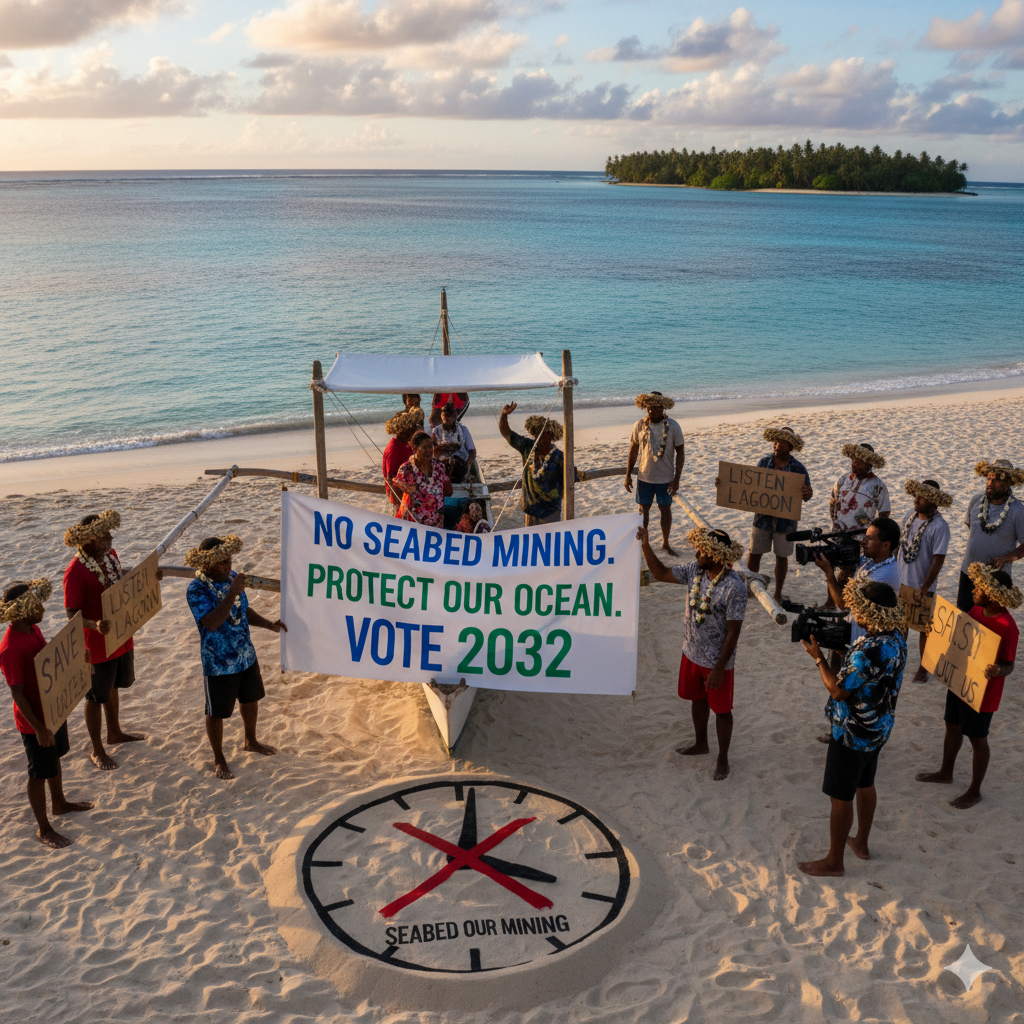
The Cook Islands government has pushed the next decision on seabed mining to at least 2032. The delay follows strong public pressure from communities, activists, and environmental groups across the Pacific.
Background
Seabed mining involves collecting mineral-rich nodules from the deep ocean. These minerals are used in modern technologies. However, many Pacific communities are worried about long-term damage to marine life. They fear it could harm food sources, cultural practices, and ocean health.
Three companies hold exploration licences in the waters of the Cook Islands. These licences end in 2027. Now they will need a five-year extension before any future step can begin.
Key Details
The Seabed Minerals Authority confirmed the new timeline. The announcement came after years of protests and growing concern.
Greenpeace Aotearoa campaigner Juressa Lee called the delay a win for the moana. She said community resistance has been strong and steady. According to Lee, a short five-year exploration period was never enough to understand the risks.
She believes there is no safe or sustainable way to mine the seabed. In addition, she said Pacific people will keep speaking out to protect their ocean.
Public Reaction
Public action has grown over the past year.
For example:
- Last month, four activists paddled out in kayaks to confront the Nautilus, a United States-funded vessel. They held a banner that read “Do not mine the moana”.
- In 2024, more than 150 people paddled into Avarua port with a giant banner that said “Protect our ocean”.
These protests show how deeply communities value their waters. They want future decisions to protect people, culture, and nature.
Expert View
Environmental groups say the delay reflects the rising pressure on leaders. They welcome the pause. However, they want a full ban on seabed mining across the Pacific.
Experts warn that no one fully understands how deep-sea ecosystems recover. In many cases, damage can last for decades. Because of this, they argue that the risk is too high.
Conclusion
The delay until 2032 gives the Cook Islands time to slow down and reassess. Meanwhile, local communities plan to keep pushing for stronger protections.
For now, one message is clear. Pacific people want to look after the moana, not mine it.