
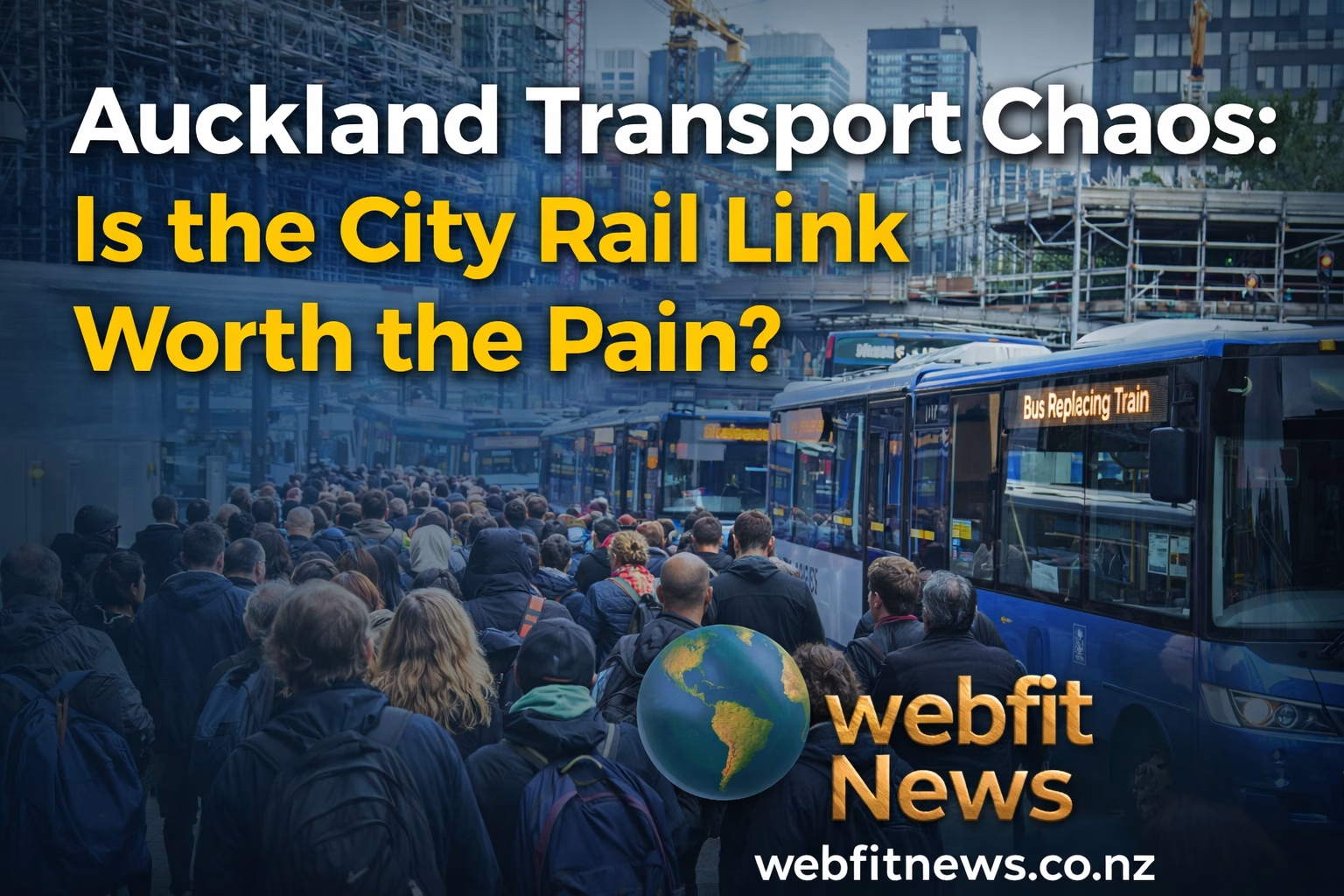
Auckland commuters face rail shutdowns, bus replacement chaos, and traffic gridlock. Is the City Rail Link worth the disruption?
Immediate Situation – What Happened Today
Auckland commuters woke up to another difficult morning.
Large parts of the rail network were shut down again as part of ongoing upgrade works linked to the City Rail Link. Trains were replaced by buses across several lines. By 8 am, social media was flooded with photos of packed bus stops, long queues, and frustrated commuters.
At the same time, traffic across key arterial routes slowed to a crawl. Motorways were congested. Inner city streets were jammed. Ride-share prices surged.
This was not just another minor delay. For many, it felt like a city pushed beyond its limits.
The latest Auckland Transport disruption has reignited a familiar question: how much longer can commuters tolerate this level of chaos in the name of progress?
What Went Wrong – Rail Shutdowns and Bus Replacement Chaos
According to Auckland Transport updates, sections of the network were closed to allow critical upgrade works ahead of the CRL opening.
The intention was clear. Replace trains with buses. Keep people moving.
The reality was different.
Commuters reported:
- Bus replacement congestion, with vehicles arriving already full
- Inconsistent timetables and unclear signage
- Long waits in cold weather
- Missed connections between buses and ferries
- Confusion over which stops were operational
Some passengers said they waited more than 40 minutes for replacement buses. Others gave up and called Uber, only to face surge pricing during peak hour.
On the roads, traffic gridlock compounded the problem. More people drove because trains were not running. That added pressure to already stretched infrastructure.
The result was a chain reaction across the entire transport network.
Commuter Frustration – Real-Life Impact
Behind every delay is a real person.
A South Auckland nurse missed the start of her hospital shift after her replacement bus was stuck in traffic. A West Auckland parent arrived late for a school drop-off, then faced an awkward conversation with their employer about another delayed start.
For many families, the hidden costs are adding up:
- Extra childcare fees for late pick-ups
- Lost wages for missed shifts
- Uber surge pricing during rail shutdowns
- Increased fuel costs
One commuter described it bluntly: “It feels like the city is being rebuilt on our time and our money.”
This is not just an inconvenience. It is daily stress.
When Auckland train shutdowns happen repeatedly, patience wears thin.
Businesses Affected – Retail and Weekend Events
Transport disruption does not stop with commuters.
Retailers in the CBD and Newmarket reported quieter mornings. Hospitality venues said breakfast foot traffic was noticeably lower.
When rail network shutdowns coincide with weekend events or major expos, the impact grows even larger. Event clashes create additional pressure on bus replacements and road networks.
Small businesses rely on predictable access. When customers avoid the city due to CRL project update disruptions, revenue suffers.
A café owner near Britomart said weekend trade has become unpredictable whenever rail works are announced.
For a city trying to revive its central business district, repeated Auckland Transport disruption is a serious concern.
The CRL Question – Is the Long-Term Gain Worth the Short-Term Pain?
The City Rail Link is New Zealand’s largest transport infrastructure project. It is designed to transform Auckland’s rail system, double capacity, and significantly reduce travel times.
It is also one of the most expensive projects in the country’s history, with costs rising to around $5 billion after revisions.
Supporters argue that once operational, CRL will:
- Cut travel times across the network
- Improve reliability
- Increase train frequency
- Unlock housing density near stations
But critics ask a simpler question: is the pain being managed properly?
Is CRL still on schedule? Officials say major construction is progressing and the project remains on track for completion, with staged openings expected next year. Yet every Auckland train shutdown fuels scepticism.
How long will disruption continue? Aucklanders have been living with rail works and partial closures for years. The Rail Network Rebuild programme is expected to stretch further into the near future to strengthen tracks and signalling systems.
The frustration is not only about the scale of the project. It is about how disruption is handled.
Planning Failure or Necessary Disruption?
PSA Health Workers Strike: Is New Zealand’s Health System at Breaking Point? – WebfitNews
This is where the debate becomes sharper.
Major infrastructure upgrades are never painless. Cities like London and Sydney have experienced similar disruption during underground expansions.
But commuters are asking:
- Is the coordination between Auckland Transport and the Auckland Council strong enough?
- Are event calendars considered before scheduling rail shutdowns?
- Is communication clear and timely?
Some argue this is unavoidable infrastructure pain. Decades of underinvestment left Auckland’s rail network fragile. Now the bill has arrived.
Others see planning failure.
If bus replacement chaos is predictable, why are there not more buses? If traffic gridlock is inevitable, why are temporary traffic management solutions not more aggressive?
Respect matters. Even when disruption is necessary, people want to feel informed and valued.
What Auckland Transport Says
Auckland Transport maintains that temporary closures are essential to prepare the network for the CRL opening.
In recent updates, AT has stated that:
- Rail shutdowns are required to upgrade tracks and signals
- Bus replacement services are expanded during closures
- Communication is issued via apps, websites, and social media
AT has also highlighted that once the CRL is operational, Auckland will have a more resilient, frequent, and efficient rail system.
However, communication remains a key complaint. Some commuters say alerts arrive too late. Others say information about alternative routes is unclear.
In a city this size, communication is not a bonus. It is critical.
What Needs to Change
If disruption is unavoidable, management is not.
Several improvements could ease public frustration:
- Clearer, earlier notification of Auckland train shutdowns
- Increased bus replacement capacity during peak times
- Better real-time updates at stations and stops
- Stronger coordination with major event organisers
- Transparent CRL project update timelines
Aucklanders are not against infrastructure. They want it delivered well.
When commuters see improvement in planning and communication, tolerance rises. When they feel ignored, anger grows.
Webfit News Perspective – The Clear Takeaway
The City Rail Link is necessary. Few transport experts dispute that Auckland needs it.
But necessity does not excuse poor execution.
Right now, Auckland Transport disruption feels chaotic rather than controlled. Bus replacement chaos and traffic gridlock are not simply side effects. They shape public trust.
Infrastructure is about more than concrete and steel. It is about people.
If commuters are missing shifts, paying surge pricing, and rearranging childcare repeatedly, respect and transparency must improve.
The deeper question is not whether CRL is worth it.
It is whether Auckland’s leaders can deliver it without burning public goodwill in the process.
The future city depends on that balance.