Introduction
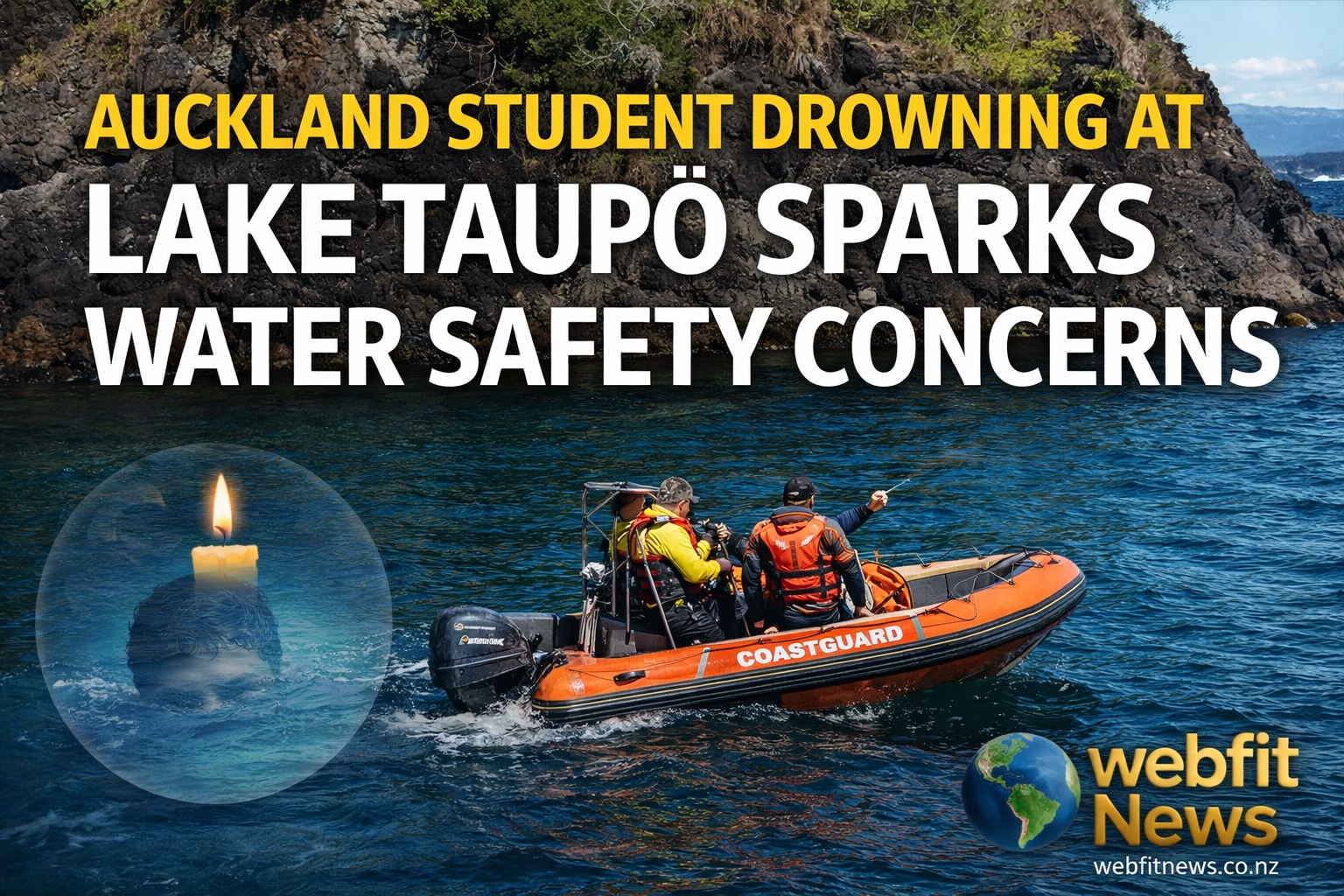
A tragic incident at Lake Taupō over the Easter weekend has sparked renewed concern around water safety in New Zealand, particularly for young people and international students.
Shaurya Sriram, a 21-year-old engineering student from the University of Auckland, lost his life after being pulled unconscious from the water at Whakamoenga Point. What should have been a routine holiday trip turned into a devastating loss that has shaken both the local community and families overseas.
This incident is not isolated. It comes amid a series of emergencies reported across the country during the same weekend, raising deeper questions about safety awareness, emergency readiness, and risk understanding.
What Happened at Lake Taupō
Her Voice, Her Power: Auckland Event Helps Women Reclaim Confidence and Connection – WebfitNews
According to details gathered from media-style investigative inputs, the incident occurred on Sunday afternoon during a group outing at Acacia Bay.
- Emergency services were alerted around 3:20 PM
- The student was pulled from deep water by those present
- Despite an immediate response, he could not be revived
- The case has been referred to the Coroner
Whakamoenga Point is known for its steep underwater drop-offs. Within just a few steps from the shoreline, depths can reach up to 30 to 40 metres. This creates a deceptive environment where swimmers may suddenly find themselves in deep water without warning.
Cold water conditions also play a critical role. Lake temperatures can trigger what is known as “cold shock,” where the body reacts suddenly, causing involuntary breathing and loss of control.
These factors combined can turn even a short swim into a life-threatening situation.
A Weekend of Multiple Emergencies
Authorities described the Easter weekend as particularly intense, with multiple incidents reported across New Zealand:
- A jetski accident in the same Taupō area earlier that day
- A mass swimmer rescue on Auckland’s west coast
- A fatal falling tree incident during a holiday event
- Public health alerts related to water contamination
The clustering of these events suggests pressure on emergency services and highlights how quickly multiple risks can escalate during peak holiday periods.
Why Lake Taupō Can Be Dangerous
At first glance, Lake Taupō appears calm and inviting. However, experts often point out several hidden risks:
1. Sudden Depth Changes
The lake is volcanic in origin, with steep underwater cliffs. Swimmers can go from shallow to deep water instantly.
2. Cold Water Shock
Even in mild weather, water temperatures can drop sharply below the surface, causing breathing reflexes and panic.
3. Freshwater Buoyancy
Unlike seawater, freshwater provides less natural buoyancy, making it harder to stay afloat.
4. Misleading Clarity
Clear water can distort perception, making depth appear shallower than it actually is.
These environmental factors are often unfamiliar to people who did not grow up around such conditions.
International Students and Safety Awareness
This tragedy also highlights a sensitive but important issue: the vulnerability of international students in unfamiliar environments.
New Zealand attracts thousands of students every year, many from countries where:
- Water temperatures are warmer
- Swimming conditions are different
- Natural hazards are less extreme
While academically strong, many students may lack practical awareness of local risks.
Past cases in New Zealand have shown similar patterns, where highly capable individuals underestimated environmental conditions.
This is not about intelligence. It is about exposure and awareness.
Pressure on Systems and Infrastructure
The broader context matters.
At the time of the incident, New Zealand was reportedly dealing with:
- Increased travel during the Easter holiday
- Strain on emergency services due to multiple incidents
- Ongoing economic and logistical pressures
When multiple emergencies occur in a short time frame, response systems can become stretched, even if protocols are followed correctly.
This raises an uncomfortable but necessary question:
Are we prepared for peak-risk periods?
Cultural Response and Community Impact
Following the incident, a rāhui (temporary restriction) was placed over the affected area.
In Māori tradition, a rāhui is a mark of respect and a way to allow the environment and community to recover after a death.
For the family of the student, based overseas, this also adds a cultural layer to the grieving process. Navigating legal procedures, distance, and unfamiliar systems can be overwhelming.
This is where community platforms and diaspora networks often play a critical role in bridging information gaps and providing support.
What This Incident Is Really Telling Us
It is easy to call this a “tragic accident” and move on.
But that would be avoiding the bigger picture.
This incident exposes a pattern:
- Natural beauty masking real danger
- Lack of targeted safety education
- Overconfidence during recreational activities
- Limited awareness among newcomers
New Zealand’s landscapes are stunning. But they are also unforgiving.
And that combination demands respect, not assumption.
Webfit News Perspective
This is not just about one incident. It is about a system gap that keeps repeating.
If international students are a key part of New Zealand’s future, then safety education must go beyond brochures and websites.
There needs to be:
- Practical, scenario-based safety awareness
- Clear signage at high-risk locations
- Targeted outreach for new residents and students
- Stronger public messaging during peak holiday periods
Because right now, the pattern is clear.
We react after loss.
We do not prevent it early enough.
Conclusion
Shaurya Sriram’s death is a painful reminder of how quickly things can change in natural environments.
One moment, it was a holiday trip with friends.
Next, it became a life-changing tragedy for a family thousands of kilometres away.
New Zealand cannot control nature.
But it can control how well people are prepared to face it.
That is where the real responsibility lies.
References
- Investigative research summary on the Lake Taupō incident and safety analysis
- New Zealand Police and emergency response context (as reported in compiled media-style inputs)
- General water safety guidance from New Zealand authorities and environmental data