Story by Webfit News Editorial Team
Auckland | 23 October 2025
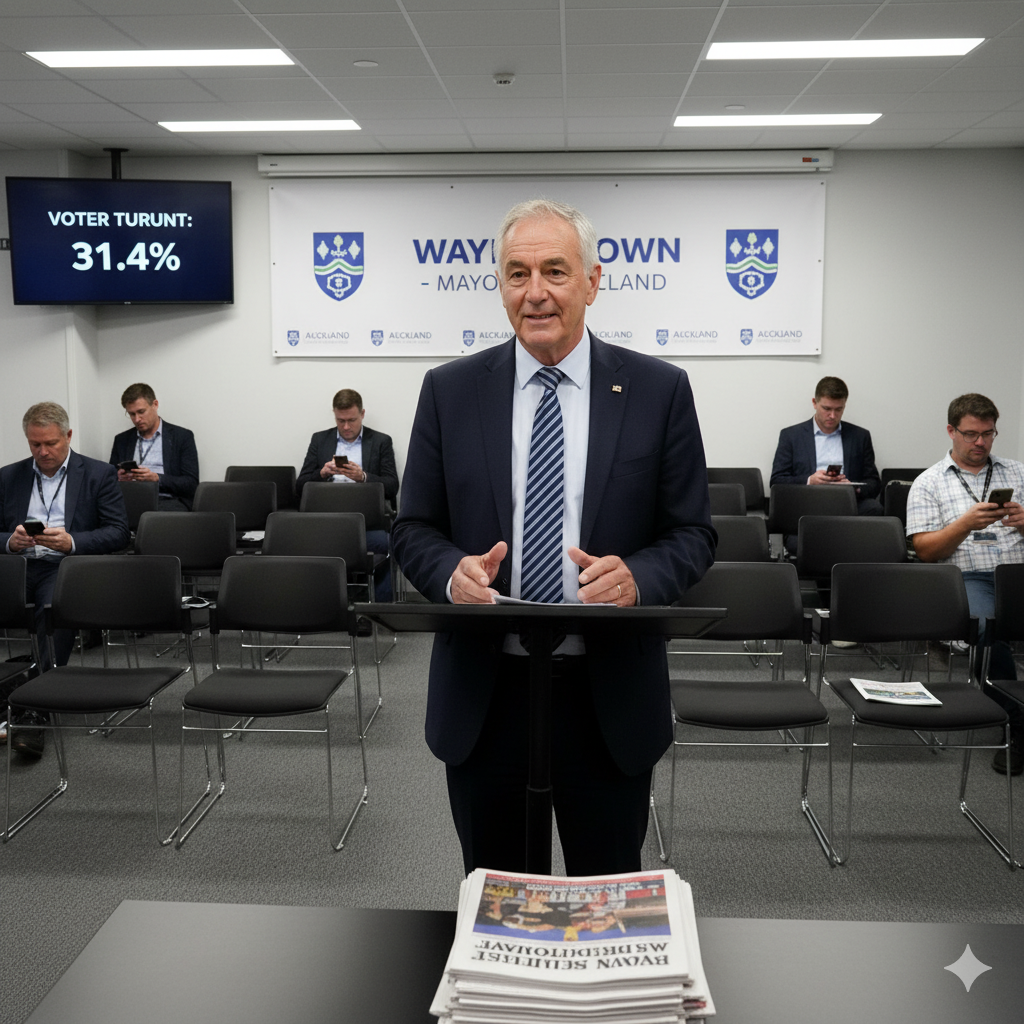
Wayne Brown has secured a second term as Auckland Mayor, winning the 2025 local elections with a strong margin but against a backdrop of record-low voter turnout. The official results, declared on October 18, confirmed that only 29.3% of registered voters participated, the lowest turnout in the city’s history.
Brown received 180,130 votes, defeating his main rival, Labor-affiliated councilor Kerrin Leoni, who gained 77,577 votes. He will lead a 20-member Governing Body, which includes five new councilors, to steer New Zealand’s largest city through the next three years of economic and infrastructure challenges.
Election Reflects Growing Voter Apathy
The low turnout, down from 35.5% in 2022, has sparked concern about public disengagement from local politics. Many voters reported feeling confused or lacking information about the candidates. Political observers say this reflects a deeper disconnect between the Auckland Council and its residents.
Brown campaigned under his “Fix Auckland” slogan, focusing on fiscal discipline, core infrastructure, and cost-of-living relief. His message resonated with ratepayers worried about rising expenses, as public surveys show over 75% of New Zealanders support a national cap on council rates.
However, the challenge ahead is complex. The city faces an infrastructure deficit of up to 185 billion dollars over the next three decades, requiring a delicate balance between prudent spending and long-term investment.
Broader Political Context and Māori Representation
While Auckland did not hold a referendum on Māori wards, 42 local councils across New Zealand did so this election. Their results will shape the national debate on representation and influence how Auckland continues its own Māori outcomes program.
The 2025 election has been viewed as a crucial test of public sentiment regarding cost pressures and governance transparency. Analysts describe it as a “referendum on council spending” that signals voter frustration rather than enthusiasm.
Next Steps for the New Council
As Brown prepares to form his new administration, attention now turns to committee appointments, transport policy, and housing intensification near key transport hubs. The first 100 days will reveal the council’s direction on major issues such as climate resilience, infrastructure funding, and public trust rebuilding.
Observers say one of Brown’s biggest challenges will be restoring public engagement after a campaign marked by low participation and limited debate. “Fixing Auckland now means fixing how Aucklanders connect with their council,” one civic analyst said.
Reference:
2025 Auckland Local Election Results – OurAuckland (18 October 2025); VoteAuckland Official Data; New Zealand Principals’ Federation and October 2025 Editorial Briefing by Webfit News Research Team.