
INTRO
It was supposed to be a normal drive home after dinner.
Instead, in a matter of seconds, a quiet rural road south of Rotorua turned into a life-threatening trap. A car disappeared into a sudden chasm. Floodwaters surged below. And a woman found herself fighting not just for survival, but for time.
Today, her family calls every day since then a “bonus.”
But behind this miraculous survival story lies a bigger, uncomfortable question for New Zealand.
How safe are our roads, really?
WHAT HAPPENED
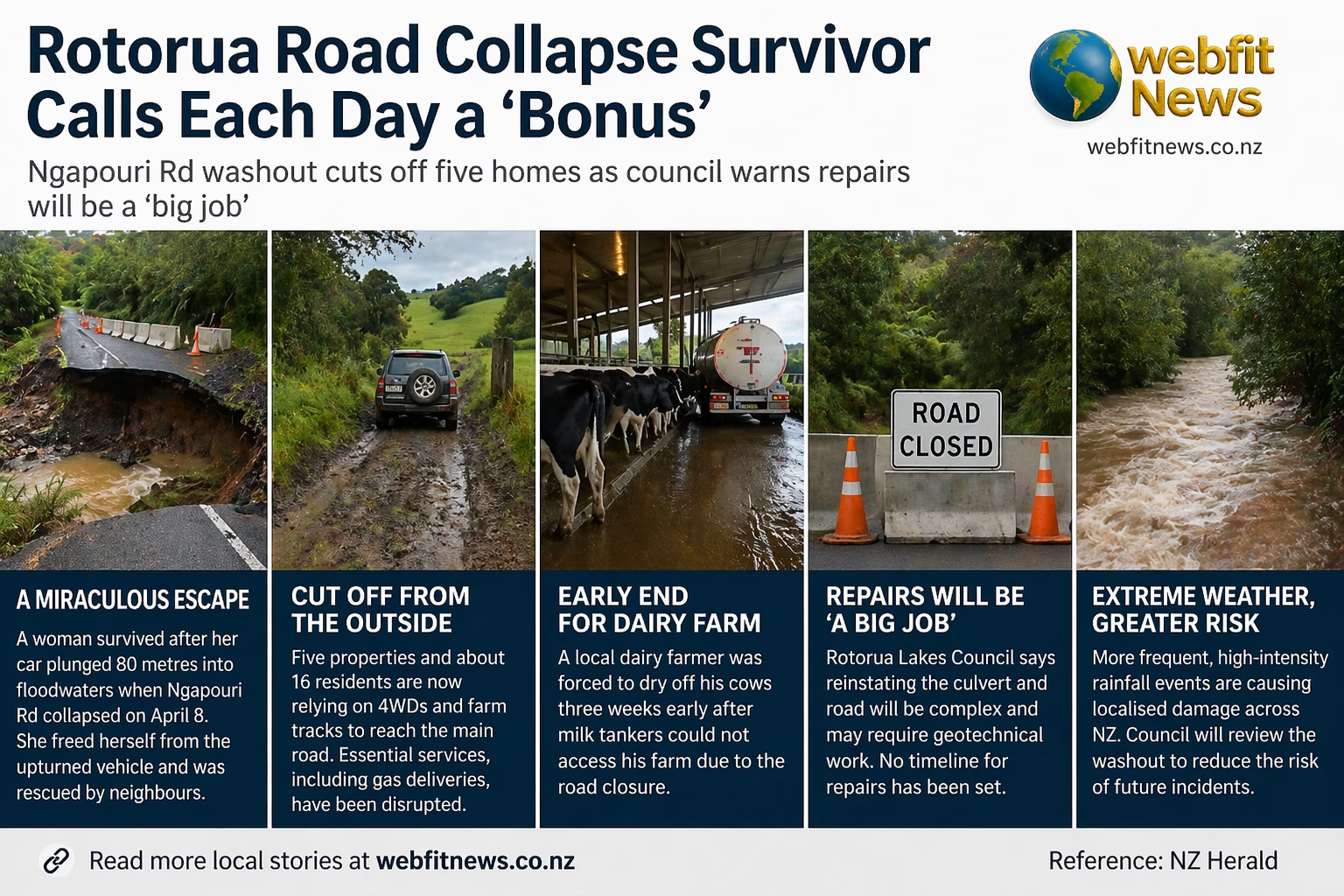
On April 8, a woman driving along Ngapouri Road near Waiotapu plunged into a massive washout after a section of the road collapsed without warning.
She had been travelling separately from her husband after visiting friends. As both vehicles approached a bend and descended a hill, her car suddenly vanished from sight.
The road had opened into a deep gap.
Her husband, driving behind but unaware it was her vehicle, managed to stop just in time. He called emergency services, not yet knowing his wife was trapped in the wreckage about 80 metres below in flood-swollen waters.
Inside the overturned car, she stayed conscious. She prayed. She sang hymns to keep calm.
Eventually, she managed to escape the vehicle and was rescued by nearby residents.
She survived. But only just.
BACKGROUND / CONTEXT
The incident was triggered by severe weather and heavy rainfall that caused a culvert failure beneath the road.
New Zealand has seen an increase in such extreme weather events over recent years. Flooding, slips, and infrastructure damage have become more frequent, especially in rural areas.
Local councils manage thousands of kilometres of roads and drainage systems. In this case alone, Rotorua Lakes Council oversees over 1000km of roads and around 4000 culverts.
The challenge is scale versus unpredictability.
Even regularly maintained systems are being pushed beyond their limits.
KEY DETAILS / FACTS
- Incident date: April 8
- Location: Ngapouri Road, Waiotapu, south of Rotorua
- Drop distance: Approximately 80 metres into a stream
- Affected households: 5 properties, around 16 residents
- Current access: 4WD-only via farm tracks
- Economic impact:
- Dairy farmer forced to dry off cows early
- Gas supply disruptions for households
- Renovation and construction delays
- Council response:
- Road closed with barriers
- Repair under investigation
- Described as a “big job” likely requiring geotechnical work
WHY THIS MATTERS
This is not just a survival story. It is a warning.
Rural communities across New Zealand depend on a small number of access roads. When one fails, it cuts off:
- Emergency access
- Supply chains
- Farming operations
- Daily life
In this case, families are relying on farm tracks just to get in and out. Essential services are already being disrupted.
For farmers, it hits income directly.
For families, it creates risk and uncertainty.
For councils, it exposes a bigger issue: infrastructure resilience in a changing climate.
MULTIPLE PERSPECTIVES
Residents
Locals have shown resilience. Despite the disruption, many say the council’s response has been reasonable given the scale of the damage.
But the reality remains. They are effectively isolated.
Farmers
A nearby dairy farmer had to end his season early because milk tankers could not reach the property. Even if insurance covers part of the loss, operational impact is real.
Council
Officials admit the repair is complex and cannot yet confirm timelines. The mention of geotechnical work suggests deeper ground instability, not just surface damage.
Wider public sentiment
There is growing awareness that these incidents are becoming more common. And that raises concerns beyond this single road.
HIDDEN ANGLE
Here is what most coverage is missing.
This was not just bad luck.
This is a systems stress test.
The key issue is not whether culverts are maintained. It is whether they are designed for the kind of rainfall New Zealand is now experiencing.
We are still operating infrastructure built for a different climate reality.
And when it fails, it fails suddenly.
No warning signs. No gradual breakdown. Just collapse.
Also, rural roads often sit lower on funding priority compared to urban infrastructure. Yet when they fail, the impact per household is far more severe.
That imbalance is not being discussed enough.
WEBFIT NEWS PERSPECTIVE
This incident should not be treated as a one-off story.
It is part of a pattern.
New Zealand is entering a phase where infrastructure resilience is no longer optional. Councils cannot just maintain systems. They need to redesign them for future conditions.
Communities should watch closely:
- How long will this repair take
- Whether temporary access improves
- What long-term upgrades are planned
Because if this road is vulnerable, many others are too.
And next time, survival may not come down to luck and presence of mind.
CONCLUSION
For one Rotorua family, life now comes with a new perspective. Every day is a bonus.
But for the rest of New Zealand, this moment should be a reality check.
A road does not just disappear overnight without a deeper problem.
And if we ignore that, the next collapse will not just be a story of survival.
It will be a story of failure.
References
- NZ Herald reporting on Rotorua Ngapouri Road washout incident
- Rotorua Lakes Council official statements
- Resident accounts and on-ground reports