Date: 13 November 2025
By Webfit News
Introduction
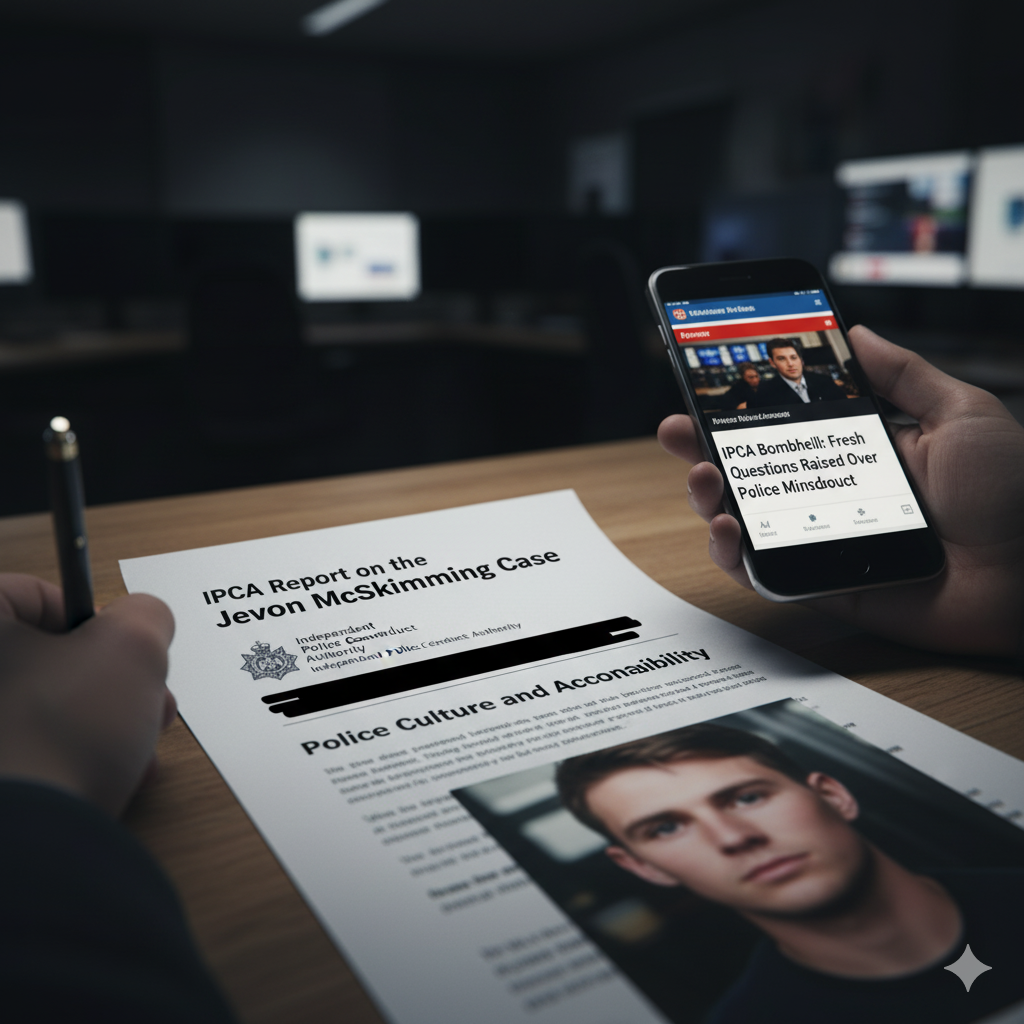
A new report from the Independent Police Conduct Authority has raised serious concerns about how the Police handled the Jevon McSkimming case. The report shows that the issue is not only about one officer. It is also about a long-standing culture inside the Police that makes it hard for staff to challenge each other.
What the IPCA Says
The IPCA did criticise former Police Commissioner Andrew Coster. It also criticised several senior officers for slow decisions and poor judgment. However, the IPCA found no evidence that staff acted with bad intentions. Instead, it says the structure and culture inside the Police played a major role.
A Culture That Sticks Together
The report describes a strong focus on loyalty and hierarchy. This culture helps officers work together in tough and risky situations. It also helps create trust within teams.
However, the same culture can create problems. Staff may feel pressure to agree with senior leaders. They may also avoid speaking up, even when something looks wrong. As a result, poor decisions can continue without proper challenge.
Why Groupthink Became a Problem
According to the IPCA, groupthink made it harder for senior Police to see the full picture. Many officers accepted McSkimming’s story without checking the facts. His version of events shaped how the organisation viewed the complainant for years. This meant her concerns were not taken seriously.
A Serious Power Imbalance
The complainant was young and working in a junior position. McSkimming was a senior leader who influenced her work. She says the relationship was not consensual. Her view was very different from the story repeated by senior staff. Yet her version did not receive the attention it needed.
What Went Wrong at the Top
By the time the allegations grew stronger, McSkimming was seen as a possible future Commissioner. This created pressure inside the Police. The IPCA says Andrew Coster focused too much on protecting McSkimming’s rights. At the same time, he did not focus enough on the risk to public trust.
Because of this, the issues were not addressed in a timely way. The complainant was even charged under the Harmful Digital Communications Act. Her not guilty plea meant the situation would be tested in open court. This created further risk for the Police.
Why This Matters for New Zealand
This case shows that the cultural problems identified almost twenty years ago still exist. The Bazley report raised similar concerns at the time. The same patterns are seen in other hierarchical organisations in New Zealand and overseas.
If the focus stays only on blaming individuals, the same problems may happen again. Many experts say the solution needs to be structural, not personal.
Calls for Independent Oversight
Several victim groups want the government to make bigger changes. They say investigations involving senior Police should not be handled by Police at all. Two ideas are now being discussed:
- A fully independent Inspector General of Police
- A Victims Commissioner with the power to direct investigations
So far, the government has not confirmed whether it will support these changes.
Conclusion
The IPCA report makes it clear that the McSkimming case was not a one-off problem. The report shows a pattern of behaviour that can grow inside any large and hierarchical organisation. Without proper changes, these issues may continue. Many people believe New Zealand needs an independent system that can step in when senior Police face serious allegations.
SEO Keywords
IPCA NZ, Police culture New Zealand, Jevon McSkimming report, Andrew Coster IPCA, NZ Police investigation, Webfit News NZ
Meta Description
A simple breakdown of the IPCA report on the Jevon McSkimming case. The report highlights deep cultural issues inside New Zealand Police and calls for stronger independent oversight.
References
- Independent Police Conduct Authority
- Scoop Media
- New Zealand Police public statements