Auckland | December 22, 2025
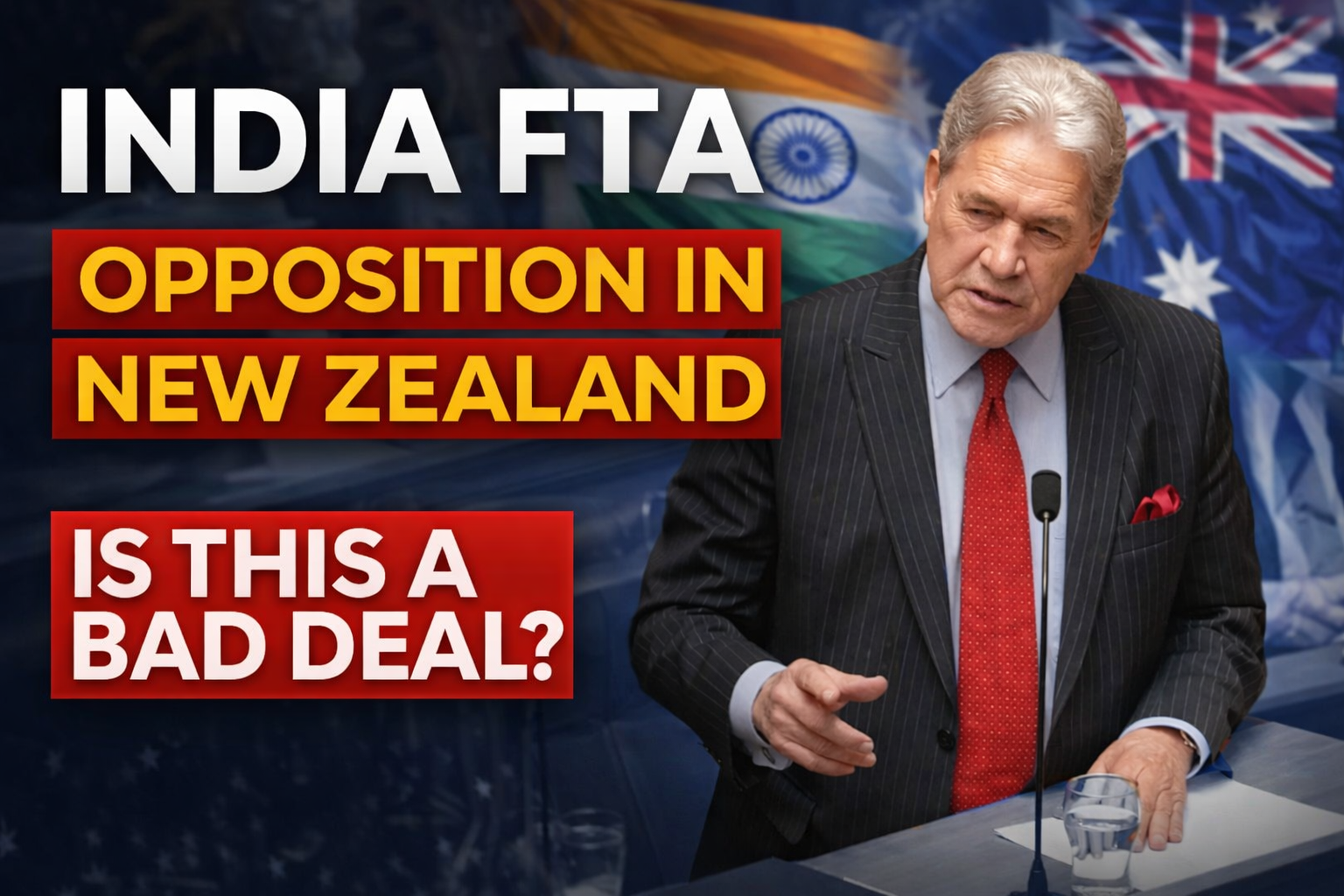
Political opposition has emerged over the India Free Trade Agreement in New Zealand, with critics questioning whether the deal delivers balanced benefits for the country.
The agreement, concluded between New Zealand and India earlier this week, has been promoted by the Government as a long-term opportunity to expand trade with one of the world’s largest economies. However, not all political voices support the deal. Some argue it gives away too much while offering limited returns in key areas.
India FTA Opposition Focuses on Dairy and Immigration
One of the strongest objections centres on dairy. Major products such as milk, cheese, and butter are excluded from meaningful tariff reductions under the agreement.
Dairy remains New Zealand’s largest export sector. In the year to November 2025, dairy exports were valued at around $24 billion, accounting for roughly 30 percent of total goods exports. Critics say signing a trade agreement without securing improved access for dairy sets an unusual precedent and weakens the deal’s value for rural communities.
They also argue that while New Zealand is opening its market more broadly, significant tariff barriers remain in place for its most valuable export products.
Immigration and Labour Market Concerns
Beyond trade in goods, the agreement includes provisions related to the movement of people. These include employment pathways and work rights linked to education.
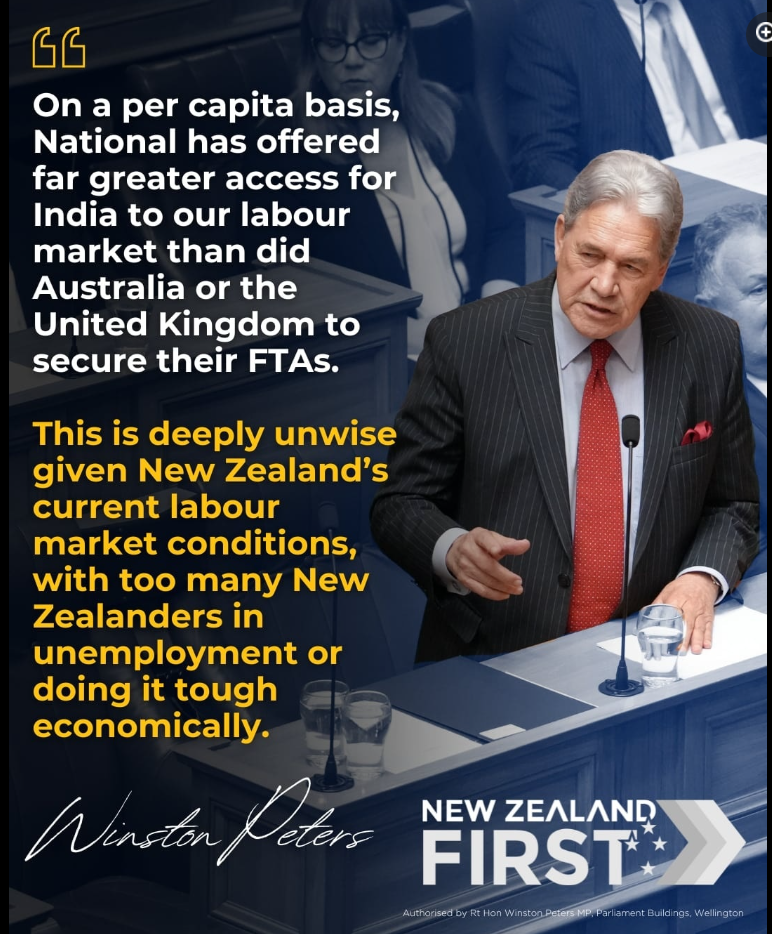
Critics say these settings go beyond traditional trade policy. They argue the level of access offered could increase pressure on the domestic labour market, particularly at a time when some New Zealanders are facing unemployment or economic strain.
There are also concerns that such provisions could limit the ability of future governments to adjust immigration and labour policies in response to changing economic conditions.
Questions Around Process and Parliamentary Support
Concerns have also been raised about how the agreement was concluded. Critics argue the negotiations moved too quickly and that the full parliamentary term could have been used to secure stronger outcomes.
They warn that concluding a major trade deal without clear parliamentary backing may lead to political and legislative challenges later. Under coalition arrangements, disagreement over the deal has already been acknowledged, and opposition has been signalled should enabling legislation reach Parliament.
Support for the Relationship, Not the Deal
Despite opposing the agreement, critics have stressed that their position should not be seen as opposition to India or the broader bilateral relationship.
They have reaffirmed support for strengthening diplomatic, economic, and strategic ties between New Zealand and India. Additional resources directed toward India-focused diplomacy and engagement have been cited as evidence of that commitment.
The disagreement, they say, reflects a difference of opinion within New Zealand politics rather than criticism of India or its negotiators.
A Debate Likely to Continue
Supporters of the agreement argue it creates opportunities for exporters, particularly in horticulture, services, and education. They say trade agreements often evolve over time and that the framework could support deeper engagement in the future.
Critics counter that trade deals should deliver clear and balanced gains from the outset, especially in sectors that underpin the national economy.
As the agreement moves toward legislative consideration and implementation, debate across Parliament and among the public is expected to continue.
For background on the agreement and its broader impacts, readers can also view our detailed explainer on the New Zealand–India Free Trade Agreement, explained at Webfit News.
According to information published by the Ministry of Foreign Affairs and Trade, dairy remains central to New Zealand’s export economy, underscoring why the issue has become a focal point in the current debate.
📰 Webfit News will continue to report on political responses and developments as the process unfolds.
Independent. Neutral. Community-focused.
India FTA a bad deal for New Zealand – New Zealand First