By Webfit News
Auckland, 11 July 2026
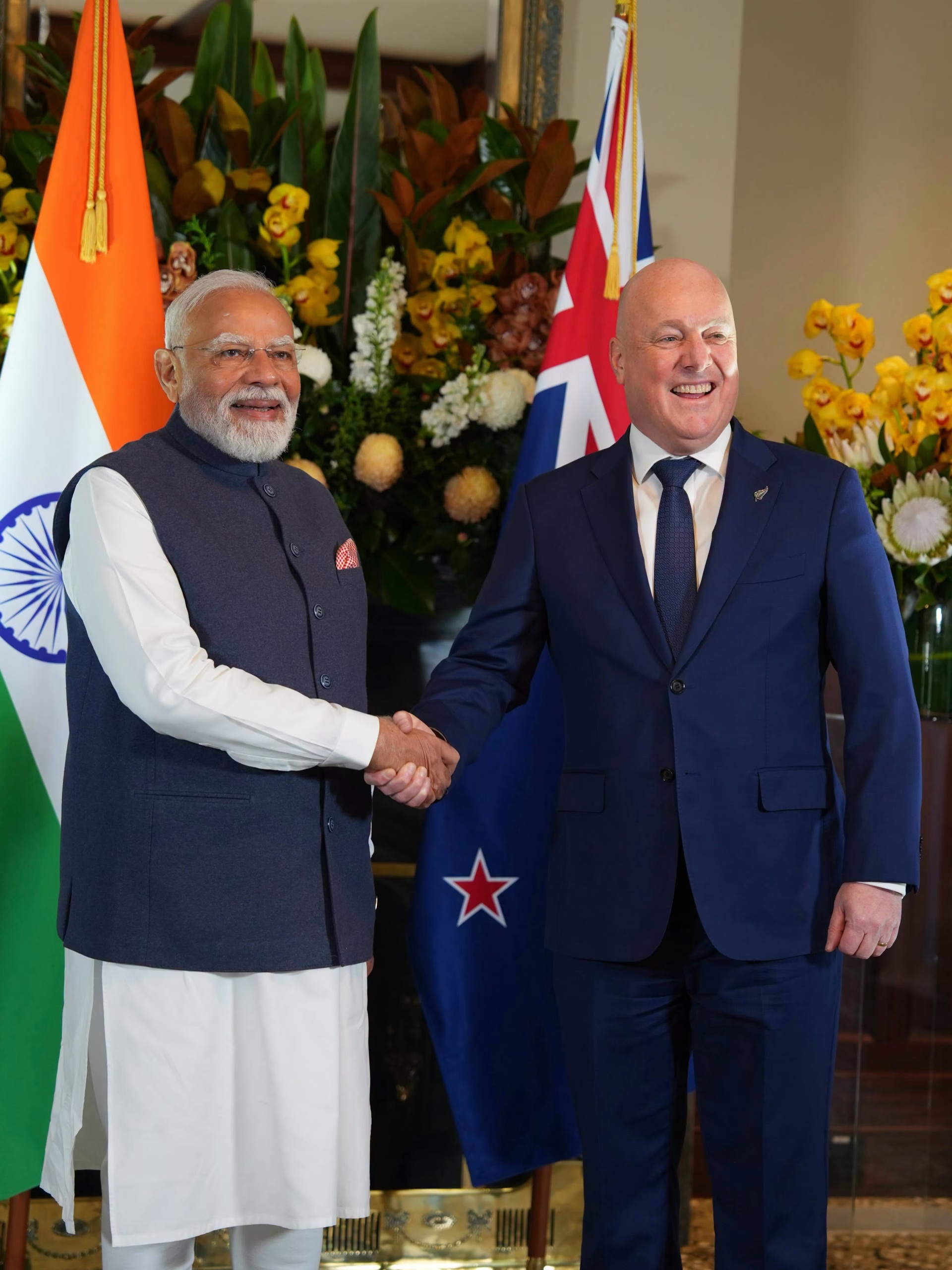
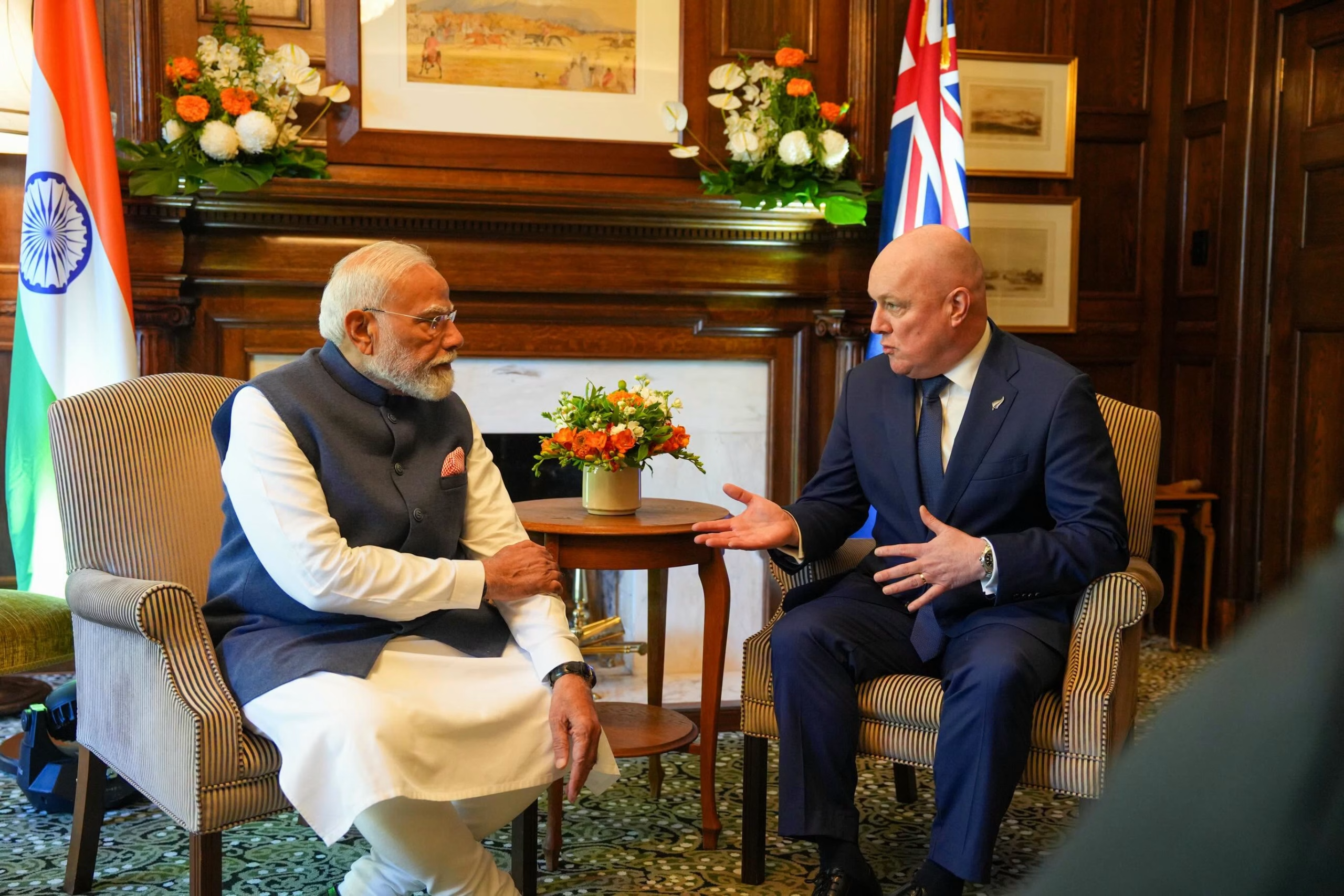
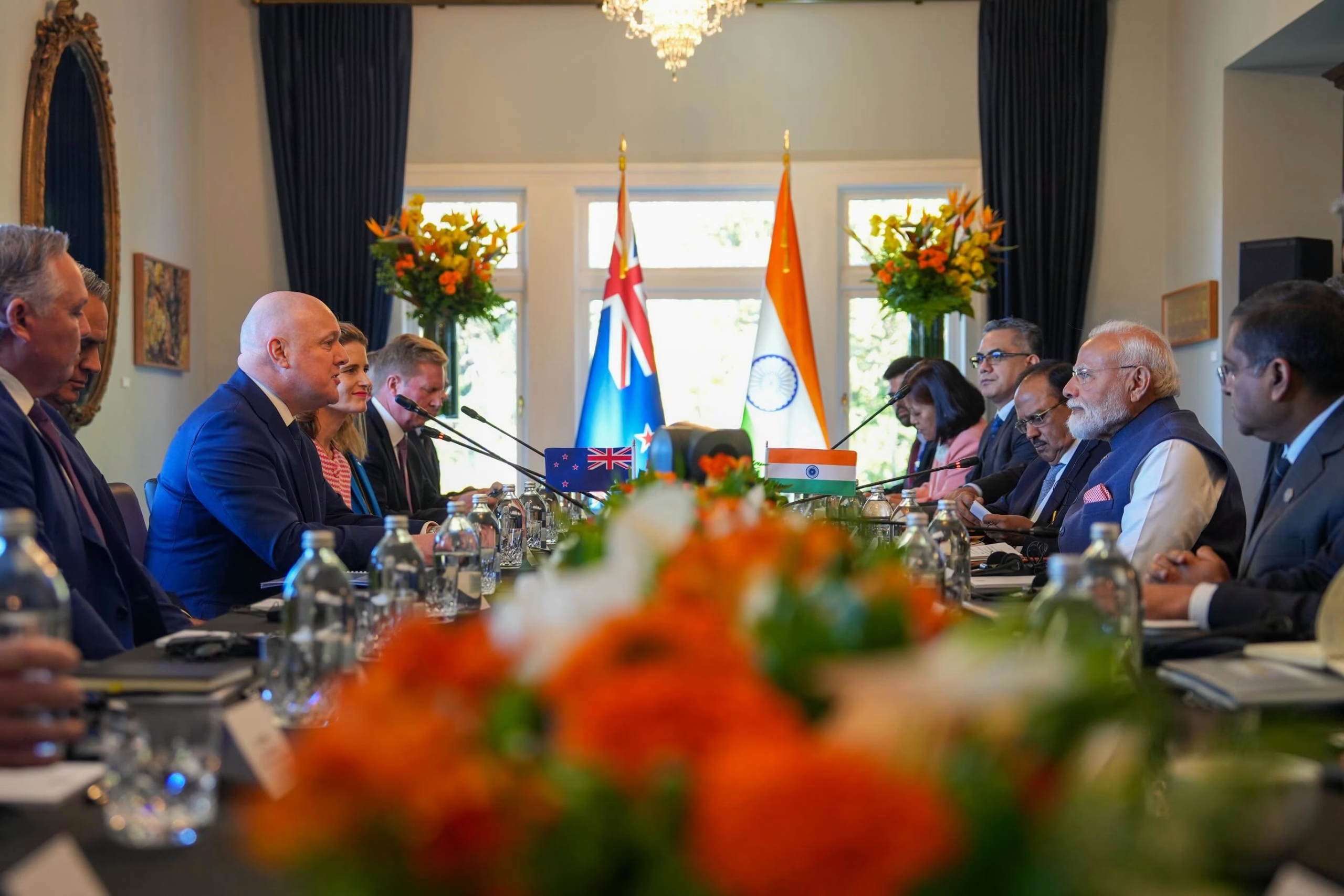
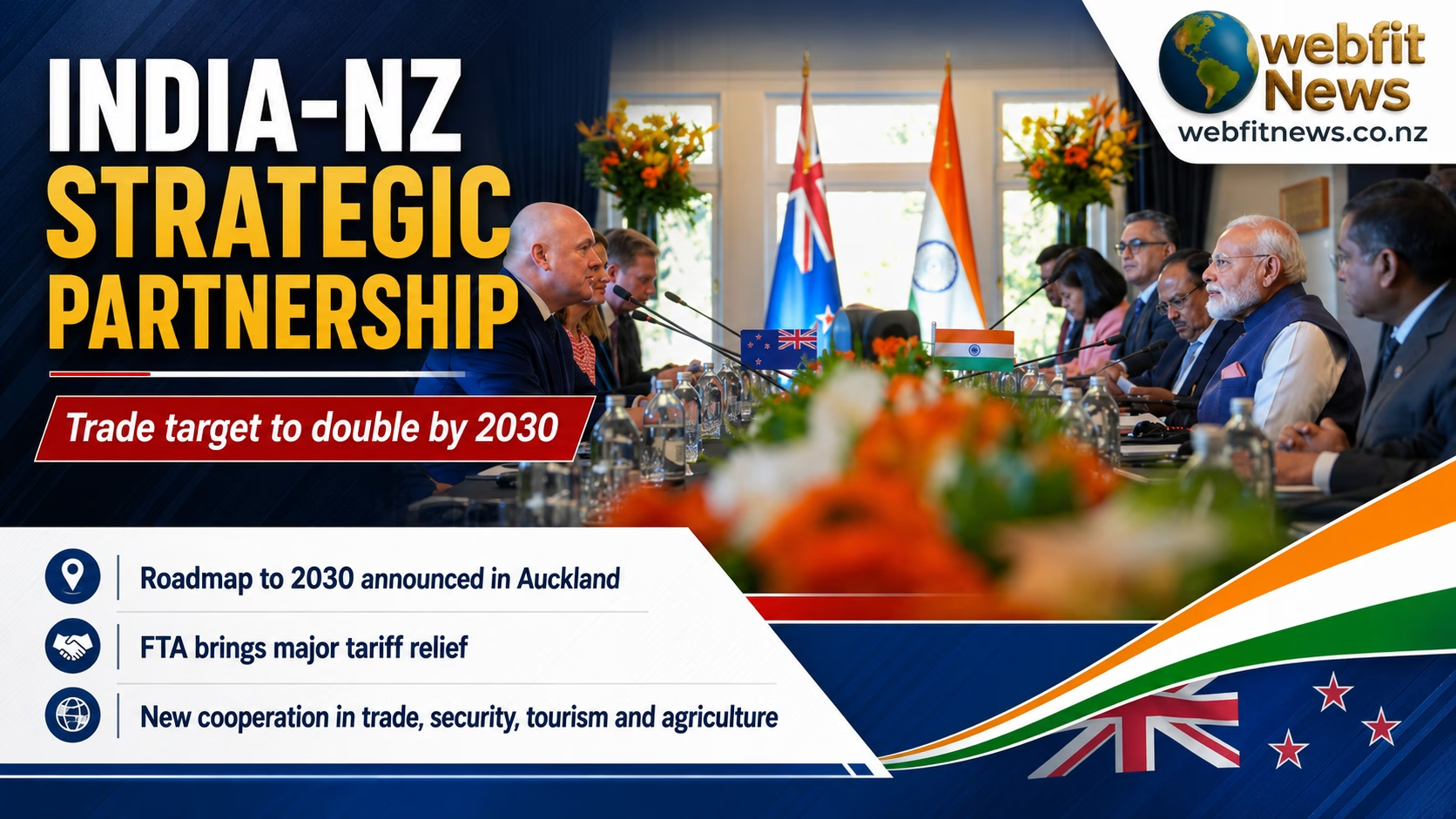
India and New Zealand have entered a new phase in their bilateral relationship after Prime Ministers Narendra Modi and Christopher Luxon agreed to elevate ties to a strategic partnership and adopt a “Roadmap to 2030”.
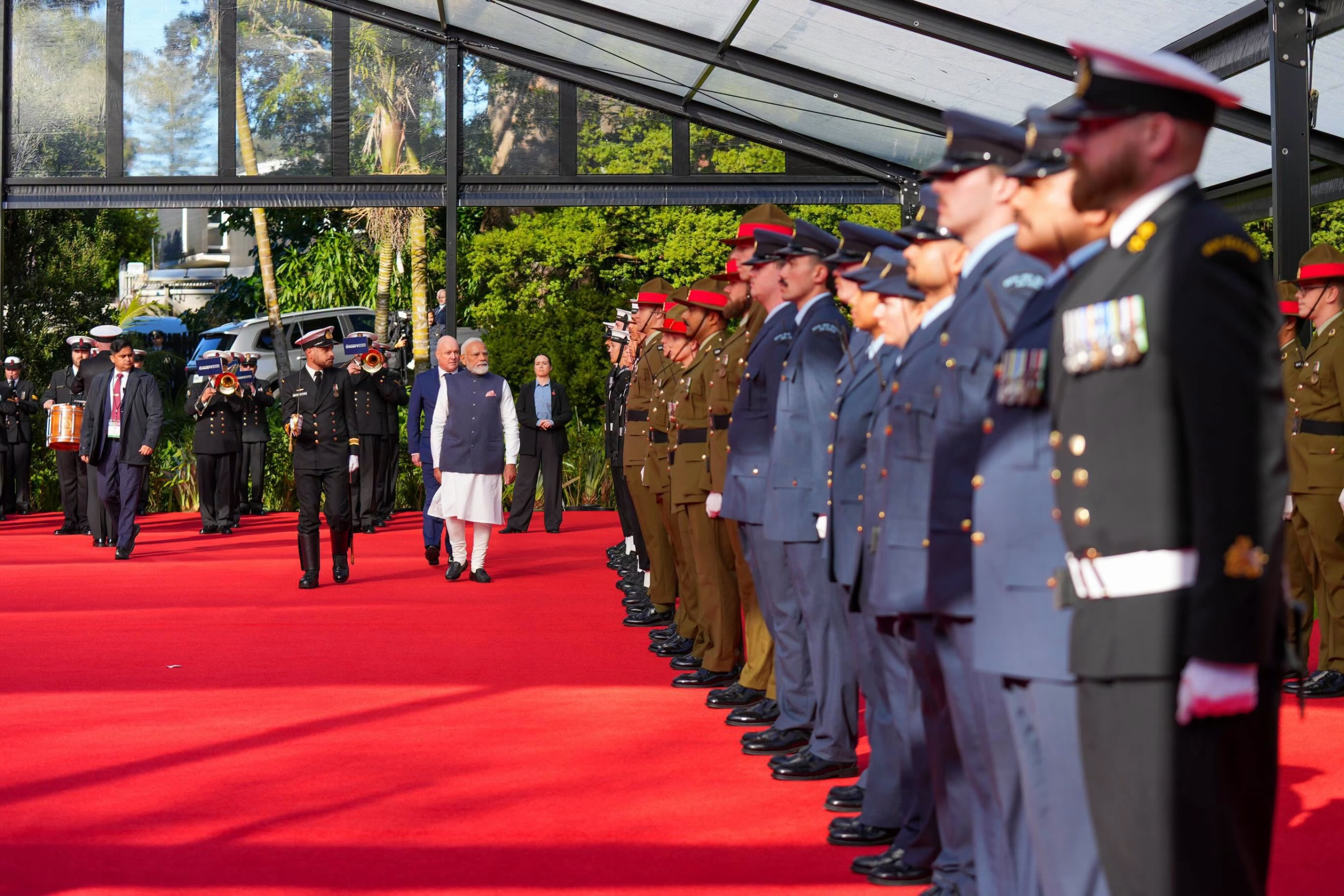
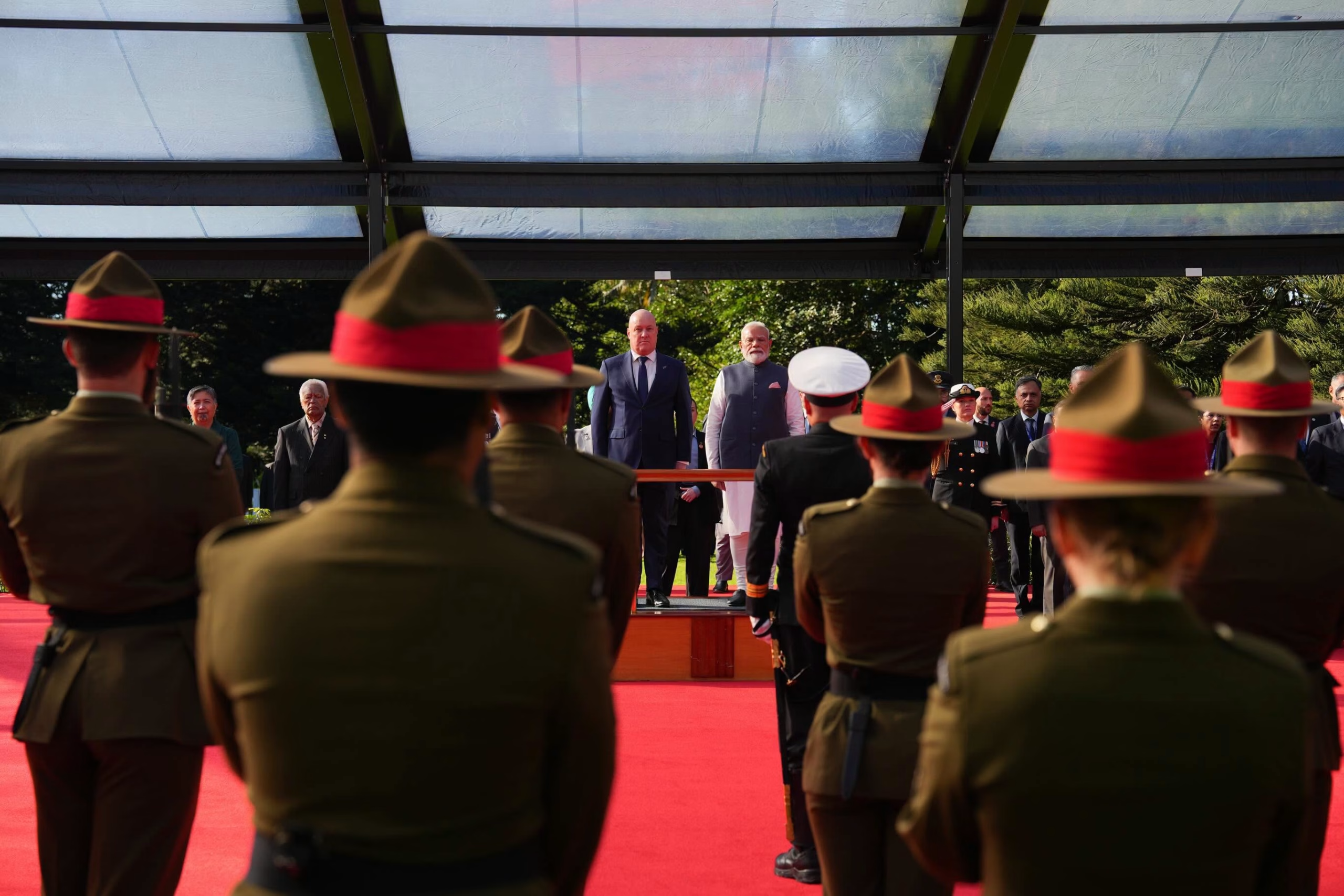
The agreement was announced following bilateral talks in Auckland during Mr Modi’s state visit, the first by an Indian prime minister to New Zealand in four decades.
At the centre of the new roadmap is an ambition to double bilateral trade by 2030 while expanding practical cooperation in defence, maritime security, agriculture, education, tourism, sport and investment.
The announcement gives the relationship a clearer long-term structure at a time when both governments are seeking greater economic and strategic engagement across the Indo-Pacific.
“Kia Ora Modi” Meet and Greet at Cordis Hotel Becomes Emotional Moment for Kiwi-Indians – WebfitNews
A Historic Upgrade in Bilateral Relations
Mr Modi’s Auckland visit follows a period of unusually rapid diplomatic progress between the two countries.
Prime Minister Luxon visited India in March 2025, when both leaders agreed to intensify cooperation and formally launched negotiations for a comprehensive free trade agreement.
Those negotiations were completed in December 2025, and the New Zealand-India Free Trade Agreement was signed in New Delhi on 27 April 2026.
Mr Modi’s visit provided the opportunity to move beyond individual agreements and place the relationship within a wider strategic framework.
The Roadmap to 2030 is expected to guide government agencies, ministers and businesses in turning high-level political commitments into measurable outcomes.
This matters because India-New Zealand relations have often been described as friendly but underdeveloped. The new strategic partnership is intended to correct that gap.
Target to Double Trade by 2030
The most commercially significant commitment is the target to double bilateral trade by the end of the decade.
Current two-way trade between India and New Zealand is valued at approximately NZ$3.95 billion annually.
That figure remains modest when compared with the size of India’s economy and New Zealand’s wider trading relationships.
India offers New Zealand companies access to a market of more than 1.4 billion people, with opportunities across food and beverage, education, tourism, technology, professional services, agriculture and investment.
For Indian exporters, New Zealand provides a stable, high-income market with growing demand for technology, pharmaceuticals, manufactured products, services and skilled professional partnerships.
The 2030 target will require more than political announcements. Businesses will need clearer market access, faster regulatory processes, better transport links and stronger relationships between investors and industry groups.
FTA Delivers Major Tariff Reductions
The Free Trade Agreement is the economic foundation of the new partnership.
Once fully implemented, tariffs will be eliminated or sharply reduced on 95 percent of New Zealand’s current exports to India.
Around 57 percent of New Zealand exports covered by the agreement will receive full tariff elimination from the first day it enters into force. That figure is expected to rise to 82 percent over time, with substantial tariff reductions applying to a further 13 percent.
The average tariff applied to New Zealand’s current exports is expected to fall to approximately 3 percent under the agreement.
New Zealand’s Ministry of Foreign Affairs and Trade estimates that immediate tariff savings could be worth about NZ$43 million annually, increasing to NZ$62 million based on current trade levels. Those savings could grow further if bilateral trade expands as expected.
The agreement covers goods, services and investment, creating potential benefits for exporters, education providers, tourism operators and professional service businesses.
It also supports the New Zealand Government’s broader objective of doubling the country’s total export value by 2034.
Opportunities for New Zealand Exporters
New Zealand businesses have traditionally struggled to secure their full share of the Indian market because of high tariffs, regulatory complexity and limited commercial connections.
The FTA could improve conditions for exporters across several sectors, including:
- Food and beverage products
- Horticulture and forestry
- Technology and digital services
- Education and training
- Tourism
- Professional and financial services
- Agricultural innovation
- Wine and selected primary products
New Zealand companies will still need to understand India’s diverse regional markets and competitive business environment.
India is not a single uniform market. Consumer demand, regulations, language, infrastructure and purchasing power vary significantly between states and cities.
The businesses most likely to succeed will be those that build local partnerships rather than treating the FTA as an automatic guarantee of sales.
Maritime Security Gains Greater Importance
The Roadmap to 2030 also gives significant attention to defence and maritime security.
The two countries have agreed to strengthen practical cooperation between their defence forces through a maritime cooperation arrangement.
This reflects the growing importance of the Indo-Pacific to both governments.
New Zealand depends heavily on secure shipping routes, stable regional institutions and the free movement of goods across the Pacific and Indian Oceans.
India has also expanded its regional security role and views maritime cooperation as an important part of its foreign policy.
Before arriving in Auckland, Mr Modi said his New Zealand discussions would build cooperation in trade, defence and the wider Indo-Pacific. He also linked his three-country tour to India’s Act East Policy and its vision for a free and open region.
Closer maritime cooperation could include naval engagement, training, information sharing, disaster response and measures to protect important shipping routes.
Agriculture, Sport and Tourism Agreements
The strategic partnership is not limited to trade and security.
The two governments have also welcomed cooperation in agriculture, tourism and sport.
Agricultural engagement is expected to include technical exchanges in livestock breeding, dairy systems and farm productivity.
This is an area where New Zealand has extensive expertise, but it is also politically sensitive.
India’s dairy sector supports millions of small farmers, meaning any agricultural partnership must balance commercial opportunity with domestic concerns about livelihoods and market access.
Sport provides a less controversial area for cooperation.
The two countries share strong cricket and hockey connections, while 2026 marks 100 years since the Indian Army hockey team toured New Zealand in 1926.
Sports partnerships could support coaching, sports science, athlete development, tourism and commercial events.
Tourism also has considerable room to grow, particularly if improved air connectivity and visa processes make travel easier.
A Major Moment for the Indian Diaspora
New Zealand’s Indian community is central to the expanding relationship.
The diaspora acts as a practical bridge between the two countries through business, cultural knowledge, family connections, investment and professional networks.
Mr Modi’s visit has attracted significant community interest, with thousands expected to attend the Kia Ora Modi gathering at Spark Arena.
The event reflects the emotional connection many Kiwi-Indians maintain with India while proudly identifying New Zealand as their home.
However, the community’s role should not be viewed only through cultural celebrations.
Kiwi-Indians are active across healthcare, education, technology, retail, hospitality, agriculture and professional services.
That makes the diaspora an important economic and diplomatic asset for both governments.
Symbolism Must Now Become Delivery
The strategic partnership is a major political milestone, but its credibility will depend on implementation.
The two governments must now demonstrate progress through increased trade, stronger investment, practical defence cooperation and measurable opportunities for businesses, students and communities.
There are also difficult issues ahead.
The FTA must complete domestic ratification processes. Businesses will need help understanding its provisions. Regulatory barriers will need to be addressed, and both governments will need to manage political concerns around migration, agriculture and market access.
The Roadmap to 2030 gives India and New Zealand a deadline and a framework.
That is useful, but it is not enough on its own.
The true test will be whether exporters gain customers, students gain opportunities, tourists gain better connections and government agencies develop durable working relationships.
A Relationship Entering a New Era
Prime Minister Modi’s historic Auckland visit has delivered more than ceremony.
The strategic partnership gives India and New Zealand a clearer direction, while the trade target creates a measurable test of progress.
For New Zealand, the relationship offers greater access to one of the world’s largest markets and a stronger connection to the Indo-Pacific.
For India, it offers deeper engagement with a stable Pacific democracy with strengths in agriculture, education, technology and services.
The diplomatic language is ambitious.
The task now is to convert that ambition into results before 2030.
References
New Zealand Ministry of Foreign Affairs and Trade, New Zealand-India Free Trade Agreement overview and key outcomes.
Office of the Prime Minister of India, official programme and departure statement for the July 2026 visit to Indonesia, Australia and New Zealand.
New Zealand Government, announcement confirming Prime Minister Narendra Modi’s state visit to Auckland.