
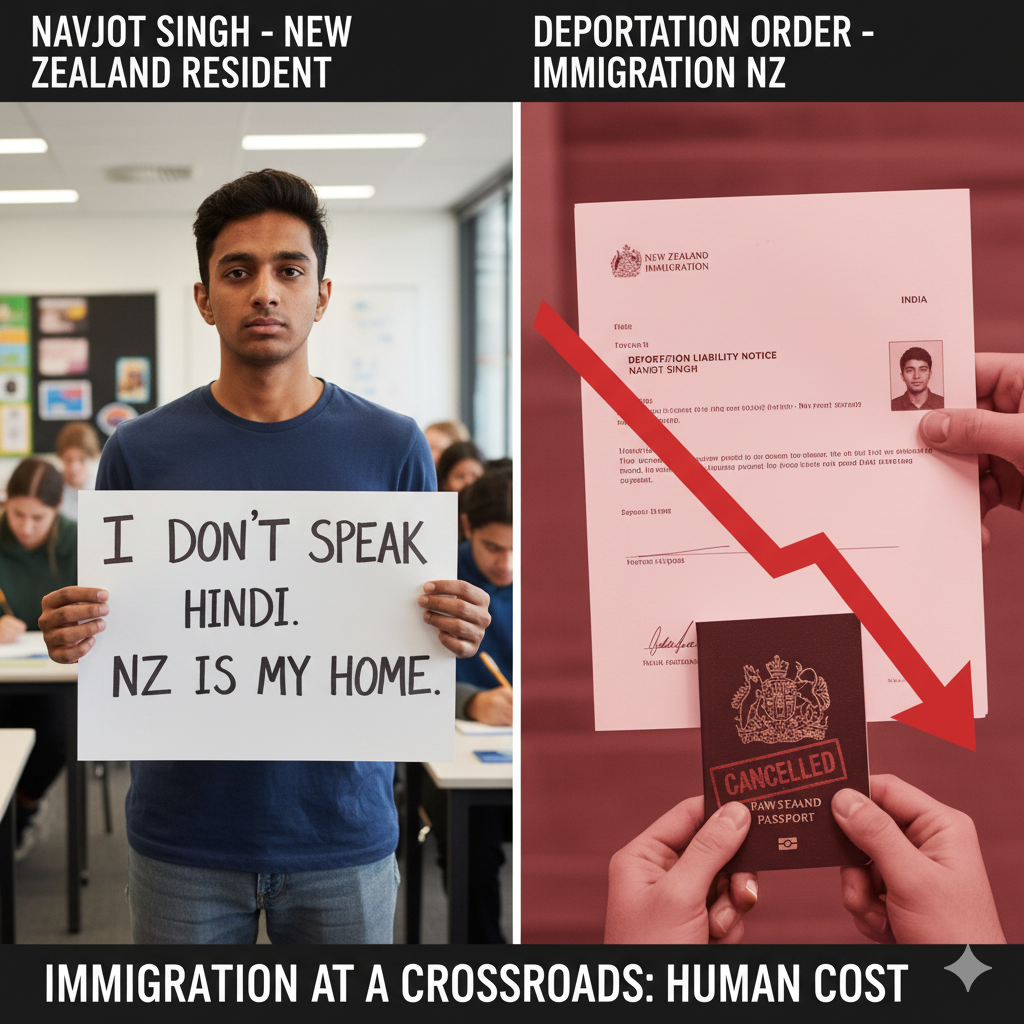
AUCKLAND, NZ
An 18-year-old Auckland student, Navjot Singh, faces deportation to India after the government ruled that he has no legal right to remain in New Zealand. The case has raised nationwide concern and sparked a wider discussion about fairness in immigration decisions.
A life built in New Zealand
Navjot was born in Auckland in 2007. His parents, who were originally from India, overstayed their visas and later left the country. His father was deported when Navjot was only five days old, and his mother departed in 2012. Since then, he has grown up entirely in New Zealand, attending school, making friends, and calling Auckland home.
Because his parents were not legal residents, immigration authorities have said that Navjot’s own residency cannot be recognized. In early October, Associate Immigration Minister Chris Penk declined his appeal for ministerial intervention, according to reports from RNZ.
Fear of a life he never knew
Navjot says the idea of being sent to India terrifies him. “I don’t speak Hindi,” he said. “All my friends are here, and I don’t know how I would start over.”
He worries about adjusting to a country where he has never lived. Finding work or continuing his studies there would be difficult. He has heard that even well-qualified people struggle to get jobs in India. Therefore, the thought of leaving New Zealand feels overwhelming.
Calls for compassion and reform
Immigration lawyer Alastair McClymont, who represents Navjot, described the decision as unfair and urged the government to reconsider. He believes children raised in New Zealand should not be deported because of their parents’ immigration history.
Community leaders have echoed this view. Sikh and Indian organizations in Auckland are appealing for a humanitarian review through the Immigration Protection Tribunal. Meanwhile, local advocates have organized petitions and meetings to highlight what they see as a gap in current immigration policy.
A question of fairness
Navjot’s story has reignited a national conversation about the balance between law and compassion. Many New Zealanders believe that children who have spent most of their lives in the country deserve a legal pathway to stay.
At the same time, immigration officials stress that laws must be applied consistently. The case, therefore, highlights the tension between policy and empathy. For now, Navjot’s future remains uncertain. His supporters continue to hope for a solution that keeps him in the only home he has ever known.
References:
Times of India – “I Don’t Speak Hindi: 18-Year-Old Navjot Singh Faces Deportation from New Zealand” (22 Oct 2025)
RNZ – Immigration Minister Decision Report 2025
Immigration NZ – Humanitarian Appeals Guidelines
Community Voices Auckland – Sikh Support Network Statement