
By Webfit News
Webfit News met in Auckland with Helen White, Labour Party MP for Mount Albert, for an open conversation about her journey, local priorities, and perspectives on current government policies. The discussion, held at her home, covered key topics such as community needs, infrastructure, housing security, youth support, and voter turnout.
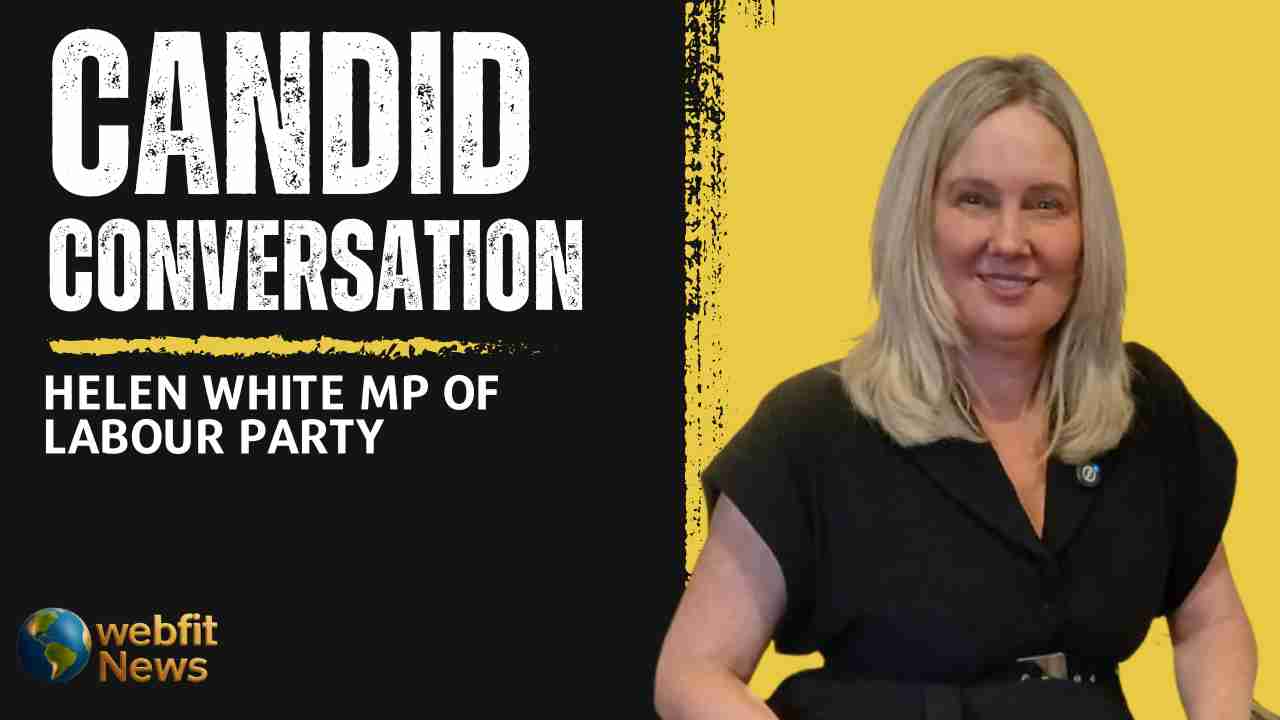
Who is Helen White
Helen White has spent most of her life in central Auckland and more than thirty years in Mount Albert. Before entering Parliament, she worked for twenty-five years as an employment lawyer and later as a barrister. She says those years taught her the importance of dignity and stability, especially when people face job loss or uncertainty.
Her decision to enter politics stemmed from her conviction that the law could help individuals, but could not always reform the broader system. In Parliament, she has focused on reforms such as limiting harsh restraints of trade that prevent workers from moving to better jobs.
Why This Interview Matters
Many voters still do not know their local MPs personally. This series aims to bridge that gap, giving communities a chance to know their representatives, hear their priorities, and evaluate their ideas directly. The initiative is entirely independent, with no campaign links or political sponsorship. Its purpose is to strengthen understanding and engagement.
What Drives Her Work
Helen describes Mount Albert as “home.” Her children attended local schools, and she often meets neighbors on her daily walks to community events.
She believes that approachable leaders who listen are vital in a small democracy like New Zealand. Her experience as a lawyer gave her a deep understanding of how government decisions affect ordinary families. “You cannot say a bit more, unemployment is fine if it lowers interest rates. That hurts real families,” she said.
A Vision for the Electorate
Helen’s main goal is a long-term plan that balances population growth with investment. She points to stormwater and flood resilience, railway lines, parks, and school capacity as key areas that need cooperation between central and local government. She said Cyclone Gabrielle exposed existing gaps and showed why future development must include strong infrastructure planning.
Key Issues Discussed
Renter Security and No-Cause Evictions
Helen raised concerns about the reinstatement of no-cause evictions. Families, she argued, deserve stable housing so children can remain in the same schools. She also mentioned her member’s bill that would require landlords to provide curtains in rental homes- an affordable way to make homes healthier and warmer.
Possible Asset Sales
When asked about reports that the government may sell its stake in Chorus, Helen said Labour remains cautious about asset sales. “Public assets should generally remain public,” she explained, though she accepted that rare exceptions might exist.
Youth Support and Benefit Settings
Helen voiced worry about recent benefit restrictions for 18- and 19-year-olds based on parental income. She said such policies increase pressure on middle-income and solo-parent families while youth unemployment remains high. “These decisions risk hurting the people who need support most,” she said.
Voter Turnout and Civic Duty
MP expressed concern over declining voter turnout. Helen said social-media negativity discourages participation. She is open to discussing compulsory voting, similar to Australia’s system, to encourage civic engagement. “In a small country, every voice matters,” she added.
Quick Q&A with Helen White
What inspired your career shift?
“Law let me help people one case at a time. Parliament is where you fix the system.”
A fun fact few people know?
Her daughter once called her “the incarnation of Paddington Bear” for her cheerful and slightly clumsy personality- a comparison she finds accurate and endearing.
Message for young people considering politics?
“It is tough but important. We need leaders who listen, not only the loudest voices in the room.”
Why She Entered Politics After 25 Years in Law
Helen explained that the courtroom allows one-to-one help, but Parliament offers the chance to reform systems. She has drafted laws to remove unfair job restrictions and promote fair mobility for workers—changes she believes would strengthen both dignity and productivity.
Representing Mount Albert
“It is mine,” Helen said warmly. She walks to meetings, knows many teachers and parents at local schools, and has witnessed the community’s transformation over decades.
Biggest Challenge and Advice for Women in Politics
Politics is harder than courtroom work, Helen admitted, but it remains essential. She encourages women who may doubt themselves to step forward, saying, “The best leaders are often the listeners. It is difficult, not impossible- and it matters.”
The Issue of Low Voter Turnout
Helen worries that social negativity discourages participation. She believes New Zealand should explore compulsory voting to ensure every citizen’s voice counts.
Priorities for the Next Year
Helen’s focus for the year ahead includes flood resilience, reliable transport, school growth, and well-maintained green spaces. She said Cyclone Gabrielle proved why Auckland’s infrastructure planning and funding must keep pace with rapid development.
Flooding and Climate Challenges
She said flooding is a long-term issue made worse by climate change. Improving coordination between councils and central government, alongside dedicated stormwater funding, is critical to prevent future disasters.
National’s Housing Reform
On the government’s reintroduction of no-cause evictions, Helen said the policy undermines housing stability and children’s education. “Secure homes are the foundation for healthy families,” she emphasized.
Government Stake in Chorus
Helen reiterated Labour’s long-standing opposition to selling public assets. “The default position should be no sale,” she said. “Exceptions, if any, must be well justified and transparent.”
Changes to Support for Young Adults
Helen said ending some benefits for 18- and 19-year-olds places an unfair burden on families earning modest incomes. Solo parents, she added, will feel the greatest strain once child support stops at age 18.
Potential Political Impact
While some may initially support the policy, Helen said its economic and emotional costs could eventually shift public opinion. “Policies must look beyond short-term savings and consider long-term wellbeing,” she added.
Final Message
Helen believes approachability and listening are essential qualities for leadership. She encouraged residents to stay informed, vote, and participate actively in building a stronger Mount Albert community.
The Bottom Line
This conversation highlighted an MP who connects national policy with everyday realities in local schools, housing, and infrastructure. Whether readers agree with her or not, Helen White’s focus on fairness, stable homes, and participation reflects the values of an engaged and empathetic public servant.
Disclaimer
The views expressed in this interview are solely those of Helen White. Webfit News remains an independent media outlet and does not endorse any political party or policy. The purpose of this article is to inform and promote constructive public dialogue across Aotearoa New Zealand.